. . . and speaking of bookends. . . our last blog ended with us showing up in South Freeport for our community dance, which was where we started back in June . . .
. . . and it is also, sadly, the day my beloved uncle Roland Barth died. You can read his obituary here:
A week later, his extended family and many friends participated in a beautiful memorial at the Head Tide Church in Alna, Maine, the town where he and many of my relatives have lived for decades.
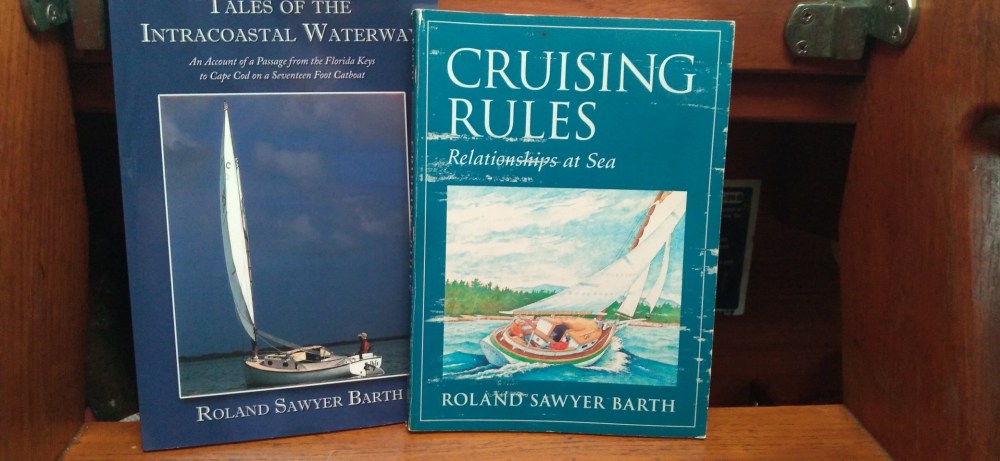
I want to take this opportunity to acknowledge my Uncle Roland by sharing this memory of him, which I spoke at his memorial. Not only was he a lifelong sailor and author of two wonderful books on sailing—along with numerous books on education—he was a great mentor and support to me in my journey on the sea.
* * *
Eight years ago, September, Roland and I sailed Mare’s Tale from Camden to Round Pond. He had just had an episode of transient global amnesia cruising Penobscot Bay with Barbara, and he needed someone to help sail the boat back with him, since he vowed never to sail alone again. I was happy to accompany him on such a long trip as I was actively looking to buy a cruising sailboat of my own. Among the boats I was considering was a Contessa 26, so it was a great opportunity for me to try out the boat. What I didn’t anticipate was Roland broaching the subject of possibly co-owning his boat given his new condition.
We had a delightful sail as we played with the possibilities of co-ownership. As we approached the bar between Hog and Louds at just past half high tide, he asked, “Now what would you have done if the tide had been just before half high?” Being a prudent sailor, I said, “I would have waited until half tide or better.” Right answer! I had passed the test. So now I had to look inside myself to see if what I really wanted was to co-own a 26’ sailboat with my uncle. While I was honored and seriously considered it, in the end, I decided that was exactly what I didn’t want: to co-own a boat with a father-like figure. Instead, I wanted to experience it for myself, which is after all what “learning by heart” is all about. It was very clarifying, and he understood completely. So I took a leap off a cliff and bought a Sabre 28, a boat of my own. And through it all, Roland has been one of my biggest supporters, first as I became Captain of My Own Ship and now, as I craft my own Cruising Rules for my current relationship at sea, living aboard with my partner Will.
In reviewing old emails, I was astonished to find so many from my dear Uncle Roland over the course of owning Maverick solo and now NIRVANA with Will. When I signed the contract on my new boat, he wrote, “Way to go, Tasha! A great vessel at a great price.” Both of our boats now in Round Pond, we bailed each other’s dinghies, and I checked Mare’s Tail’s waterline given a slow leak. After recommending the documentary Maidentrip about a 14-year-old girl sailing solo around the world, he wrote, “You next for around the globe on Maverick?” When I thought I lost my dinghy because I was distracted by a man, he wrote, “Moral of the story: never turn over command of your dinghy…or your life…to some guy!” And after wavering whether to launch one year because it felt too daunting to do it alone and then changing the oil in the engine for the first time, he wrote, “Great to see your hands in the oil, Tasha. So pleased that this little vessel has become such an important part of your life…and to have played a very minor role in that.” More than playing a minor role, he’s been an inspiration.
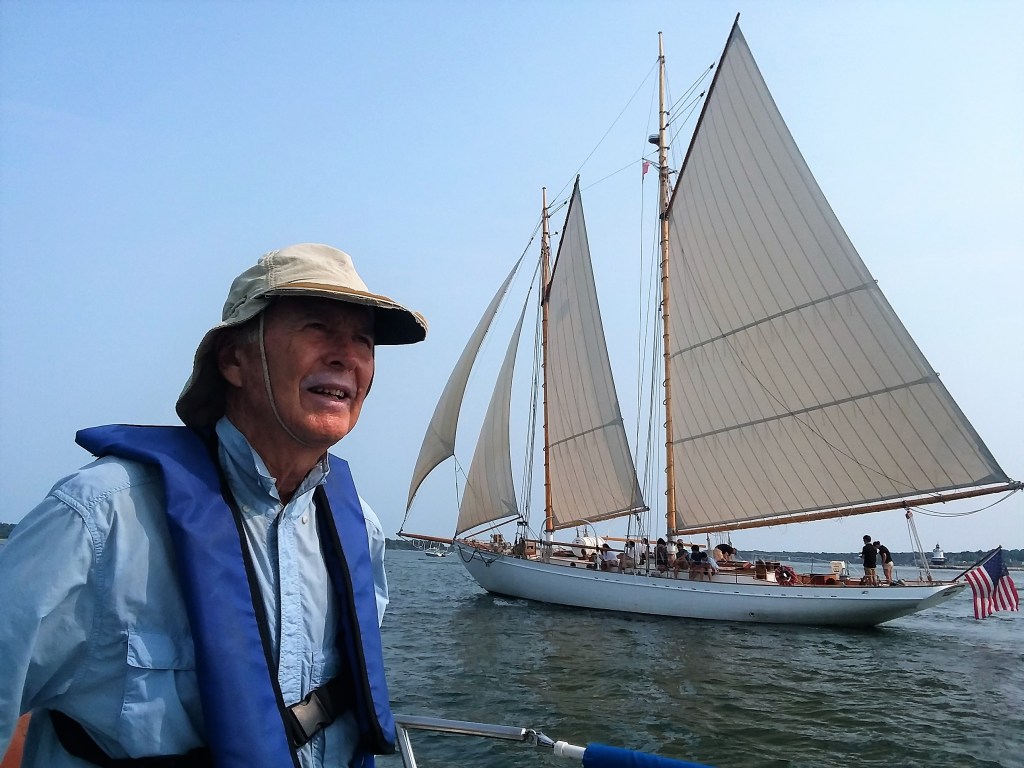
In 2018, we went on our first Uncle-Niece cruise in Casco Bay, and just after he sold Mare’s Tail in 2019, we went on our second. From his gushing email of gratitude, he wrote, “Thanks for arresting my grieving at not being able to sail my own boat…and providing the leadership and modeling of what a good captain should be.” You have no idea how much that email meant to me, coming from him.
Happy Roland at the Helm, 2019
Having since sold my Sabre and bought a Freedom 36 with Will, we had the honor and great good fortune to have taken Roland on his last sail of Muscongus Bay with Joanna. On that occasion, he passed along his personal copy of Cruising Rules that he carried with him on Mare’s Tale for 25 years, with this inscription, “To captains Tasha and Will, with gratitude for our little cruise, Harbor Island, Monhegan, and the George’s Islands, and in anticipation of new cruising you two will craft together.” There was a moment at the helm when Joanna asked, “On a scale of one to ten, how much pain are you in Dad?” His response: “I’ve got my hands on the wheel and I’m sailing. My pain is a zero.” If I were to turn that into a cruising rule it would be: When in any kind of pain, get out on the water and go sailing!
As I’ve made the transition from life on land to life on the sea, I couldn’t have asked for a more supportive and loving uncle on my shoulder along the way. So I’ve created a cruising rule in honor of Roland, which I shared with him several years ago. For all the sailors out there, perhaps you’re familiar with the misogynist acronym for finding your compass course given true, variation, and deviation: True Virgins Make Dull Company, Add Whisky, Subtract Ethics. Instead, I offer this one for finding your course through life, relationships—on land and sea—and all the chartered and uncharted waters we inevitably encounter along the way:
True Value Manifests Deep Connection, Add Wisdom, Subtract Ego
Our summer cruising is drawing to a close, but there are still tales to tell. . . With a brand-new starter for our engine thanks to J.O. Brown, we were ready to set out once again, this time in search of a pump out for our holding tank. Finding places to do a pump out has been one of the biggest challenges we’ve had all summer. For this reason, we plan to replace our marine head with a composting toilette. The nearest place was Rockland, 12 miles west. After being in Perry Creek for a week, we felt a little sad about leaving, but it was time to move on. We motored most of the way until just past the Rockland breakwater, Will spotted another Freedom 36. We chased it down, took pictures of each other’s boats, and made plans to meet the next day. Tying up to the town dock, we had a magnificent hot shower, did three loads of laundry, and with clean bodies and clothes, went out for dinner at a wonderful restaurant, In Good Company, where we had black truffles on salmon and other delicacies. What a nice change from dinner aboard!
The forecast was for heavy rain and wind, so we picked up a mooring and spent an unbearably rolly night, one of only three the whole trip. Although Will can sleep through pretty much anything, I was up all night. When morning broke, I called the Rockland Yacht Club which runs a launch, and they came and picked us up; it was not possible to row ashore. The launch driver said had he known how bad it was out in the harbor, he might not have come to get us. We spent a rainy day ashore having breakfast with the couple living aboard their Freedom in Rockland, met up with an old friend from Damariscotta, and visited the Island Institute, whose mission is to support the 15 inhabited island communities on the coast of Maine. And they have an awesome satellite map showing all 4000 Maine islands.
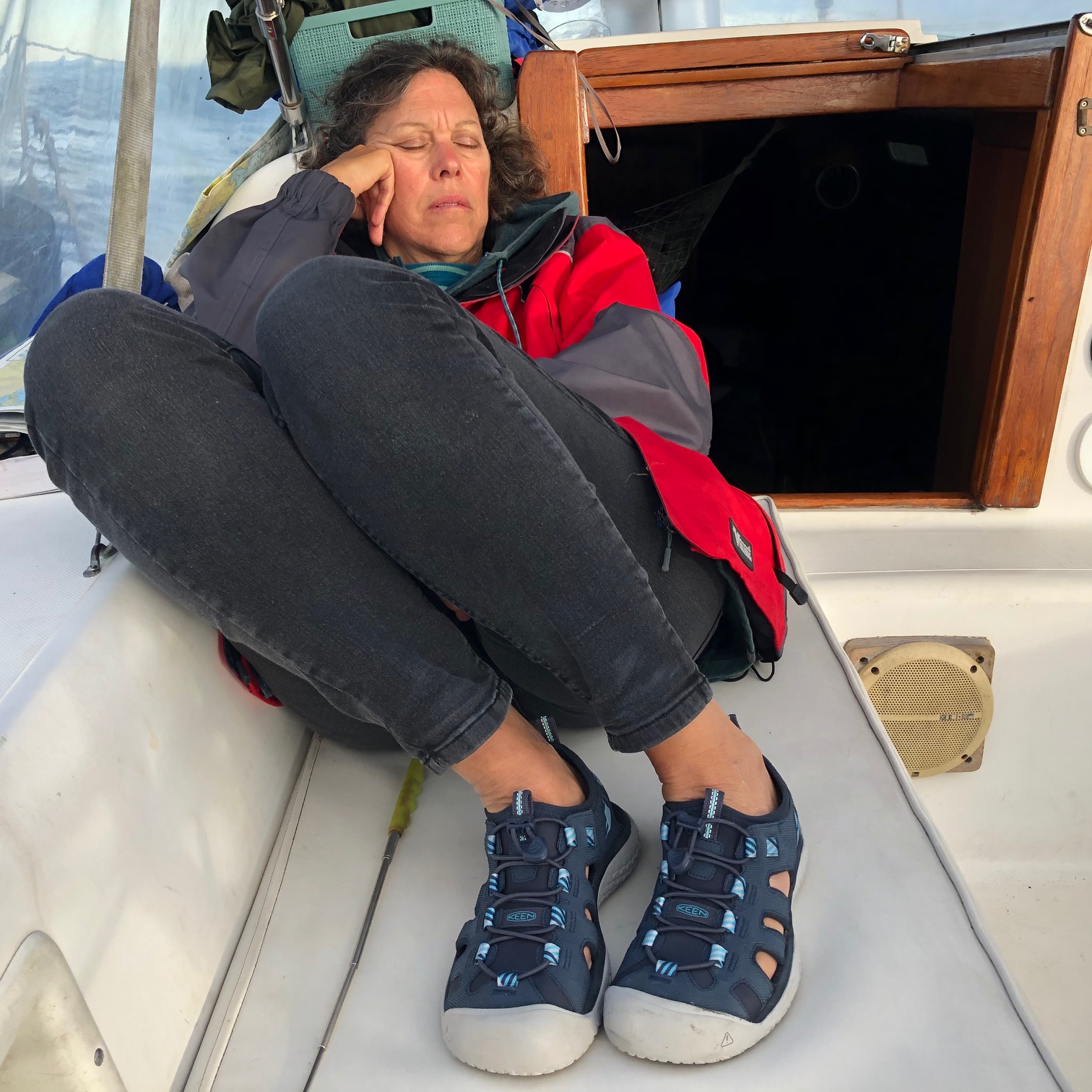
After our welcome shore leave, we were ready to go back home to the boat. Next morning, Will did a big shop with the wagon while I lounged, still feeling a bit tired from lack of sleep, and wrote about “home.”
* * *
There are so many “ideas” of home that underlie the word and “feeling” of the word, many of which are fantasies. Does home ever really live up to our ideals? Will it ever? So what happens if we drop the idea altogether? What new possibilities might spill into the open space? How creative can we be in our “architecting” a home that fits who we are? And what feelings might emerge from that space?
About a month ago, after living aboard NIRVANA for two months, I noticed that I stopped using the word “home” when referring to my house in South Portland. It stuck in my throat somehow when I said it, and I corrected myself, in my mind anyway. It’s a place that’s been my home for seven years and felt good as such, with its cherry kitchen cabinets and black granite countertops, colorfully painted rooms, pleasant deck and hanging chair, half-moon bed in a room full of Quietude (the paint color chosen largely because of the name), and all those oh-so familiar objects of one’s life that accumulate through years of acquisition, like birds collecting sticks for their nests, which in the case of ospreys can exist for years. The osprey nest at the mouth of Pulpit Harbor in North Haven is said to have been there for 150 years! The generations come and go, but the nest remains, being passed down, generation to generation, much like an historic farmhouse.
So what does it mean to have a home that is untethered to land, except for the periodic yet regular tying up to a dock? Clearly land is not a necessary ingredient of home, for there, at the other end of the anchor or mooring ball is a magnificently cozy, efficient, and functional living space that is what I now call home. Yet it’s so much more than that. Step into the cockpit and your backyard is the vast sky and water of whatever bay, cove, or harbor you happened to be in that day. Step on deck and your front yard is wherever your imagination and boat are equipped to take you tomorrow. You feel the elements—wind, sun, mist, rain, fog—like you feel the heartbeat of another lying next to you; it’s that intimate. On a boat, you are constantly at the intersection of nature and your capacity to exist within it. When the wind carries you across the bay with the sun beating down, call it love. When the fog rolls in and the raindrops form, it’s just another form of intimacy.
* * *
Our next destination was Matinicus, the most remote inhabited island off the coast of Maine, almost 20 miles offshore. We motored most of the way due to lack of wind once again, where we encountered a huge oil tanker in between naps.
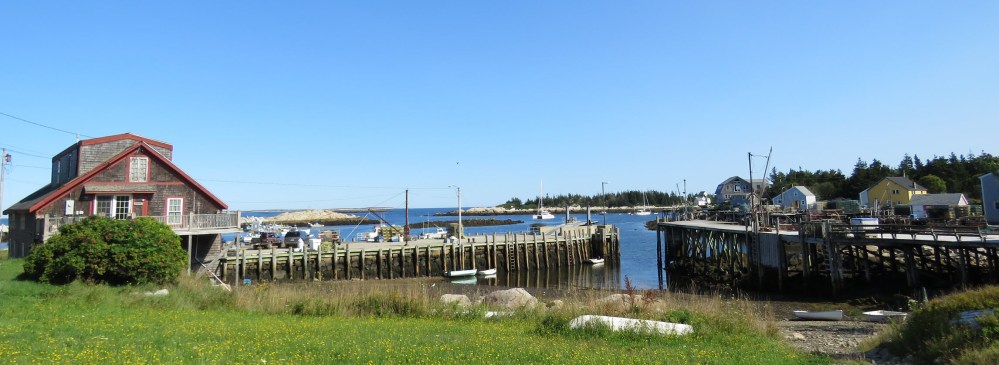
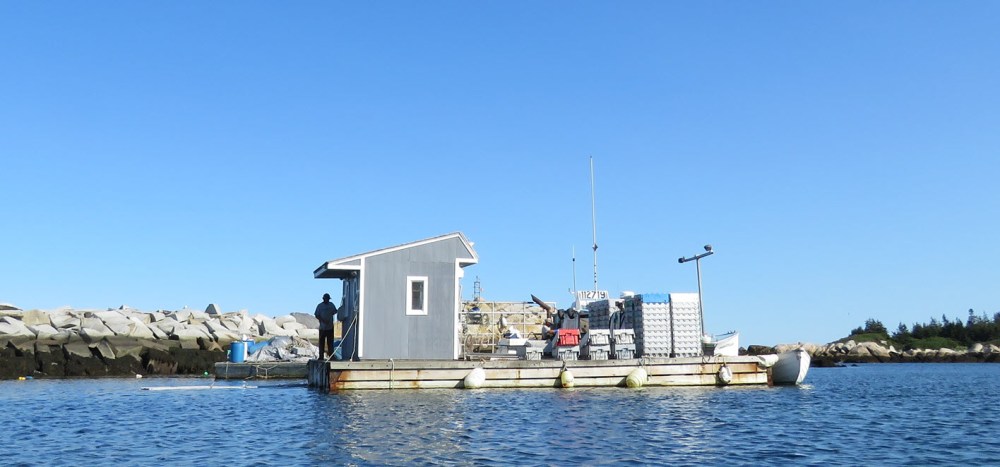
Like all the island communities, fishing is what people do. There are no paved roads and no store. There is, however, a school, a post office, and two small libraries, one adult and children’s. On the sail over, I googled a theater friend named Suzanne who has a house on the island. What came up was the Matinicus Historical Society and her name; turns out she is the historical society. She welcomed a visit, which ended up being a fascinating history lesson of the island, mostly stemming from her distant relatives who were among the first settlers. She told many stories full of intrigue, including shoot outs with Native Americans. After years of visiting relatives on the island, she and her husband bought a house at the intersection of two dirt roads, which turned out to be the very house that was owned by her distant relatives! Not only that but it was the site of the original house from 1763 of her distant relatives, Ebenezer and Susanna Young Hall. Unfortunately, someone on the island had just recently driven his truck into it such that the wall was completely smashed! The police came over from Rockland to investigate, and they managed to track down the culprit, an islander who was driving too fast, drunk, and didn’t take the turn. High drama on a small island to be sure. After hearing wonderful stories and getting a tour of Suzanne’s historic house—which included the same garage toy that Will used to own!—we wandered down the dirt road and met the new schoolteacher, who had just moved to the island with his family to teach six kids, pre-school to middle school-aged, including two of his own. On the row back, we passed the floating lobster co-op where the lobstermen offload their catch, the first we’ve seen. Matinicus was a very special island indeed and well worth the visit.
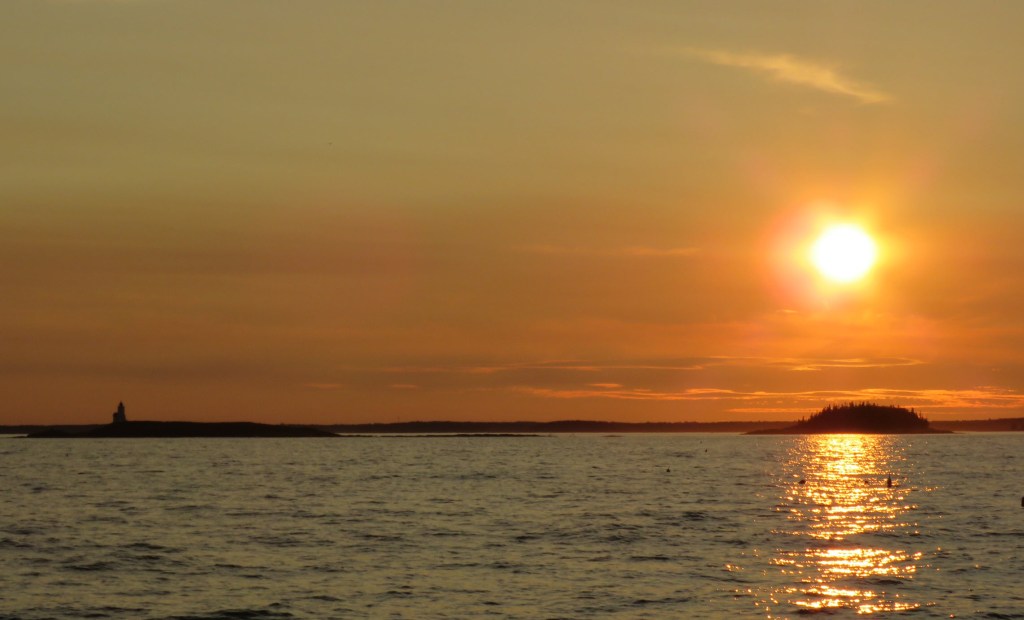
At this point, it was time to start heading west toward our home port. First stop was 12 miles west to Home Harbor in the Mussel Ridge Channel, where we anchored near Two Bush Light after a beautiful sunset, then moved on the next morning in thick fog.
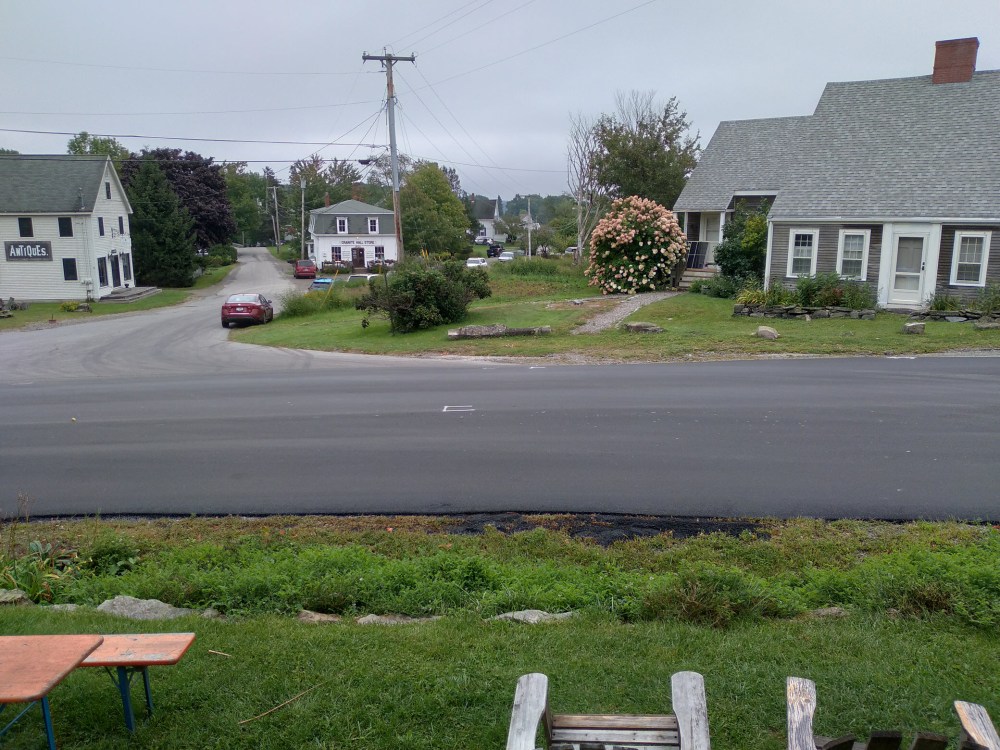
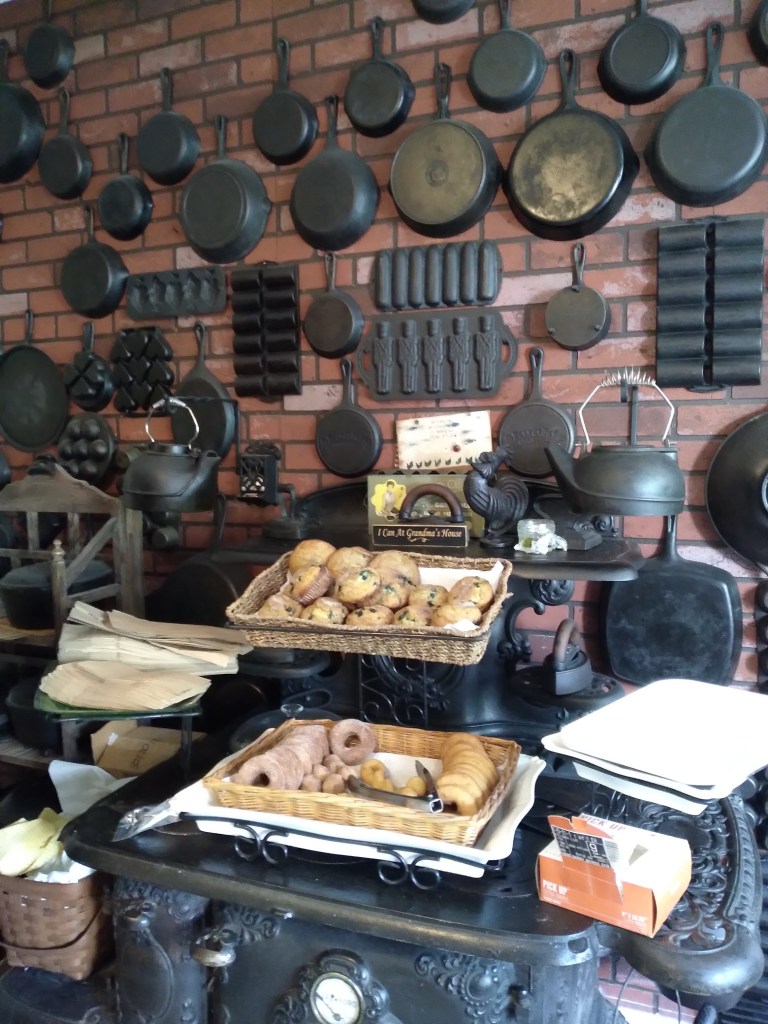
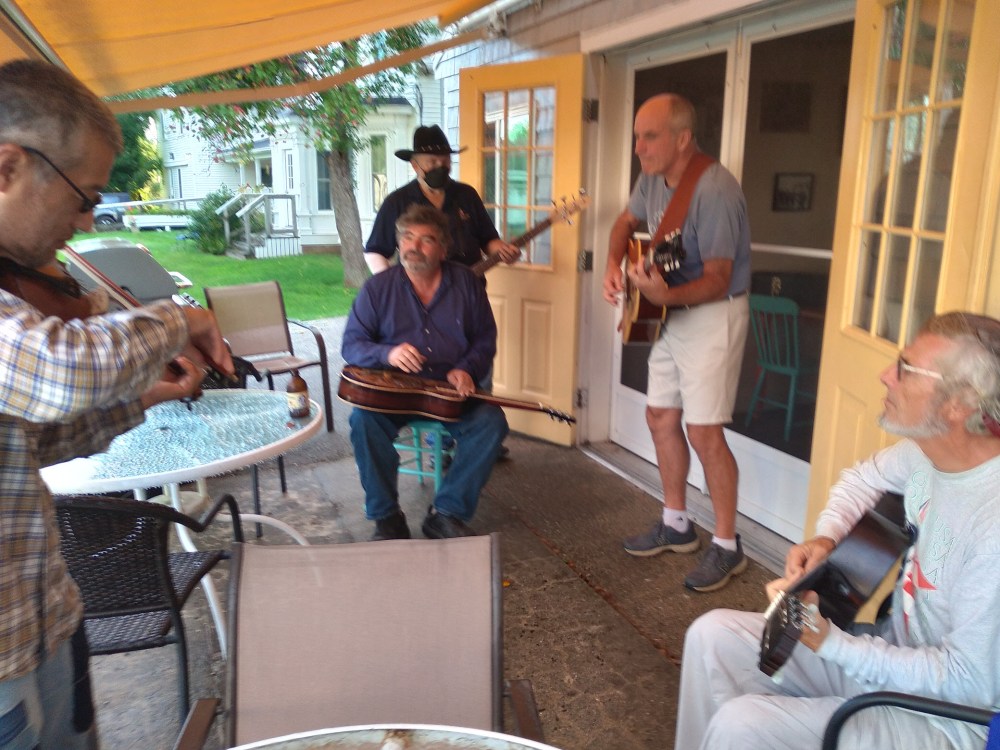
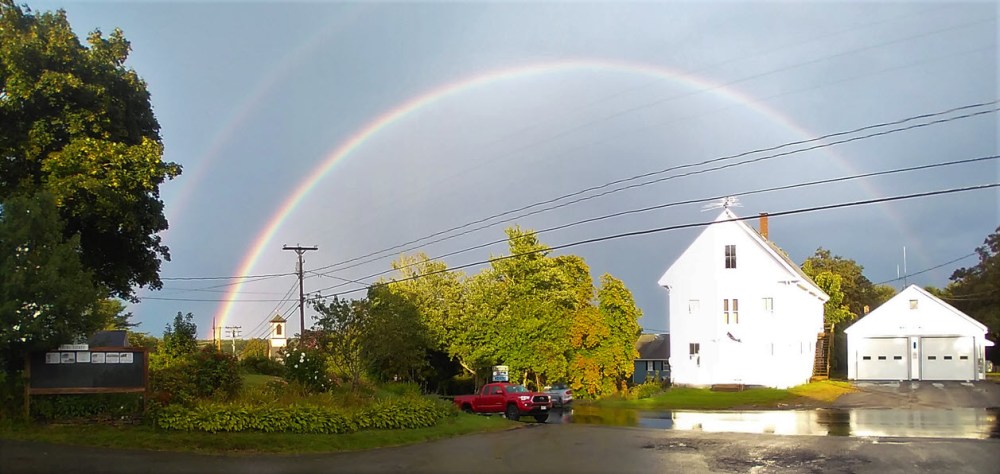
Next stop was 21 miles west to Round Pond, my home port for many years for my two former boats. It was also the home port of my Uncle Roland, who had the first non-fishing boat in the harbor more than fifty years ago. Roland has since sold his boat and is nearing the end of his life, and we were hoping to visit one last time, but it was not meant to be. Instead, my cousin Joanna, his daughter, spent the day with us aboard after many days with him during his rapid decline. We were so grateful to have had Roland and Joanna on board earlier in the summer before he became too ill to clamor aboard a boat and take the wheel. We couldn’t have been in a better place to be thinking about my beloved uncle than Round Pond. My friend Nancy also came down for a visit, and we had a wonderful long walk around the far side of the harbor and picked up some goodies from Dot’s Bakery, Julie’s Greenhouse, and Granite Hall. We were also lucky to be in Round Pond for the Monday night outdoor music jam, which I used to attend with my ukulele. This time, Will joined in with his guitar with a much smaller, more intimate group that remained after a big downpour sent most people home. The rainbow that emerged was a special bonus, especially under the circumstances.
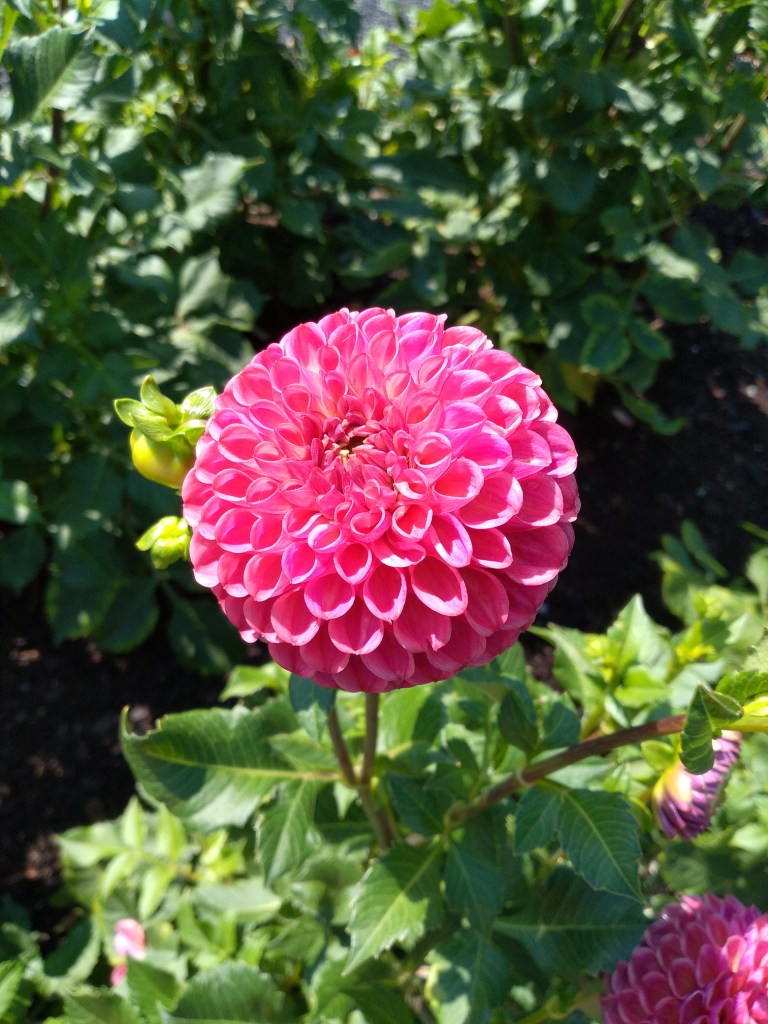
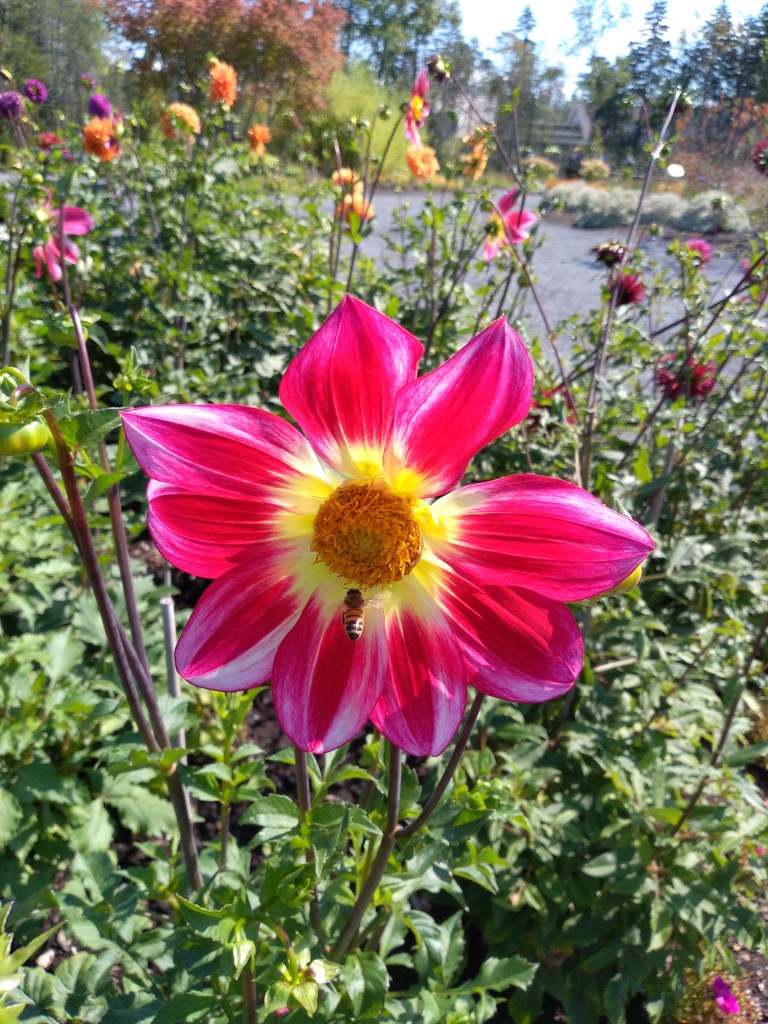
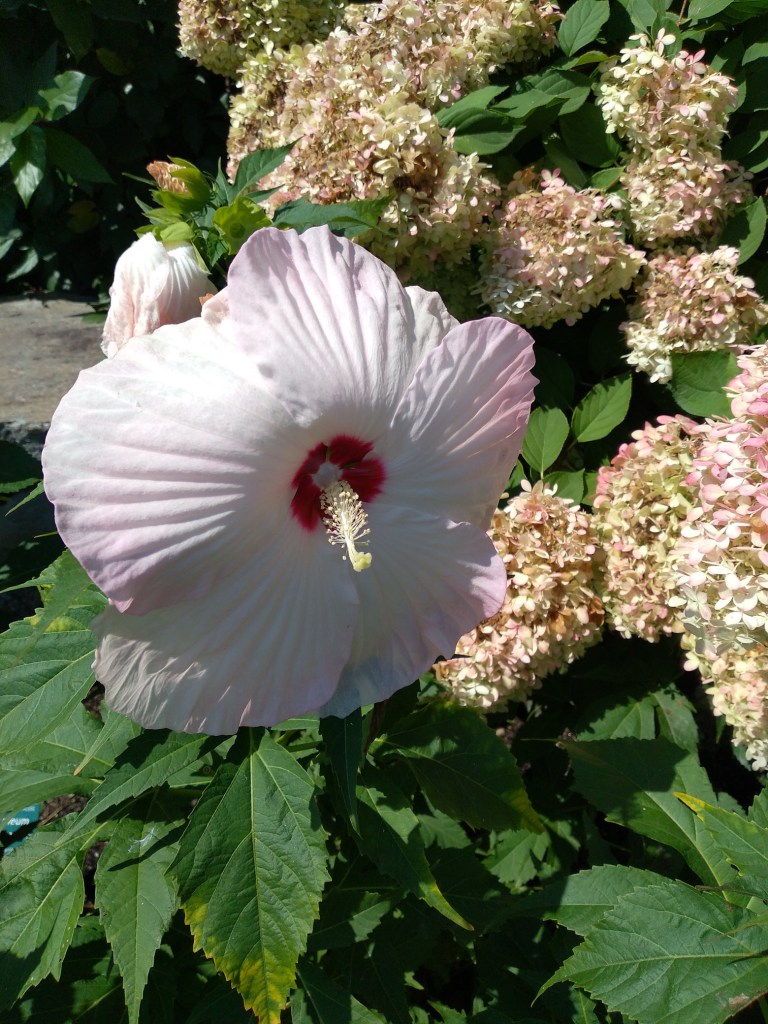
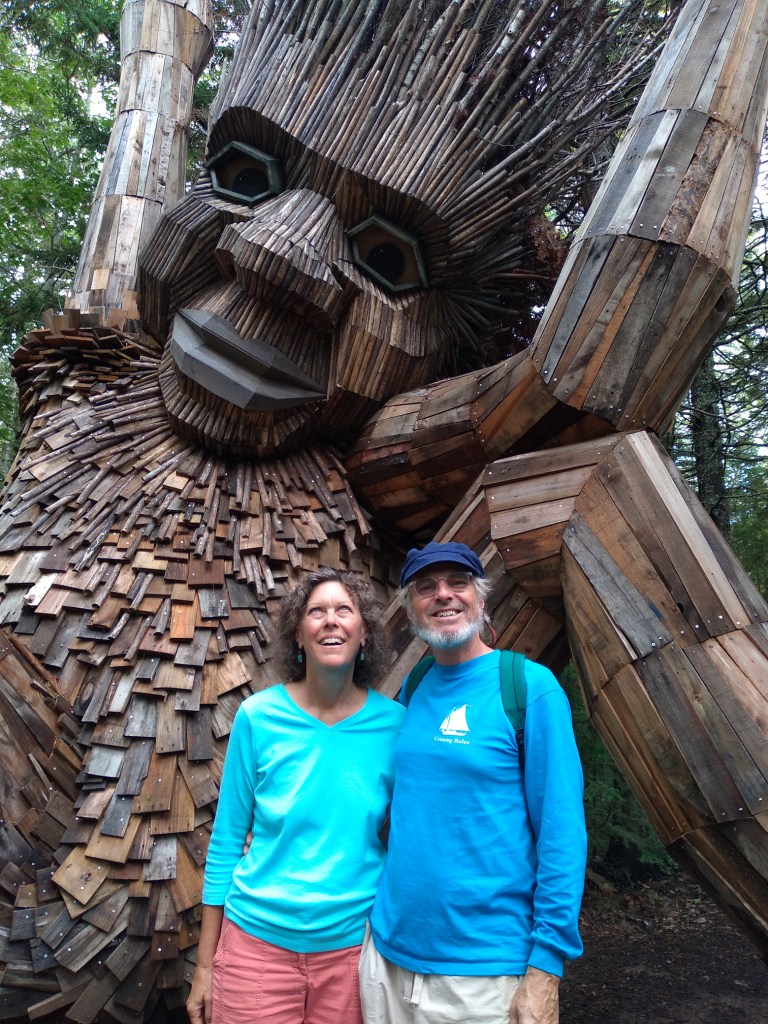
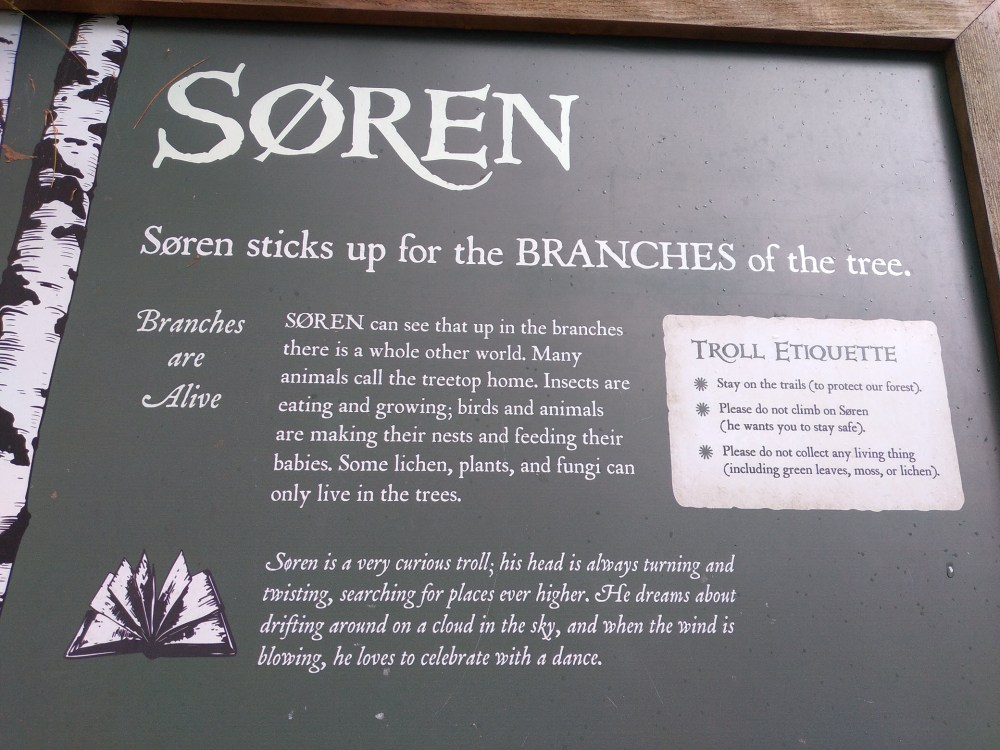
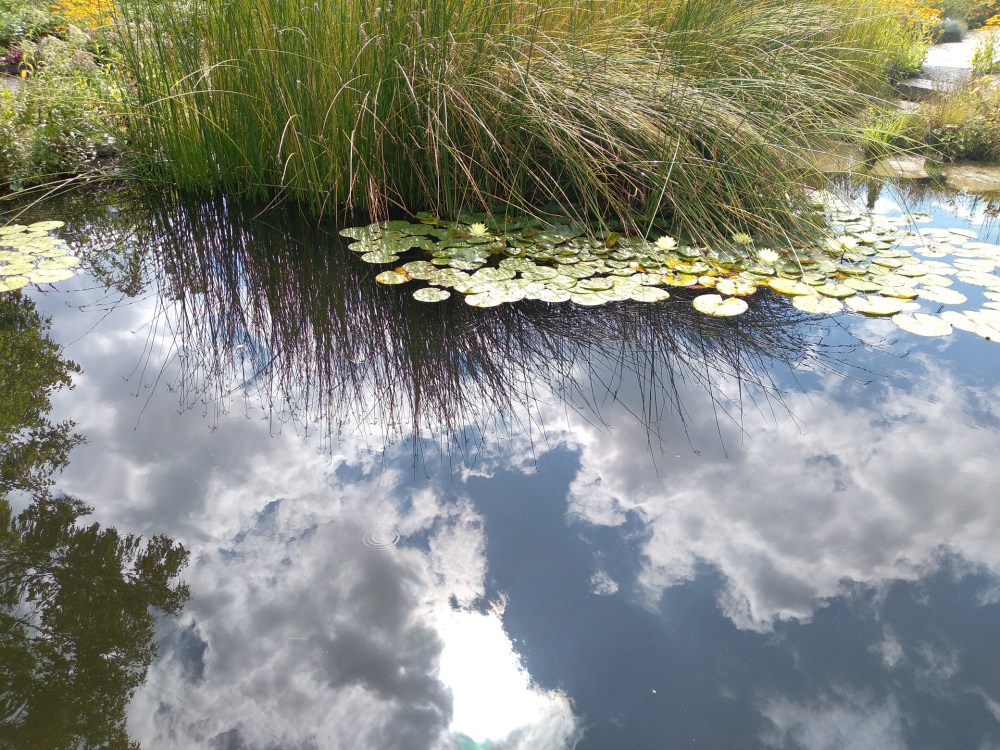
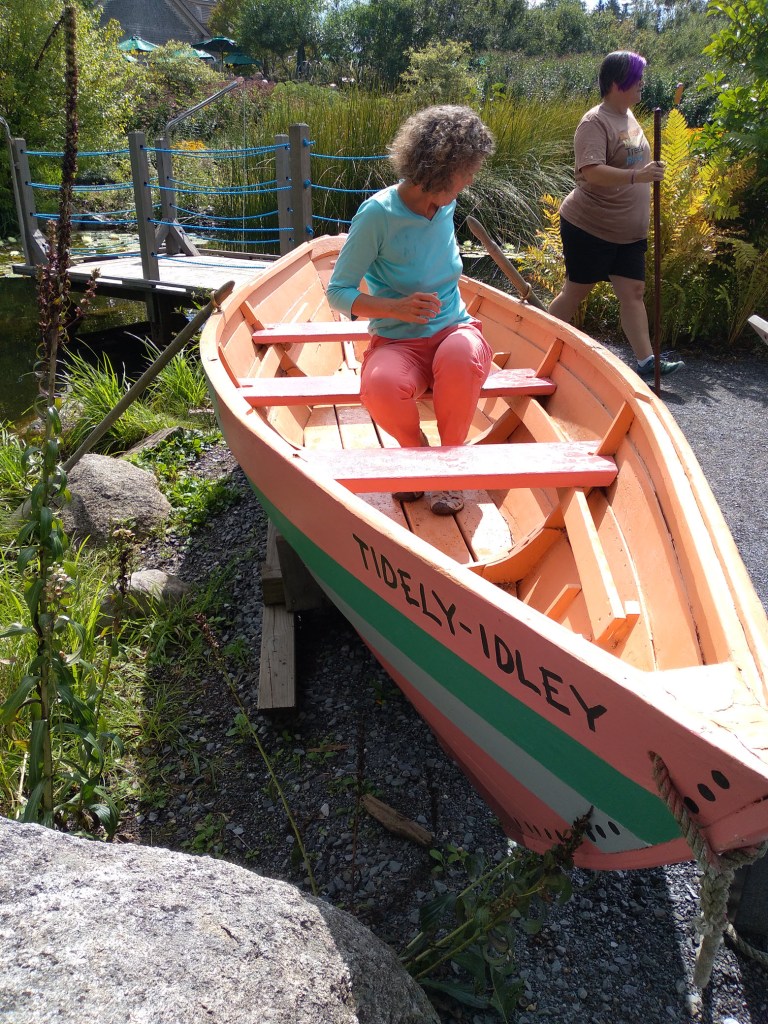
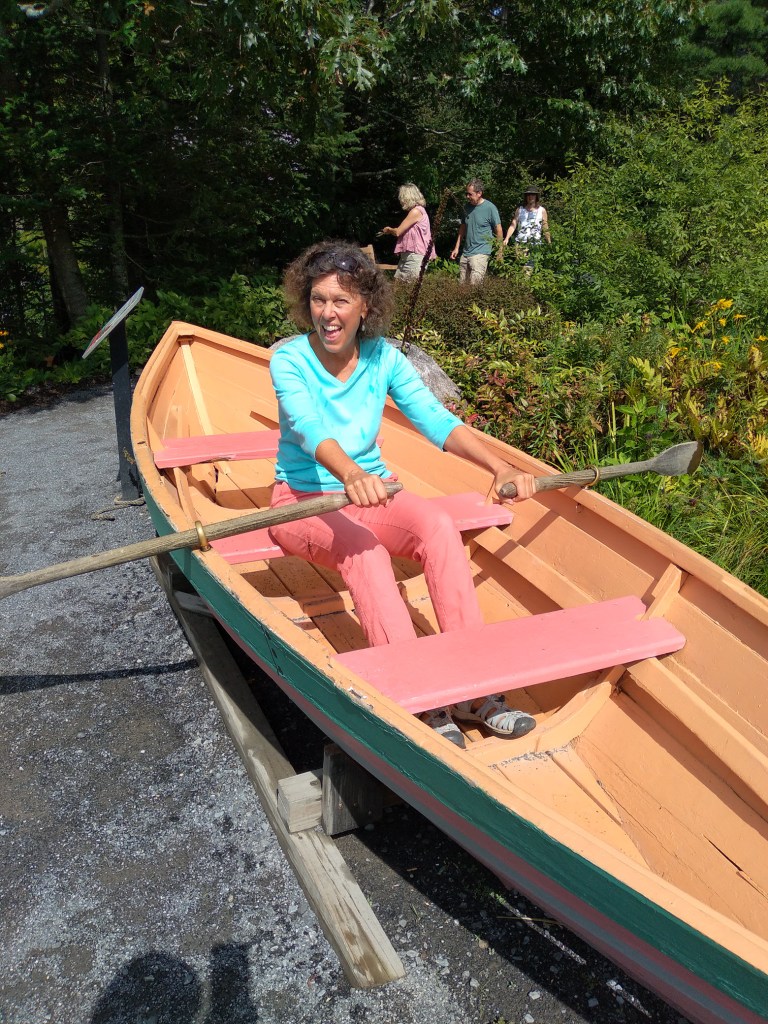
Another storm was brewing, this time hurricane Larry tracking across the Atlantic with high winds and seas building to 8 feet, so we chose West Boothbay Harbor as a protected place to lay for a couple of days. We motored and then sailed another 18 miles west as the wind picked up and the seas were building. The boat handled wonderfully as we headed to our cozy harbor by the Coast Guard station. Friends keep their Concordia yawl here, and we were fortunate to be able to have Chris over for a glass of wine the night we arrived. The all-day rain meant we had to run our generator to keep our batteries up, only the fourth time we’ve had to do so all summer. We took advantage of the following beautiful fall day to visit the Coastal Maine Botanical Gardens, a 300-acre parcel of highly cultivated land with thousands of varieties of beautiful plants, lovely walkways, a sweet children’s garden, and five twenty-foot tree trolls, created by a Danish artist to cultivate awareness about the importance of trees in our world. Lucky for us, our friend Rebecca came up from Portland to enjoy the gardens with us, drive us to the grocery store, and then take us back to the boat.
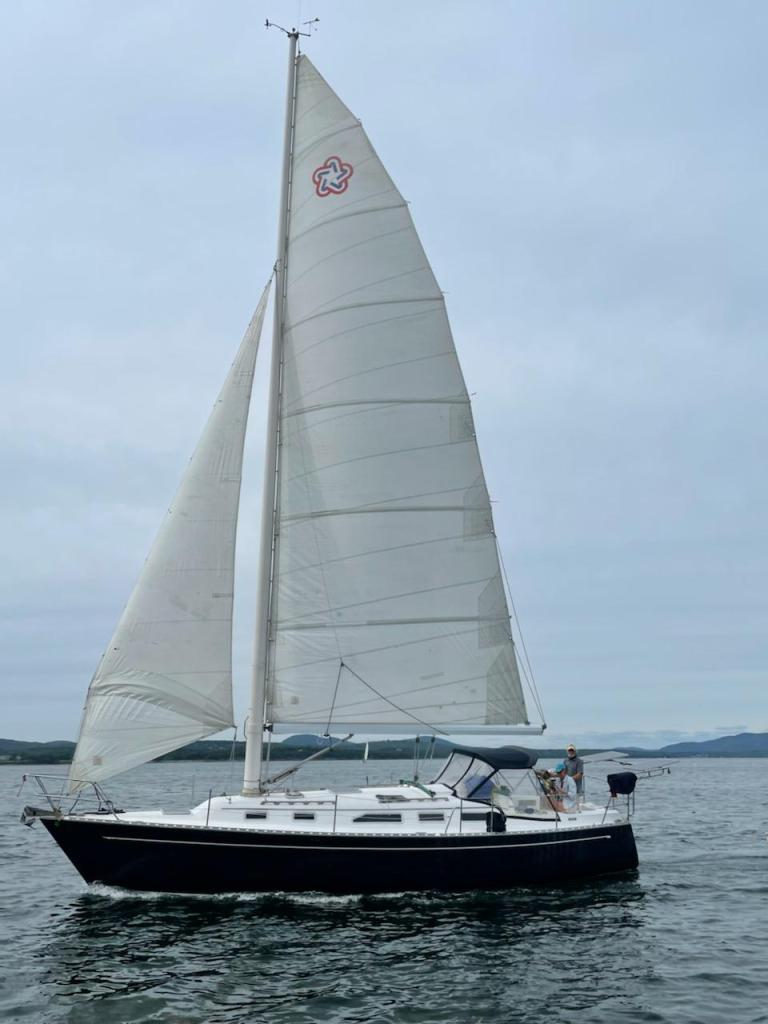
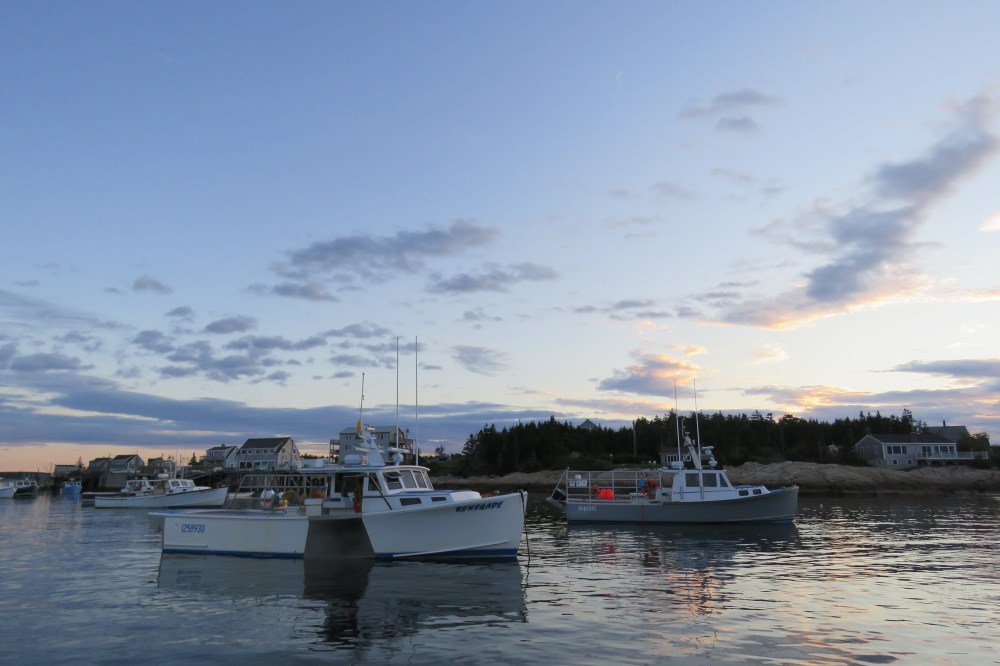
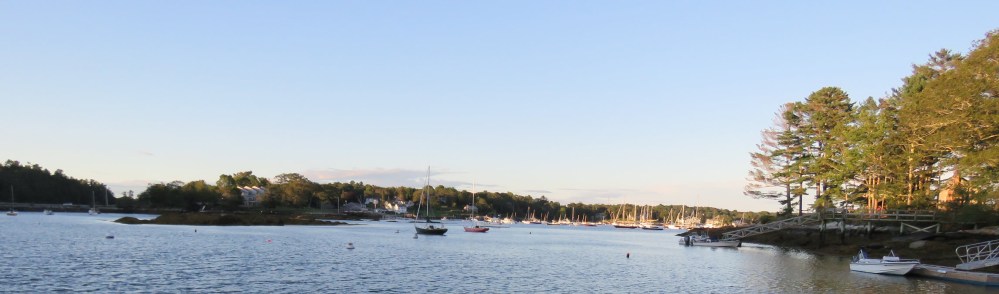
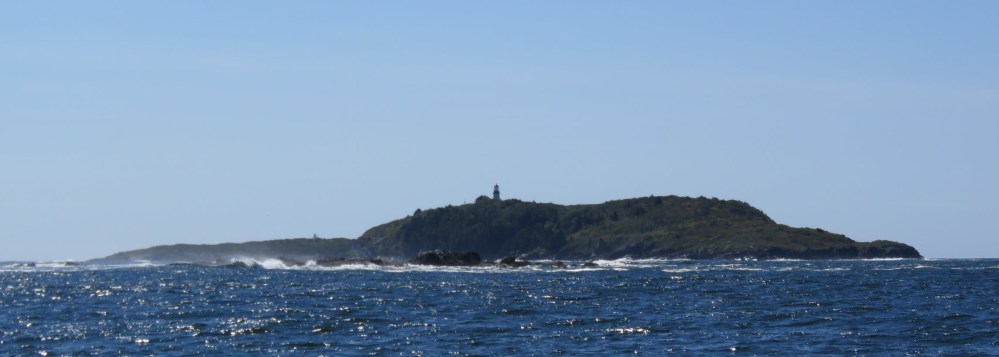
We had our longest day of sailing yet—36 miles—from Boothbay to South Freeport in Casco Bay, with great wind almost the whole way for a change. It was an exhilarating sail back into familiar waters, past Burnt Island light, the Cuckholds, Fort Popham, Seguin Island light, Little Mark Island, and into South Freeport, which was our first stop when we left South Portland just over three months ago. Similar to our first stop back in June, we came here to attend Portland Community Dance’s outdoor dance, which was a wonderful way to reconnect with friends. Being here today feels like bookends to our magnificent summer adventure aboard sv NIRVANA, where over the course of three months, we visited 50 different anchorages and traveled over 550 miles!
Now it’s time to transition to fall when the weather will be turning chill. Our plan is to be on our mooring in Spring Point and do some sailing in Casco Bay until Oct 15, when we’ll move with the boat to DiMillo’s Marina in Portland. There, we can plug in to electricity and run a heater and be right in the heart of downtown. We’ll be there until the end of November when we’ll leave to spend the winter in Sicily living on my Dad’s former sailboat!
For the past week, we’ve been up Perry Creek without a starter. The good news is that we could have been up shit’s creek without a paddle. Instead, we’ve spent a delightful six days in a lovely cove only one mile from J. O. Brown boat yard where we’ve had two mobile mechanics and a neighborhood full of friendly, generous people who’ve helped us beyond measure. And the reason we’re here without a starter, instead of Matinicus, a lonely outpost in the Gulf of Maine, is due to a mistake.
Wednesday
Our “plan” is to provision, fill up our water tank, and top off our diesel before heading out to the barren Brimstone island off Vinalhaven and then on to Matinicus, a remote island 15 miles out to sea. Arriving in the early evening, we tie up to the town dock and get a ride from the owner of the store to the well-stocked Island Grocer. Because it’s nearly dark, we motor one mile to Perry Creek for an overnight—right next to our favorite floating tiny house—with plans to motor to J.O. Brown in the morning. Our fuel was only down a quarter tank, but our water was virtually empty. We’d called earlier about fuel availability only to learn that they were out. “It should be arriving tomorrow by boat on the next high tide,” Linda, the office manager said. Good, that will give us some time in Perry Creek, which we’d missed last time.
Thursday
By mid-afternoon, it was approaching high tide, so before motoring across, Will decides to check the oil, which we’d been tracking all summer and chooses to fill it. With confidence, he opens the cap on top of the engine block, which looks like every other radiator cap he’d ever seen but mistakes it for an oil fill and starts pouring. After a few seconds he remarks, “That’s weird. It’s already overflowing.” I know right away something isn’t right, so I ask, “Which cap did you use, because there are two.” Indeed, he had put the oil into the radiator cap instead of the oil fill! My stomach does that somersault it does when something I imagine to be disastrous happens. I say nothing and take the news with great equanimity.
Will immediately acknowledges his mistake and starts sopping up oil with paper towels. He gets on the phone with Alec, the wonderful mobile mechanic who came on board in Belfast to replace our solenoid. He suggests using an oil absorbent pad as the oil should be floating on top of the coolant. He says that he could come out on Tuesday to drain the coolant but meanwhile, if we could remove most of it, we’d probably be fine to motor over to J. O. Brown and have them replace it. We call the boat yard and tell them our problem, and wouldn’t you know, a couple hours later, a guy shows up from the yard to have a look. He says the same thing and tells us Foy Brown would be around tomorrow to help us out. Good, not a disaster and we have a “plan.”
Meanwhile our water supply is now super low, and we are washing dishes in salt water, so I suggest rowing over to our neighbor boat and asking if they might spare some water for our tanks. They are more than happy to accommodate, bringing us two deliveries of five gallons each, along with an extra oil absorbent pad. Rick and Valerie couldn’t be nicer, confessing that he too had done something similar in years past. With some water and a plan, there’s nothing else to do until the next day. To Will, it’s a defining moment when Tasha, instead of slouching into moroseness suggests that we smoke some pot and go for a hike
* * *
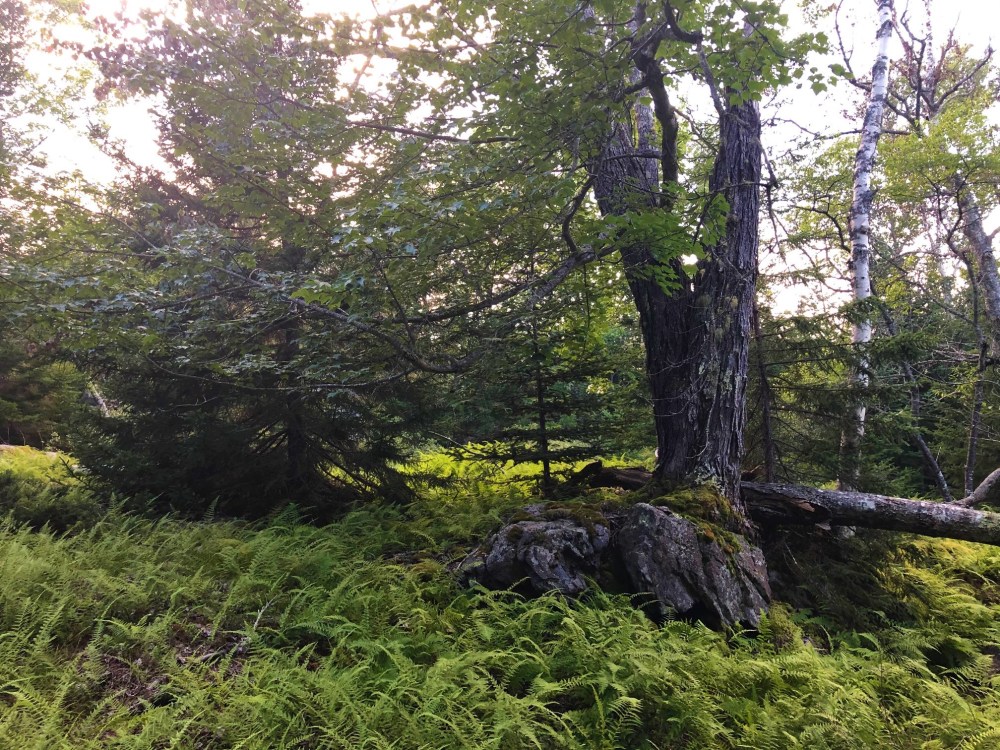
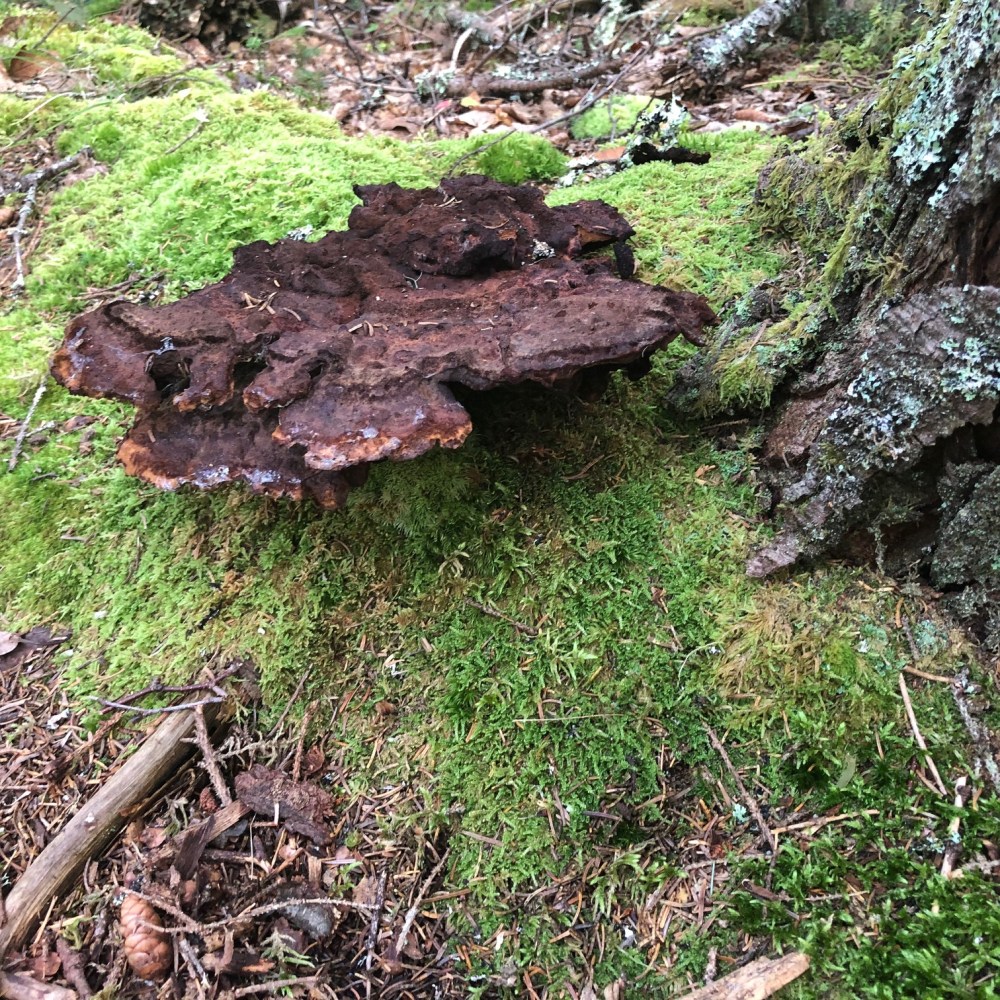
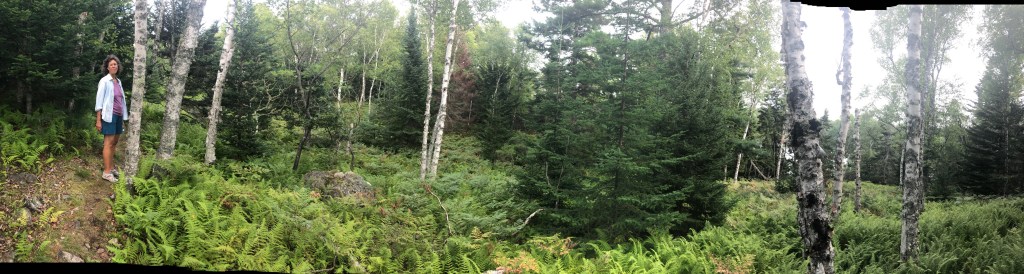
The beautiful, rooted staircases and pine needle gravel-filled paths that perfectly match the contours make every step sublime. Encyclopedia Brown and Harriet the Spy have their moment in the sun at the overlook, first wondering if the buttoned-up dandelions had yet to deliver their wispy seeds to the wind or not. Given the season and the barren granite, where would they alight? Picking one apart, we witness them getting swept off rock faces to bumble along. The inch-long wisps culminate in a seed—a kernel (that is, “a kernel of truth”)—quintessential–as in the found example where every single corn-silk wisp manages to break away with the tiniest sliver of seed at the end. Did the DNA replicate so well that the barest paint-thin shaving is enough?
And on to the pinecone, hypnotizing when viewed from the top. Does Fibonacci matter? Sure, there are natural growths that display a perfect Fibonacci ratio, the nautilus shell, for instance, as it grows at every single tangent of its spinning out. But what about less-rigorous pronouncements, the plant parts or patterns that aren’t exactly 1.382 times the previous one? Here we recognize the power of an “idea” that we then want to “see,” regardless of the proof to the contrary. For me (Will), it is enough that Fibonacci works even once; it’s not necessary to do more. The other innumerable growth patterns may one day get their day in the sun—or maybe we will “get over” ourselves and quit trying to “classify” and reduce—or try to anyway—nature to something it really isn’t.
* * *
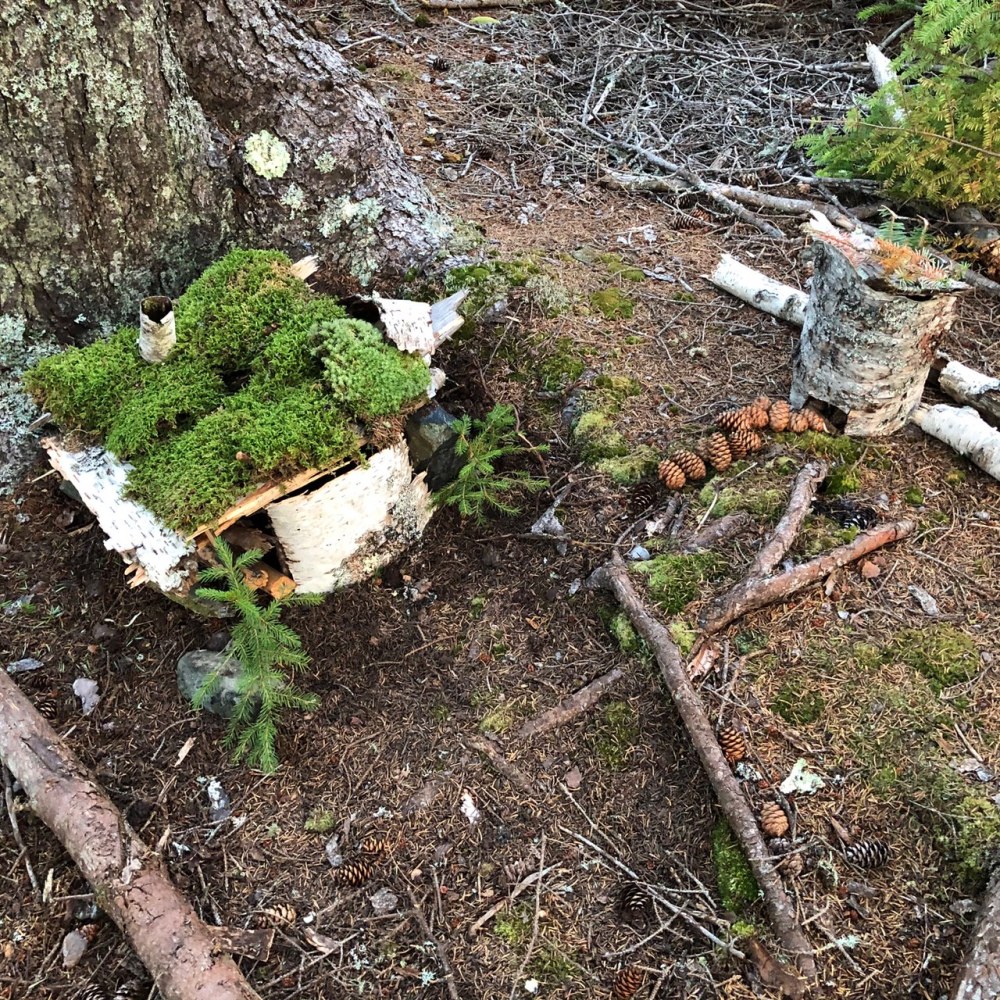
On the last leg of the hike, inspired by all the fairy houses we’d seen on the way in, I exclaim, “I want to build a fairy house!” A hollowed out birch bark cylinder appears tucked between two trees. The question is whether to leave it where it is where it probably wouldn’t be seen or move it closer to the trail. After some inner debate, I decide to move it and then set to decorating the top with moss-covered bark and laying sticks along one side to form an outdoor porch. In front of the opening is a bright red mushroom, and I place a yellow fungus-covered stick in front as the other portal. Will suggests putting a large rock inside, which I do and then switch into engineer mode wondering if I need to make it more structurally sound. “Build from your eight-year-old self,” he suggests, and I switch back to that mode finishing off the house with a minimum of adornments. We riff on the architectural elements of two other fairy houses we see in a clearing, wondering whether adult or child was at play when building them.
Yes, it is quite an outing! Needless to say, we’re no longer worried about the oil issue.
Friday
With most of the oil removed, we get an early start to motor over to J. O. Brown. I push the start button, once and get a little cranking, twice, a little less, and a third time, nothing. We check the batteries which are relatively low without much solar giving them a charge so early in the morning, so we run the generator for half an hour and try again. This time, we get absolutely nothing pushing the starter button.
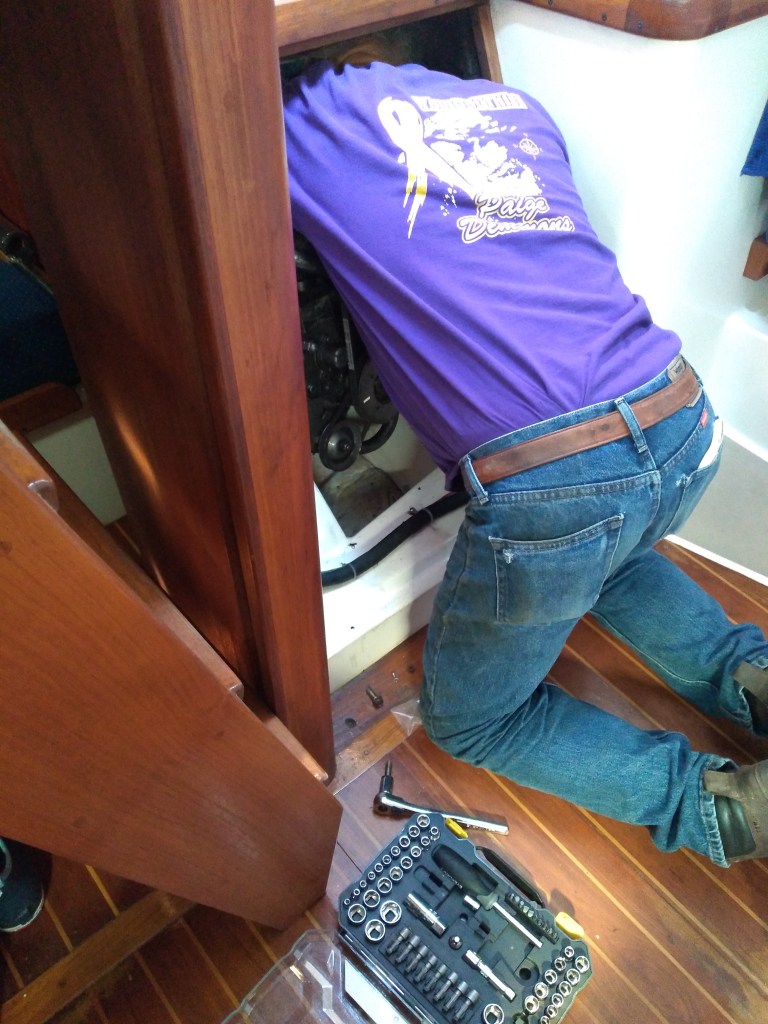
Rick on the neighboring boat notices our troubles and hails us asking if he can help, so I row over and tell him of our plight. Fifteen minutes later he arrives, tool bag in hand, ready to help, along with yet another five gallons of water. Knowing more about these things than we do, he climbs down into the lazarette and tests the power to the solenoid, which is fine. He then takes a large screwdriver and holds it between the two terminals on the solenoid, bypassing it to send power directly to the starter. Nothing. We also notice two lose wires which he tries connecting. Nothing. Then he tries attaching one end of a small jumper cable to the starter and the other end to the engine block. Will questions it in his mind as he does it. Poof! Smoke comes pouring out as the wire melts, at which point he says, “Well, I’ve reached the end of my knowledge.”
Before departing he asks, “I don’t suppose you have Nigel Calder’s Mechanical and Electrical book on board?” “We sure do!” I say and tell him he’s a friend. We then spend another half hour pouring over his troubleshooting section and learning the steps to debug the system, most of which we’ve done. The net result is even though it’s rarely the starter, in our case, that’s what it points to. We called J. O. Brown once more to tell them of our new, more pressing issue. Linda says she’ll pass it along to Foy.
Meanwhile, Bunny rows by and we chat her up about living aboard, which she and her husband Bill have been doing since 1994, mostly in the waters around Turkey and Greece. She too offers to bring us some water, which we graciously accept. “Do you need anything else? Food? Wine?” she asks. Will says, “We could always use bacon. Just kidding.” Next thing you know, there’s Bunny, water and bacon in hand! Nothing more to do but go for another hike, this time to the summit, where we have a magnificent view over East Penobscot Bay to the Camden Hills. A bit of exercise does us a lot of good after all this waiting around.
Saturday
We wait on board to hear from Foy, hoping his schedule isn’t too full to get to us. Evan, the tile guy from Vinalhaven comes by in his Boston Whaler wanting to chat. He often comes to Perry Creek on the weekends to see where all the boats are from and get to know people. He too asks if we need anything, and we say, “Well, since we’re probably going to be here for another couple of days, we’d gladly accept some more water.” He says he’ll bring some out tomorrow.
We meet another lovely couple on a wooden boat he’d built himself and whom we’d met on Swan’s Island at the music festival. We chat people up as they come in and the harbor fills up with a dozen boats. Late in the afternoon, Foy shows up to have a look. He performs the same tests Rick did only in about ten minutes with the same results. He then removes the starter to have a look and learns that it’s only spinning in one direction instead of both. “It’s toast,” he declares. OK then! “I can probably order one for you on Monday, get here on Tuesday.” Alright then! We have more of a plan. We continue to wait.
Sunday
In the afternoon, Bunny stops by with yet another gallon of water. Happy to engage with “someone other than my husband,” she stays a while to chat when Evan comes back with three five-gallon containers full of water, and we invite him aboard as well. A super friendly gadfly, Evan tells us about the various social circles on Vinalhaven and how he’s managed to touch most but stay outside of all of them. “It’s better that way,” he says. He also commented, “Fishermen are always crying crocodile tears. The gold in the pot in front of them is never shiny enough for them.” He’s seen a construction boom on Vinalhaven from people “from away” and has no lack of business as the lone tile guy on the island. “And they spare no expense,” he said. “I’ve put in tile that costs $50 per square foot!” When I learn he’s single, I play matchmaker and try fixing him up with a friend.
Bunny invites us over for cocktails on their Norsman 447 with the couple on the wooden boat, and we see what a $200k cruising boat feels like, complete with enclosed cockpit to keep out the elements. I bring a fresh batch of garlicy hummus that I’d just made in the food processor, and we sit around the cockpit table laden with hors d’oeuvres as Bill, 82, holds forth with sailing stories and Bunny passes around the popcorn.
Back on NIRVANA, Will says, “Any who is sealing out that much nature shouldn’t be on a sailboat!”
Monday
At 9:00 AM, we’re awoken by a loud motor passing by us and then a sudden BANG against our hull. Will pops his head up through the hatch and hears, “Watch out for the sailboat!” and “Pull that boat in!” and then from the crew, “I can’t!” I jump out of bed, put on some clothes, and go up to the cockpit as I watch a large fishing boat steaming past us after cutting between us and the tiny house. “Sorry I clipped your kayak,” the captain yells to the boat astern of us. I wave my arms and yell, “Did you hit us?” but he’s moving too fast to hear and doesn’t turn around.
We are only slightly shaken and not too concerned until half an hour later we’re visited by a neighboring boat saying he had called the Marine Patrol and we’d probably get a visit soon. He saw the whole thing, including the skiff hitting our boat, and felt the captain was behaving recklessly. We check our boat and discover a few gouges left by the skiff’s outboard that was trailing behind on a long tether. Later, Brandon from Marine Patrol comes by in 20’ Whaler with a bad ass outboard in his grey uniform and badges. He inquires about what happened and asks us each for a written statement so he can report the incident. We also get a statement from the boat to our stern. At first he is all official and then lets down his guard as we start talking about fishing and the eel we’d seen earlier in the day. He later realizes it’s a matter for the Coast Guard since it involved a commercial vessel.
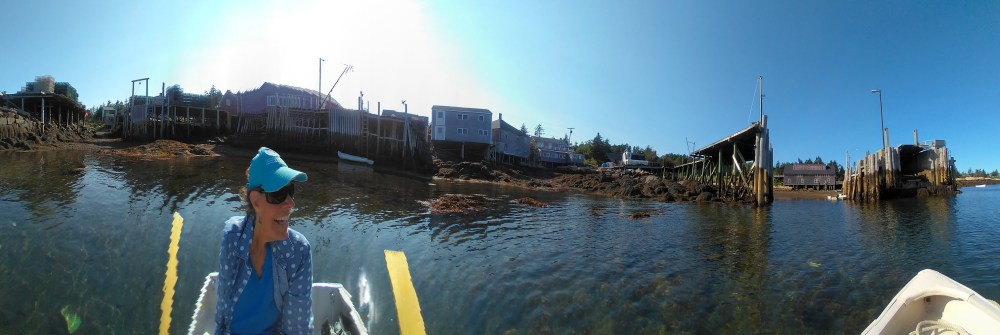
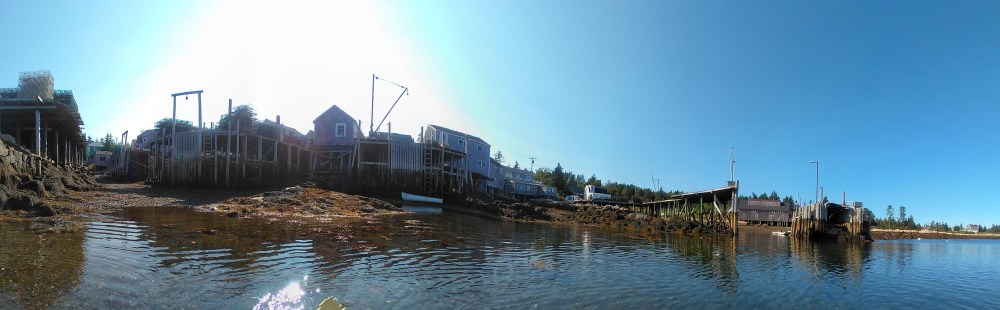
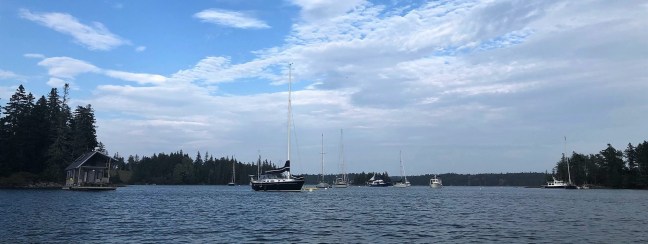
One by one, the boats in Perry Creek start leaving. We take another hike ashore, this time on the north side, all the way to the head of Perry Creek. This is when Will realizes there are no houses around the shore—such a pleasure. This has been our home for almost a week now. We’ve seen high drama, low drama, we’ve waited and walked, and we’ve experienced plenty of neighborly kindness.
Tuesday
By noon, all boats have left the harbor except John McCloud, the Scotsman from Vermont who lives aboard his Nordic trawler and is the de facto “mayor” of Perry Creek, having set half a dozen moorings for people to use and contributed significantly to the trails that line the creek.
It’s mid-afternoon and we decide to call to see if there’s any progress. Linda answers. “The UPS truck just arrived. I haven’t seen Foy since before lunch, but I’ll tell him you were asking.” Remember, we’re on an island, so we had to wait for the mail boat for the UPS truck. An hour later, we see a lone skiff motoring in. It’s Foy with our new starter, straight from China via Newburyport, MA. Apparently, he’d tried three other places before finding someone who had the type we needed. He climbs into the engine compartment and with Will’s help from the lazarette, and a couple of under-his-breath swears, attaches the motor. Will cranks it over and the engine hums like a baby! Rejoicing all around.
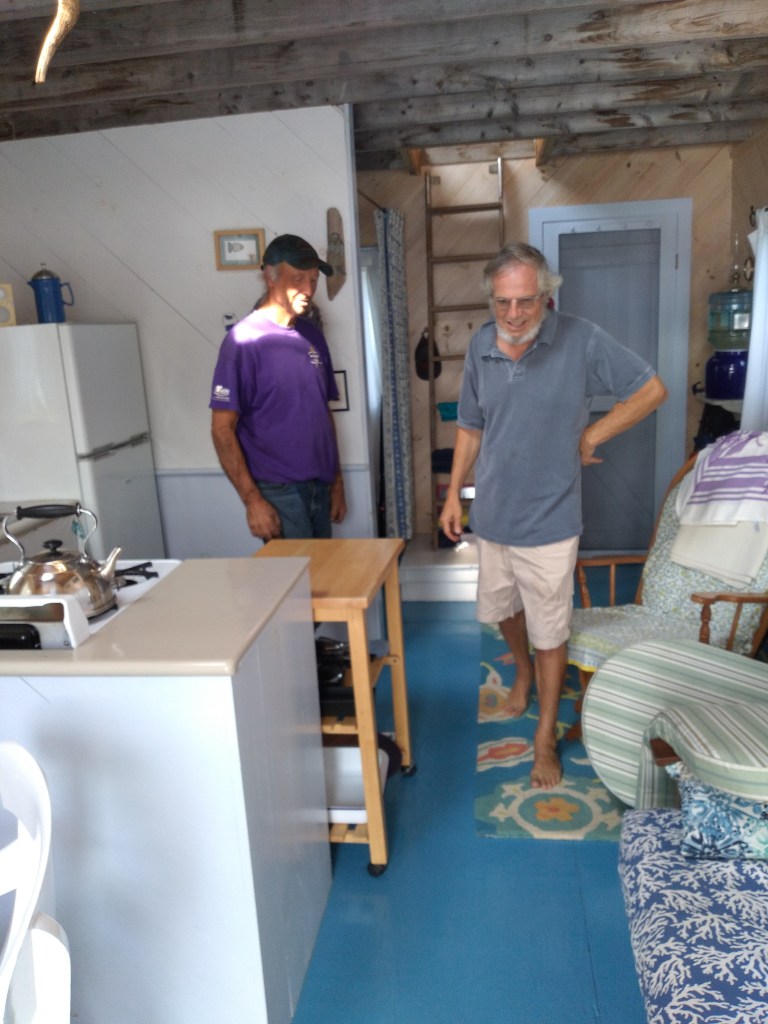
We allow as to how we—and everyone else—have been admiring his tiny house, which we’re moored right next to and we learned he built for his wife ten years ago. I boldly ask if we can see it and he says, “Sure! Hop on in!” He motors us over and gives us a tour. The thing is beautiful inside, complete with kitchen, sleeping loft, pickled diagonal siding, freshwater tank, composting toilette, beautiful rugs, furnishings, and artwork, and an outdoor shower with on-demand hot water. Such an inspiration for tiny house living! And he’s built several of them for some of his workers, which he keeps on trailers up the road from his shop.
Wednesday
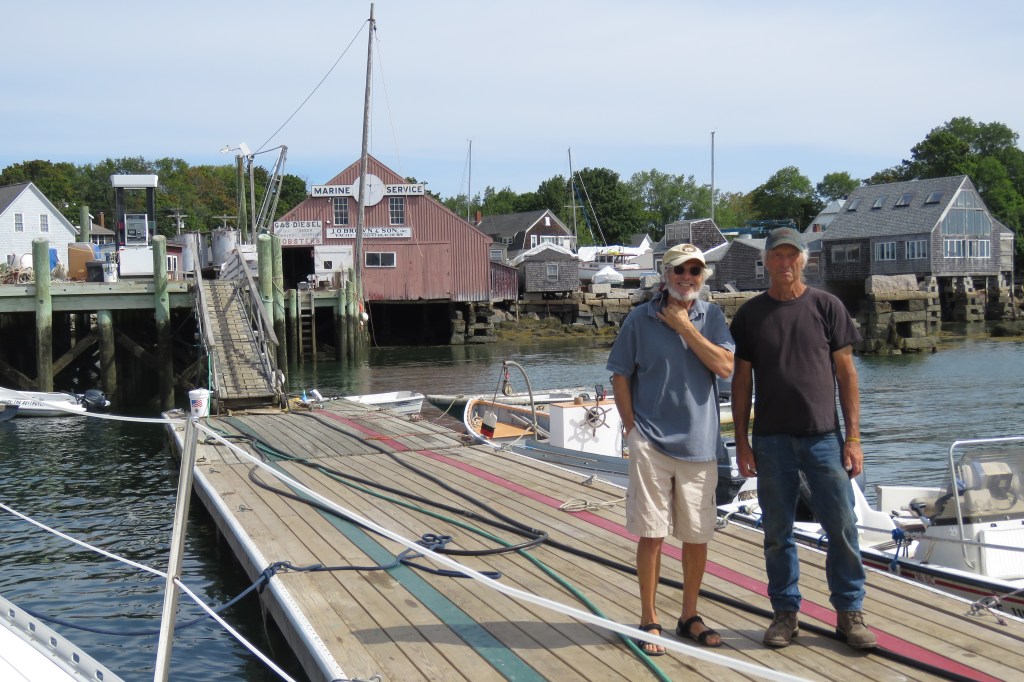
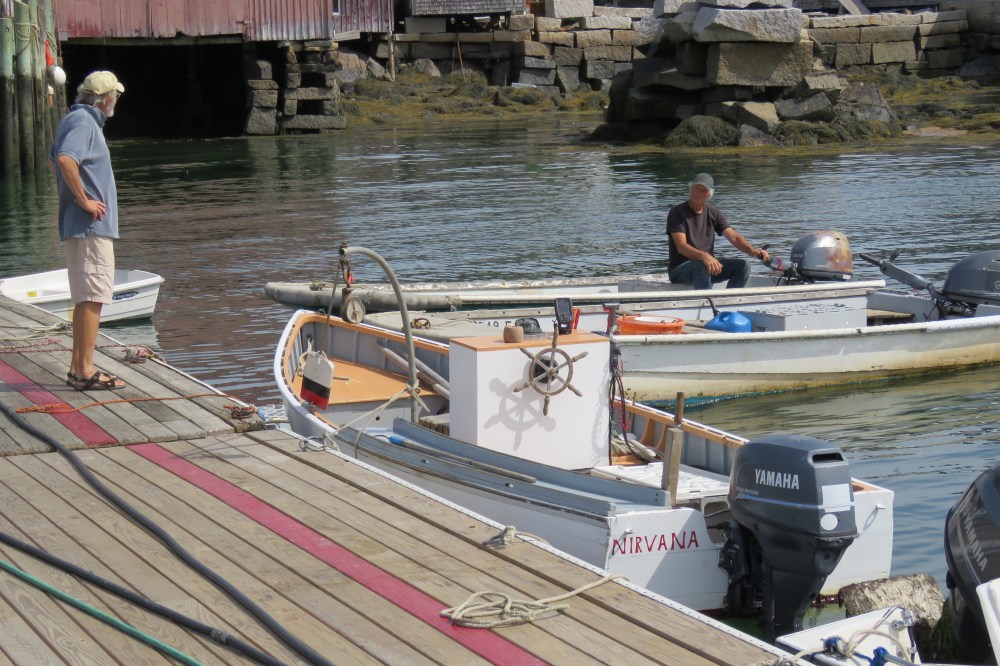
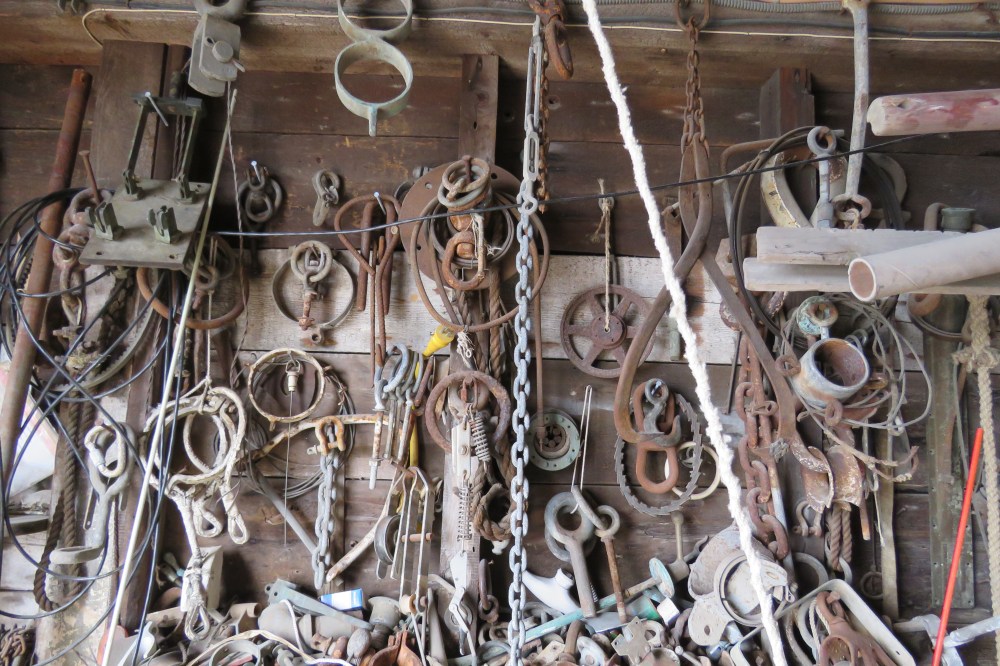
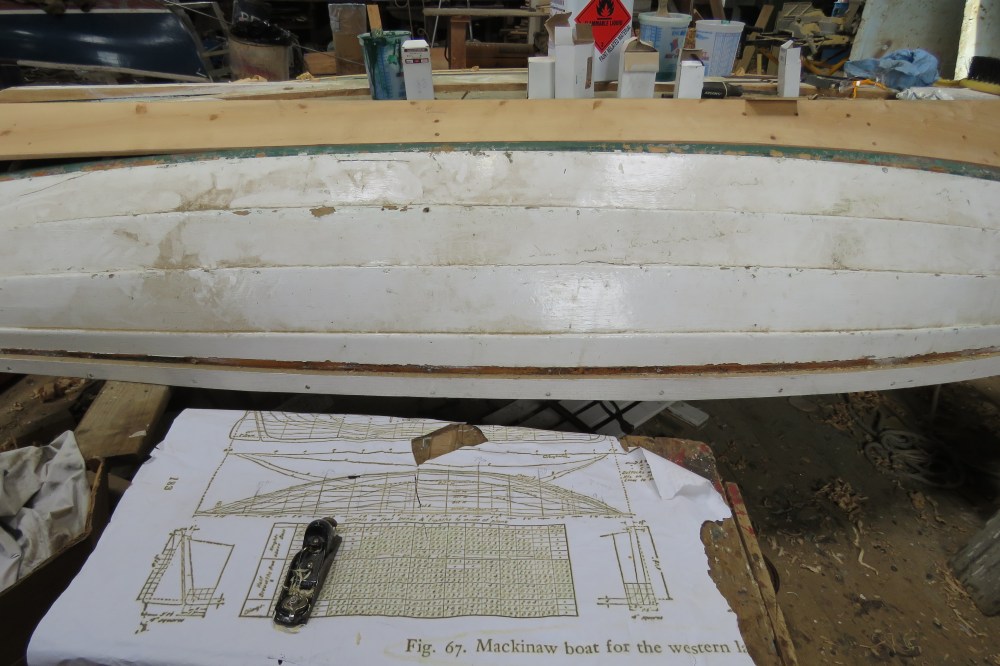
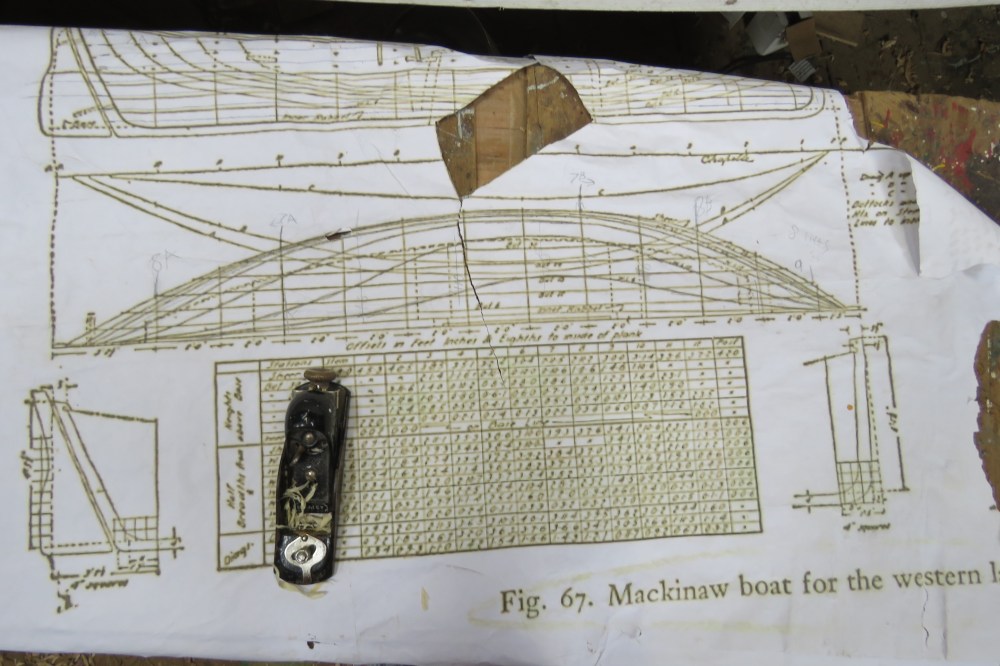
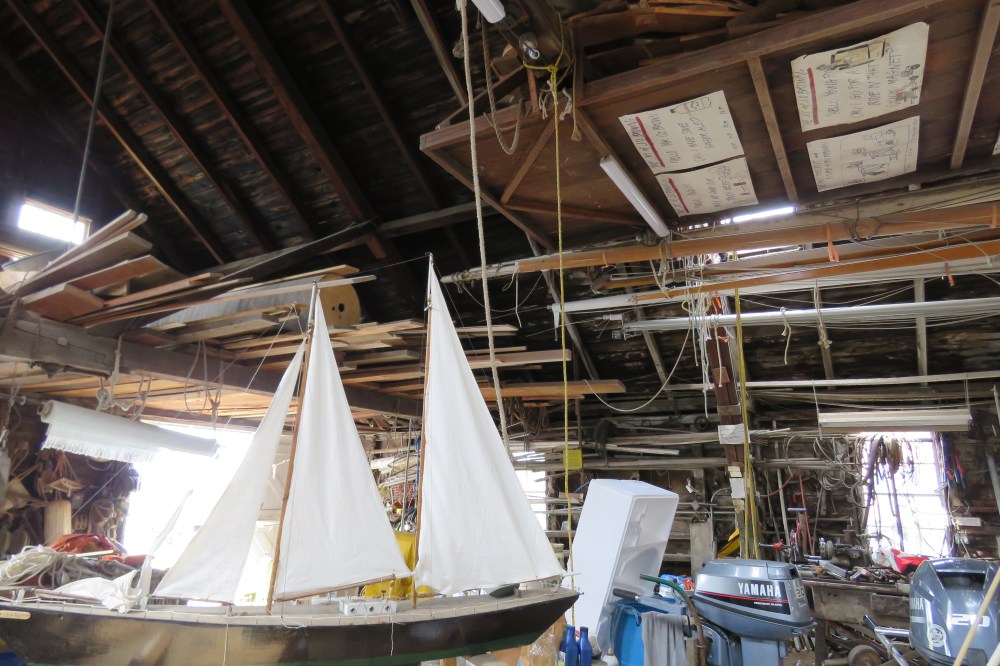
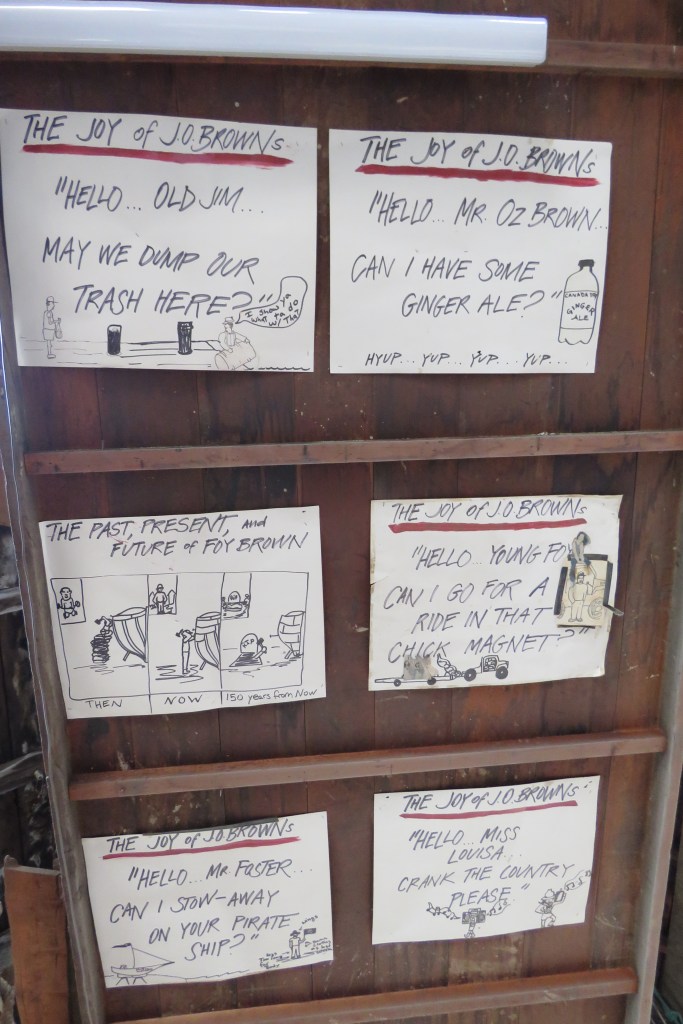
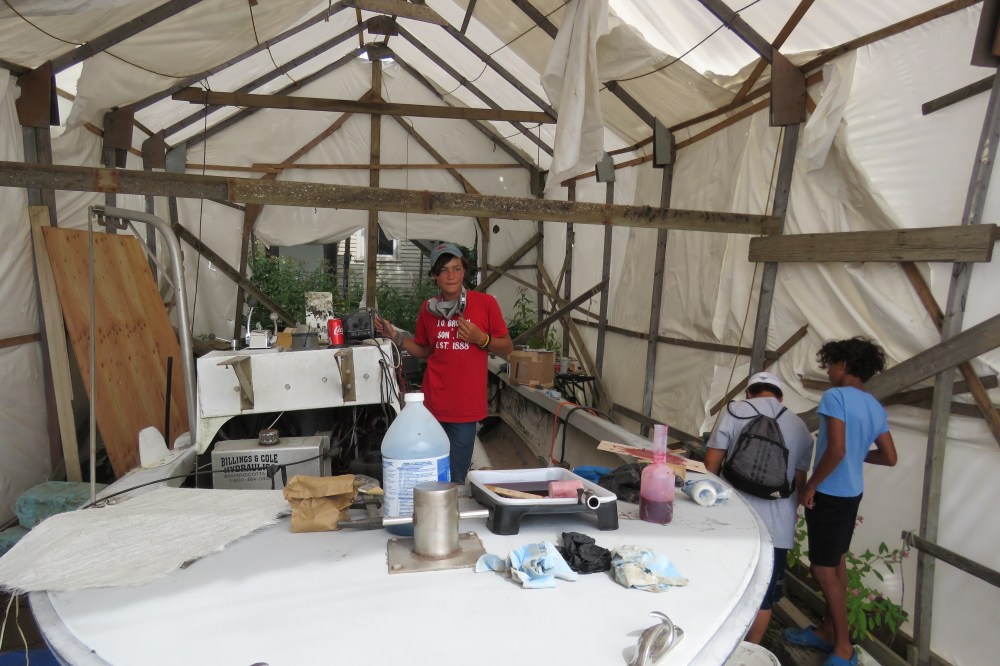
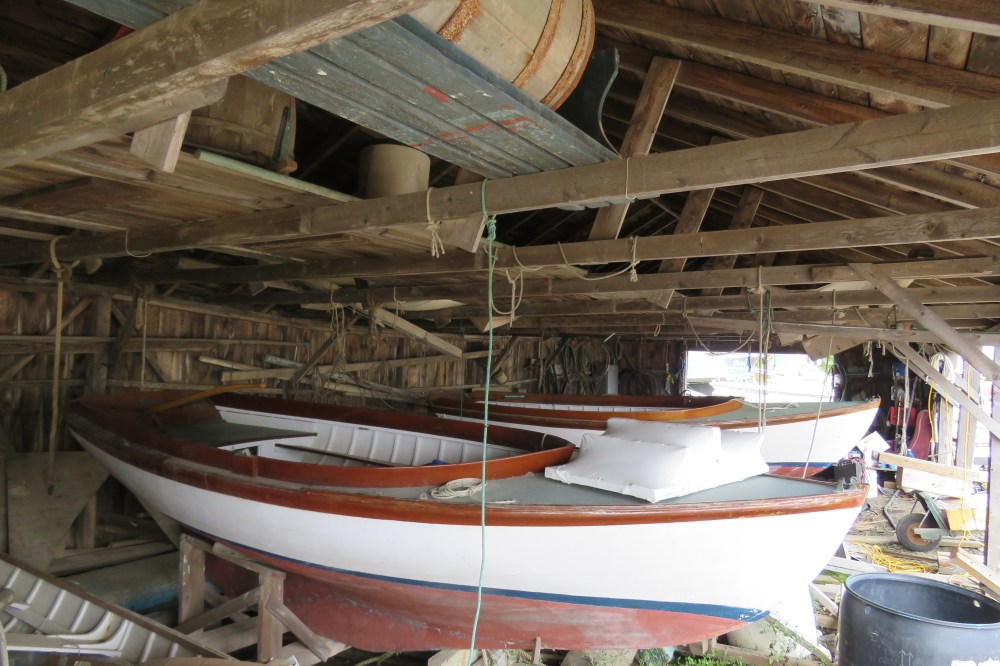
We’re finally ready to leave our home for a week, and with a tinge of sadness we drop the mooring and head over to the yard to fuel and water up—our intention of a week ago—and pay our bill. With $550 for the starter plus UPS and 2.5 hours of labor at $60/hr, we’re glad to be back to square one. We take a self-guided tour of the numerous buildings at the large compound that is J. O. Brown. The place is chock full of all manner of stuff strewn about the shop in what can only be described as complete chaos. And yet, you can just tell that Foy Brown and his son and his nephew and his nieces, like his father and grandfather and great-grandfather before him are enjoying the hell out of working there. And his grandson Silas at age 13 whom we also met is as accomplished a boat builder as anyone there and has numerous boat models in various stages of completion. And the name of his lobster boat? Nirvana.
And as for oil in the coolant? “That shouldn’t harm you any. It might even oil up the water pump!” says Foy.
* * *
And so, because F. O. Brown was out of fuel on Wednesday, and because Will poured oil into the radiator on Thursday, and because our starter didn’t work on Friday, we were in Perry Creek when our starter died rather than Matinicus, which meant Foy Brown was able to travel a mere one mile from his top-notch boatyard to our boat to fix it. And as a result, we were able to meet some of the nicest, most generous people we’ve met all summer!
So once again, three times over, something that seemed bad at the time turned out to be good for us in the end. And who knows, maybe because we were hit by another boat, the insurance claim will exceed the cost of our new starter!














































 Surrender to the Abundance