March 23, 2023
Little San Salvador
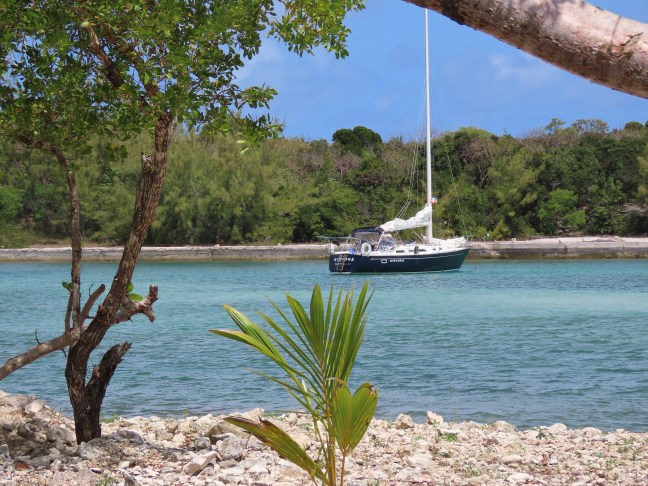
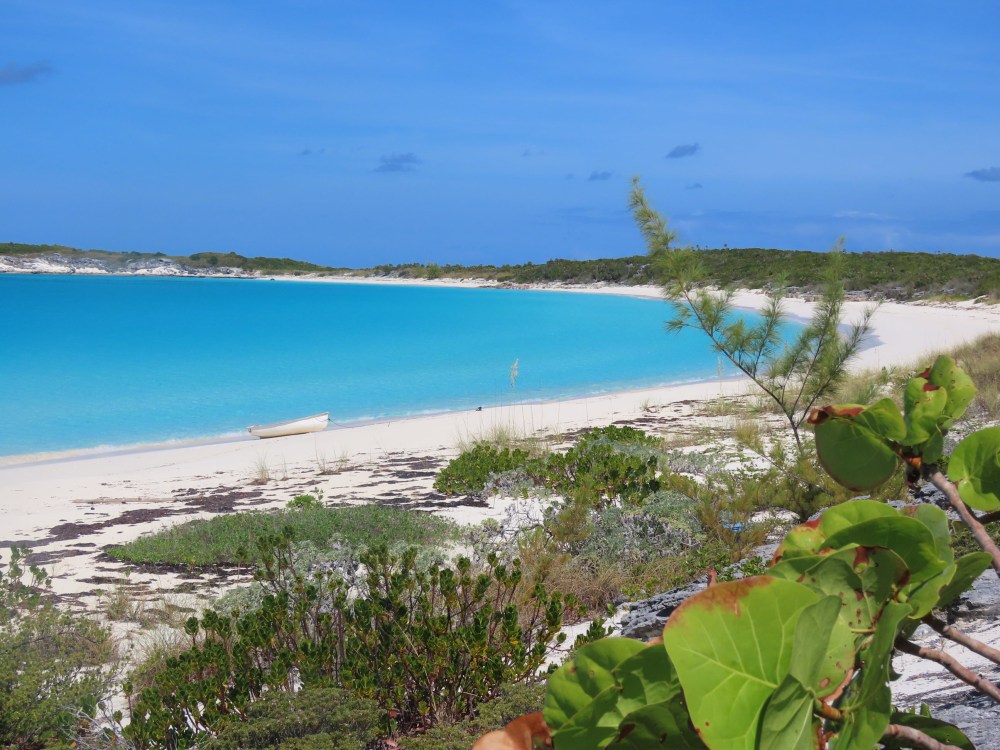
There’s a small island ten miles off the tip of northern Cat Island, a convenient stop on the way to Eleuthera, our next destination heading north. It’s been renamed Half Moon Cay by the owners, Carnival Cruises, but the charts still 6 it by its original name, Little San Salvador. Reading the comments from other cruisers about the place, we were encouraged to stay the night in the wide, open bay after the cruise ship has left for the day and to leave the next morning before the cruise ship arrives. Some rated it highly as a “beautiful anchorage,” and another cruiser said they stopped for a week and went ashore to enjoy the free food offered during the day.
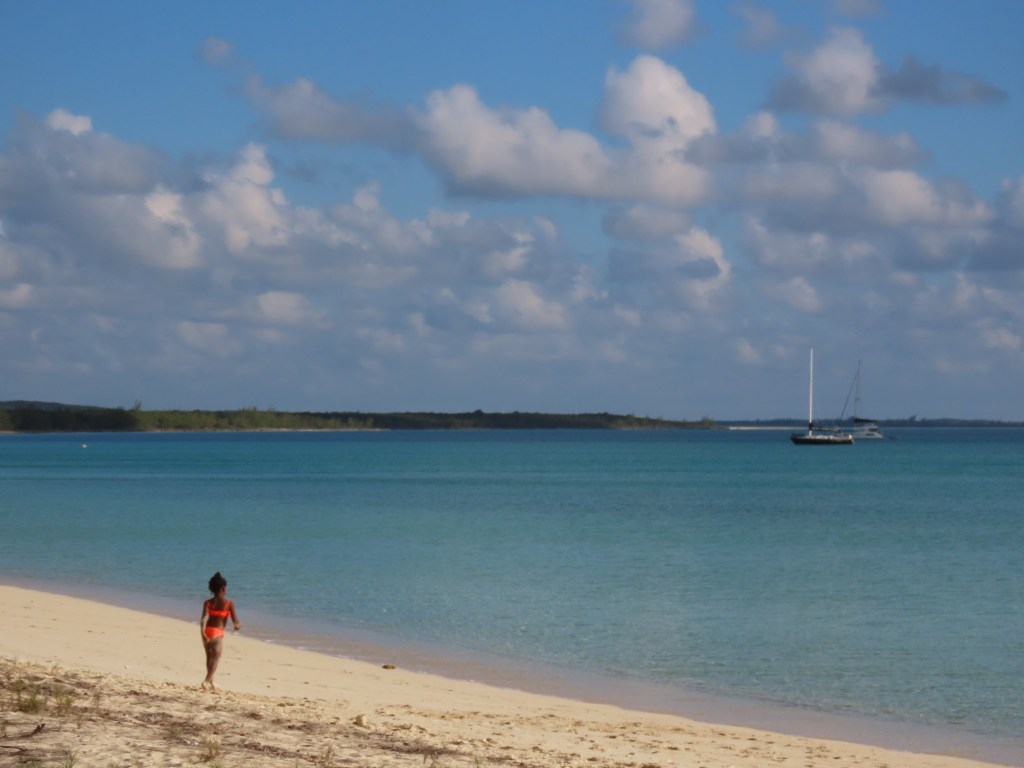
Pulling into the bay, we encountered a “pirate ship” on the beach and numerous beach huts and multi-story buildings. The place was deserted but for a large machine dragging over the long half-moon beach to smooth the sands for the next day’s arrivals. Sure enough, at 7AM a ten-story cruise ship made its appearance and began shuttling staff and then passengers ashore for the land-based activities: water sports, snorkeling, volleyball, basketball, horseshoes, shuffleboard, horse-back riding, hiking, glass bottom boat excursions, and of course, eating. Over the course of the next hour, we watched this spectacle unfold, thinking we might try going ashore and “blending in” to see what the cruise ship experience was all about. By 8AM, we thought the better of it, weighed anchor, and continued on to South Eleuthera, happy to have escaped.
Little San Salvador is 2400 acres, of which the cruise company has developed 50 for its activities, with the stated goal of “maintaining as much habitat as possible for wildlife.” The company purchased the island in 1996 for $6 million and employs hundreds of Bahamians, as is required when foreigners create businesses in this country. From the many conversations we’ve had with Bahamians, most agree that working in a resort means a good, steady income that they would not otherwise have, although some project this sentiment with more enthusiasm than others. From my eyes, I see an army of people of color serving white foreigners and wonder if this might be part of what I’m feeling—a sense of passive resignation.
And there are dozens and dozens of examples of this model across the Bahamas—white, foreign investors creating resorts of one description or another in a country where over 70% of the economy is from tourists, 70% of whom visit by cruise ship. The next largest sector, 15% of the economy, is banking and offshore international financial services, accounting for the most offshore entities in the world!
Needless to say, the cruise ship industry is a BIG DEAL in the Bahamas. So far, this is the first sighting we’ve had of these monster ships, which we saw stacked up like dominoes in Fort Lauderdale and Miami ready to make the crossing. Little did we know that the second cruise ship we saw in the distance that morning was heading for our next stop in South Eleuthera.
Lighthouse Point and Rock Sound, South Eleuthera
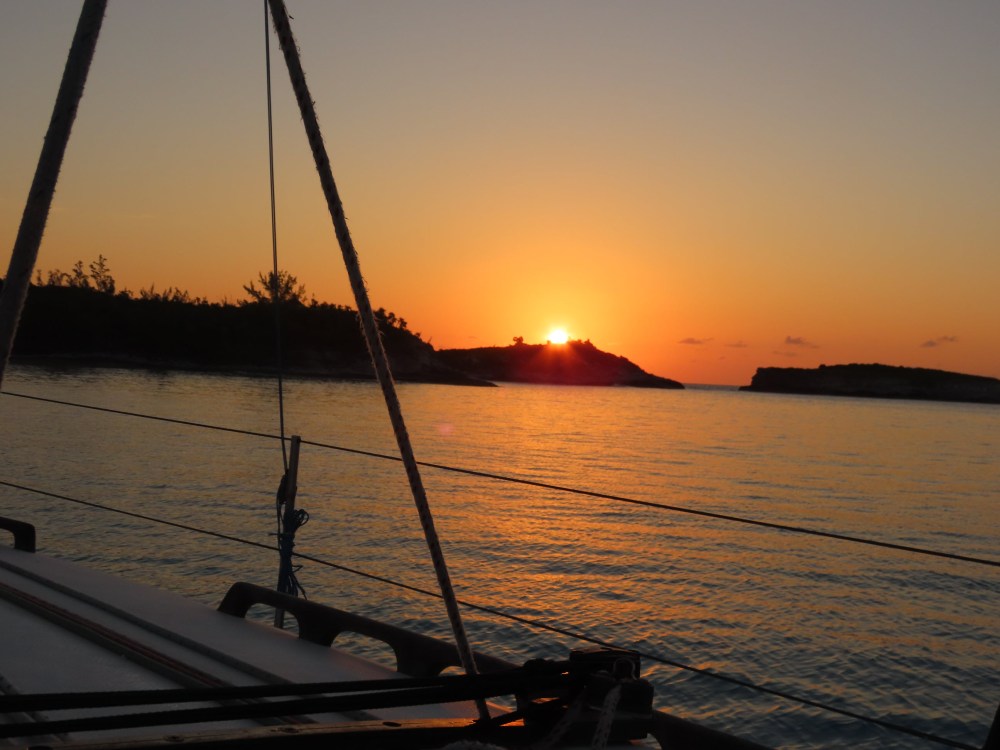
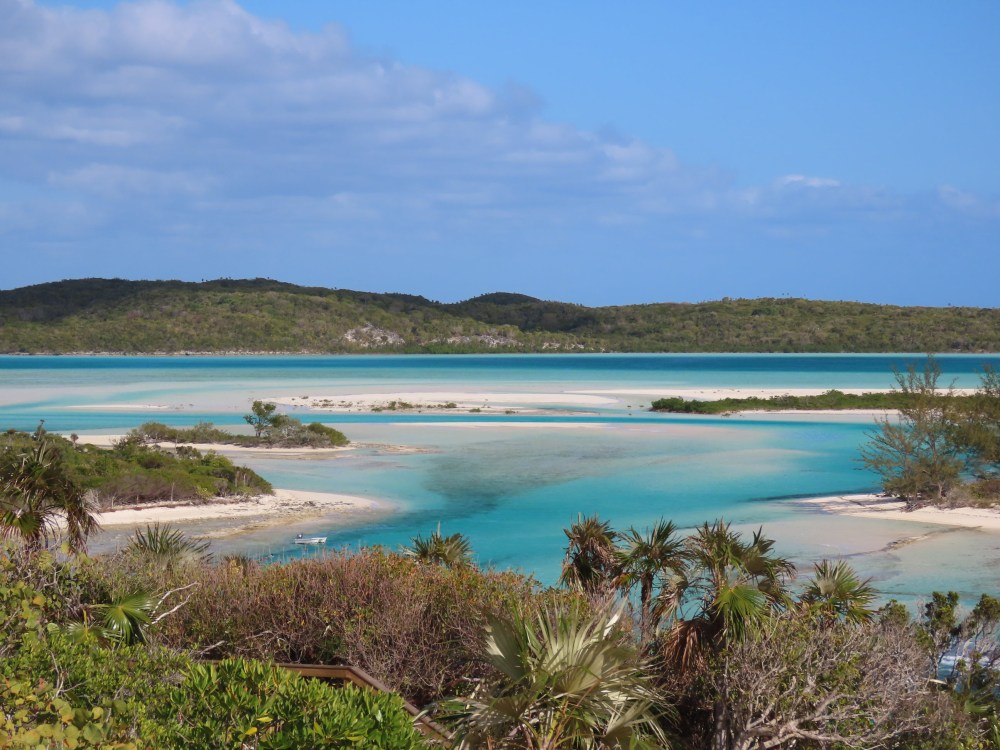
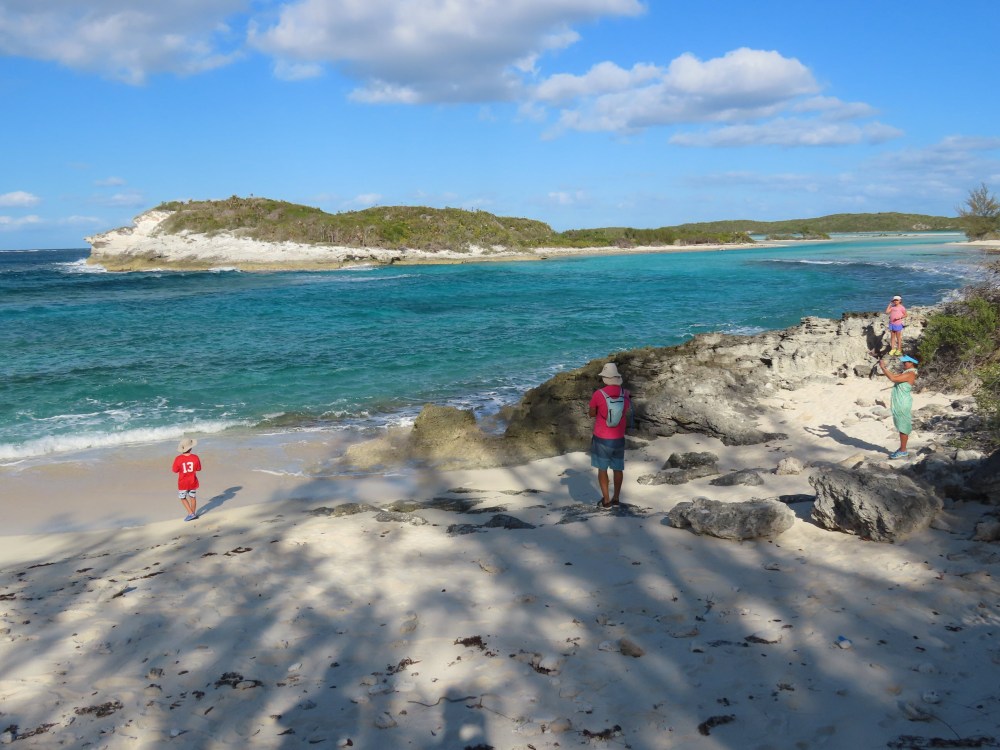
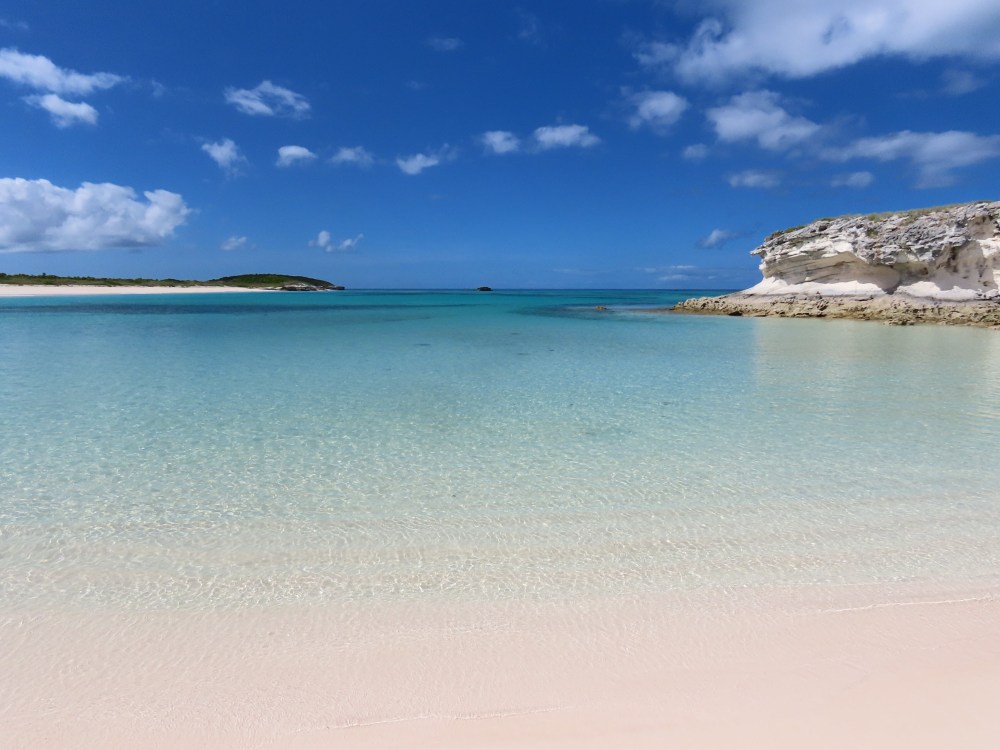
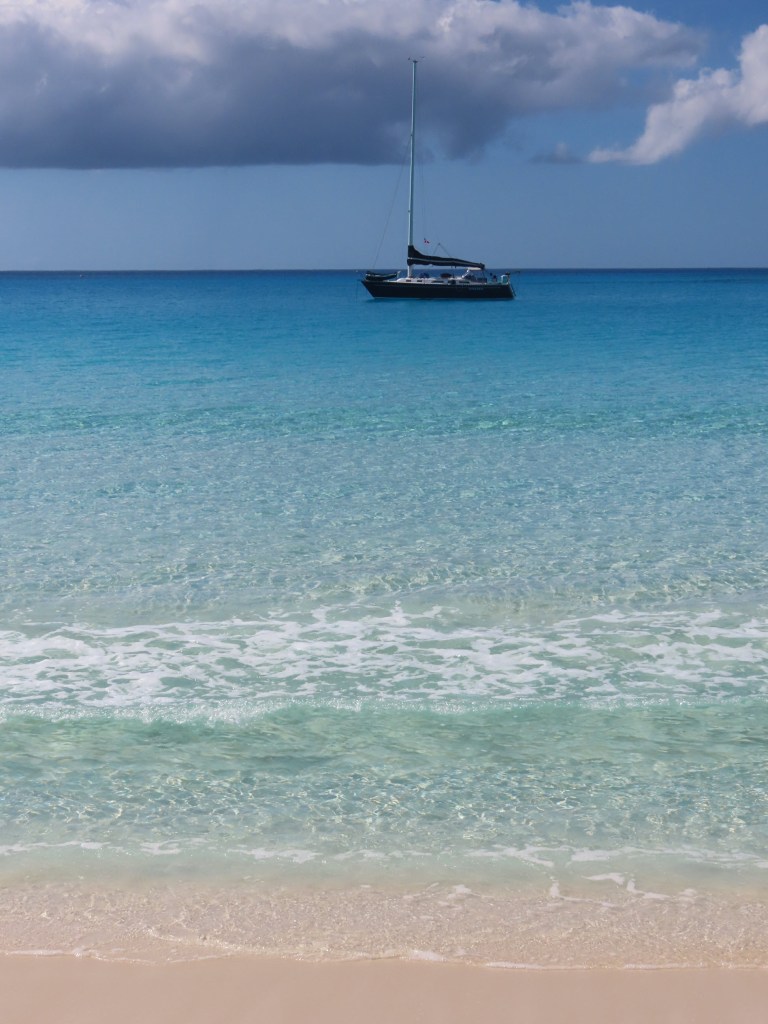
We pulled into the very exposed anchorage at the southern tip of Eleuthera, Lighthouse Point, but with winds from the north, we were protected, and much to our amazement, we were the only boat in the little bay—only the second time so far in the Bahamas. The water was crystal clear, the beach was beautiful, the rocky point was dramatic, and the path up to the light house and beach on the Atlantic side was lovely. With such privacy, we stripped down to our skin and enjoyed a great swim, extolling our good fortune at having found such an off-the-beaten-path anchorage.
The next morning, as we rounded the point, there was the cruise ship from the day before, offloading people in small boats ashore.
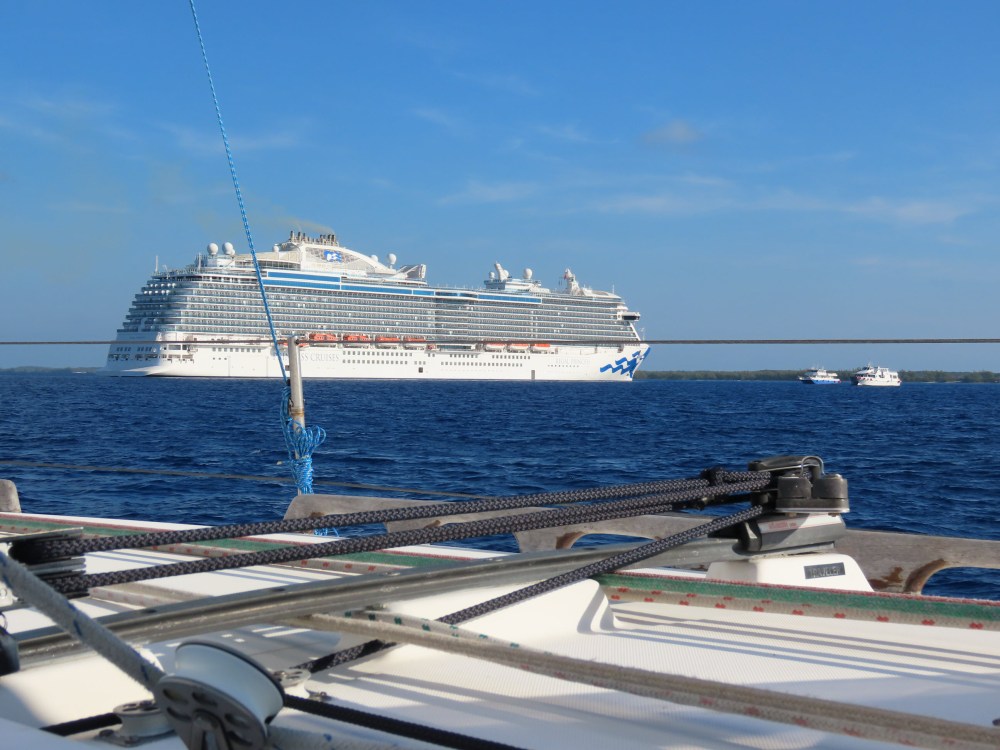
We assumed the long pier labeled “Under Construction” on the chart was being built for the cruise ship and confirmed our suspicion online—Light House Point, Eleuthera is Disney Cruise Lines’ latest development in the Bahamas. Since its purchase in 2019 of the 700-acre property, they’ve created a detailed environmental impact study—which apparently passed muster with the government—hired two well-known Bahamian artists to work with Disney “imagineers” to create an “authentic local feel” to the site (I’m imagining Junkanoo on steroids), and will hire 80% Bahamians, thereby creating 120 sustainable jobs for locals. As part of the deal, they will also donate 190 acres at the tip of the island to the Bahamian government for a national park.
It sounds good on paper, but how could developing yet another waterfront cruise village not hurt the environment, at least visually, if not in percentage of the island begin developed. These ships dump hundreds of thousands of gallons of treated sewage three miles offshore, apparently legally, but regularly dump plastic and food waste overboard, which is illegal. Their response is to receive the fines and simply pay them as part of the expense of operation.
And yet, we too are foreigners who come here on our sailboats for the pristine beauty of these islands and for the local culture. There are no regulations for dumping raw sewage overboard and everyone does it, as there are no pumpout stations like in the US. Who’s to say the Bahamians don’t have it right that creating another resort isn’t the best use of the land for the people?
Anchoring in Rock Sound further north, we asked the woman who worked at the well-stocked grocery store and gave us a ride back to our boat what she thought about Disney coming to South Eleuthera. “It’s terrible,” she said. “I don’t want them here.”
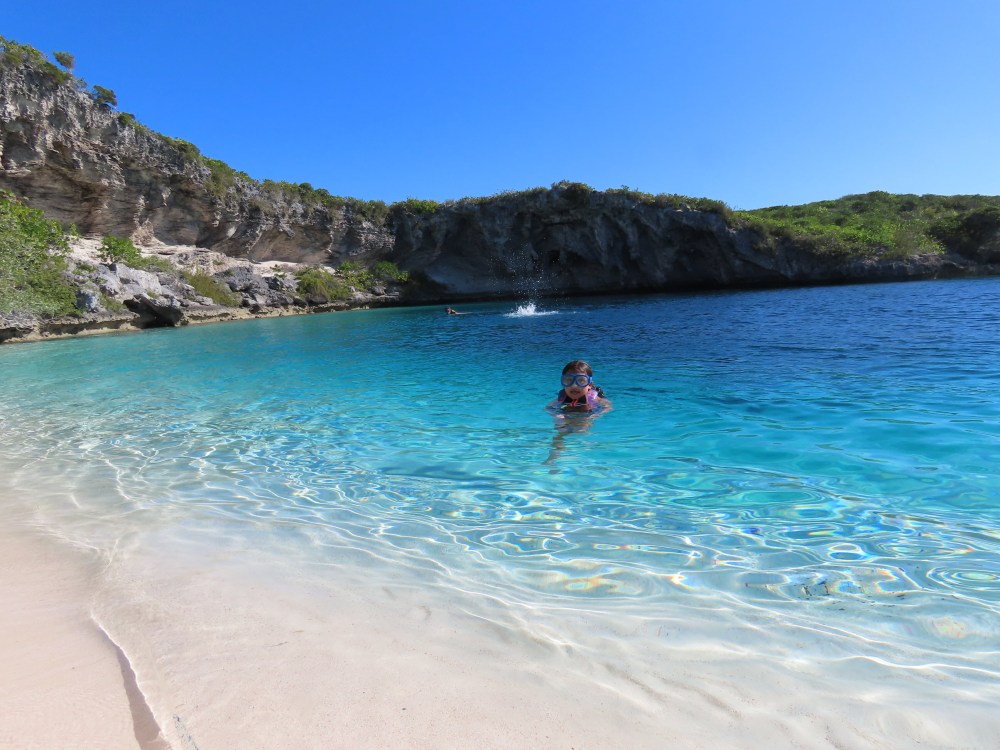
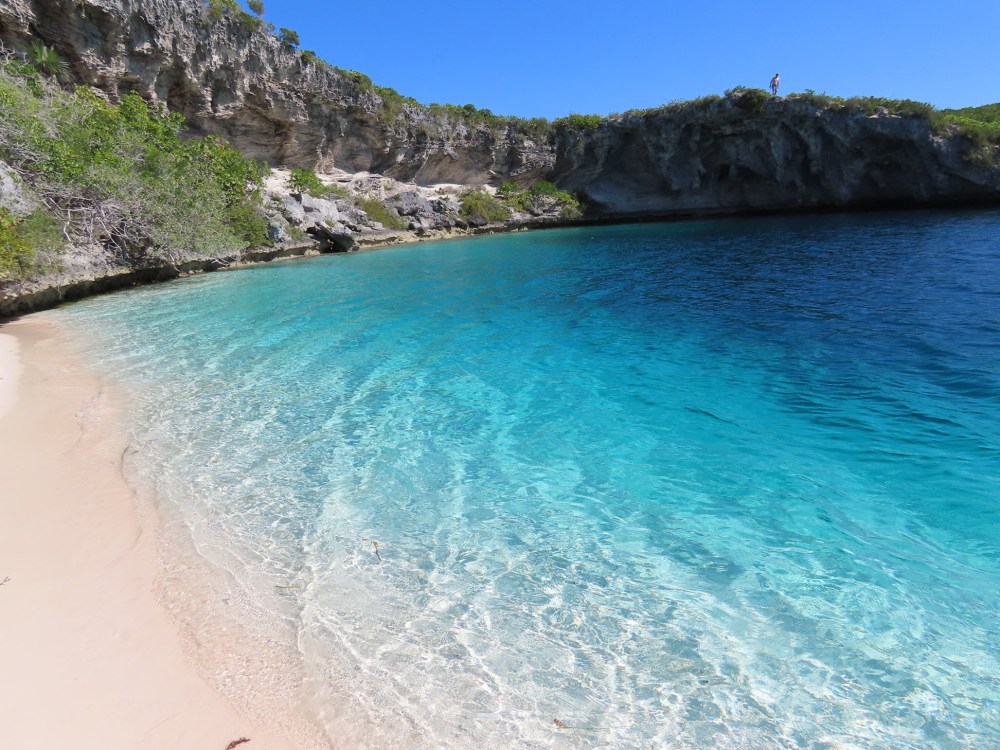
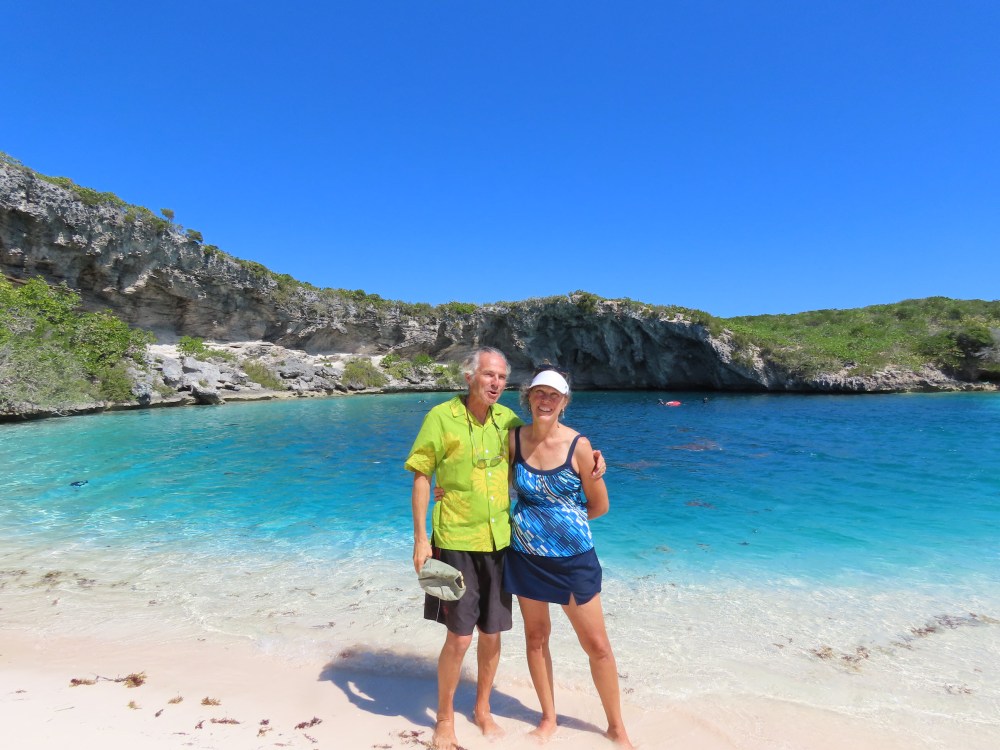
Later, as we wandered around the settlement and stumbled upon the Ocean Blue Hole, we met a youthful, middle-aged woman selling a variety of wares under the gazebo, including a book of fiction that she’d self-published, which we bought and have been reading. Like many people we’ve talked to in the Bahamas—who face the same outrageous prices in the grocery stores that we do. Like many people weve encountered in the Bahamas, she works hard piecing together several jobs to make a living.
“Follow the money” we heard about the One Eleuthera Foundation, a collective for sustainable development that would nix overscale development like Disney’s on the Although this organization has done some good, it seems that they are white people who came in as “saviors” and probably have no more on their mind than developing those same lands for themselves. It would be tricky for any group to look totally clean to locals but, on the face of it, OEF seems a better bet than Disney, given the two track records.
After several days, we sailed north stopping in yet another off-the-beaten-path, and very exposed, anchorage where we were the only boat. The bold rocky cliffs were reminiscent of Maine, and we enjoyed a quiet day in calm waters…until the wind shifted 180 degrees, the waves started rolling in, and a sleepless night ensued for this princess. Motoring up the coast the next morning gave us little respite until the next day when, after a good night’s sleep, I was able to see the world once again with clear, open eyes.
Governor’s Harbor and Hatchet Bay, Eleuthera
On Sunday, singing wafted high from the Methodist church at the head of Governor’s Harbor, where I stopped in to take in the sights and sounds. Later in the afternoon, an outdoor service took over a community gathering spot with a fervor that lasted hours. Each morning, an industrious man and his wheel-chair-bound father boarded their small fishing boat for full days of fishing, even on Sunday. We had spoken just a few words to each other, across bows, when we picked up a mooring the first day, and we were touched when the fisherman gave us a hale wave as we left a few days later.
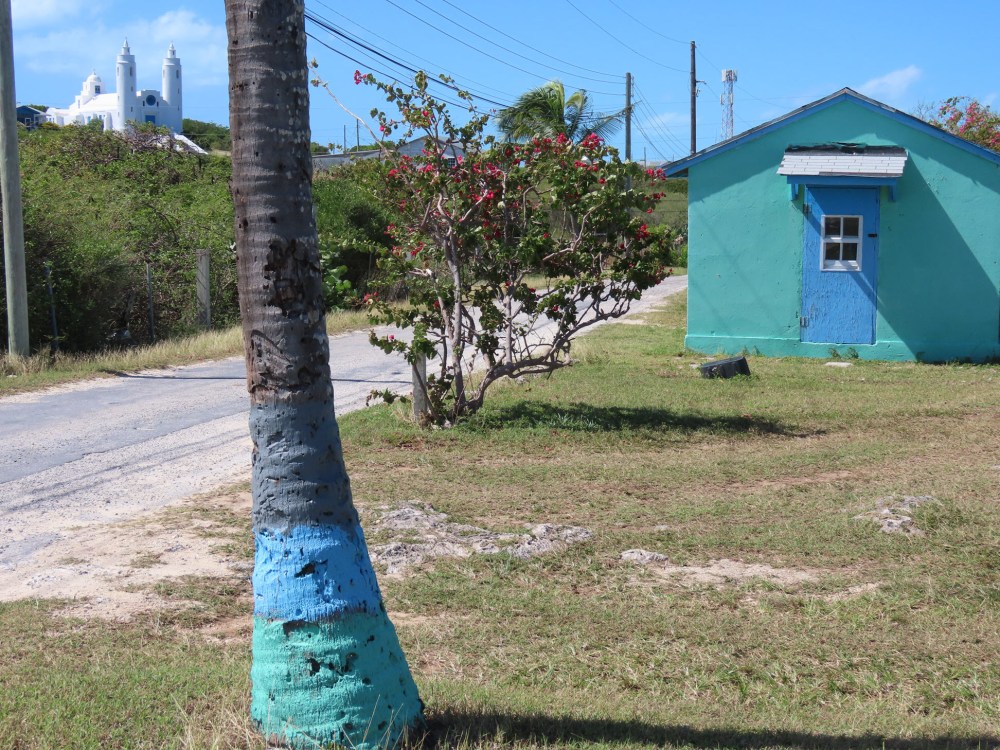
Walking up the hill we noticed a distinct difference to this place: many of the houses were from the mid-1800s, of more stature, and the environment more manicured than we’ve seen anywhere in the islands. It had a distinctly colonial, upscale feel, which was confirmed by Catherine, the Swiss-educated, Bahamian owner of the Buccaneer Club with its Sunday afternoon live music and attached ice cream and gift shop selling fancy women’s attire and coffee table books of Cat Island and Eleuthera. According to her, the visitors to this part of the island are mostly New Yorkers, along with, among others, the Royal Family and Lenny Kravitz, who lives part of the year in the modest home where his grandfather grew up.
As we’ve heard countless times, the Bahamas is home to the rich and famous, as well as the poor and underserved. The writer we met writes succinctly about this slice of the Bahamian culture in her stories that relate problems of obesity, diabetes, teen pregnancy, unemployment, drug abuse, HIV/AIDS, single motherhood, and marital rape. These problems are especially acute in the outer islands where community resources are minimal compared to the urban centers: think health care and social services. That said, her stories all have an upbeat turnaround, which she uses to inspire personal responsibility for making better choices.
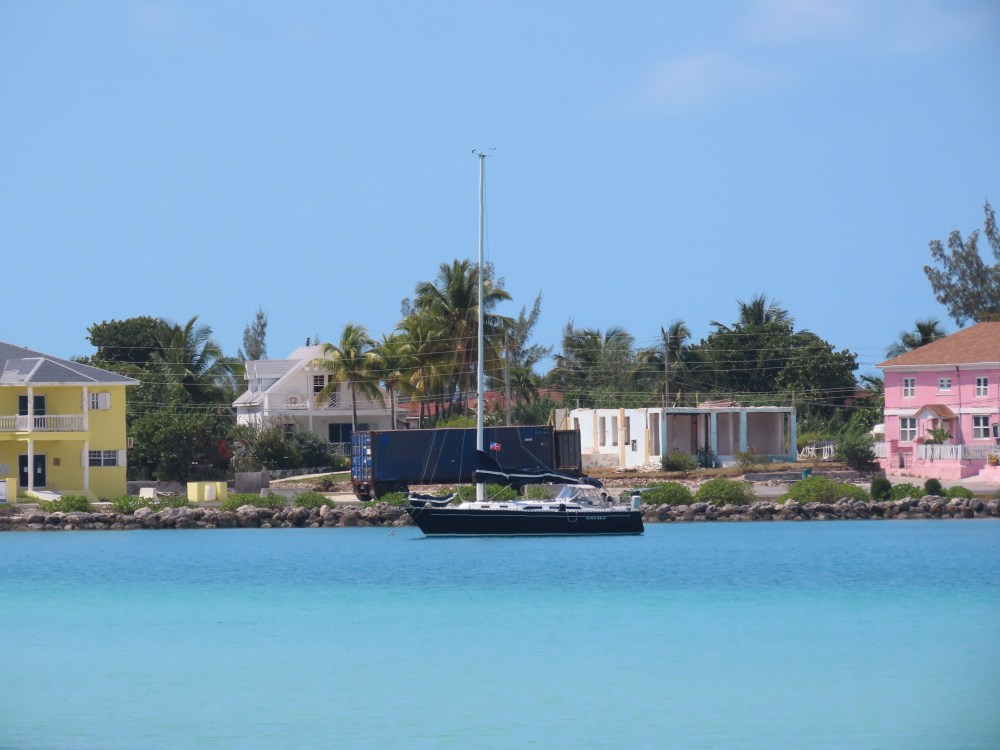






To a lesser extent, the Bahamas is also home to a growing middle-class of hard-working people who find steady work and/or create self-sustaining businesses. We’ve also heard many stories of people leaving for Nassau at a young age where the urban lifestyle provides plentiful work, as well as all that goes along with it—traffic, over-congestion, and crime—then return to the “family islands” where their people were born.
Andros:
“I was a cab driver in Nassau for thirty years. Now I live in my mother’s old house and sell coconuts and vegetables on the roadside to make ends meet.”
“I worked for the Bahamian Government in Nassau for thirty years and when I learned that a position as head of the Labor Department opened up on my home island, I jumped at the chance. I wanted to give back to the community where I was born. Oh, and I have cars to rent if you need one.”
Exuma:
“We live on Warderick Wells for a few weeks at a time, then we go back to Nassau. Here we enforce the regulations in the Exuma Land and Sea Park, which mostly means driving around to boats collecting payments for moorings. In Nassau, as security police, we’re in the line of fire, fighting crime. Who wouldn’t want to come here?”
Cat Island:
“My father started this grocery store, and now we own a small shopping plaza. I’ve never been off the island, and I like it that way.”
“My husband used to work at a restaurant in Nassau, but we came back home to start a small take-out restaurant. It does well enough.”
Eleuthera:
“I worked for Paradise Island resorts for 38 years and came back to Eleuthera to start a small business selling clothing. I should have done it years ago.”
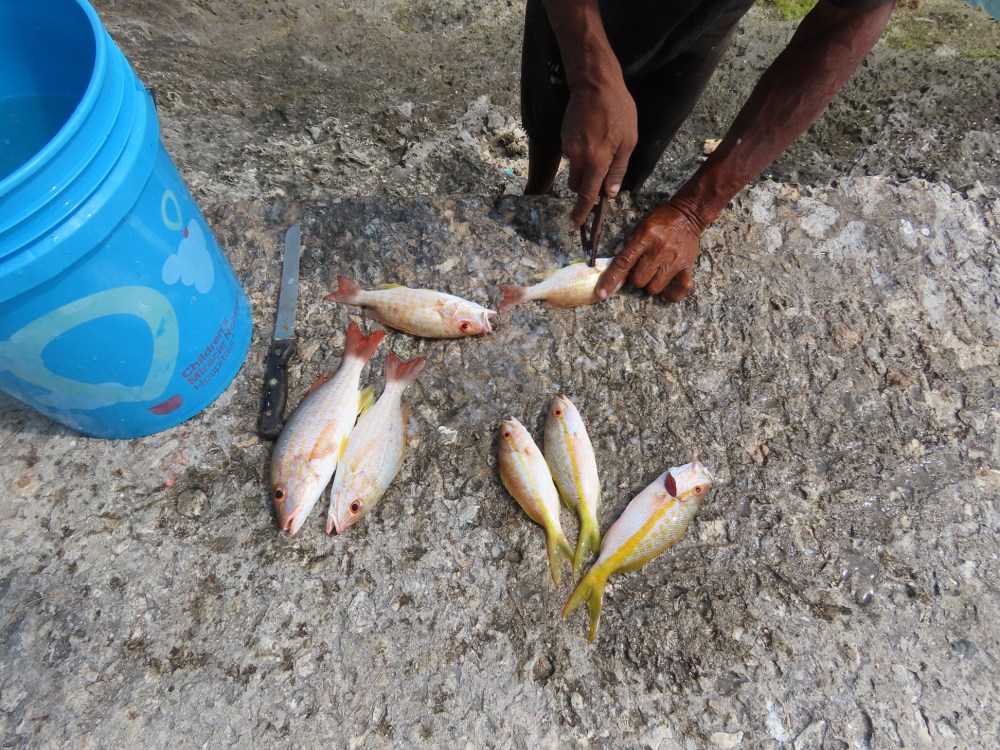
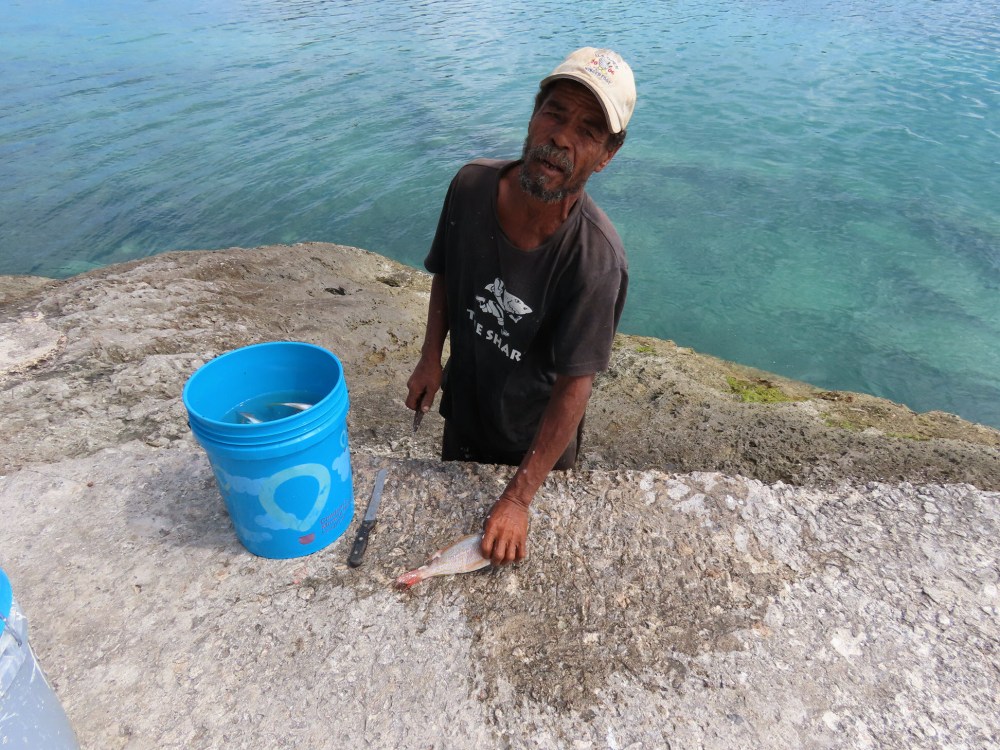
“I’m cleaning these fish for a guy on that sailboat. You can have these four snappers he gave me for ten bucks.”






If nothing else, Bahamians are extremely resourceful, and yet they are deeply dependent on the American economy, one might even say enmeshed—the two currencies are, in fact, interchangeable. For many years, the enmeshment took the form of drug smuggling. Now, legal offshore banking has legitimized all financial exchanges. Americans own much of the property and many of the businesses, and the American government has a large military base as well. Why? The Bahamas has no income tax, corporate tax, capital gains tax, or wealth tax. It does, however, have a 10% Value Added Tax on all goods coming into the country, and as almost everything on the outer islands comes by container ship or plane from Nassau, and almost everything in Nassau has to be imported, the cost of goods is extremely high, often two to three times the cost in the US. It’s a wonder the Bahamians prosper as much as they do, albeit largely on rice and peas, fried fish, and Bahamian mac ‘n cheese; thus, the obesity and diabetes.
A commonwealth of the United Kingdom since 1648, the Bahamas gained governmental independence in 1973, yet it has been deeply interconnected with America and Europe for centuries. Unlike the original inhabitants, of the 400,000 Bahamians who live on the islands today, most are descendants of freed slaves from American Loyalists, who were resettled by the Crown after the American Revolutionary War. When slavery was abolished in the Bahamas in 1834, the country became a haven for freed African slaves from North America and British slave ships. And what of the native people from these islands? The Lucayans, who inhabited these islands for centuries prior to their “discovery” by Columbus, were removed, enslaved, and extinguished by diseases brought by Europeans. And so, the history of these islands is much like that of our own country, except that here, the descendants of slaves actually rule the government, if not the economy, which largely remains in the hands of rich Americans.
Glass Window
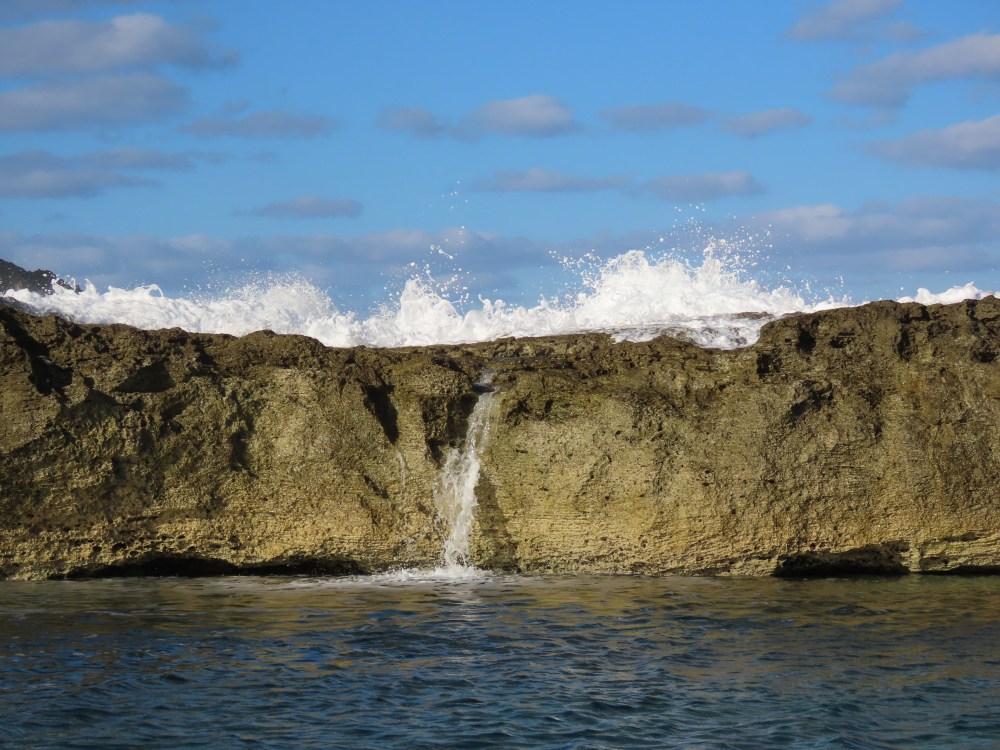
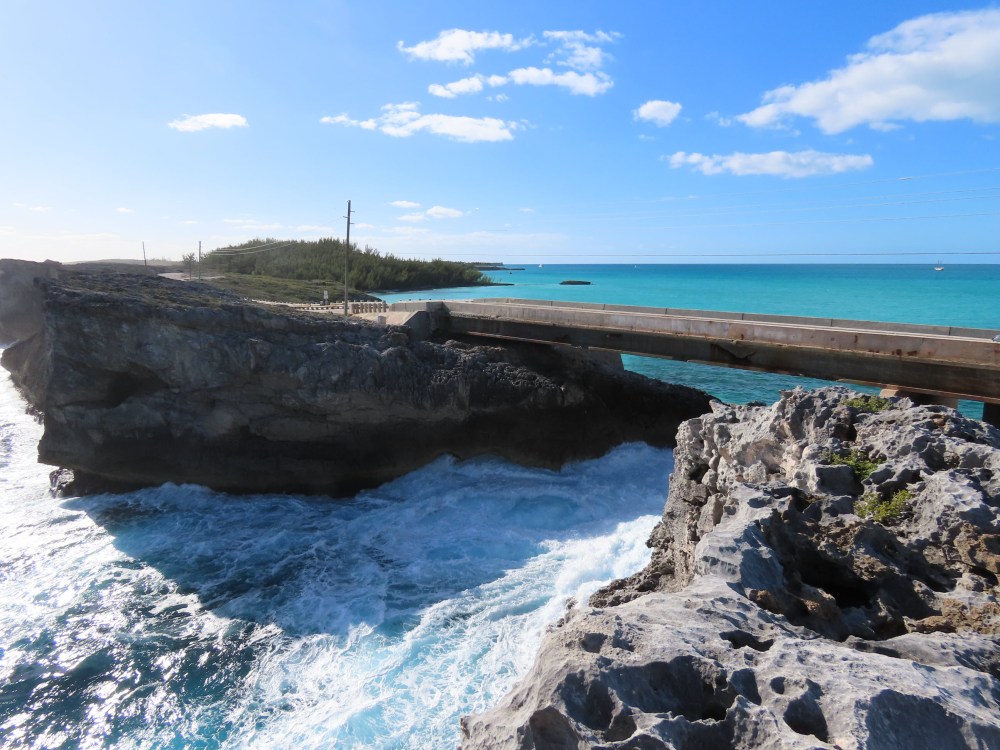
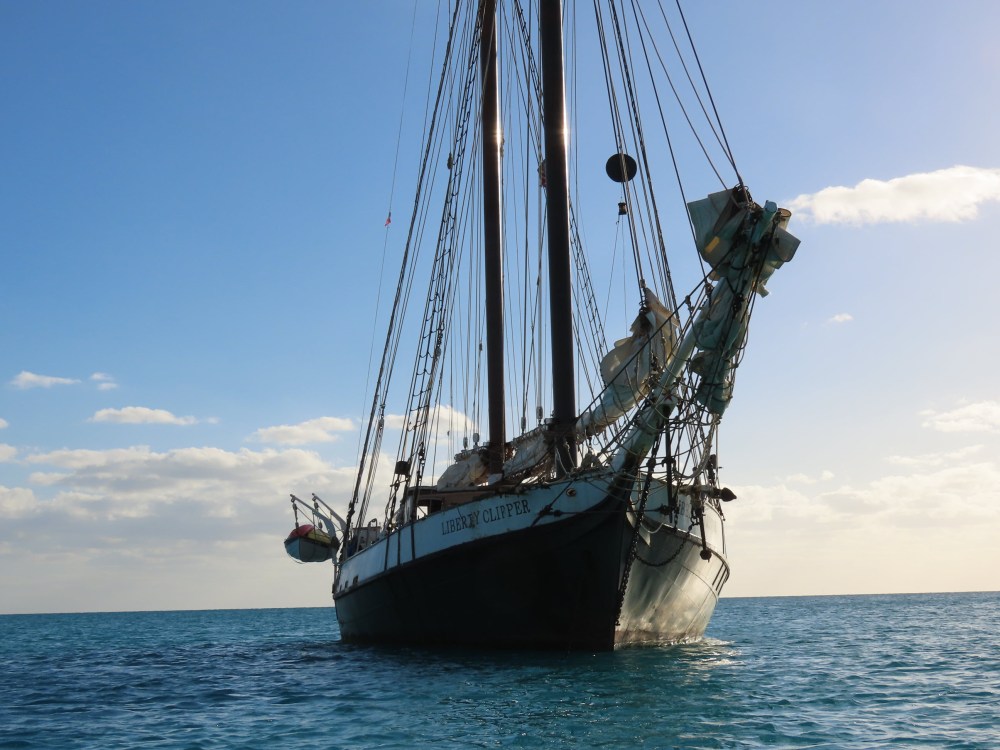
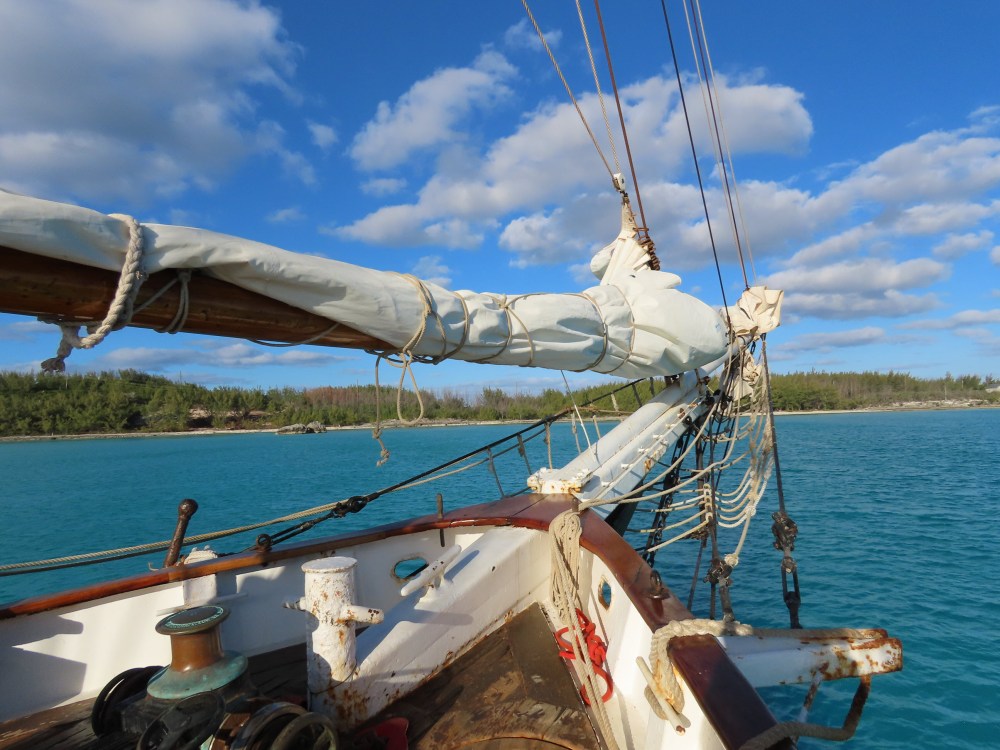
Leaving Hatchet Bay, we anchored off Glass Window, where a very narrow strip of land divides the ocean from the sound, but with the change in tide, the water gushes in and out connecting the two. Much to our surprise, the Liberty Clipper, a 120’ schooner hailing from Boston, was anchored off during one of its Bahamian cruises. Two of the crew were driving around in their large tender and said they were headed over to see the window. As I sometimes do, I asked if we could catch a ride, thereby saving us a long row. With their captain’s agreement, we got up close and personal with the spectacle as the Atlantic Ocean trickled and splashed over the land into the sound at low tide. We also got a tour of the schooner, which is always a thrill and made me nostalgic for Maine, which is swarming with schooners. We also saw the glass window opening from the bridge above, as well as the Queen’s Baths, where the water splashes into high pools above the ocean swells.





Spanish Wells, Eleuthera
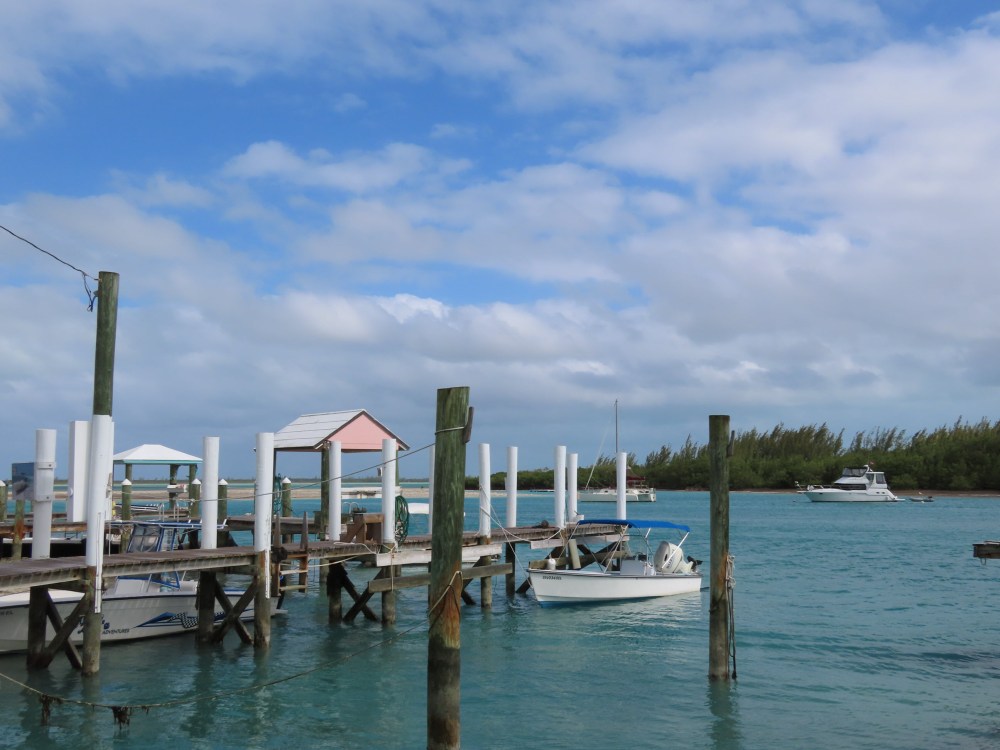
We’ve now visited Eleuthera from bottom to top, landing in the strange, foreign land known as Spanish Wells, where 90% of the inhabitants are white Bahamians and the blacks are mostly from Haiti. These Bahamians have an unusual British-Aussie-Irish-Bahamian accent unlike anything we’ve heard. St. George’s Cay, which makes up one half of the community of Spanish Wells, feels like Coconut Grove in the 50’s with its mostly one-story colorful cement-block house and manicured lawns where everyone drives around in golf carts. While engaging when you speak to them, people don’t say “Good afternoon” in the friendly manner we’ve heard from black Bahamians in the settlements, and they don’t look you in the eye when they walk past. The large grocery store is off-the-charts compared with all the other stores we’ve been in with tons of fresh produce and meats, and a pharmacy department complete with fluorescent lights like in the states. It feels like another planet!


Arriving to seek shelter from the upcoming winds and seas, we learned that all the moorings and slips were full, but someone recommended Kyle Pinder’s dock in Muddy Hole on Russell Island, the other island making up the “harbor” (called the creek) of Spanish Wells. Turns out the main road in town is named after his grandfather, Leo Pinder, one of the grocery stores is called Pinders, and the school is the Samuel Guy Pinder All-Age School. Kyle and his cousin couldn’t have been nicer helping us tie up our boat and giving us the lay of the land. He directed us where to land our dinghy on the other side of the creek, but when we got there, we had to ask someone which dock was his. The guy said, “Kyle Pinder owns half the docks in Spanish Wells, so that doesn’t help!”
Investigating further at the Spanish Wells museum, we learned that white Bahamians arrived here in 1648 after leaving Bermuda seeking religious freedom and were shipwrecked on the Devil’s Backbone, a coral-reef-strewn shoreline at the northern most tip of Eleuthera. One group of freedom-seekers went to New Providence, aka Nassau, and the other settled in Spanish Wells. The inhabitants of the island are largely descendants of these early Puritans—Pinders, Higgs, and Sawyers—along with some later Crown loyalists who left the United States after the American Revolution. In fact, these early settlers called themselves the “Eleutherian Settlers,” which is Greek for freedom. The island has remained largely self-sufficient, community minded, God worshiping, and white ever since.


After a night at the dock, we anchored out in Muddy Hole, which is a little hidden gem—a super-protected opening in the mangroves, as tranquil as a land-locked pond. Despite days of significant wind and rain, many very welcome calm nights and good sleep ensued. Exploring Russell Island by foot, we were offered a ride in a golf cart by a white Bahamian from Nassau who has recently been investing in land on the island; since COVID, the prices have been exploding and he wants in. In fact, it appears that half of Russell Island is for sale and the other half has recently been developed, including a man-made canal reminiscent of Florida to create “waterfront” property for the rich.


In the course of our tour, he told us that Spanish Wells is known as the “white, racists” island, which indeed he was, although he claimed otherwise. I cannot even repeat some of the things he said because they were so offensive. And yet, every once in a while, it’s good to come face to face with people with such extreme beliefs to remind yourself of your own values. Why he chose to reveal his extreme racism to us we don’t know, except that Will especially is extremely good at asking probing questions that get people talking about themselves and their lives. In Hatchet Bay, for example, we chatted with the owner of a small clothing store for an hour about his return home from 30 years working at a resort in Nassau. With each revelation, he chuckled and said, “I don’t know why I’m telling you this, but…” And it’s happened countless times throughout the Bahamas. I guess we are open and curious, and take the time not only to ask questions but to listen to the answers. We’ve found that people love to share their stories as much as we love to hear them; it’s how we get to know a place—by its people.
As we continued on our walk around Russell Island, we saw a sign for a Lutra Sails. Curious about what kind of business a sailmaker has on Spanish Wells with so many motor boats, we called the phone number on the sign. When Lorin arrived back from his run, he invited us into his shop, sweat still pouring off his face. Turns out he mostly does canvas and vinyl work, but not only that, he is the Bahamian National Champion in time-trial bike racing and road racing, and recently won both titles in the same Championship, which has never been done before as riders feel too spent after just one of these. Soon Deann and her two adorable children took me upstairs to meet Skittles, their macaw, a beautiful bird she’d owned for nine years.

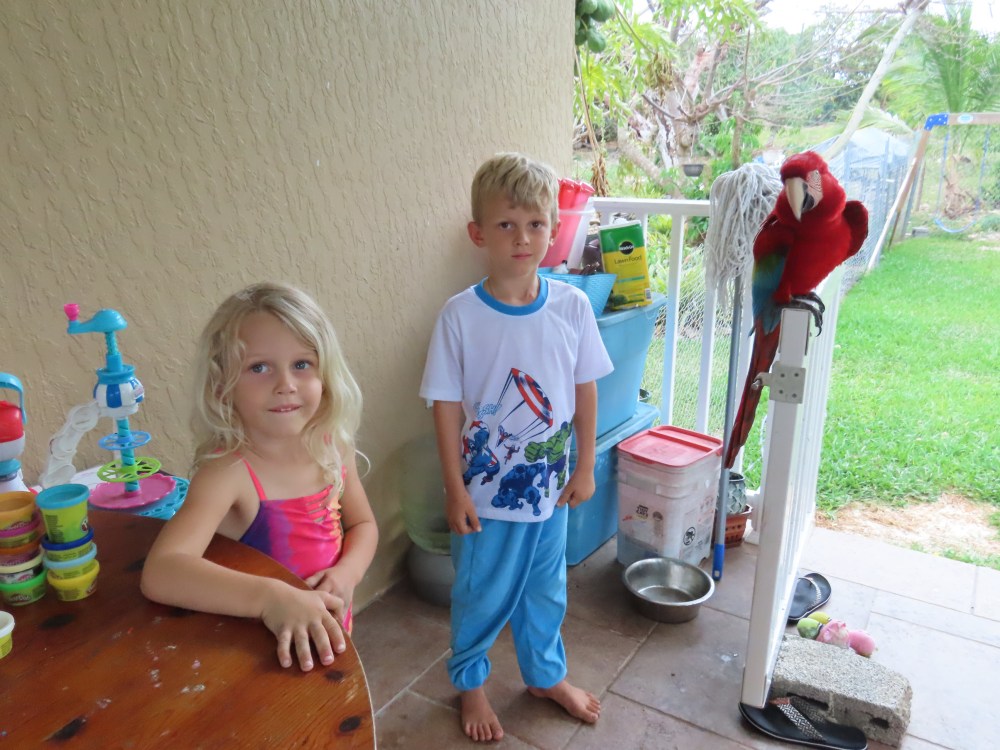


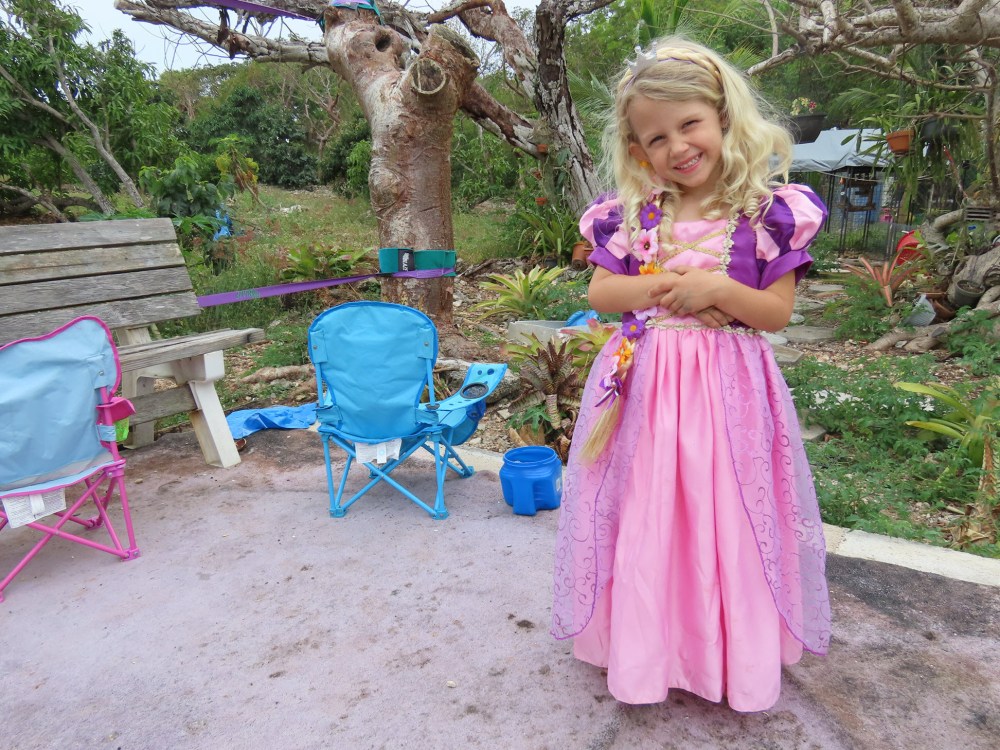

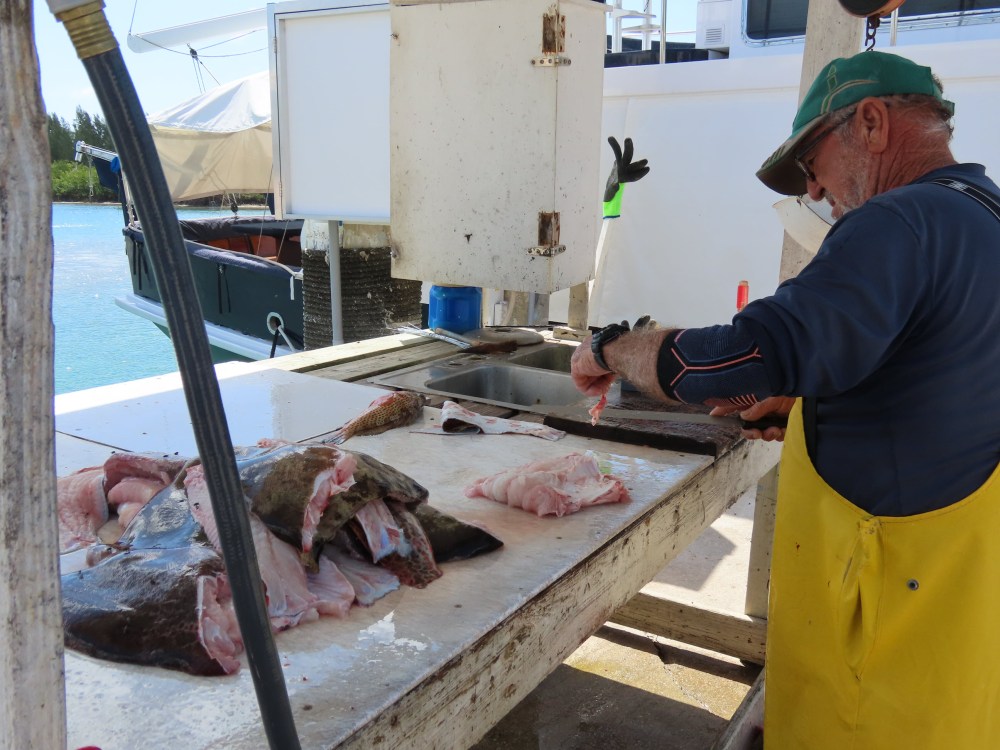
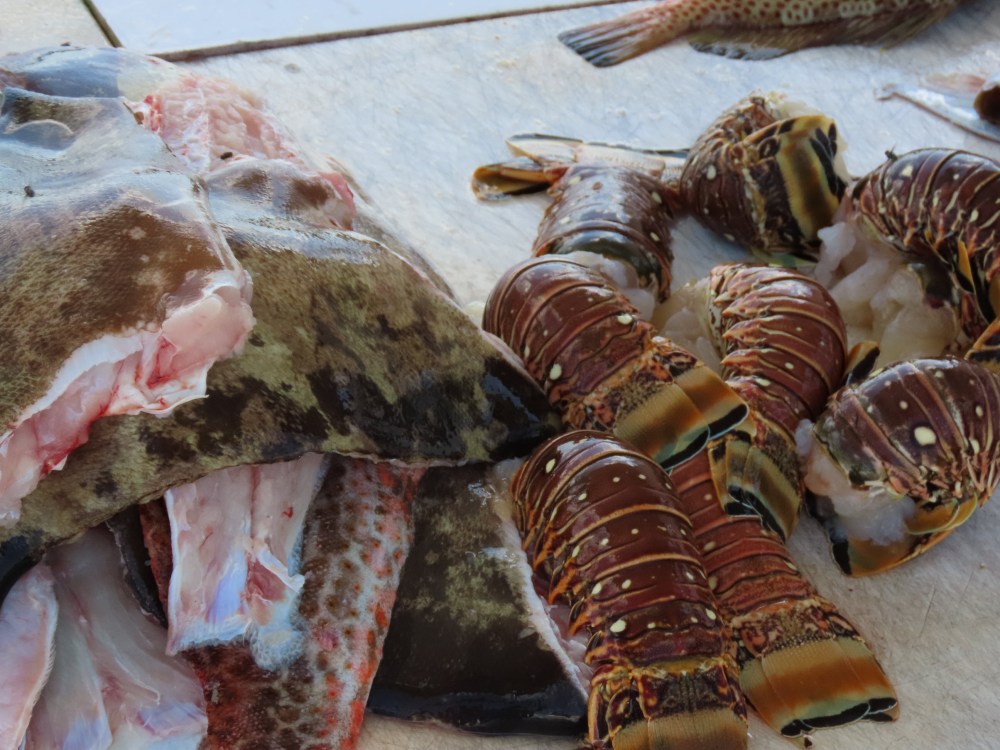
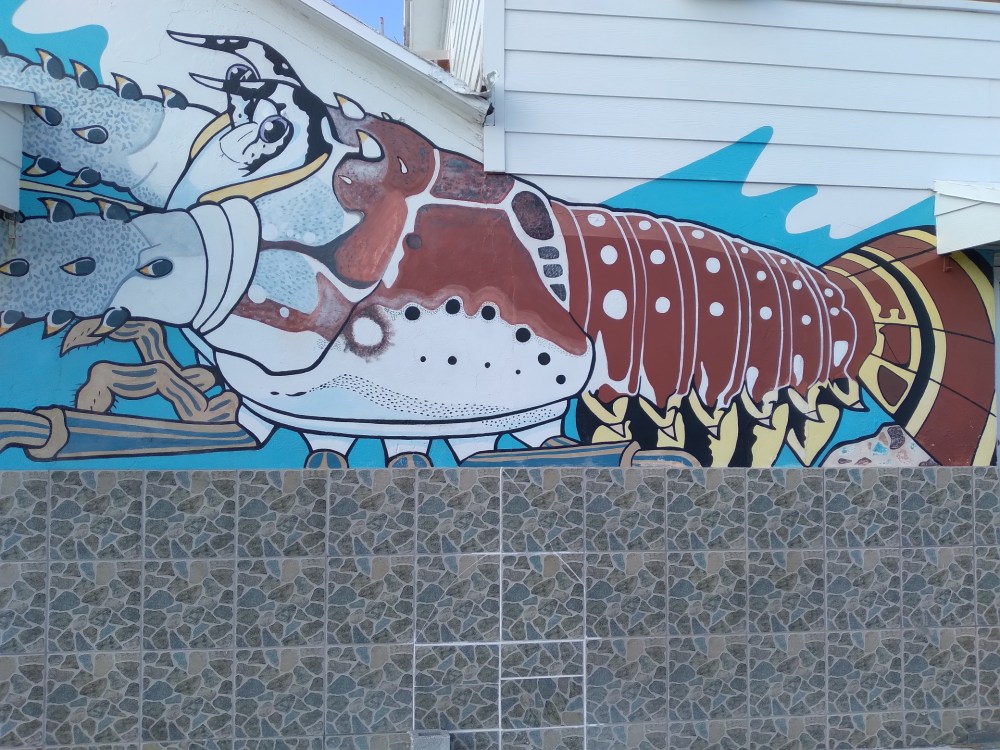
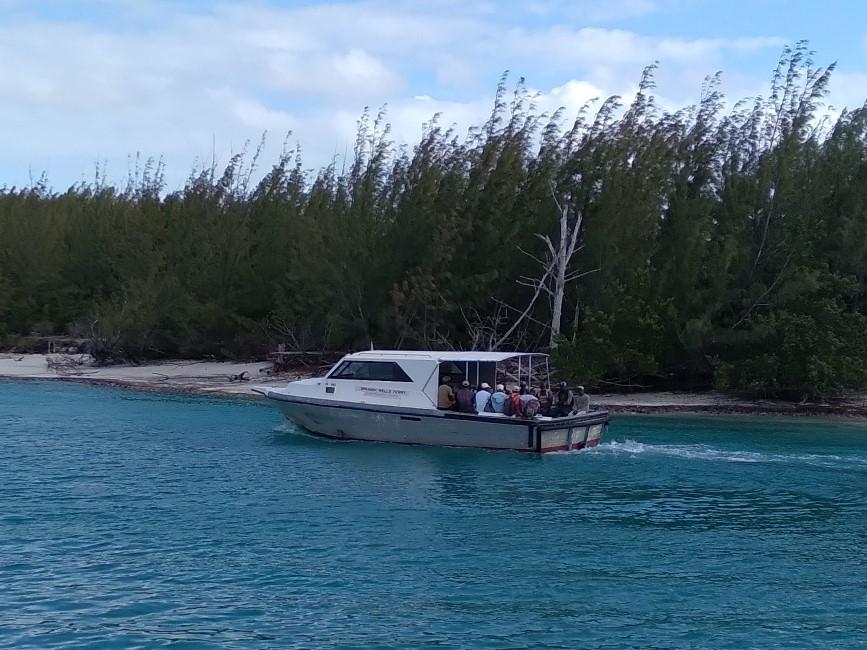
While Leann, the kids, and I picked tomatoes, played marbles, and painted rocks, Will learned about the canvas trade, as well as lobster fishing, which Lorin did for many years. In the 1980s, the fishermen of Spanish Wells devised a form of lobster trap that they call “condos,” which the spiny lobsters crawl under for protection. These “traps” are simply pressure-treated 2x4s with a corrugated tin roof but no bottom. Diving for them using hookahs—hoses attached to air compressors on the surface—fishermen can often bag up to 40 at a time. In fact, Spanish Wells is the largest processor of lobster in the Bahamas, exporting 70% of its catch to Red Lobster in the US. We also learned that fishermen own their boats and earn their pay cooperatively, whereby everyone gets an equal share of the profits—a holdover from the early settlers. Because of the abundance of lobsters and other fish, fishermen can earn up to $30k in three months in this trade, which combined with a booming construction trade means that unlike many of the family islands, few people ever leave. Well, except for the black Bahamians, who are ferried by the boatload back and forth each day from the mainland to work on the island for the locals.



After more than a couple of hours with this delightful family, we returned to the boat with two paw-paws (papayas), a jar of home-made salsa, and a much warmer feeling about the place, especially after our earlier encounter.
From Lighthouse Point to Rock Sound to Governor’s Harbor to Hatchet Bay to Spanish Wells, we’ve covered a lot of Eleuthera, which is the most diverse Bahamian island we’ve encountered so far. Although we are among the racial majority here in Spanish Wells, we feel less “at home” here than in other parts of Eleuthera and the family islands. Perhaps it’s the feeling of insularity and isolation from the rest of the Bahamas that feels so uncomfortable. Or perhaps it’s a sense of racist undertones; it’s clear that the Haitian workers are invisible and only speak when spoken to. Or it could be that affluence has brought about more social “cliques,” evidenced by the relative unfriendliness of passersby that appears to be another striking import in their spiral toward Americianization, which, thankfully, is so much slower in the other family islands.




























 Surrender to the Abundance