. . . and speaking of bookends. . . our last blog ended with us showing up in South Freeport for our community dance, which was where we started back in June . . .
. . . and it is also, sadly, the day my beloved uncle Roland Barth died. You can read his obituary here:
A week later, his extended family and many friends participated in a beautiful memorial at the Head Tide Church in Alna, Maine, the town where he and many of my relatives have lived for decades.
I want to take this opportunity to acknowledge my Uncle Roland by sharing this memory of him, which I spoke at his memorial. Not only was he a lifelong sailor and author of two wonderful books on sailing—along with numerous books on education—he was a great mentor and support to me in my journey on the sea.
* * *
Eight years ago, September, Roland and I sailed Mare’s Tale from Camden to Round Pond. He had just had an episode of transient global amnesia cruising Penobscot Bay with Barbara, and he needed someone to help sail the boat back with him, since he vowed never to sail alone again. I was happy to accompany him on such a long trip as I was actively looking to buy a cruising sailboat of my own. Among the boats I was considering was a Contessa 26, so it was a great opportunity for me to try out the boat. What I didn’t anticipate was Roland broaching the subject of possibly co-owning his boat given his new condition.
We had a delightful sail as we played with the possibilities of co-ownership. As we approached the bar between Hog and Louds at just past half high tide, he asked, “Now what would you have done if the tide had been just before half high?” Being a prudent sailor, I said, “I would have waited until half tide or better.” Right answer! I had passed the test. So now I had to look inside myself to see if what I really wanted was to co-own a 26’ sailboat with my uncle. While I was honored and seriously considered it, in the end, I decided that was exactly what I didn’t want: to co-own a boat with a father-like figure. Instead, I wanted to experience it for myself, which is after all what “learning by heart” is all about. It was very clarifying, and he understood completely. So I took a leap off a cliff and bought a Sabre 28, a boat of my own. And through it all, Roland has been one of my biggest supporters, first as I became Captain of My Own Ship and now, as I craft my own Cruising Rules for my current relationship at sea, living aboard with my partner Will.
In reviewing old emails, I was astonished to find so many from my dear Uncle Roland over the course of owning Maverick solo and now NIRVANA with Will. When I signed the contract on my new boat, he wrote, “Way to go, Tasha! A great vessel at a great price.” Both of our boats now in Round Pond, we bailed each other’s dinghies, and I checked Mare’s Tail’s waterline given a slow leak. After recommending the documentary Maidentrip about a 14-year-old girl sailing solo around the world, he wrote, “You next for around the globe on Maverick?” When I thought I lost my dinghy because I was distracted by a man, he wrote, “Moral of the story: never turn over command of your dinghy…or your life…to some guy!” And after wavering whether to launch one year because it felt too daunting to do it alone and then changing the oil in the engine for the first time, he wrote, “Great to see your hands in the oil, Tasha. So pleased that this little vessel has become such an important part of your life…and to have played a very minor role in that.” More than playing a minor role, he’s been an inspiration.
In 2018, we went on our first Uncle-Niece cruise in Casco Bay, and just after he sold Mare’s Tail in 2019, we went on our second. From his gushing email of gratitude, he wrote, “Thanks for arresting my grieving at not being able to sail my own boat…and providing the leadership and modeling of what a good captain should be.” You have no idea how much that email meant to me, coming from him.
Happy Roland at the Helm, 2019
Having since sold my Sabre and bought a Freedom 36 with Will, we had the honor and great good fortune to have taken Roland on his last sail of Muscongus Bay with Joanna. On that occasion, he passed along his personal copy of Cruising Rules that he carried with him on Mare’s Tale for 25 years, with this inscription, “To captains Tasha and Will, with gratitude for our little cruise, Harbor Island, Monhegan, and the George’s Islands, and in anticipation of new cruising you two will craft together.” There was a moment at the helm when Joanna asked, “On a scale of one to ten, how much pain are you in Dad?” His response: “I’ve got my hands on the wheel and I’m sailing. My pain is a zero.” If I were to turn that into a cruising rule it would be: When in any kind of pain, get out on the water and go sailing!
As I’ve made the transition from life on land to life on the sea, I couldn’t have asked for a more supportive and loving uncle on my shoulder along the way. So I’ve created a cruising rule in honor of Roland, which I shared with him several years ago. For all the sailors out there, perhaps you’re familiar with the misogynist acronym for finding your compass course given true, variation, and deviation: True Virgins Make Dull Company, Add Whisky, Subtract Ethics. Instead, I offer this one for finding your course through life, relationships—on land and sea—and all the chartered and uncharted waters we inevitably encounter along the way:
True Value Manifests Deep Connection, Add Wisdom, Subtract Ego
Our summer cruising is drawing to a close, but there are still tales to tell. . . With a brand-new starter for our engine thanks to J.O. Brown, we were ready to set out once again, this time in search of a pump out for our holding tank. Finding places to do a pump out has been one of the biggest challenges we’ve had all summer. For this reason, we plan to replace our marine head with a composting toilette. The nearest place was Rockland, 12 miles west. After being in Perry Creek for a week, we felt a little sad about leaving, but it was time to move on. We motored most of the way until just past the Rockland breakwater, Will spotted another Freedom 36. We chased it down, took pictures of each other’s boats, and made plans to meet the next day. Tying up to the town dock, we had a magnificent hot shower, did three loads of laundry, and with clean bodies and clothes, went out for dinner at a wonderful restaurant, In Good Company, where we had black truffles on salmon and other delicacies. What a nice change from dinner aboard!
The forecast was for heavy rain and wind, so we picked up a mooring and spent an unbearably rolly night, one of only three the whole trip. Although Will can sleep through pretty much anything, I was up all night. When morning broke, I called the Rockland Yacht Club which runs a launch, and they came and picked us up; it was not possible to row ashore. The launch driver said had he known how bad it was out in the harbor, he might not have come to get us. We spent a rainy day ashore having breakfast with the couple living aboard their Freedom in Rockland, met up with an old friend from Damariscotta, and visited the Island Institute, whose mission is to support the 15 inhabited island communities on the coast of Maine. And they have an awesome satellite map showing all 4000 Maine islands.
After our welcome shore leave, we were ready to go back home to the boat. Next morning, Will did a big shop with the wagon while I lounged, still feeling a bit tired from lack of sleep, and wrote about “home.”
* * *
There are so many “ideas” of home that underlie the word and “feeling” of the word, many of which are fantasies. Does home ever really live up to our ideals? Will it ever? So what happens if we drop the idea altogether? What new possibilities might spill into the open space? How creative can we be in our “architecting” a home that fits who we are? And what feelings might emerge from that space?
About a month ago, after living aboard NIRVANA for two months, I noticed that I stopped using the word “home” when referring to my house in South Portland. It stuck in my throat somehow when I said it, and I corrected myself, in my mind anyway. It’s a place that’s been my home for seven years and felt good as such, with its cherry kitchen cabinets and black granite countertops, colorfully painted rooms, pleasant deck and hanging chair, half-moon bed in a room full of Quietude (the paint color chosen largely because of the name), and all those oh-so familiar objects of one’s life that accumulate through years of acquisition, like birds collecting sticks for their nests, which in the case of ospreys can exist for years. The osprey nest at the mouth of Pulpit Harbor in North Haven is said to have been there for 150 years! The generations come and go, but the nest remains, being passed down, generation to generation, much like an historic farmhouse.
So what does it mean to have a home that is untethered to land, except for the periodic yet regular tying up to a dock? Clearly land is not a necessary ingredient of home, for there, at the other end of the anchor or mooring ball is a magnificently cozy, efficient, and functional living space that is what I now call home. Yet it’s so much more than that. Step into the cockpit and your backyard is the vast sky and water of whatever bay, cove, or harbor you happened to be in that day. Step on deck and your front yard is wherever your imagination and boat are equipped to take you tomorrow. You feel the elements—wind, sun, mist, rain, fog—like you feel the heartbeat of another lying next to you; it’s that intimate. On a boat, you are constantly at the intersection of nature and your capacity to exist within it. When the wind carries you across the bay with the sun beating down, call it love. When the fog rolls in and the raindrops form, it’s just another form of intimacy.
* * *
Our next destination was Matinicus, the most remote inhabited island off the coast of Maine, almost 20 miles offshore. We motored most of the way due to lack of wind once again, where we encountered a huge oil tanker in between naps.
Like all the island communities, fishing is what people do. There are no paved roads and no store. There is, however, a school, a post office, and two small libraries, one adult and children’s. On the sail over, I googled a theater friend named Suzanne who has a house on the island. What came up was the Matinicus Historical Society and her name; turns out she is the historical society. She welcomed a visit, which ended up being a fascinating history lesson of the island, mostly stemming from her distant relatives who were among the first settlers. She told many stories full of intrigue, including shoot outs with Native Americans. After years of visiting relatives on the island, she and her husband bought a house at the intersection of two dirt roads, which turned out to be the very house that was owned by her distant relatives! Not only that but it was the site of the original house from 1763 of her distant relatives, Ebenezer and Susanna Young Hall. Unfortunately, someone on the island had just recently driven his truck into it such that the wall was completely smashed! The police came over from Rockland to investigate, and they managed to track down the culprit, an islander who was driving too fast, drunk, and didn’t take the turn. High drama on a small island to be sure. After hearing wonderful stories and getting a tour of Suzanne’s historic house—which included the same garage toy that Will used to own!—we wandered down the dirt road and met the new schoolteacher, who had just moved to the island with his family to teach six kids, pre-school to middle school-aged, including two of his own. On the row back, we passed the floating lobster co-op where the lobstermen offload their catch, the first we’ve seen. Matinicus was a very special island indeed and well worth the visit.
At this point, it was time to start heading west toward our home port. First stop was 12 miles west to Home Harbor in the Mussel Ridge Channel, where we anchored near Two Bush Light after a beautiful sunset, then moved on the next morning in thick fog.
Next stop was 21 miles west to Round Pond, my home port for many years for my two former boats. It was also the home port of my Uncle Roland, who had the first non-fishing boat in the harbor more than fifty years ago. Roland has since sold his boat and is nearing the end of his life, and we were hoping to visit one last time, but it was not meant to be. Instead, my cousin Joanna, his daughter, spent the day with us aboard after many days with him during his rapid decline. We were so grateful to have had Roland and Joanna on board earlier in the summer before he became too ill to clamor aboard a boat and take the wheel. We couldn’t have been in a better place to be thinking about my beloved uncle than Round Pond. My friend Nancy also came down for a visit, and we had a wonderful long walk around the far side of the harbor and picked up some goodies from Dot’s Bakery, Julie’s Greenhouse, and Granite Hall. We were also lucky to be in Round Pond for the Monday night outdoor music jam, which I used to attend with my ukulele. This time, Will joined in with his guitar with a much smaller, more intimate group that remained after a big downpour sent most people home. The rainbow that emerged was a special bonus, especially under the circumstances.
Another storm was brewing, this time hurricane Larry tracking across the Atlantic with high winds and seas building to 8 feet, so we chose West Boothbay Harbor as a protected place to lay for a couple of days. We motored and then sailed another 18 miles west as the wind picked up and the seas were building. The boat handled wonderfully as we headed to our cozy harbor by the Coast Guard station. Friends keep their Concordia yawl here, and we were fortunate to be able to have Chris over for a glass of wine the night we arrived. The all-day rain meant we had to run our generator to keep our batteries up, only the fourth time we’ve had to do so all summer. We took advantage of the following beautiful fall day to visit the Coastal Maine Botanical Gardens, a 300-acre parcel of highly cultivated land with thousands of varieties of beautiful plants, lovely walkways, a sweet children’s garden, and five twenty-foot tree trolls, created by a Danish artist to cultivate awareness about the importance of trees in our world. Lucky for us, our friend Rebecca came up from Portland to enjoy the gardens with us, drive us to the grocery store, and then take us back to the boat.
We had our longest day of sailing yet—36 miles—from Boothbay to South Freeport in Casco Bay, with great wind almost the whole way for a change. It was an exhilarating sail back into familiar waters, past Burnt Island light, the Cuckholds, Fort Popham, Seguin Island light, Little Mark Island, and into South Freeport, which was our first stop when we left South Portland just over three months ago. Similar to our first stop back in June, we came here to attend Portland Community Dance’s outdoor dance, which was a wonderful way to reconnect with friends. Being here today feels like bookends to our magnificent summer adventure aboard sv NIRVANA, where over the course of three months, we visited 50 different anchorages and traveled over 550 miles!
Now it’s time to transition to fall when the weather will be turning chill. Our plan is to be on our mooring in Spring Point and do some sailing in Casco Bay until Oct 15, when we’ll move with the boat to DiMillo’s Marina in Portland. There, we can plug in to electricity and run a heater and be right in the heart of downtown. We’ll be there until the end of November when we’ll leave to spend the winter in Sicily living on my Dad’s former sailboat!
For the past week, we’ve been up Perry Creek without a starter. The good news is that we could have been up shit’s creek without a paddle. Instead, we’ve spent a delightful six days in a lovely cove only one mile from J. O. Brown boat yard where we’ve had two mobile mechanics and a neighborhood full of friendly, generous people who’ve helped us beyond measure. And the reason we’re here without a starter, instead of Matinicus, a lonely outpost in the Gulf of Maine, is due to a mistake.
Wednesday
Our “plan” is to provision, fill up our water tank, and top off our diesel before heading out to the barren Brimstone island off Vinalhaven and then on to Matinicus, a remote island 15 miles out to sea. Arriving in the early evening, we tie up to the town dock and get a ride from the owner of the store to the well-stocked Island Grocer. Because it’s nearly dark, we motor one mile to Perry Creek for an overnight—right next to our favorite floating tiny house—with plans to motor to J.O. Brown in the morning. Our fuel was only down a quarter tank, but our water was virtually empty. We’d called earlier about fuel availability only to learn that they were out. “It should be arriving tomorrow by boat on the next high tide,” Linda, the office manager said. Good, that will give us some time in Perry Creek, which we’d missed last time.
Thursday
By mid-afternoon, it was approaching high tide, so before motoring across, Will decides to check the oil, which we’d been tracking all summer and chooses to fill it. With confidence, he opens the cap on top of the engine block, which looks like every other radiator cap he’d ever seen but mistakes it for an oil fill and starts pouring. After a few seconds he remarks, “That’s weird. It’s already overflowing.” I know right away something isn’t right, so I ask, “Which cap did you use, because there are two.” Indeed, he had put the oil into the radiator cap instead of the oil fill! My stomach does that somersault it does when something I imagine to be disastrous happens. I say nothing and take the news with great equanimity.
Will immediately acknowledges his mistake and starts sopping up oil with paper towels. He gets on the phone with Alec, the wonderful mobile mechanic who came on board in Belfast to replace our solenoid. He suggests using an oil absorbent pad as the oil should be floating on top of the coolant. He says that he could come out on Tuesday to drain the coolant but meanwhile, if we could remove most of it, we’d probably be fine to motor over to J. O. Brown and have them replace it. We call the boat yard and tell them our problem, and wouldn’t you know, a couple hours later, a guy shows up from the yard to have a look. He says the same thing and tells us Foy Brown would be around tomorrow to help us out. Good, not a disaster and we have a “plan.”
Meanwhile our water supply is now super low, and we are washing dishes in salt water, so I suggest rowing over to our neighbor boat and asking if they might spare some water for our tanks. They are more than happy to accommodate, bringing us two deliveries of five gallons each, along with an extra oil absorbent pad. Rick and Valerie couldn’t be nicer, confessing that he too had done something similar in years past. With some water and a plan, there’s nothing else to do until the next day. To Will, it’s a defining moment when Tasha, instead of slouching into moroseness suggests that we smoke some pot and go for a hike
* * *
The beautiful, rooted staircases and pine needle gravel-filled paths that perfectly match the contours make every step sublime. Encyclopedia Brown and Harriet the Spy have their moment in the sun at the overlook, first wondering if the buttoned-up dandelions had yet to deliver their wispy seeds to the wind or not. Given the season and the barren granite, where would they alight? Picking one apart, we witness them getting swept off rock faces to bumble along. The inch-long wisps culminate in a seed—a kernel (that is, “a kernel of truth”)—quintessential–as in the found example where every single corn-silk wisp manages to break away with the tiniest sliver of seed at the end. Did the DNA replicate so well that the barest paint-thin shaving is enough?
And on to the pinecone, hypnotizing when viewed from the top. Does Fibonacci matter? Sure, there are natural growths that display a perfect Fibonacci ratio, the nautilus shell, for instance, as it grows at every single tangent of its spinning out. But what about less-rigorous pronouncements, the plant parts or patterns that aren’t exactly 1.382 times the previous one? Here we recognize the power of an “idea” that we then want to “see,” regardless of the proof to the contrary. For me (Will), it is enough that Fibonacci works even once; it’s not necessary to do more. The other innumerable growth patterns may one day get their day in the sun—or maybe we will “get over” ourselves and quit trying to “classify” and reduce—or try to anyway—nature to something it really isn’t.
* * *
On the last leg of the hike, inspired by all the fairy houses we’d seen on the way in, I exclaim, “I want to build a fairy house!” A hollowed out birch bark cylinder appears tucked between two trees. The question is whether to leave it where it is where it probably wouldn’t be seen or move it closer to the trail. After some inner debate, I decide to move it and then set to decorating the top with moss-covered bark and laying sticks along one side to form an outdoor porch. In front of the opening is a bright red mushroom, and I place a yellow fungus-covered stick in front as the other portal. Will suggests putting a large rock inside, which I do and then switch into engineer mode wondering if I need to make it more structurally sound. “Build from your eight-year-old self,” he suggests, and I switch back to that mode finishing off the house with a minimum of adornments. We riff on the architectural elements of two other fairy houses we see in a clearing, wondering whether adult or child was at play when building them.
Yes, it is quite an outing! Needless to say, we’re no longer worried about the oil issue.
Friday
With most of the oil removed, we get an early start to motor over to J. O. Brown. I push the start button, once and get a little cranking, twice, a little less, and a third time, nothing. We check the batteries which are relatively low without much solar giving them a charge so early in the morning, so we run the generator for half an hour and try again. This time, we get absolutely nothing pushing the starter button.
Rick on the neighboring boat notices our troubles and hails us asking if he can help, so I row over and tell him of our plight. Fifteen minutes later he arrives, tool bag in hand, ready to help, along with yet another five gallons of water. Knowing more about these things than we do, he climbs down into the lazarette and tests the power to the solenoid, which is fine. He then takes a large screwdriver and holds it between the two terminals on the solenoid, bypassing it to send power directly to the starter. Nothing. We also notice two lose wires which he tries connecting. Nothing. Then he tries attaching one end of a small jumper cable to the starter and the other end to the engine block. Will questions it in his mind as he does it. Poof! Smoke comes pouring out as the wire melts, at which point he says, “Well, I’ve reached the end of my knowledge.”
Before departing he asks, “I don’t suppose you have Nigel Calder’s Mechanical and Electrical book on board?” “We sure do!” I say and tell him he’s a friend. We then spend another half hour pouring over his troubleshooting section and learning the steps to debug the system, most of which we’ve done. The net result is even though it’s rarely the starter, in our case, that’s what it points to. We called J. O. Brown once more to tell them of our new, more pressing issue. Linda says she’ll pass it along to Foy.
Meanwhile, Bunny rows by and we chat her up about living aboard, which she and her husband Bill have been doing since 1994, mostly in the waters around Turkey and Greece. She too offers to bring us some water, which we graciously accept. “Do you need anything else? Food? Wine?” she asks. Will says, “We could always use bacon. Just kidding.” Next thing you know, there’s Bunny, water and bacon in hand! Nothing more to do but go for another hike, this time to the summit, where we have a magnificent view over East Penobscot Bay to the Camden Hills. A bit of exercise does us a lot of good after all this waiting around.
Saturday
We wait on board to hear from Foy, hoping his schedule isn’t too full to get to us. Evan, the tile guy from Vinalhaven comes by in his Boston Whaler wanting to chat. He often comes to Perry Creek on the weekends to see where all the boats are from and get to know people. He too asks if we need anything, and we say, “Well, since we’re probably going to be here for another couple of days, we’d gladly accept some more water.” He says he’ll bring some out tomorrow.
We meet another lovely couple on a wooden boat he’d built himself and whom we’d met on Swan’s Island at the music festival. We chat people up as they come in and the harbor fills up with a dozen boats. Late in the afternoon, Foy shows up to have a look. He performs the same tests Rick did only in about ten minutes with the same results. He then removes the starter to have a look and learns that it’s only spinning in one direction instead of both. “It’s toast,” he declares. OK then! “I can probably order one for you on Monday, get here on Tuesday.” Alright then! We have more of a plan. We continue to wait.
Sunday
In the afternoon, Bunny stops by with yet another gallon of water. Happy to engage with “someone other than my husband,” she stays a while to chat when Evan comes back with three five-gallon containers full of water, and we invite him aboard as well. A super friendly gadfly, Evan tells us about the various social circles on Vinalhaven and how he’s managed to touch most but stay outside of all of them. “It’s better that way,” he says. He also commented, “Fishermen are always crying crocodile tears. The gold in the pot in front of them is never shiny enough for them.” He’s seen a construction boom on Vinalhaven from people “from away” and has no lack of business as the lone tile guy on the island. “And they spare no expense,” he said. “I’ve put in tile that costs $50 per square foot!” When I learn he’s single, I play matchmaker and try fixing him up with a friend.
Bunny invites us over for cocktails on their Norsman 447 with the couple on the wooden boat, and we see what a $200k cruising boat feels like, complete with enclosed cockpit to keep out the elements. I bring a fresh batch of garlicy hummus that I’d just made in the food processor, and we sit around the cockpit table laden with hors d’oeuvres as Bill, 82, holds forth with sailing stories and Bunny passes around the popcorn.
Back on NIRVANA, Will says, “Any who is sealing out that much nature shouldn’t be on a sailboat!”
Monday
At 9:00 AM, we’re awoken by a loud motor passing by us and then a sudden BANG against our hull. Will pops his head up through the hatch and hears, “Watch out for the sailboat!” and “Pull that boat in!” and then from the crew, “I can’t!” I jump out of bed, put on some clothes, and go up to the cockpit as I watch a large fishing boat steaming past us after cutting between us and the tiny house. “Sorry I clipped your kayak,” the captain yells to the boat astern of us. I wave my arms and yell, “Did you hit us?” but he’s moving too fast to hear and doesn’t turn around.
We are only slightly shaken and not too concerned until half an hour later we’re visited by a neighboring boat saying he had called the Marine Patrol and we’d probably get a visit soon. He saw the whole thing, including the skiff hitting our boat, and felt the captain was behaving recklessly. We check our boat and discover a few gouges left by the skiff’s outboard that was trailing behind on a long tether. Later, Brandon from Marine Patrol comes by in 20’ Whaler with a bad ass outboard in his grey uniform and badges. He inquires about what happened and asks us each for a written statement so he can report the incident. We also get a statement from the boat to our stern. At first he is all official and then lets down his guard as we start talking about fishing and the eel we’d seen earlier in the day. He later realizes it’s a matter for the Coast Guard since it involved a commercial vessel.
One by one, the boats in Perry Creek start leaving. We take another hike ashore, this time on the north side, all the way to the head of Perry Creek. This is when Will realizes there are no houses around the shore—such a pleasure. This has been our home for almost a week now. We’ve seen high drama, low drama, we’ve waited and walked, and we’ve experienced plenty of neighborly kindness.
Tuesday
By noon, all boats have left the harbor except John McCloud, the Scotsman from Vermont who lives aboard his Nordic trawler and is the de facto “mayor” of Perry Creek, having set half a dozen moorings for people to use and contributed significantly to the trails that line the creek.
It’s mid-afternoon and we decide to call to see if there’s any progress. Linda answers. “The UPS truck just arrived. I haven’t seen Foy since before lunch, but I’ll tell him you were asking.” Remember, we’re on an island, so we had to wait for the mail boat for the UPS truck. An hour later, we see a lone skiff motoring in. It’s Foy with our new starter, straight from China via Newburyport, MA. Apparently, he’d tried three other places before finding someone who had the type we needed. He climbs into the engine compartment and with Will’s help from the lazarette, and a couple of under-his-breath swears, attaches the motor. Will cranks it over and the engine hums like a baby! Rejoicing all around.
We allow as to how we—and everyone else—have been admiring his tiny house, which we’re moored right next to and we learned he built for his wife ten years ago. I boldly ask if we can see it and he says, “Sure! Hop on in!” He motors us over and gives us a tour. The thing is beautiful inside, complete with kitchen, sleeping loft, pickled diagonal siding, freshwater tank, composting toilette, beautiful rugs, furnishings, and artwork, and an outdoor shower with on-demand hot water. Such an inspiration for tiny house living! And he’s built several of them for some of his workers, which he keeps on trailers up the road from his shop.
Wednesday
We’re finally ready to leave our home for a week, and with a tinge of sadness we drop the mooring and head over to the yard to fuel and water up—our intention of a week ago—and pay our bill. With $550 for the starter plus UPS and 2.5 hours of labor at $60/hr, we’re glad to be back to square one. We take a self-guided tour of the numerous buildings at the large compound that is J. O. Brown. The place is chock full of all manner of stuff strewn about the shop in what can only be described as complete chaos. And yet, you can just tell that Foy Brown and his son and his nephew and his nieces, like his father and grandfather and great-grandfather before him are enjoying the hell out of working there. And his grandson Silas at age 13 whom we also met is as accomplished a boat builder as anyone there and has numerous boat models in various stages of completion. And the name of his lobster boat? Nirvana.
And as for oil in the coolant? “That shouldn’t harm you any. It might even oil up the water pump!” says Foy.
* * *
And so, because F. O. Brown was out of fuel on Wednesday, and because Will poured oil into the radiator on Thursday, and because our starter didn’t work on Friday, we were in Perry Creek when our starter died rather than Matinicus, which meant Foy Brown was able to travel a mere one mile from his top-notch boatyard to our boat to fix it. And as a result, we were able to meet some of the nicest, most generous people we’ve met all summer!
So once again, three times over, something that seemed bad at the time turned out to be good for us in the end. And who knows, maybe because we were hit by another boat, the insurance claim will exceed the cost of our new starter!
“I get all the news I need on the weather report.” –Simon & Garfunkel
Most of the memories we’ve shared about our life aboard NIRVANA are striking. However, you may wonder about the day-to-day life aboard a sailboat, which is different, because it’s a sailboat, because it’s a tiny house, and because weather is our most important source of news. For those unfamiliar, I wanted to share some of the details about our “home” (see diagram) and our daily routines.
Daybreak finds us asleep. We have yet to see the sunrise; however, depending on the harbor, we are often rocked awake by lobster boat wake as they head out early to fish. We love our v-berth, which is a great memory foam mattress shaped in a V so our feet mingle by the anchor locker at the bow, but we have king-sized width at the top. We rouse by mid-morning, choose some clothes from the shelves on either side of the V, head back to the breaker panel above the navigation station. We flick on the water pressure pump, turn off the anchor light, and take a look at the solar charger to check if the battery charge is healthy, above 13 volts. Tasha flicks on the newly repaired propane safety solenoid breaker switch, fills the red tea kettle from our 60 gallon water tank, and drops a Bengal Spice tea bag in her white tin cup. Will usually finishes his trade of the day and heads to the galley looking for food.
We eat very well. Tasha may make cottage cheese pancakes or a savory omelet with fresh foraged mushrooms. Otherwise, Will’s contribution might be soft boiled eggs and bacon with toast made with our handy stovetop “toaster” device. We pass plates and drinks through the companionway to the cockpit. We are often greeted by chattering birds, flopping seals, and sometimes strippers surrounding mackerel in a noisy feeding frenzy. Though Will has thrown a line overboard with chicken bits as bait, he has yet to catch anything. Our breakfast complete, Will usually washes the dishes in our double sink with an adjacent drying pad above our storage locker for pots and pans. Next in line in our galley is a three-burner propane stove with oven. Closest to the companionway is our fridge/freezer. Yes, we can keep ice cream! Like the locker for pots and pans, the fridge is a deep cavern under the countertop making organization critical to being able to find things. The fridge is our main energy hog and the reason we added solar panels. Most days, by 10 AM, the solar is already cranking more than 13 volts into our bank of five batteries. If we’ve had two cloudy days in a row, Will fishes out the Honda generator from the lazarette and runs it for 45 minutes to recharge the batteries. We’ve only needed to run it a handful of times. The generator might also come in handy to run an electric heater in the shoulder season.
We look on our phones at the weather reports from various sources for information on wind speed, direction, tides, rain, etc. and decide whether we have favorable wind for a new destination that day. Our sailing passages have been in the range of 10 – 20 miles, which we can do in a handful of hours. However, the wind forecasts have been so erratic that plans B, C, D, and so on are often accommodated half-way through a passage. While we can sail upwind, it’s much less efficient than all the other points of sail if we really care to get somewhere, which most of the time we don’t. Our boat is very easy to sail given its self-tacking jib and all lines leading back to the cockpit. This means that while sailing, unlike mooring, anchoring, or docking, the boat can easily be virtually single-handed. That said, there are definitely times when having two is much easier. We begin our sail by starting the engine, pulling up the anchor or letting go of the mooring line, and while one of us is steering out of the anchorage, the other is removing sail ties and loosening our halyard and reefing lines, which we tie up for the night so as not to keep us awake with their clanging above our heads on the mast. Because the jib is so small, this means the mainsail is very large and heavy, so Will usually hauls up the sails while Tasha steers into the wind, then we shut off the engine and sail away.
The boat performs well in 5 knots of wind or above. If we fall below 2 – 3 knots of boat speed, we start the engine with our sails up and motor until we find the wind again, which may or may not happen. Tasha is our intrepid navigator and has always managed to get us to our next anchorage before dusk. We’re aware that others are used to spending BOAT-bucks (Break Out Another Thousand), but we are cost-conscious boaters so tend to anchor or pick up a free mooring, rather than reserve a mooring or slip at a marina. We’ve only had to pay for overnight anchorage a handful of times. We’re also thrilled that for the price of a tablet and a $15/year subscription, we’ve upgraded our navigation system to a touchscreen, which makes it much easier to use. Typically, Tasha will plot a course, which appears as a line on the electronic chart that avoids low water, rocks, and ledges, but we always note where the red and green navigation buoys are and what they’re indicating. It’s amazing to think that massive schooners plied these waters before the rocks were known, the navigations aids were installed, and the charts were created, because there are many, many rocks and shallow areas. With the water rising and falling 11 feet every day, a boat like ours that draws four and a half feet may be able to sail a course at high tide when rocks are submerged but hit bottom at low tide.
Another major hazard of sailing in Maine waters is the ubiquitous lobster pot, a colorful floating buoy attached to a four-foot lobster trap on the bottom. Because they’re easy to snag on the rudder or propeller, we make every effort to steer around them, which means we have to be super vigilant. Depending on wind and tide and despite you best efforts, you can slide into them and get snagged. Not only that but many lobster pots are attached to another buoy with a toggle line between them that may only be several feet below the surface, so identifying pairs of connected pots is also a required skill. Alas, while we’ve avoided thousands of pots so far, we have in facts snagged and unfortunately had to cut the line of one pot and one toggle while underway, which is quite a trick. While we feel somewhat badly for the lobsterman whose trap is now lost on the bottom, we know that lobstering has been the most lucrative in 40 years, so we carry on. We’ve also learned that there’s an escape hatch on the traps so lobsters can pretty much leave when they choose.
While underway, we’ve encountered the wind changing direction and faltering as well as strong currents coming right at us that have made us change our mind mid-course about our next anchorage. Some of these have been wonderfully fortuitous as the cove we ducked into was much nicer than we expected or the guidebook might have commented on. Navigating on-the-fly requires an appreciation of which land masses will best block the wind that night so that our anchorage is not only secure but as calm as possible for sleeping. As much as we admire people like Bill Cheney and his engineless boat Penelope whose book we’ve been reading, we don’t sail up to our anchorage. Rather, with plenty of room to spare, we start the engine, drop sails, and motor until we find the best spot. One thing we learned from Belfast Harbor is that if you are not on route of lobstermen leaving early in the morning, you get to sleep much later in the morning!
Once arrived, we often row ashore in our Puffin dinghy that is tethered to the stern that we tow behind us when we sail. We pull the dinghy up alongside the boat, bail it out, if necessary, put our day pack aboard, and climb down with the assistance of a single rigid step suspended from the toe rail. No, Will has yet to install the pully system to hoist the dinghy up on the davits at the stern. We both love to row and have easily rowed a mile a more at a stretch. The Maine Island Trail Association has created beautiful trails on many uninhabited islands. We prefer the islands with the least man-made impact and love the nature and variety such that no two islands seem alike. We’ve bathed at, danced on, and photographed many of these islands and have been awestruck by both the large-scale vistas and the up-close view of the wide variety of fauna we’ve encountered. Tasha has likely prepared snacks and water, and we often carry extra clothing, which we end up not needing since it’s usually about 10 degrees hotter on land with fewer breezes. We’ve also especially enjoyed the more remote island folk that we’ve met, and we might spend the day chatting up locals who are more friendly the more remote the island is.
Lunch is often a fresh green salad with smoked salmon, tuna, chicken, and/or homemade hummus, made fresh onboard. To run the food processor, we turn on our 1000 watt inverter, which converts 12 volt power to 120 volts. We also use it to charge our laptops, razor, electric toothbrush, the Mighty, and Tasha’s electric keyboard. The main benefit of the fridge is to store fresh vegetables, which we love. We have been lucky enough to be at the right place at the right time to procure extremely fresh veggies at a couple of farmer’s markets. On a bi-weekly basis, we need to find a place to provision, refill our water tank, pump out the waste from the head (marine toilet), and top off our diesel tank, if necessary. If we’re lucky, we can do all these things in the same place. If not, we focus on our highest priority. Unlike most days when we anchor or pick up a mooring, these trips require that we pull up to a dock. We’ve gotten better at creeping up to a dock and tying up the three lines that hold our boat, and most times we don’t require a dock hand to help. However, there are tricky wind and current situations where the extra hands sure have been welcome. Some of our most challenging moments have been avoiding the unforgiving docks and other boats with strong currents not in our favor.
We have also gotten very good at anchoring and have only had to relocate once due to our anchor dragging. At least half the time, we’re able to pick up mooring balls that we find empty, as long as the mooring pennant (rope) is big enough for our boat. Most moorings are private and if not in use by the end of the day are fair game. But we avoid anything that looks remotely like a fisherman’s mooring, as that tempts serious consequences. Twice we’ve rigged up our own pennant to a mooring ball, including one that announced that it was Available July – August.
Settled in, thoughts turn to cocktail/vape hour and supper. Tasha is a very imaginative chef. Most nights she prepares something she has not made before, and it always comes out amazing! Last year’s nine-day cruise saw us sitting outside every evening for supper and a gorgeous sunset light show. Whether due to heavy rains this year or something else, the mosquitos have largely shut down that option. Instead, we take in our solar LED lights from up on deck to our fold-down table in the salon and enjoy a candlelit supper. We benefit from having a heat exchanger in our engine such that often we get to wash dinner dishes in hot water, unless we’ve already used it for hot showers. We’ve also used our camping sun shower—a black plastic bag and spray nozzle that heats up in the sun—both on deck and in our head for less luxurious but still hot showers. Sometimes we augment the hot water in the solar shower by heating some on the stove. These hot showers have been deliciously satisfying, only exceeded by the three lengthy ones we’ve had ashore. Another shower alternative is a quick saltwater dip in the ice cold Maine ocean followed by a warm water rinse from the hose in the cockpit. The outdoor showers are heavenly, especially when we have privacy from other boats. Sailing done for the day, we often play music, dance, sing, read out loud to each other from our small library, do the New Yorker crossword puzzles with some success, play Boggle, write in our journals, play keyboard and guitar, or just plain veg! Even on cold, rainy days when we’re sitting at anchor, we’re never bored.
We have two grand living spaces: the salon and the cockpit. The salon includes two luxurious couches surrounding “the dance floor,” with a fold-down table for eating. Visually, the salon includes the galley and the navigation station so feels even larger. The warm wood interior with high windows makes it feel super cozy and like a luxurious lodge at sea. The cockpit, on the other hand, is out in the elements, which include sun, wind, and rain, as well as long vistas even when we’re anchored in a cove. Because the boat is only tethered at the bow, it spins so the view changes from moment to moment. Between the salon and the cockpit is the dodger (ghosted in the diagram), which is a protective wind and sun screen that can be thought of as a covered porch between the interior and exterior. When one of is sailing, the other is most likely out of the sun and wind under the dodger. Unlike most dodgers, ours has plastic glass all the way around, which means we have full visibility from the cockpit. We have a second dining table in the cockpit that folds up from the steering pedestal where we eat al fresco as often as possible. We’ve also rigged up an extension to the dodger (see Will’s watercolor painting) that shelters the entire cockpit from sun or rain. With today’s high 80-degree temperatures, this is where we’re lounging right now.
Though it feels like a whole different world out here, we’re still only a couple of hours from Portland by car. While we’ve visited over 40 harbors and seen an astonishing variety of landscape, what’s constant is the green water beneath us. Yet with 4000 islands in Maine, we still have a lot to explore, and the boat has provided us with everything we need—we long for nothing.
Well, we did indeed follow our “plans” from Belfast, with a three-day interlude when we were holed up for hurricane-turned-tropical-storm Henri. Before we left our five-day respite in Belfast, we had the good fortune to find a mobile mechanic named Alec, who came to our boat to replace our solenoid, which has been non-functional since we bought the boat. This switch controls the flow of propane into the stove, so now we feel much safer being able to shut it off when not in use. While he was onboard, we had him show us how to replace the impeller, the little rubber gasket that flows water through the engine for cooling. We’ve encountered some great mechanics who are very generous with their time and information, so we continue to learn a lot.
The wind was up so we had a nice sail across East Penobscot Bay past the top of Islesboro to Holbrook Island Sanctuary, where there’s a wonderful trail system off a long dirt road on the Cape Rosier peninsula. The hike to the summit was steep and craggy with a great view. But the highlight was running into a young couple who had been collecting chanterelle mushrooms and gave us a handful of theirs to help us identify them. So we’ve been collecting and eating them every since. Yum!!!
We were told Castine was worth a visit, so we motored a short distance, past the Arctic training and research schooner Bowdoin, and onto a Maine Maritime Academy mooring, just off their floats holding their fleet of 420s. Tying up to the public dock we were told by a cold official there, “Two hours max,” the first unfriendly encounter we’ve had all summer. With the MMA State of Maine training ship and tug tied up next door, Nirvana seemed out of place in this strange little town. On our way to the historical museum, we saw a “regiment” of young students yelling back and forth to their officers, “Sir, yes sir!” I was fascinated by this bunch of mostly teenage boys—there were only two girls—as they learned embodied obedience, conformity, and anonymity and wondered out loud to Will, “Happy doesn’t seem to be part of the program.” It was a very foreign experience for me and made me glad about many of the very cool young people I know who are decidedly not like that! The museum, however, was excellent with many fine displays about the triangle trade of fish, salt, and cotton along the trade route from Castine to Liverpool to New Orleans. Their bicentennial quilt was quite impressive, and the MMA displays about the Bowdoin were fascinating, but wandering the town, we felt additionally uncomfortable among the finely manicured mostly summer homes of people from away; the locals live out of town. After topping off our water tanks and pumping out, we were more than ready to leave.
At first motoring in no wind then sailing, we traveled 13 miles to the Barred Islands, just north of North Haven, a small archipelago in a lovely spot with glorious views all around. There we encountered a first: a mooring ball labeled “AVAIL July – Aug.” We’ve picked up plenty of moorings along the way, but none has ever been labeled as “available.” Turns out it was set by Rob Cabot, grandson of Tom Cabot, who owns the adjacent Butter Island, whom we met while rowing the one mile to their private island with public trail access. He was busy hauling his docks and was happy to chat us up about the impressive osprey nest perched at the end of his dock where birds have been nesting for five years, with the idea of chasing away seagulls. Instead, the nearby eagle more often than not swoops in to consume the osprey chicks once hatched. The trail up Montserrat Hill was lovely with a beautiful almost 360-degree view of East Penobscot Bay, complete with commemorative bench and plaque dedicated to his grandfather, who for 50 years was a major force in Maine island preservation. Thank you, Tom and Virginia!
Taking stock of the impending hurricane, we sailed eleven miles down the eastern coast of Vinalhaven to Seal Bay, which was indeed crawling with seals, a number of which we found peaking their heads up at us and lounging on the rocks just as they become exposed as the tide was falling—a rather amazing sight. Arriving rather late to this large, enclosed bay, we found an anchorage away from the dozen or so other boats giving us a spot to ourselves for three delightful days, mostly in fog and rain, while we waited out the storm. For some hours, the wind was a steady 10 – 15 with gusts to 23 as clocked by us, but otherwise a mostly non-event.
Will took this opportunity to bring up a small “conflict” we had when we arrived, which evolved into a deep conversation about some of the differences we have aboard and in our styles. What ensued was an ever-deepening love, affection, and admiration for each other, as well as some perhaps overdue self-reflection and other-understanding. As the day progressed, we found ourselves attending to an ongoing issue with our pressure pump, namely first tracking down and then repairing a leak in a fitting leading from the hot water tank. With my tenaciousness in finding said leak and Will’s skill in repairing it, we had a very satisfying day in the fog. It was a big day for us, not the least of which because Will also shaved his mustache and beard, going back to his earlier pioneer look.
As the fog lifted most spectacularly and the sun rolled in dry and hot, we spent the day airing out our damp clothes, swimming, sunbathing, showering in the cockpit, and doing art, a first for me in many years. Will, of course, is a master at the craft and made a gorgeous plan drawing of our boat for those unfamiliar, which inspired his soon-to-be-published A Day in the Life Aboard sv Nirvana blog.
From Seal Bay, we motored a mile around the corner to Winter Harbor, a long narrow inlet along Calderwood Neck. Unlike Seal Bay, we had this harbor largely to ourselves and had a delightful row upstream where we tied up to a long dock with a for sale sign, which we took as invitation to walk ashore. What we found was a whole system of mowed trails around what we later learned was 13 acres owned by the Maine Coast Heritage Trust and selling for over half a million, a bit our of our price range alas. Unlike being on the water, walking ashore was hot, so we dinghied to a little rock cove, stripped down, and took a delightful dip to cool off, which included Will “walking on water” like the seals!
One of our steady occupations this summer has been fantasizing about buying a small camp on an island or on the mainland. On this row back to the boat, we had an astounding realization: our boat is our home, which means we don’t need to own a place ashore as much as we want to use the boat as a vehicle for exploring places that we might want to stay for longer stretches in the off-season when we’re not sailing. To wit, our plan this winter season is to be in Sicily on my dad’s former sailboat, visiting him and my stepmother and exploring another island. We’ve already started practicing our Italian. Next winter, who knows!
Our larder becoming a bit lean and our water tank near empty due to the water pump repair, we made our way to the public dock in North Haven and called for a ride to the one, very well-stocked grocery store in the middle of the island. This is one of the best island stores we’ve been to, and to have a ride to and from was a huge bonus being on a boat. We got to hear the Republican point of view of the recent vacation by the governor to the island, whom he said looked “disheveled” and wasn’t “fun” like our former governor. You have to give this guy credit though; twice a week he takes his 55’ tractor trailer to the mainland and stocks up with fresh veggies, nice meats, an excellent assortment of wine, and a wide variety of grocery items. The variety of grocery options on the Maine islands is quite astonishing.
Motoring around the corner to Perry Creek (for those of you who might remember, we popped in here a month ago on our way to Isle au Haut), we now await the arrival of the fuel boat at J. O. Brown, along with a water tank up, which Will scoped out while tied up to the public dock. There he met the retired owner, J. O., 70-something, and his grandson, Adam, who gave a bit of the history of the place, which looks about like it did when J.O.’s grandfather started the yard. Perry Creek, you might also remember, is where was saw the third adorable floating tiny house, which we are now moored next to.
Living aboard a boat has so much to offer, and we continue to be thrilled to call NIRVANA home!
Here we are in Belfast Harbor where we’ve been on “shore leave” from our cruise about ready to move on. In Buck’s Harbor, we read in Points East magazine about a wooden boat building festival, so we decided to check it out and ended up spending five leisurely days getting to know this wonderful little town. With a long public walkway along the waterfront that passes a couple of boatyards, a rail trail up the Passagassawaukeag River, including a sweet footbridge across the river, and downtown just steps away, Belfast has offered us some very enjoyable walks and encounters ashore.
Turns out the boat building contest consisted of exactly one team building a skiff, and when the four-hour timer went off, we were the only people there to bring our applause and capture the moment. Half an hour before, a dramatic thunder and lightning storm hit sending everyone home, so we huddled under a gazebo catching up with my friend Linda who lives in the co-housing community here. We were then treated to an unexpectedly wonderful puppet show about a young girl and boy who find a message in a bottle with a treasure map and make their way in their small boat to a tiny island only to encounter the no-eyed pirate and his two mates who were about the make them walk the plank when Lobster Boy and Crabby save the day! There were other great characters as well, including a giant sea monkey, the kids’ inattentive parents, and the wild and crazy jet ski dude. We were told by the puppeteers that the show was written and puppets created in only three short months by the same three siblings who ran the puppets. Such a joyous treat to escape into puppet-land for an hour. We felt the like the story was about us as our alter egos Harriet the Spy and Encyclopedia Brown. :)))
Earlier in the day, we heard there was a boat swap, so with a wagon full of fresh veggies and other delectable delights from the farmer’s market and food co-op, we wandered down to the two tables only to find the exact item we were looking for: a whisker pole to hold out our tiny jib when sailing downwind. The other item we needed was a boat hook, which served as said whisker pole the day before until, upon “un-deployment,” bend to a 90-degree angle and no longer served its intended purpose. This was fine with me because I could never get it to collapse or extend anyway, and luckily, just up from the boat swap was a small marine store that had a new boat hook, just as unplanned as everything else we’ve encountered!
But that wasn’t all. When we first arrived, we went to the public dock for a pump out and water, but since it was after hours, no one was there, so we ended up staying overnight at the dock thinking we could get the pump out first thing and leave. Well, we ended up being charged for an overnight that we didn’t anticipate, so we were heading out to anchor. Instead, at the boat swap, we ran into Sandy, whom we’d met at the music festival on Swan’s Island, who when asked if she knew of a mooring we could use said we could use her floating dock at the head of the harbor, which has been sitting empty all summer since she only recently launched her boat. Cool! Sandy had bought a boat last year, lived on it on the dock last summer, and was in the process of learning as a solo sailor until she met Guy, a British boatbuilder who has lived in the US for 25 years, so is now navigating sailing in partnership. We managed to tie alongside without being swept under the footbridge or into the shallows by the strong incoming current, and that’s where we’ve been ever since, just off Front Street Boat Yard a short row to the walking path but just far enough away from the marina to feel like we have our space.
In addition to Sandy and Guy, we’ve encountered so many neat people and things here, including Luke, one of the riggers who works in the harbor and runs a small charter boat tied up to the same float; a therapist couple who’ve been living on their Grand Banks 32 trawler for the summer on a neighboring floating dock; Fred who owns a 505, the boat my Dad and I used to race when I was a teenager; Rob, a friend from Portland Community Dance who has been living off-grid and off-the-land in nearby Monroe; Evie, wife of the late Norman Tinker, found-objects sculptor; Alison Langley, wooden boat photographer; Alec, mobile mechanic extraordinaire who came out to the boat for a couple of repairs; the recently restored turn-of-the century steam ship Cangarda; a cool floating shipping container house boat; excellent homemade ice cream; a beautiful loon that visits us every night; plus one giant rubber ducky!
Prior to Belfast, we went from Buck’s Harbor to Horseshoe Cove, a short two miles away at the recommendation of a couple we talked to on the dock while reading Burt Dow by Robert McCloskey. We spent two wonderful days and nights, one in the eerie fog and one in the bright sunshine where rowing up stream, we were treated to some amazing wonders of nature.
We’d asked them where we might find some hiking, so they sent us up a narrow channel beyond the narrow harbor by dinghy to a boulder (you can’t miss it!) where we could find a trail spur on private land that would bring us to the John B. Mountain trail. Well, we didn’t find the boulder, but somehow we found the spur and then the trail and had a delightful hike up and down again and miraculously managed to find our way back to our dinghy following not much more than our instincts in the many forks in the path. It being a hot day for a change, we stripped down and swam in the shallow waters and rowed back to the boat, past Seal Cove Boat Yard, this time at high tide.
The day before we rowed in the same direction, this time at low tide to the reversing falls just beyond the yard, where we went ashore on a spit of land trying to hack our way to the other side of the falls.
We never made it beyond instead encountered dozens of wild mushrooms of many species, which we found fascinating in our ongoing pursuit of psychedelics. Don’t worry, we haven’t tried any yet but are inspired to learn more. And low tide treated us once again to fresh mussels harvested from the sea!
From Horseshoe Cove we had intended to sail to Holbrook Island, but the wind died as it often has this summer, so we stopped instead at Pond Island, just off Cape Rosier, which had a beautiful sand beach and where a schooner was also anchored. The next day we took the long, uncharted way around the outside of the island and had a swim among the rocks and seaweed on the back side overlooking Isleboro and the Camden Hills. As we approached our dinghy I said, “Boy I’d sure like a beer right about now,” and passing a group on the beach, Will asked, “Do you have an extra beer?” to which she replied, “Which one do you want?” We gladly accepted, and I paid her with the perfect sand dollar I’d found moments earlier on the beach, the only one we’ve seen all summer.
Well, that brings us back to our downwind sail around Cape Rosier, around the tip of Isleboro, and on into Belfast. So now it’s on to Castine and Holbrook Island, Butter Island, Seal Bay on Vinalhaven, and slowing making our way back to our home port. We’ll see how those “plans” shape up since most of our plans are really just “ideas” until they are manifested.
Wow, wow, wow!!! That pretty much sums up our last week on Swan’s Island for the Sweet Chariot Music Festival and Eggemoggin Reach Regatta. We’re now in Bucks Harbor, of Robert McClosky fame (Blueberries for Sal and One Morning in Maine) after an exhilarating 17 mile sail from Mackerel Cove up the Eggemoggin Reach once again, under the Deer Isle-Sedgwick bridge, past harbor after harbor filled with masts, complete with soundtrack by Jethro Tull, the Beatles, and the Moody Blues, music to sail by to be sure!! This evening we had our first outdoor shower on land after many on the boat at Bucks Harbor Marine where we read Robert McCloskey’s Time of Wonder overlooking the harbor.
Eggemoggin Reach
Here are some links to our Soundtrack for the Summer:
Anchored in Burnt Coat Harbor on the south side of the Swan’s Island for the festival, we counted on toward 30 boats, including two schooners, the engineless Louis R. French and the American Eagle, which we had the good fortune to tour early one morning in the rain by invitation of Will’s friend Ben and his family who were onboard, and Captain John Foss, who has owned, sailed, and maintained her since 1985. So much history in these 1930 Gloucester fishing schooners.
Burnt Coat Harbor, Swan’s Island
Now in its 32nd year, the Sweet Chariot Music Festival started with Doug Day playing his banjo aboard his windsurfer to schooners anchored in Burnt Coat Harbor. This year it was a three night extravaganza of extraordinary talent from Maine to California, including: Goeff Kaufman who ran the Mystic Seaport Sea Music Festival for ten years and knows every shanty ever sung; Annegret Bair, West African djembe player extraordinaire from Portland and member of Inanna, Sisters in Rhythm, of which I’ve been a groupie for 25 years; Muriel Anderson, the guitar-harp playing powerhouse who sailed into Mackerel Cove last year and was invited to join the line-up again this year; Dean Stevens, the gentle folk singer with a Guatemalan flare; Bob Lucas, the soulful banjo-guitar playing singer-songwriter from Ohio; the husband-wife duo John and Rachel Nichols from Rockport; Eric Kilburn, the mandolin playing sound guy with a large recording studio in MA; David Dodson, the renowned singer-songwriter now living in Maine; Rich and Sandy Jenkins with Bob Hipkins, the show-tune performing trio straight from the Big Apple; and last but by no means least, Suzy Williams, the almost-70-year-old magenta-wig-tutu-sporting singer-songwriter of Stormin’ Norman and Suzy fame from Venice Beach, CA; and of course, Doug Day himself as musician-MC-runner-of-the-roost director, complete with the gorgeous backdrop mural painted by Buckley Smith. How Doug met this diverse group of performers would take many blogs, but suffice it to say, he has been around himself. And as front row audience members prone to enthusiastic rhythmic clapping and dancing, we were much appreciated by the performers.
Sweet Chariot Music Festival, Odd Fellows Hall, Swan’s Island
I also put together a video of some of the acts to give you a flavor:
Aside from enjoying the high-caliber music and performances, we were inspired to volunteer our services on the first night in the kitchen making Tuesday Tacos with a bunch of wonderful teenagers where we sang Mary Poppins tunes from their stellar performance as Mary Poppins and Burt at Camden High School, which was a big highlight! Later, we also spent some quality time with Doug’s son Jackson, whose senior project at College of the Atlantic is called Ode to Mushrooms. What a great bunch of young people!
Our efforts in the kitchen meant we were then invited to the “after parties.” The first was at Doug’s house, where I was approached with, “So you made it into the inner sanctum,” which apparently is quite rare for normal audience members, and the second was at the waterfront home of one of the many locals who put up musicians in their homes during the festival, which included desserts and ongoing performances into the wee hours of the morning.
And then there was the shanty boat parading around the harbor with a boatload of musicians in the afternoon while we danced on deck in between sipping wine and eating local steamers. As it so happens, we were responsible for this couple being at the festival having met them at Hell’s Half Acre near Stonington, and here they were invited to participate. It was just that kind of festival, where you see musicians rowing ashore with their instruments.
We also had the great good fortune to be chauffeured around the island by Liberty, a dance friend from Portland, in her custom camper van named Roameo, which meant we were able to visit parts of the island we might not otherwise have seen. Other cools things about Swan’s are the excellent swimming quarry, the local oysters, the many female lobsterwomen, the Swan’s Island Yacht Club with free sailing lessons, and the stone beaches and mossy hikes. As such, we feel we’ve been swept up into the vortex of Swan’s Island such that Doug picked up on our enthusiasm by showing us a wonderous but neglected Japanese tea house adjacent to his property built by his friend that might just be for sale, and then fed us a sumptuous brunch on our last morning on the island. More on that TBD.
Our second destination of the summer after Sweet Chariot was the Eggemoggin Reach Regatta, now in its 36th year. With over 100 classic wooden boats of all sizes and rigs, our plan was to spectate from NIRVANA. But wouldn’t you know, on the first night sitting next to Doug at the dinner we helped prepare, he mentioned he had a wooden boat and was racing in the regatta, so Will jumped to ask if he needed crew and wouldn’t you know he said yes!!! His 1958 Sparkman & Stephens Valencia was built for the commodore of the New York Yacht Club and was the perfect boat to be on for the race. Aside from a pre-start near encounter with Black Watch, a 68’ 1938 S&S design out of Newport, complete with a matched-t-shirt crew who didn’t look us in the eye when they tacked in front of us onto starboard, it was a very low-key race in a relatively heavy boat and fairly light winds. We ended up 99th out of 109 boats, which afforded us a wonderful view of all the boats as they sailed downwind with their colorful spinnakers flying. With Will on the mainsheet, me as a floater between jib sheet and camera, and Doug’s son Jackson a human spinnaker pole, it was a dream come true to see all these beautiful wooden boats in one location on the coast of Maine!!!
Eggemoggin Reach Regatta
Doug Day, our captain
Wooden Boat School Harbor pre-race
Nat Herreshoff silhouette
Jackson, our human spinnaker pole
Will on the mainsheet
Valencia, ’58 S&S
I’m almost as exhilarated remembering this past week as I was experiencing it. So now we are back to the mellow life of living aboard NIRVANA awaiting the next wonderous adventure on land and sea.
Here we are in Burnt Coat Harbor on Swan’s Island in anticipation of the Sweet Chariot Music Festival, our only destination for this trip, so feeling the need to give another update before the festivities begin.
When we last left off, we were on our way to pick up cousins Joanna and Susan in Stonington on Deer Isle for a short cruise. We had a mostly lovely sail from Northeast Harbor on Mt. Desert, aside from snagging one lobster pot in Southwest Harbor and another in the narrowest part of Casco Passage just between two ledges (!), both of which managed to pop off. Oooffff, there are a lot of lobster pots out here, including “toggles” where one pot is attached to another with a string of pots such that one must not only avoid individual pots but also getting snagged on the line between them. (Stayed tuned for that story!)
Webb CoveAbandoned quarry buildingRain on the hatch
Rain again had us holed up in Webb Cove, an abandoned quarry town two miles from Stonington, a large, shallow working harbor with 30 lobster boats and no pleasure boats. We rowed ashore for a look around, which was mostly deserted on a Sunday except for one lobsterman and a rotund truck driver Deer Isle native who supplies most of bait to the lobstermen on the island. And boy could you smell it! Pogies, red fish, and pig hide lined the docks in huge 400 pound containers. Every lobsterman has his favorite bait, and he’s happy to supply it but noted that every fisherman has the same catch as the next, regardless of the bait. His solution to the lobster license shortage? Lobstermen can have as many traps as they want, but they must build their own out of wood, which is naturally biodegradable, just like he did back in the day!
Stonington town dock, Deer IsleStonington in the fog
After motoring to the floating Stonington town dock, we tied up for a couple hours anticipating the arrival of our guests. The harbormaster immediately greeted us and regaled us with stories of his father, who was captain of Paul Cunningham’s yacht (who is credited with inventing the “cunningham” line on a sail, if you know what that is), and his family who owns Billing’s Marine down the way. We loaded on bags of high-class provisions from “the big city” for our cruise and had a short but lovely sail to McGlathery Island in Merchant’s Row, where we were gifted with a beautiful sunset, the private schooner, Eros, a wonderful row to the uninhabited Round Island for a swim, as well as other schooner sightings.
ErosWing-on-wing with our tiny jiblet
The next day we headed out on a fast reach for a ten mile sail to the Eggamoggin Reach, when the wind started to die, so we pulled into the famed Wooden Boat School harbor, the finish line for the Eggamoggin Reach Regatta, coming up next weekend. There were many small sailboats as well as some larger ones that the school takes people out on for sailing lessons. Will and I rowed ashore and toured the classroom sheds after hours, where we saw ten Swampscott Dories being built by students, including Deb Walters, a septuagenarian who had kayaked from Maine to Guatemala as a fundraiser for Safe Passages, an organization that raises money for schools there. Wow!!! Neat and most humble woman! Grilled salmon in the cockpit with yet another stunning sunset over Deer Isle.
Wooden Boat School, Eggamoggin Reach
Good wind out of the NW so we decided to tack upwind up the reach toward Buck Harbor, of One Morning in Maine fame. We got as far as Torrey Castle Ledge, the start of the Eggamoggin Reach Regatta with seven miles to go when we collectively decided to “not be attached to the outcome,” as advised by Uncle Roland, so we reversed course, taking the wind ten miles SW to Buckle Harbor on Swan’s Island. We all took the opportunity for a swim in the rare heat of the afternoon, and in a moment of total surrender, I invited my cousin Susan to give me a haircut on deck. It’ll sure be easier to wash now that it’s so short!
With rain and wind in the offing, my cousins opted to cut the trip a day short and return to Stonington, so the three women hauled the anchor, and raised sail (while Will wrote intensely in his journal in the v-berth) and made our way ten miles to Hell’s Half Acre, a beautiful confluence of islands four miles south of Stonington between Devil and Bold Islands. With the fierce determination that only three Barth women can have, after three attempts, we managed to hail a lobster boat who sold us six lobsters right off the boat, which they transferred to us by bucket and we cooked up and gorged on in the cockpit. Ohmy! It was a stunning ending to our four-day family cruise.
Thinking we’d head toward Bass Harbor on Mt Desert for water and pump out, we learned they had none, so we motored ten miles in no wind to the famed Hinkley Boat Yard in Southwest Harbor, where we were able to tie up to their dock on a Sunday for several hours, fill our water tank, and pump out our poop. We had a fabulous lunch at Peter Trouts, poked around on a Hinkley that was in the yard for repair (apparently the novice owner ran into a buoy!), then set sail in a nice 8-10 knots for another ten miles mostly upwind toward Mackerel Cove on the north shore of Swan’s Island.
From there, we had a wonderful sail around the east coast of Swan’s through the “back door” toward Burnt Coat Harbor…until, while posing for a picture entitled “My Morning Commute,” I snagged yet another lobster pot, two pots between a buoy and a toggle. Ooooffff!
My Morning Commute, just before snagging the lobster pots!
So Will hauled out the tree-limbing tool we have on board, all oiled up and ready to go from the last time we hauled it out, and we were free…almost. Will cut the buoy off that was dragging, only to discover later when he dove on it with a mask that the line had gotten wrapped around the propeller shaft. Luckily it didn’t prevent us from motoring to our lovely anchorage in the harbor where boats are arriving fast and furiously for the festival.
After a haircut for Will on deck, we went ashore and met a wonderful father-son, carpenter-lobsterman duo, whose wharf we tied up to and who were gracious and fascinating, and though originally from S. Freeport, a wealth of knowledge about the island. He had built not only a lobster shack but a house and two-story garage complete with hot tub overlooking the harbor! We had a wonderful walk to the Burnt Coat Lighthouse and a rocky trail along the shore including a 4’ tall driftwood-stone hut, which we crawled into on the beach. At Fisherman’s Co-op, we chatted up two sisters, both lobsterwomen, one in her 20s and the other in braces, maybe 15, whose extended family owns numerous boats. We’ve heard of and seen a number of female lobsterwomen here, which seems to be a thing on this island.
And now we await another guest on board for the music festival and all the lively music that is yet to follow! We’re getting quite an education about our environs from the many wonderful people we encounter and continue to be excited to be here, in paradise!
A lot has happened since the first week of July! Last you heard, we were near Port Clyde and the hurricane was about to bear down on us. Today, we’re in Northeast Harbor on Mt. Desert, which feels like another planet after all the remote harbors and islands we’ve visited so far. Here, the harbor is dominated by yachts, and the few lobster boats congregate in the inner harbor. Everywhere else we’ve been, lobstermen are king and we’ve encountered few cruising boats. Here, we can take our trash ashore, do laundry, and have a hot shower. In most harbors we’ve visited, a sign is posted at the dock: “Do not bring trash ashore,” and our hot showers have been powered by the sun or the engine. This is the quintessential cruising boat harbor, and while we appreciate the amenities and experiencing this historic harbor, our preference is for the remote islands where our only company is the loon, eagle, and guillemot.
* * *
The hurricane-turned-tropical-storm-turned-gale had us on a mooring in Maple Juice Cove, where Andrew Wyeth painted Christina’s World. Will put up our custom-made rain cover, née sunshade and painted his first watercolor as the rain poured down. The dinghy was half full of water by the time it stopped, but luckily the storm moved offshore a bit, so the winds were not very strong at all.
The day after the storm we motored 17 miles, past Tenant’s Harbor up the Mussel Ridge Channel to Dix & Birch Islands, the final destination of our cruise last year so held special meaning for us. Yes, you can go back and see it afresh, and still hold the magic of the past along side it. :)))
Finally leaving familiar waters, we sailed eight miles across western Penobscot Bay to Hurricane Island, former home of Outward Bound and current home to the Center for Science and Leadership. We went for a glorious hike around the North end of the island to Sunset Rock and back around to the quarry. On the path we met a couple asking, “Do you know where the big crack is?” We weren’t sure but the one we walked through to get to the quarry was pretty big. They too were there on their boat and looking to upgrade, so we gave them a tour of NIRVANA, which they loved and immediately started looking online for one for sale. They subsequently invited us to hang off their mooring in the un-charted Golden Harbor on Barton Island, just outside the Basin on Vinalhaven.
After spending the afternoon in Carver’s Habor, the main harbor on Vinalhaven, where we anchored in 3’ at low—two hours before and after high tide—we had a delightful sail wing-on-wing out the Reach where we encountered a huge ferryboat in the narrows! We didn’t dare go into the Basin with our boat but tried rowing at an hour after low tide, but it was impossible. The Basin is a huge inland body of water where the tide rushes in and out through a very narrow passage twice a day. By good fortune, we were invited by our friend’s cousin on the adjacent point to walk their private path to the public trail, where we had a long walk around and where we saw a rock with more than 20 seals. A fascinating place indeed!
Carver’s Harbor, Vinalhaven
Golden Cove, Vinalhaven
The Basin, Vinalhaven
From there, we headed out past Leadbetter Island on our way to Pulpit Harbor on the north side of Northhaven, where we spent two nights. Our first mission was to fill our propane tank, which we schlepped a couple miles to a guy who would be able to fill it at 4pm. That left the rest of the day at the fascinating North Haven Historical Society museum, with excellent exhibits of early sailing and working skiffs, farming, schooling, and life on North Haven, complete with local commentary by Annabelle, the sweet 18-year-old whose goal is to run the place, after college at USM. The museum had one of the original North Haven racing dinghies, the oldest one-design racing boat still being raced today. Luckily, a passing truck took our trash to the dump on our walk in, and another passing truck gave us a lift back to the harbor with our propane and groceries on our walk back. And what should be our delight in the harbor, but not one, not two, but three gorgeous schooners—Stephen Tabor, American Eagle, and my favorite, J&E Riggin, which had aboard a knitting-dancer I’ve danced with in Camden! Rowing around these awesome boats was a thrill, and to top it off, we were invited aboard a custom motor yacht we both recognized from Casco Bay for a glass of wine and tour.
The next day, we rowed up the small river feeding into the harbor to the North Haven Oyster Co. where we bought a dozen oysters from a help-yourself fridge. We were fascinated by the tiny house on a float at the head of the harbor, which turned out to be owned by the Adam, the Harbormaster’s son (how else do you get permission for such a thing?), where he’s been living year-round for the past couple years. Turns out Adam had his own tiny house in Cabot Cove just around the corner, which we also toured with delight as we passed our fourth schooner, the Victory Chimes, on the way out.
What started out as a fine sail turned into pea soup fog as we backtracked past Fiddler’s Ledge into the Fox Island Thoroughfare, a narrow passage between Vinalhaven and North Haven, but we saw no land on either side. After picking up a mooring, damp and soggy, Will said, “Let’s go to dinner at the Nebo Lodge.” So at 8pm, into the fog we went once more, rowing more than half a mile until we found the most elegant farm-to-table restaurant, formerly owned by Chelly Pingry, our State Representative. The food was excellent, albeit small portions for hungry sailors. And who should be there but none other than Annabelle, our dear historical museum guide! Not much for a young person to do on these small islands, so you kind of do it all.
Around the corner was the beautiful Perry Creek where we sought out yet another floating tiny house (we totally want one!), but just as we were settling in, we simultaneously realized we’d prefer to take advantage of the wind and sail, we didn’t know where. We had an exhilarating reach in 10-13 knots where we hit 8.4 knots, out the eastern end of the Thoroughfare, across eastern Penobscot Bay to Merchant Island, one of the largest islands south of Deer Isle. Picking up a giant mooring, we discovered mussels growing on the pennant, which we harvested and ate for supper with garlic and wine. Will’s comment, “So that’s what mussels are supposed to taste like!” The next day, we rowed ashore on the adjacent Harbor Island where we saw the J&E Riggin sailing past in a picture-postcard view and had a picnic on our own private crushed shell beach. Ohmy! Our second favorite island so far.
* * *
I will pause here, as just remembering all this is taking my breath away with all its splendor and wonderment! Each place we go feels like it’s more amazing than the last! And so it goes when you’re on an adventure, where the outcome is unknown until you’re living it.
* * *
Despite the ongoing “patchy drizzle” and fog as reported for days on end by NOAA, we decided to motor a short three miles from Merchant to Isle au Haut, where we picked up a mooring just off Kimball Island. It turned out to be owned by none other than the Kimball’s, but we were assured by a local fisherman we’d be fine. Wandering ashore in our rain gear we visited the small gift shop, chatting with the owner and her husband for nearly an hour; the town hall/library, complete with a tour by the proud librarian; the church up on the hill; the Acadia National Park ranger station; and the well-stocked grocery.
The next day, the fog was still too thick to make a hike in the outlying Acadia National Park worth it, so we sailed 18 miles across Jericho Bay, past Swan’s Island to Frenchboro (Long Island), where we spent two wonderful days on the most remote inhabited island yet. In 24 hours, we’d met probably half the island, among them Eric, a recent transplant who lived in the oldest house on the island and gave us a tour of his unusual “Joshua” ketch and the book he wrote about his solo voyage to Hawaii; John, who used to run Lunt Lobster and Deli and made us a to-go sandwich after a tour of his cottage; Daniel, the lobsterman who gave us a detailed explanation of the nuances of a lobster trap; Daniel’s wife, one of the three members of the selectman’s board who made us each a lobster roll on the spot; the twice-a-month tax man at the town hall who gave us the inside scoop on all the properties that owe back taxes; Jen, the pastor turned chef of the Deli, where we had among other things, blueberry pizza (try it with ricotta!); Rick, a friend of Will’s from Concord with whom he’d played soccer for 15 years; and Zach and Nate Lunt, who 25 years ago, did a video with my mother when they were in grade school and who showed us the whale bone they collected and their huge stuffed moose! It was a very special place with not much to do except walk around the island and enjoy the slow-paced beauty of island life.
The morning of departure, I rowed to shore with The Little Prince, the book we’d borrowed from the 24-hour library repeating the mantra, “It is only with the heart that one can see rightly; what is essential is invisible to the eye.” And this after so much splendor of the eye and heart. And there is so much heart energy flowing between human and nature, human and human, and Will and I. It’s all we’ve ever wanted—to be in constant flow with nature and each other in a way that’s planned only by what happens next. Ohjoy!!!
Time for another update! We’ve been living aboard for a month now and are loving it all—the sunny days sailing in perfect wind, the rainy days hunkered down in the cabin, the cloudy days sailing when only the fishermen are out, the rows ashore to explore our current environs, and the long spells of time at anchor puttering, cooking, eating, reading, and sleeping. It’s a glorious life of mindless leisure being where we are interspersed with mindful activity getting from here to there.
Working backwards, last night we were in a little group of islands near Port Clyde—Caldwell, Teel, and Stone—where we had a wonderful row and were invited ashore by the owner of Stone for a hike around, accompanied by one of her dogs. After the previous night in Port Clyde, we rowed to the town dock for breakfast at the General Store, a walk to Marshall Point Light, and a stop at the Herring Gut Learning Center, started by Phyllis Wyeth, where we were given hydroponic lettuce and basil. We were about to leave Muscongus Bay when we learned about the hurricane marching up the coast, so we decided to stay put. Now we are in Maple Juice Cove, which is more protected and the Olson House is just up the hill, the site of Andrew Wyeth’s Christina’s World.
We had cousin Joanna and her dad, my uncle Roland aboard for a two day cruise after a huge family lobasta feed on the 4th in Round Pond, my old hailing port. We brought NIRVANA in to the dock and people came aboard for an “open boat,” including my mother, who is getting around using a rolator these days, and a 10-year-old boy named Julian, who is learning to sail at sailing camp. Our cruise took us to Harbor Island, an old favorite, Monhegan, where Will and I had a couple hours to explore the almost-too-precious famed artist community, and “Betsy’s World” in George’s Harbor, a narrow opening between two islands owned by Betsy Wyeth, Andrew’s wife.
Before our mini family cruise we anchored in Greenland Cove in Muscongus Bay and paid for our first mooring in Christmas Cove on the Bristol peninsula. We had a fantastic meal and our first hot shower ashore at Coveside, where for decades, passing sailors have left their tattered burgees. My friend Christine happened to be working a mile away, so we arranged to borrow her car to “go to town” (Damariscotta), my old home town, to do some provisioning and laundry. Quite a contrast to living aboard, going to the big city!
We set out for good the last week of June headed for South Freeport, where we ended up staying for three days on a friend’s mooring, taking advantage of the wonderful people at Brewer’s Marine, first to go up the mast to install a wind indicator and second to come aboard and check our engine after hearing a mysterious clanking noise. That day, we got intimate with our Yanmar as we tightened and then changed the alternator belt and learned a whole lot more than we knew before; it’s all good.
Setting out from South Freeport, we went to Snow Island in Quohog Bay, where we had a nice row around the islands and cocktails aboard Septemtrio with a couple from MD, just retired and out for the summer. They extolled the virtues of Maine, as do we as we, living and loving every minute.
Plotting our courseRowing in our Puffin, Round PondSummer sailing in MaineTasha and Vanessa at the helmUncle Roland and cousin JoannaOmlettes care of chef JoannaNirvana from the Monhegan InnRoland naps on deck on MonheganSunset with solar panels, installed by WillSharing the helm and the plateWill plays the mainsheet in light airGlorious nature at Caldwell Island

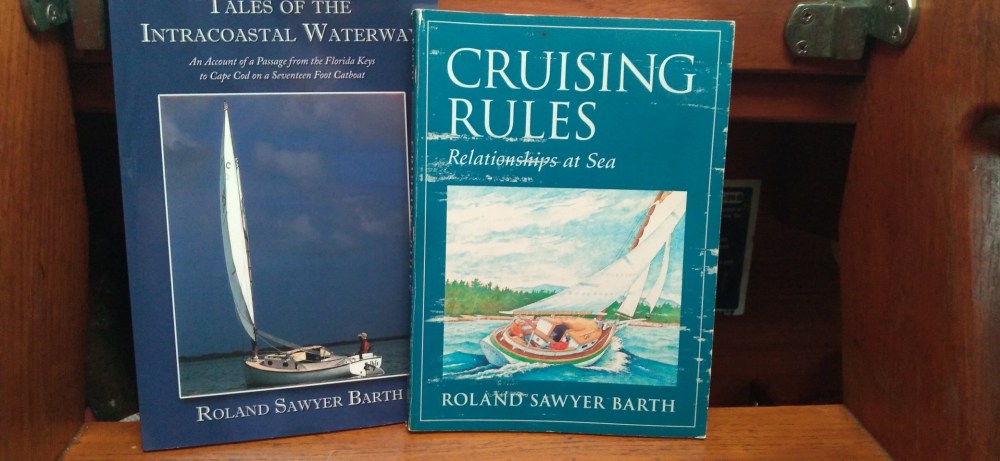
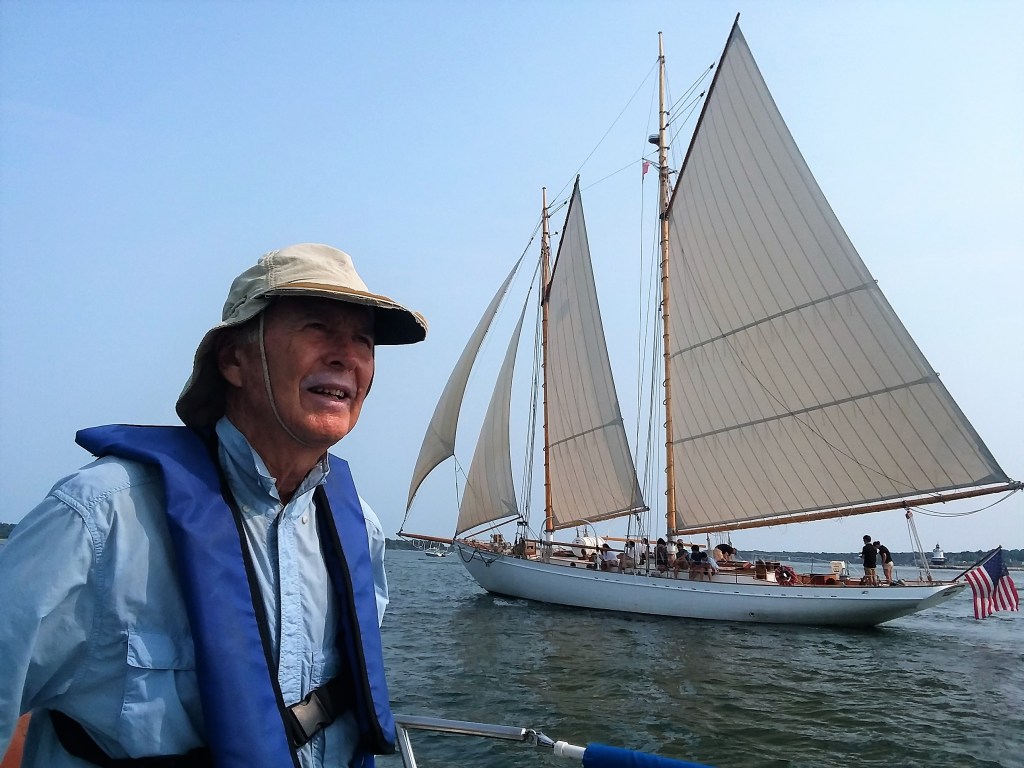

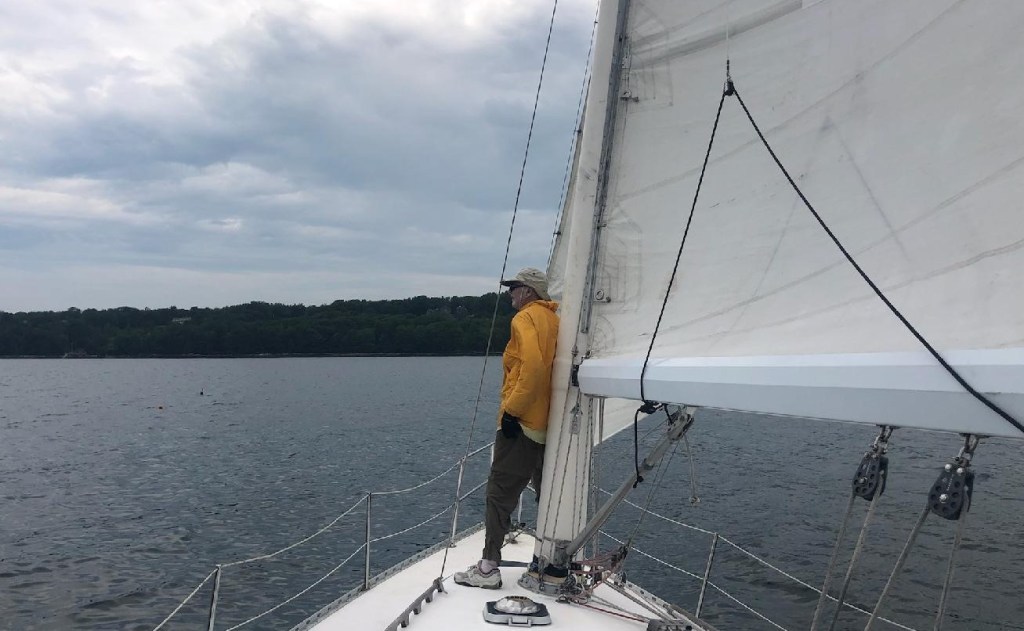
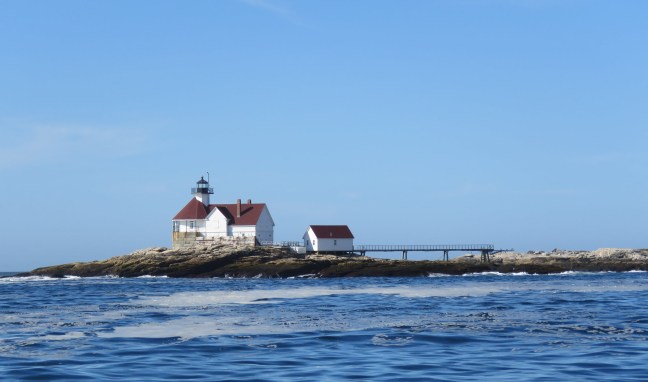


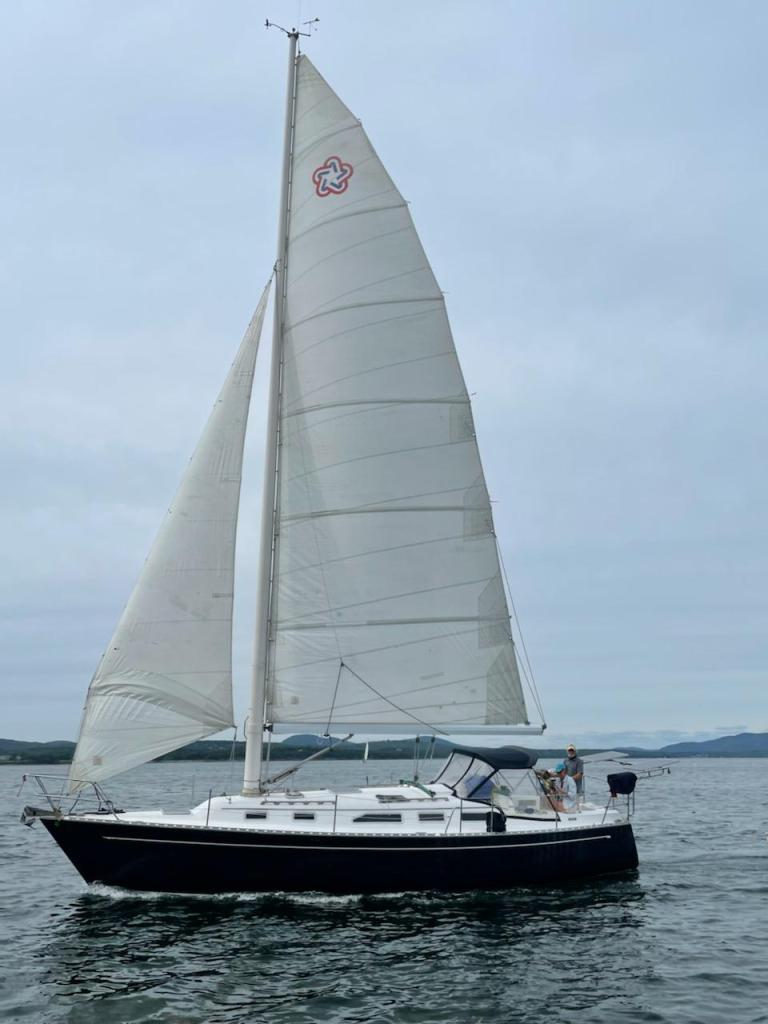


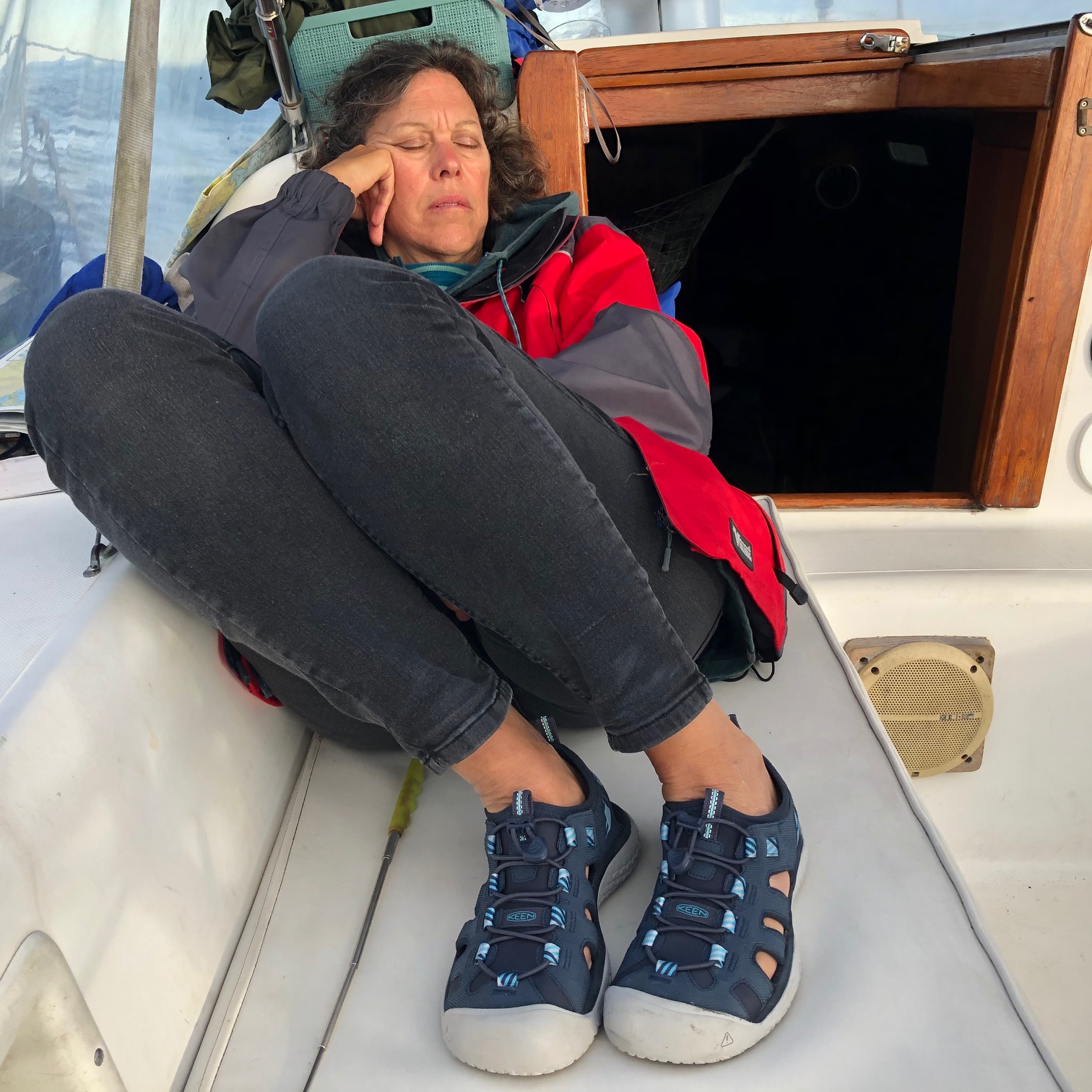
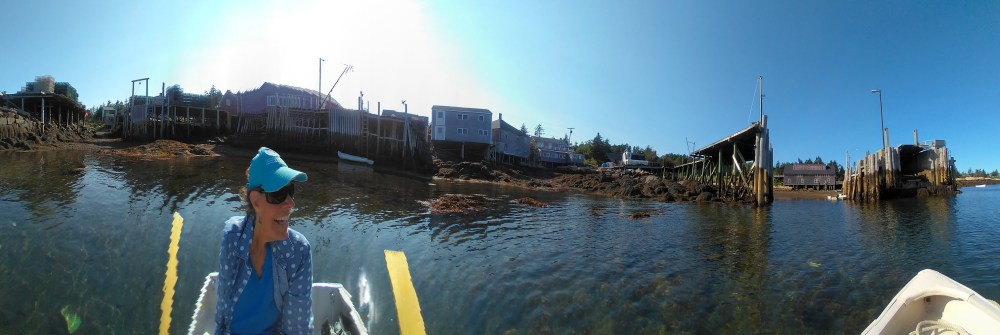
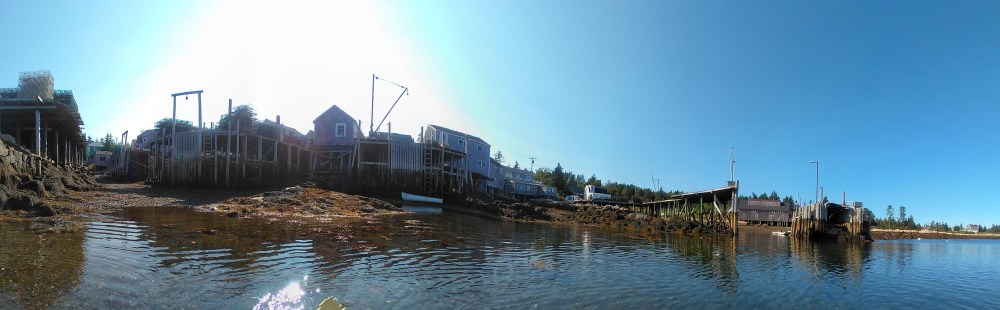

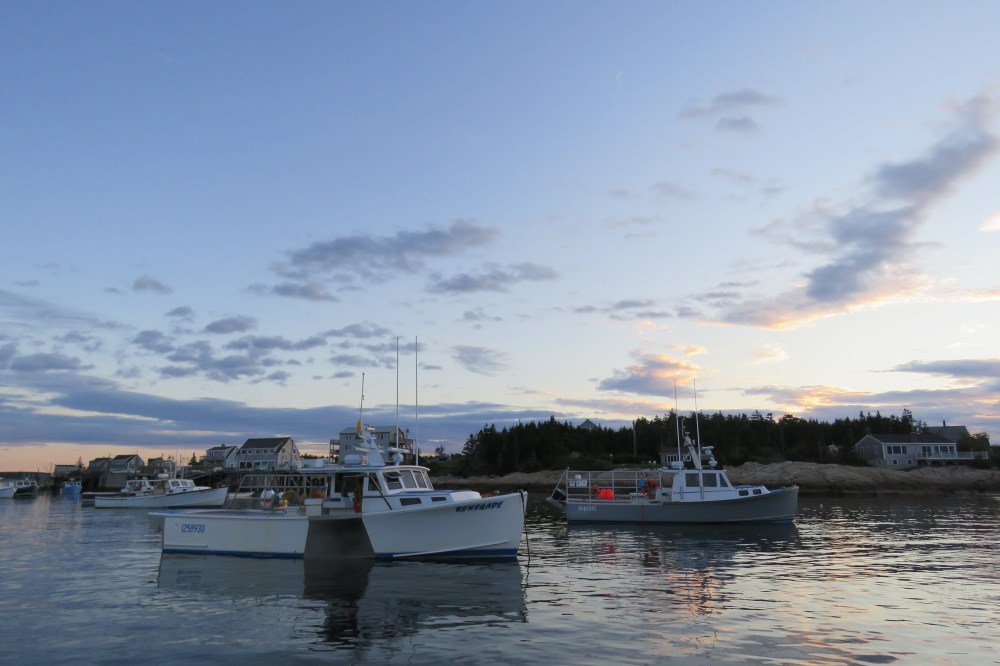


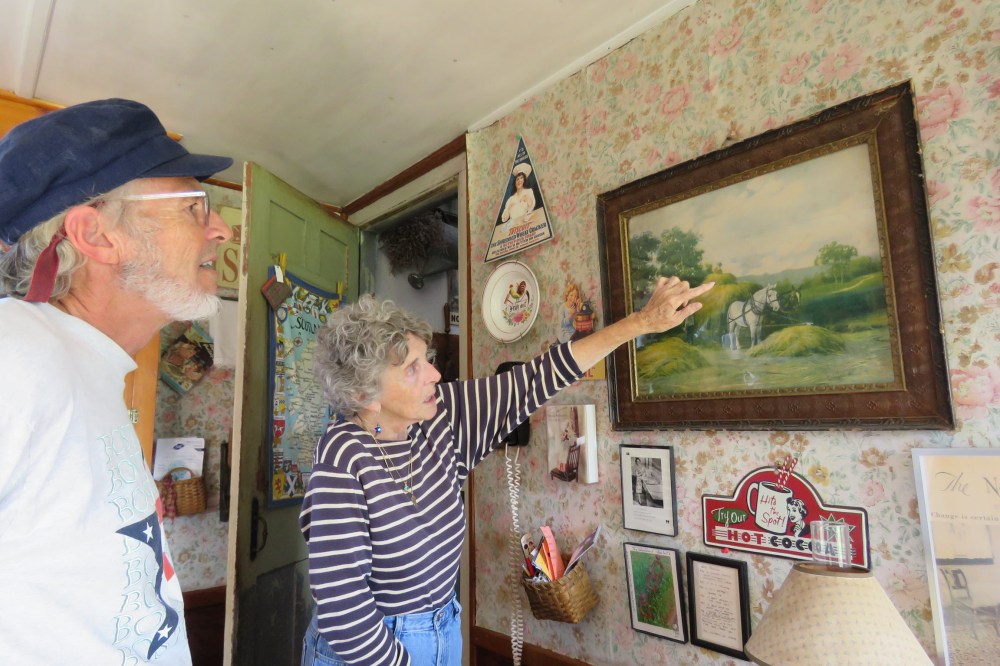








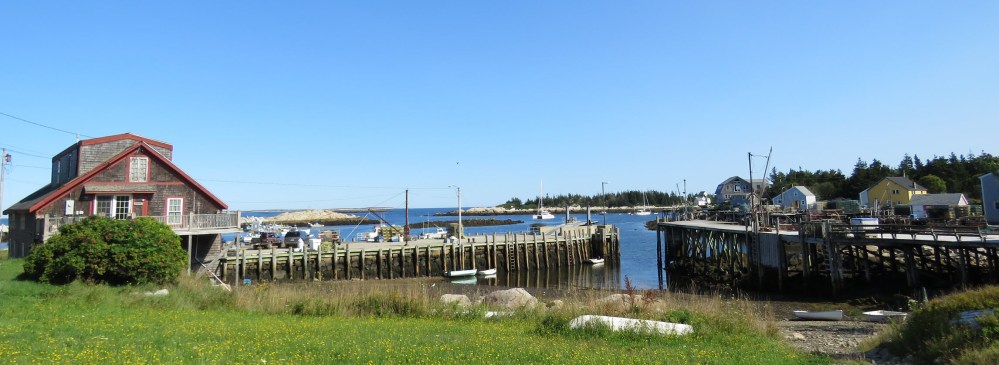

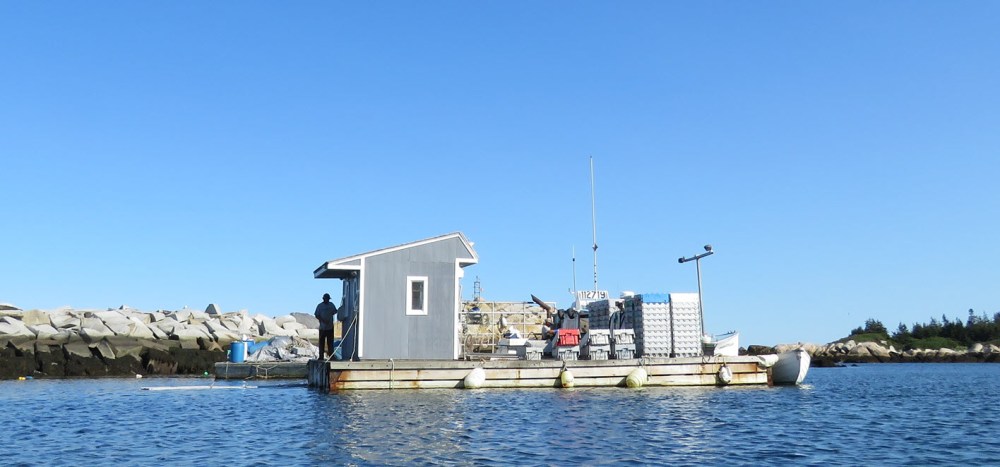


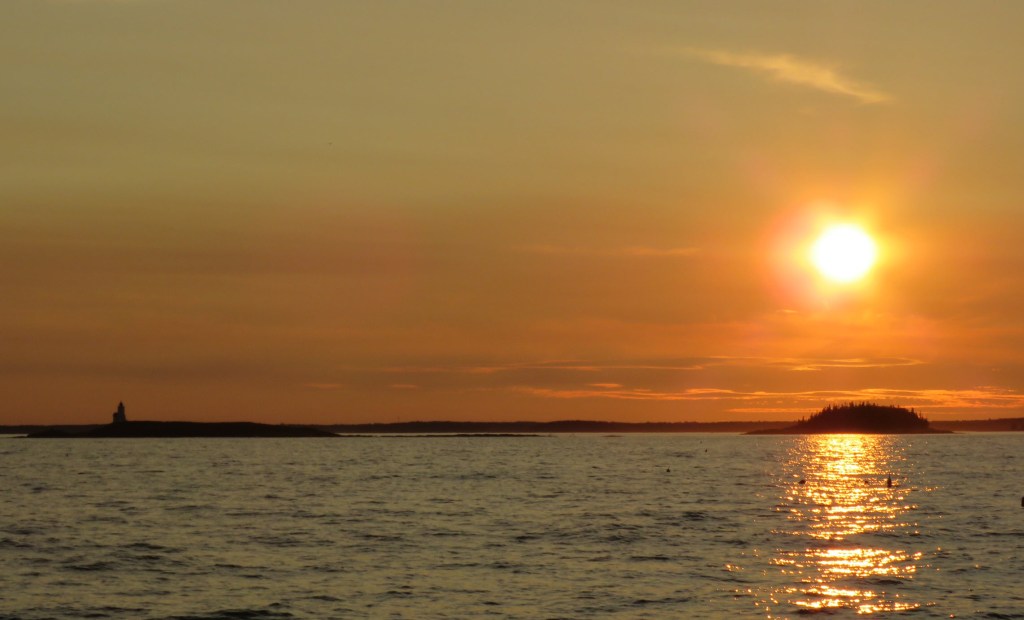
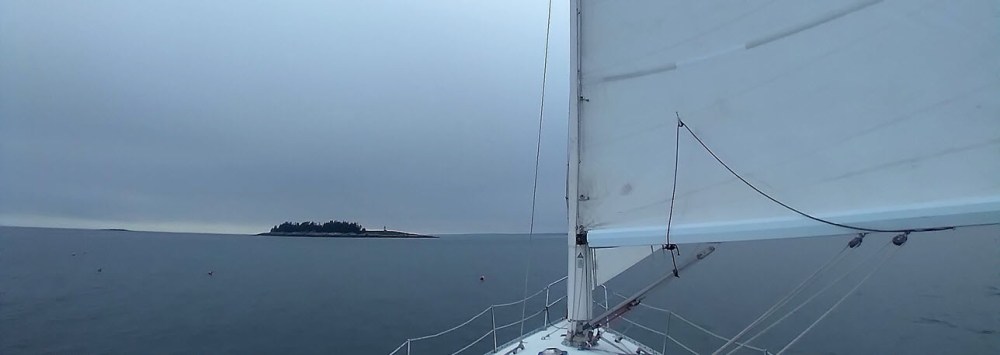


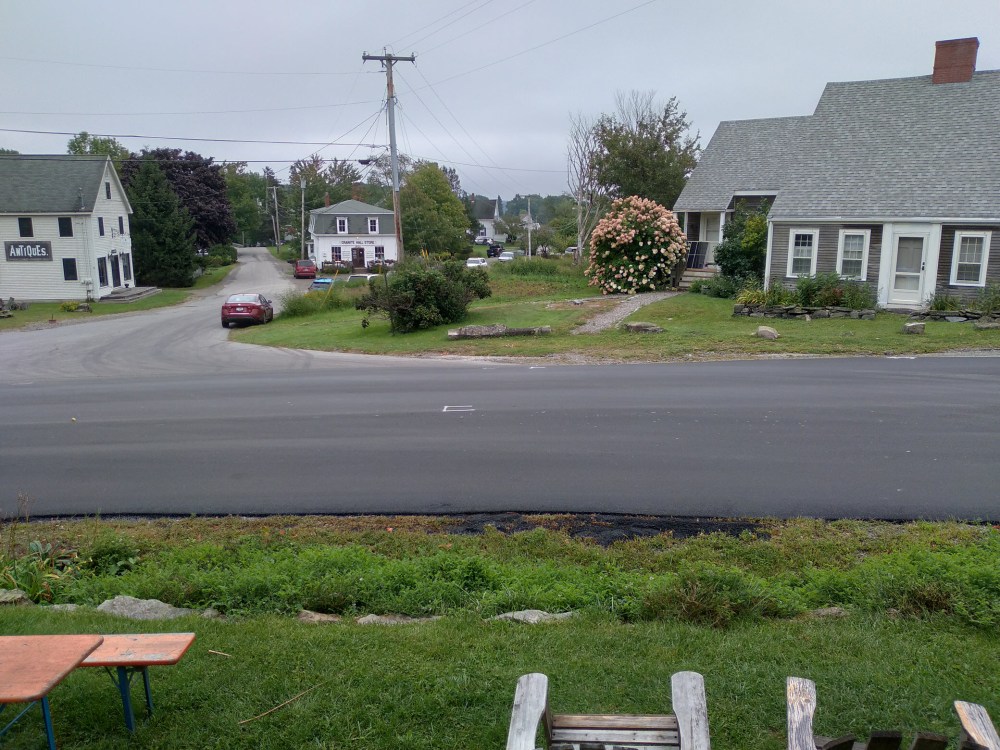


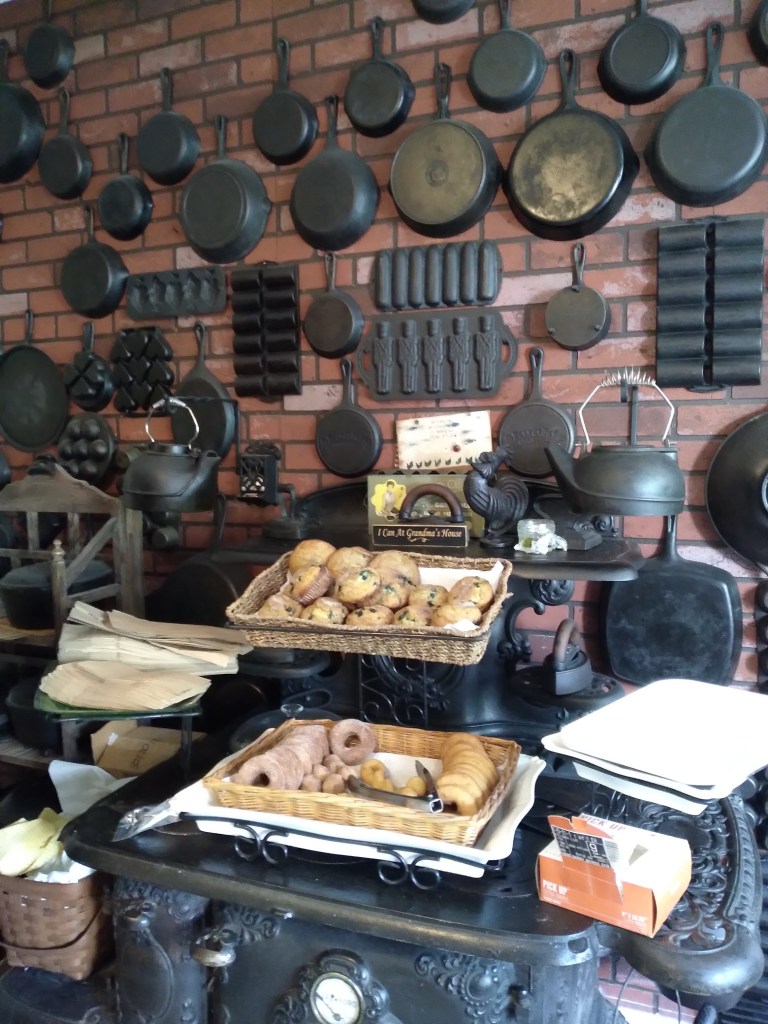


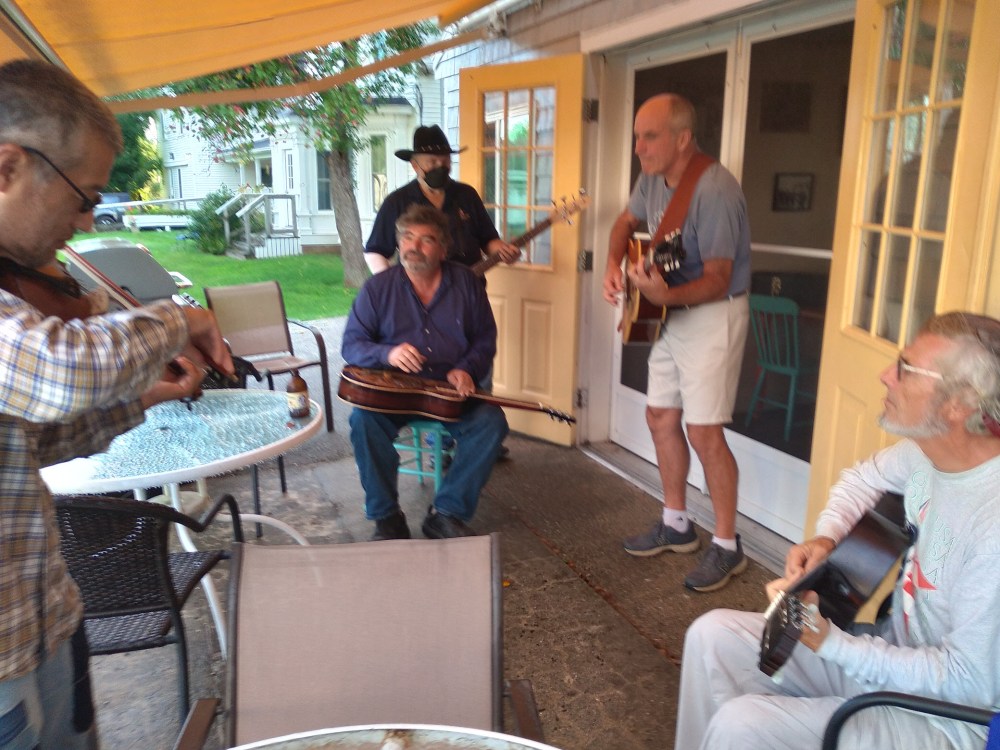
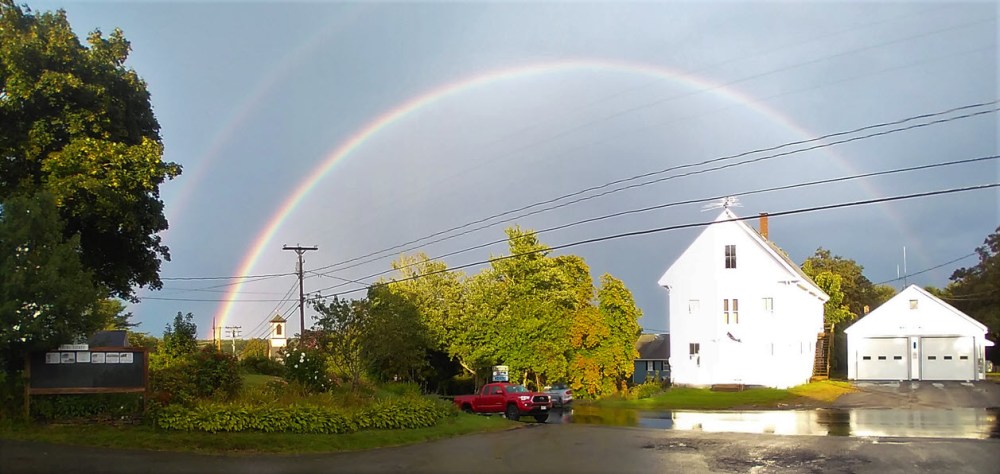
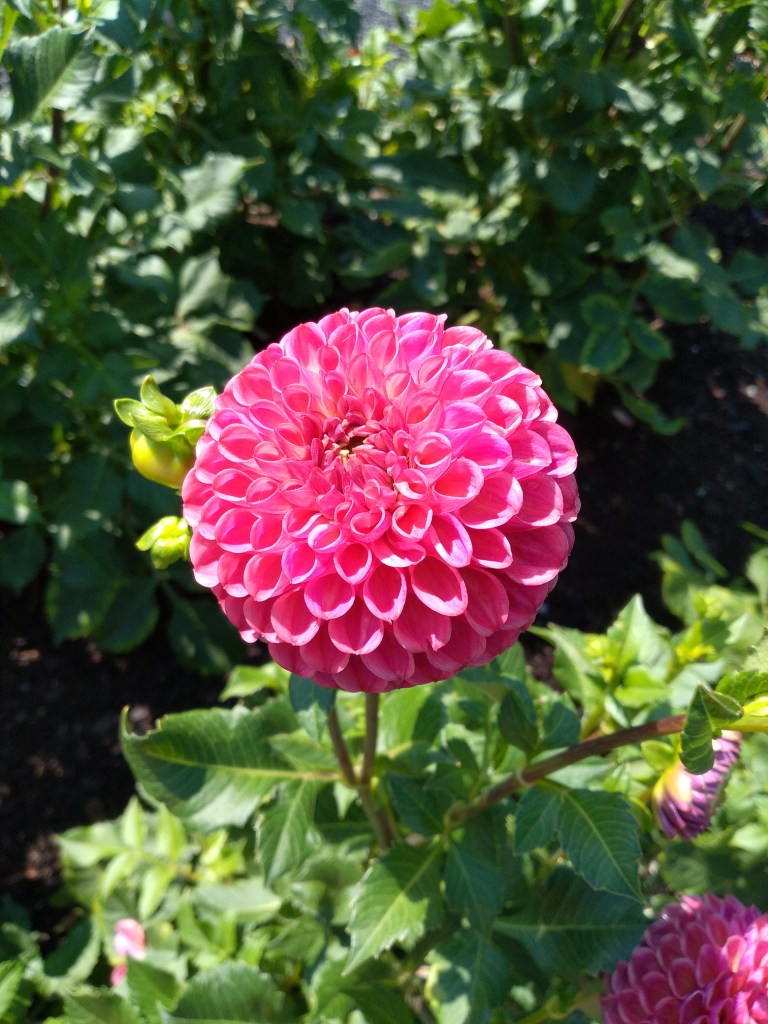
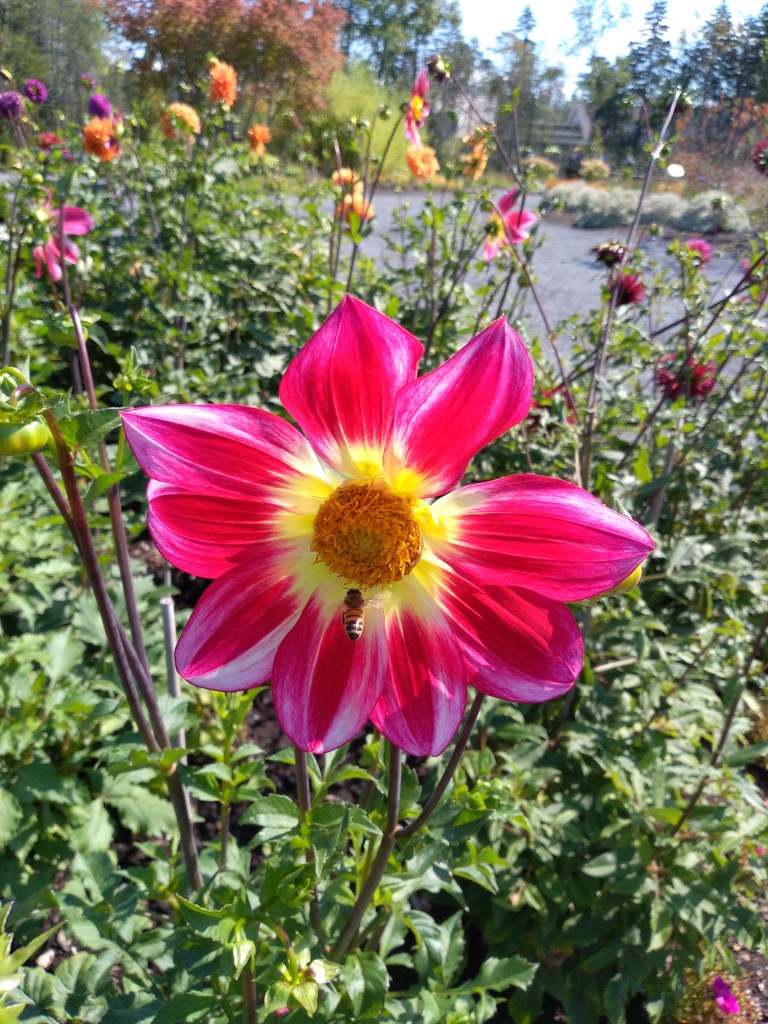
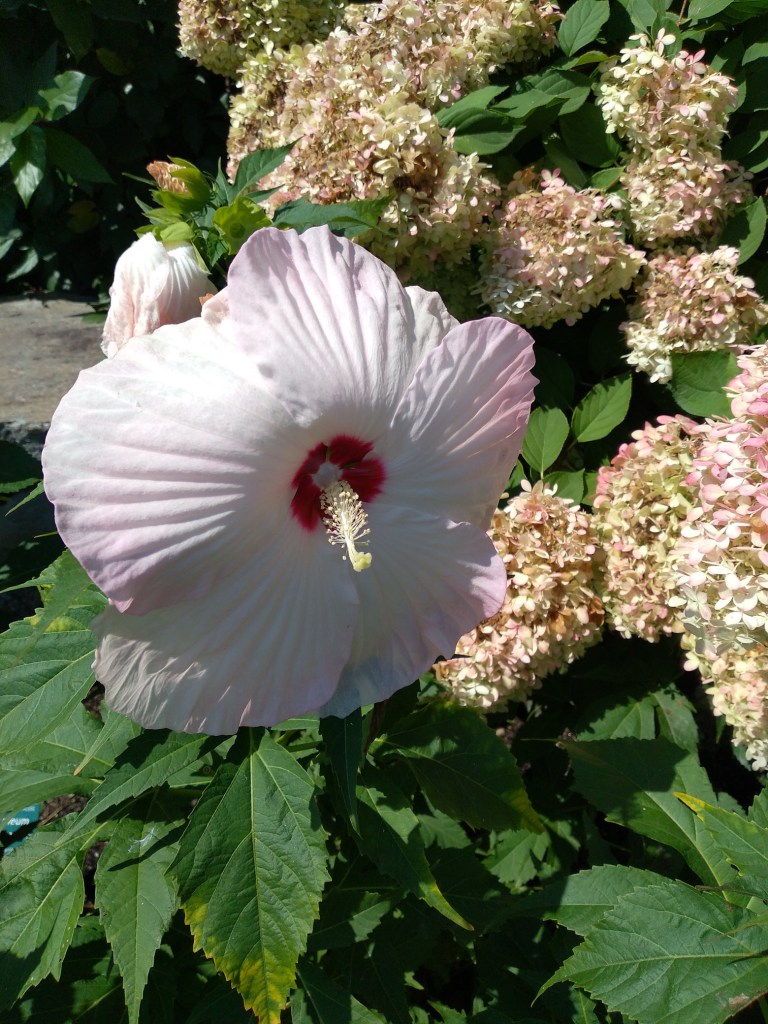


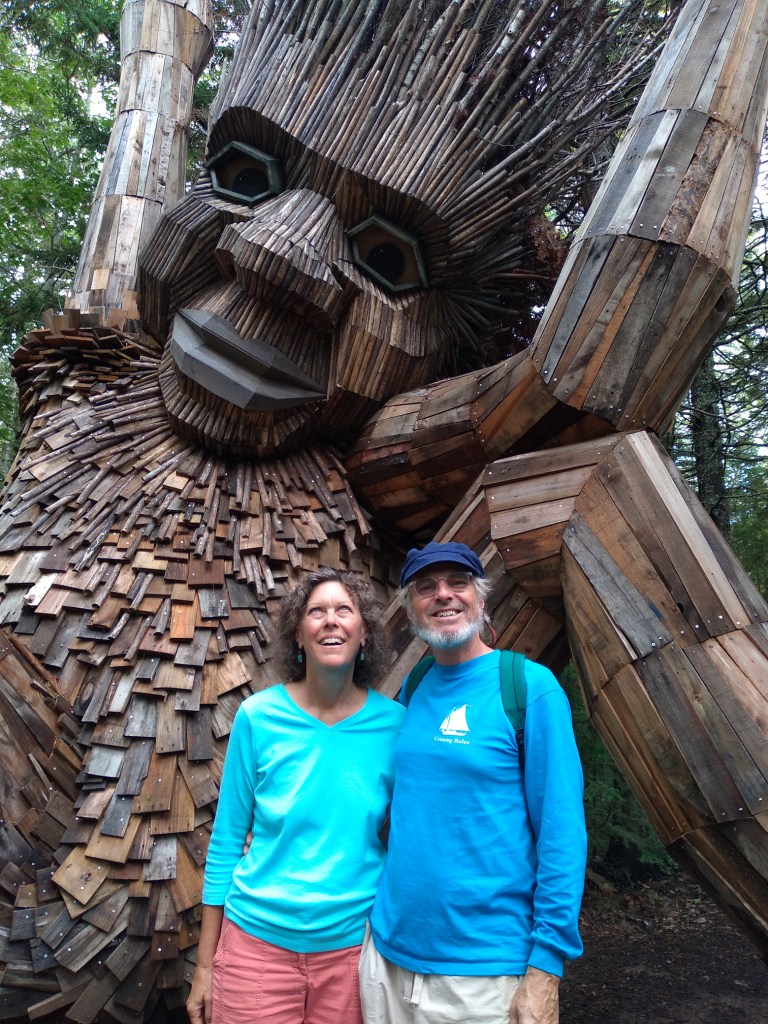
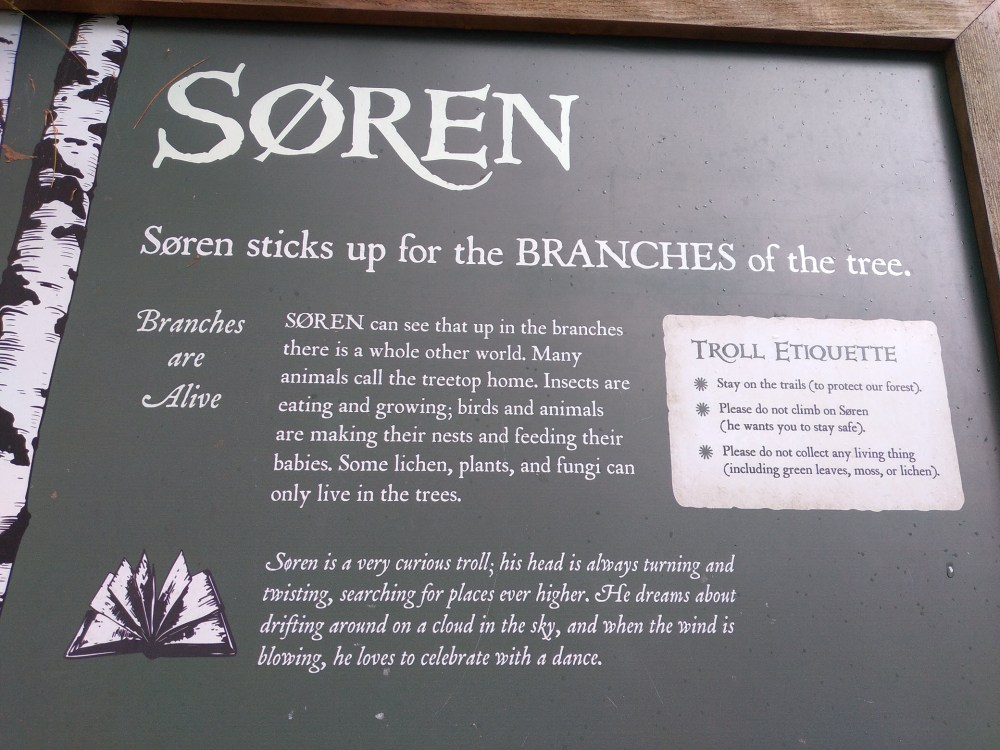

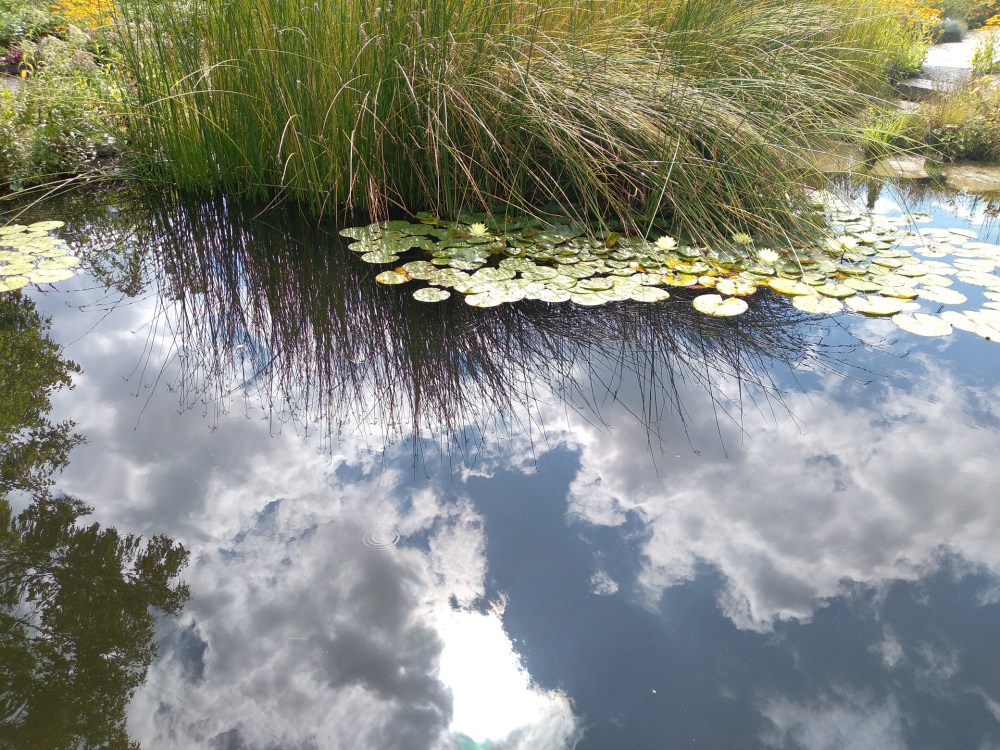
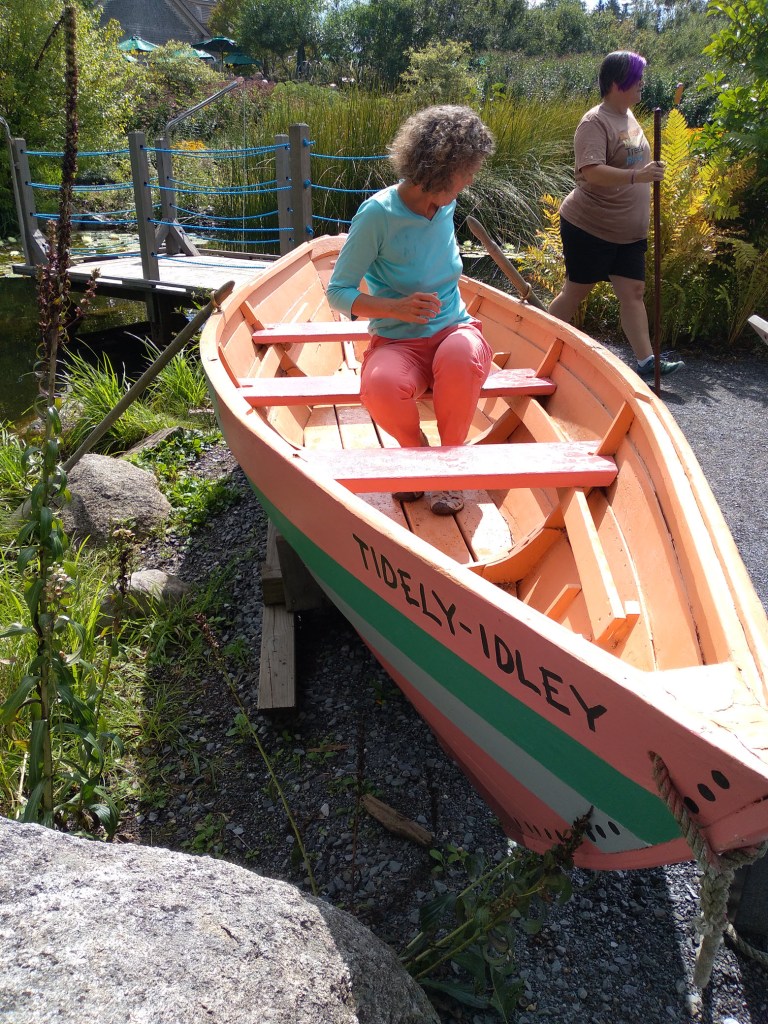
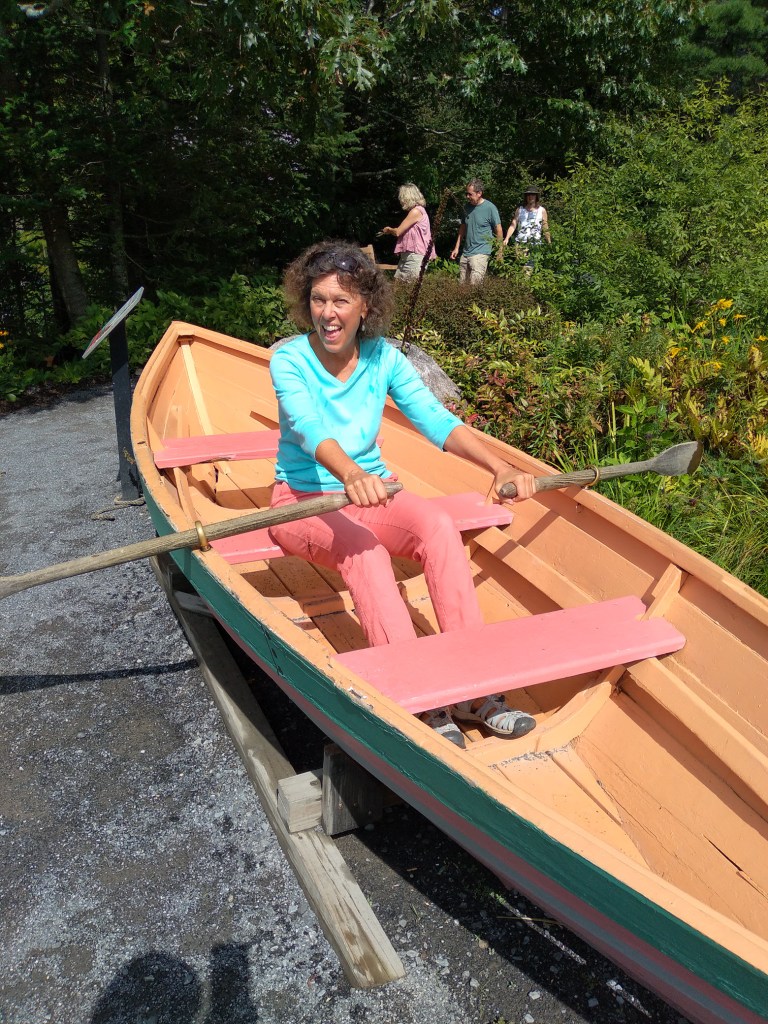

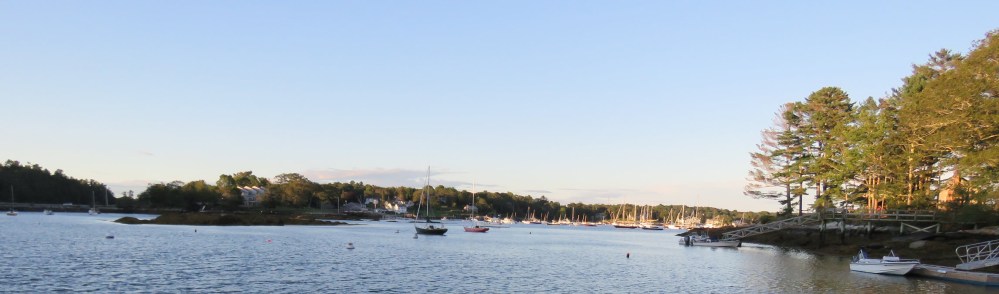


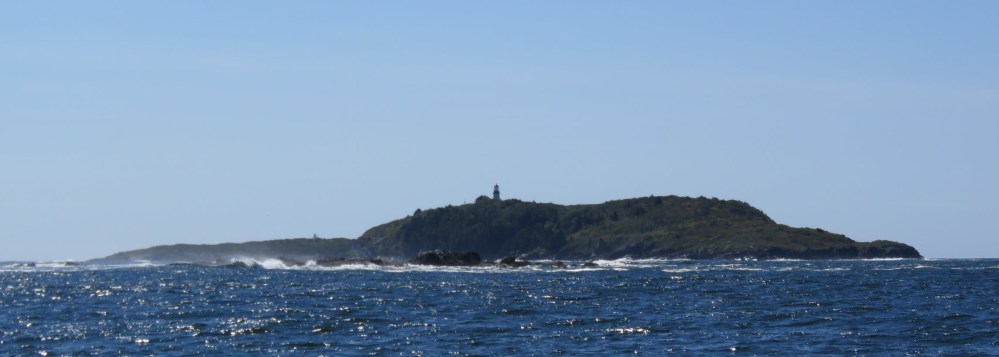

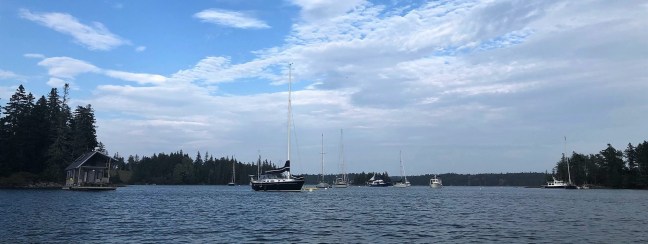

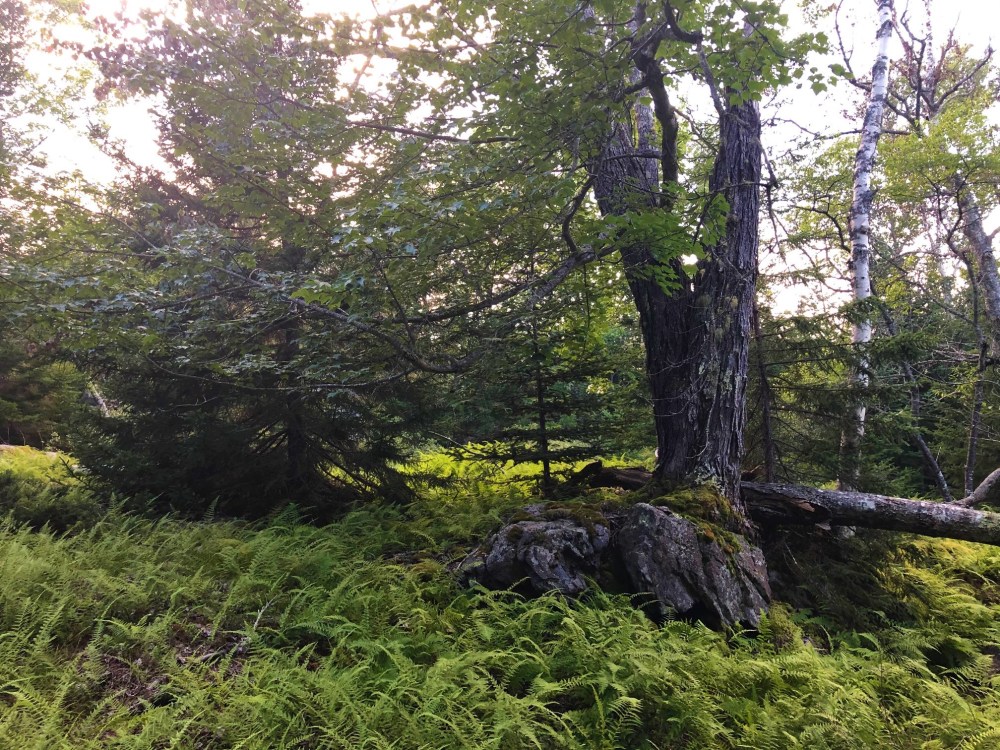


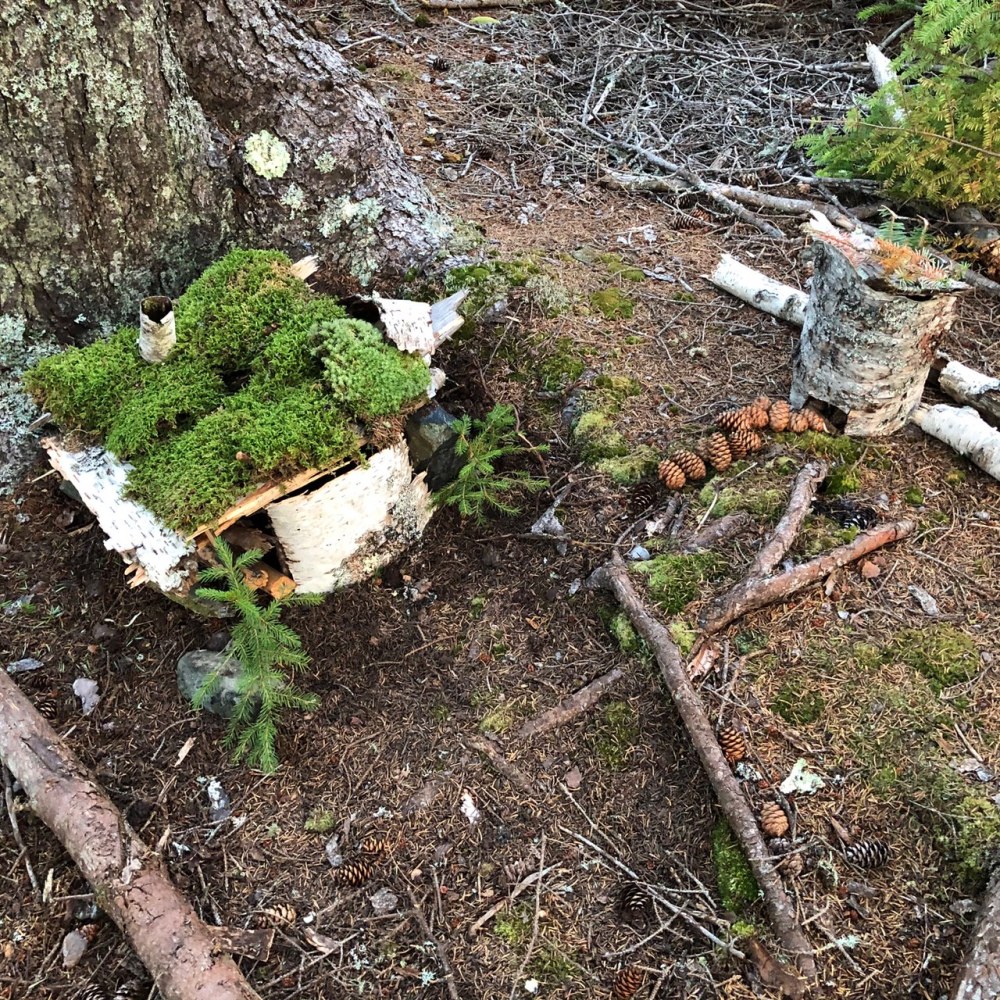
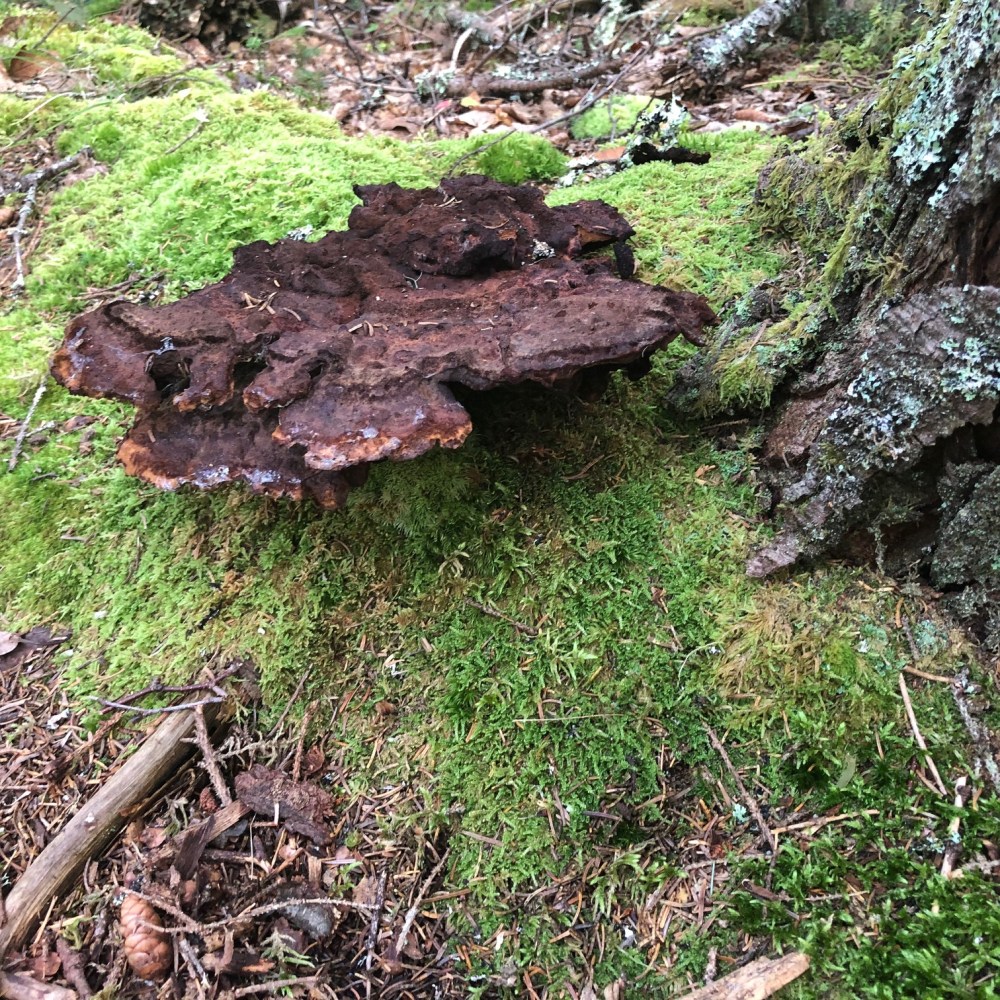


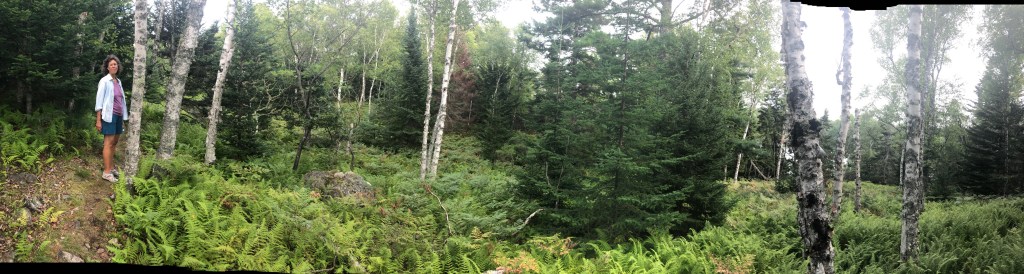
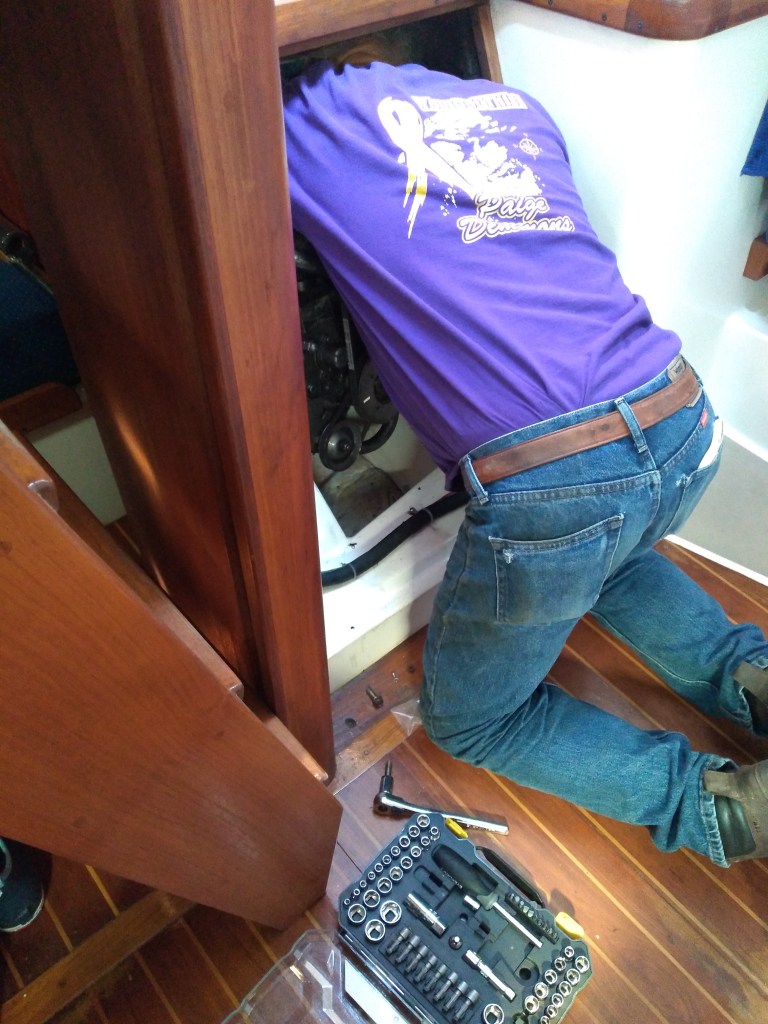


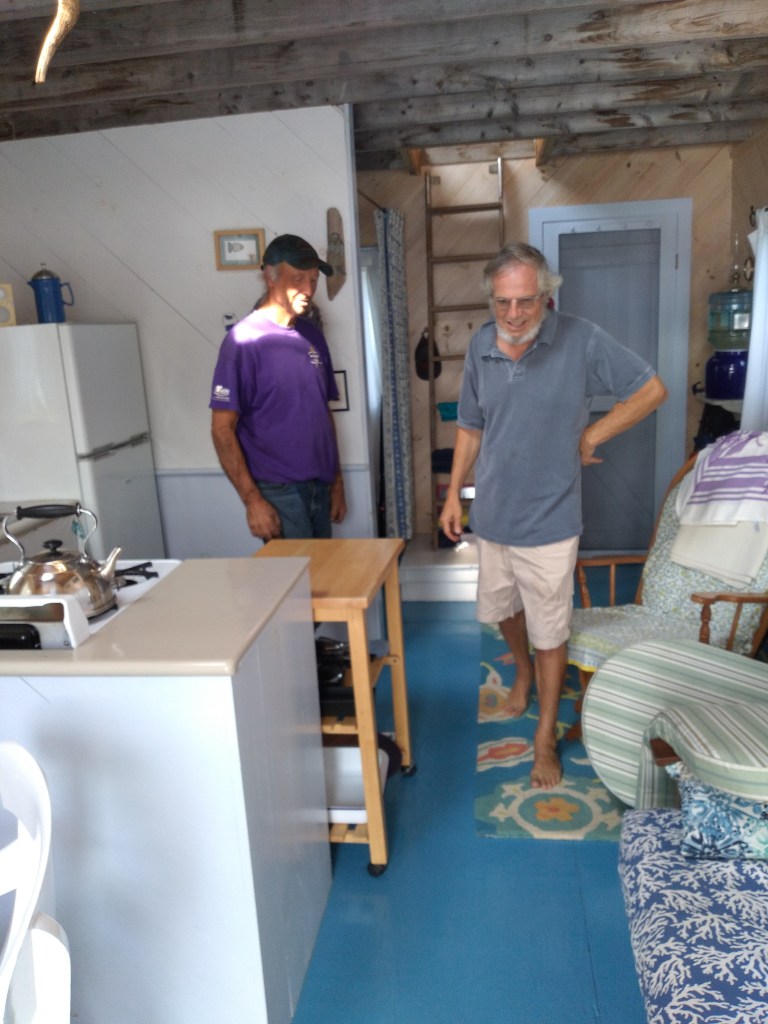
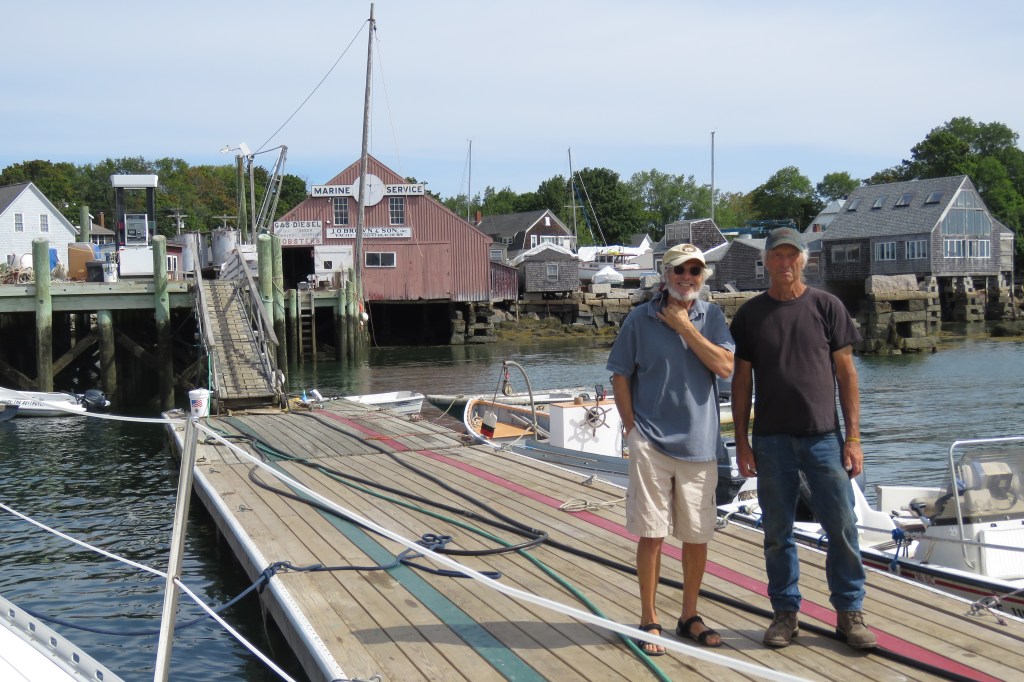
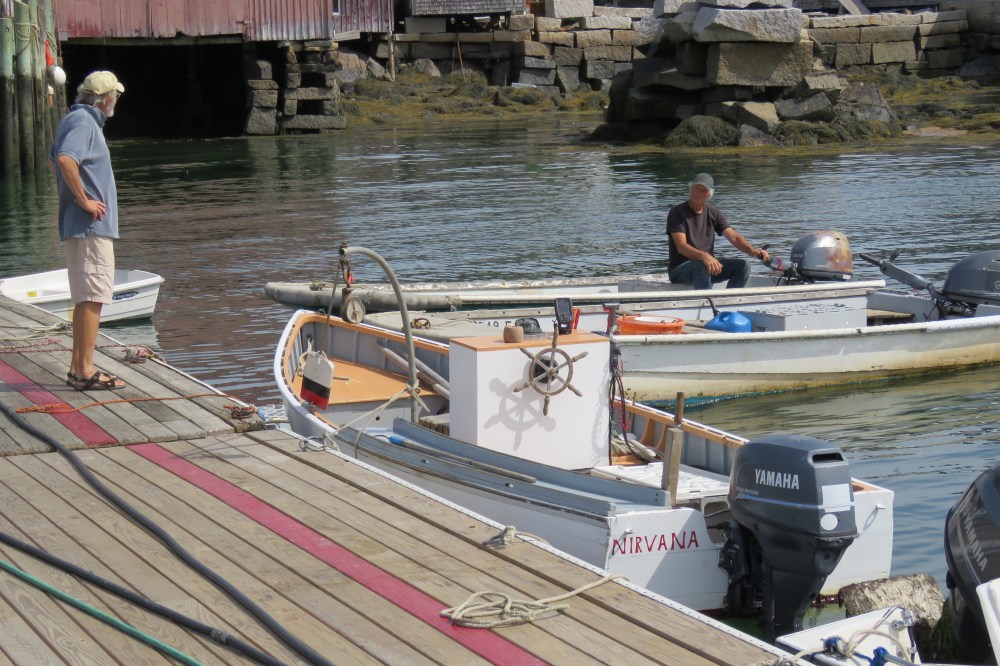
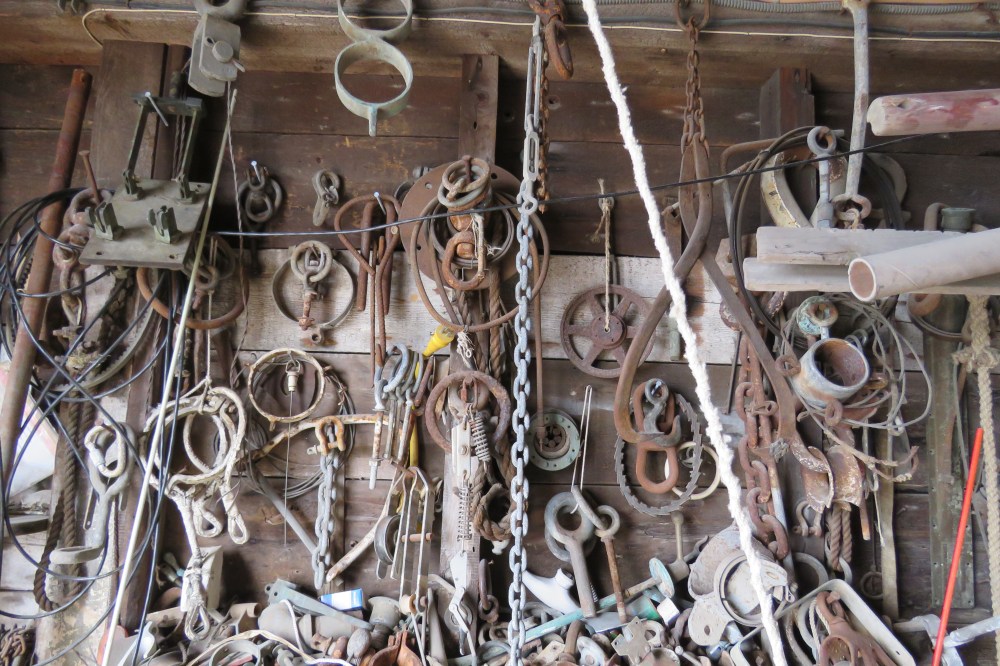


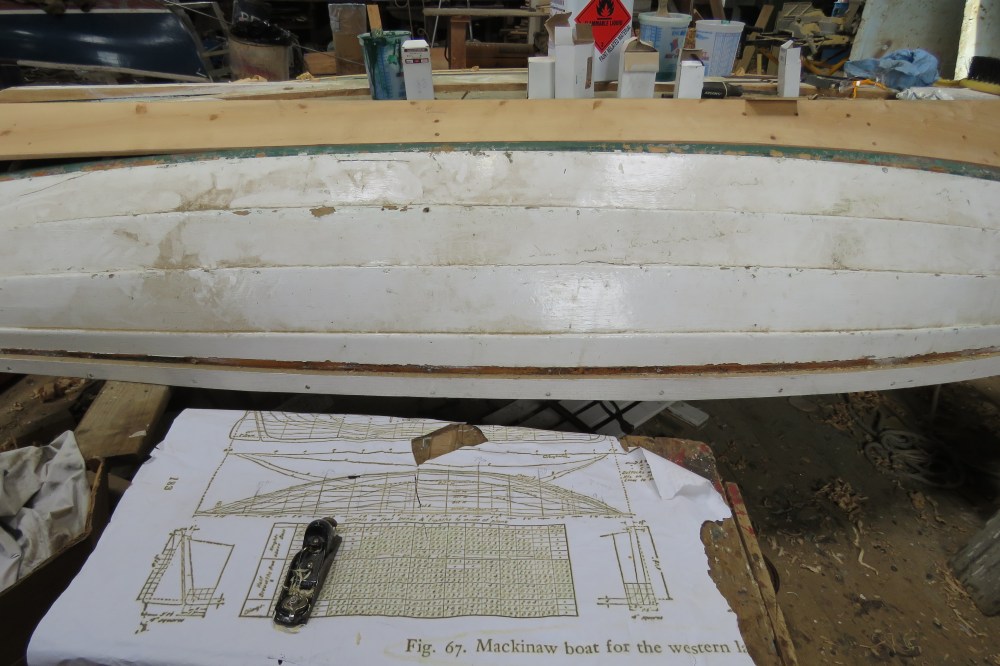
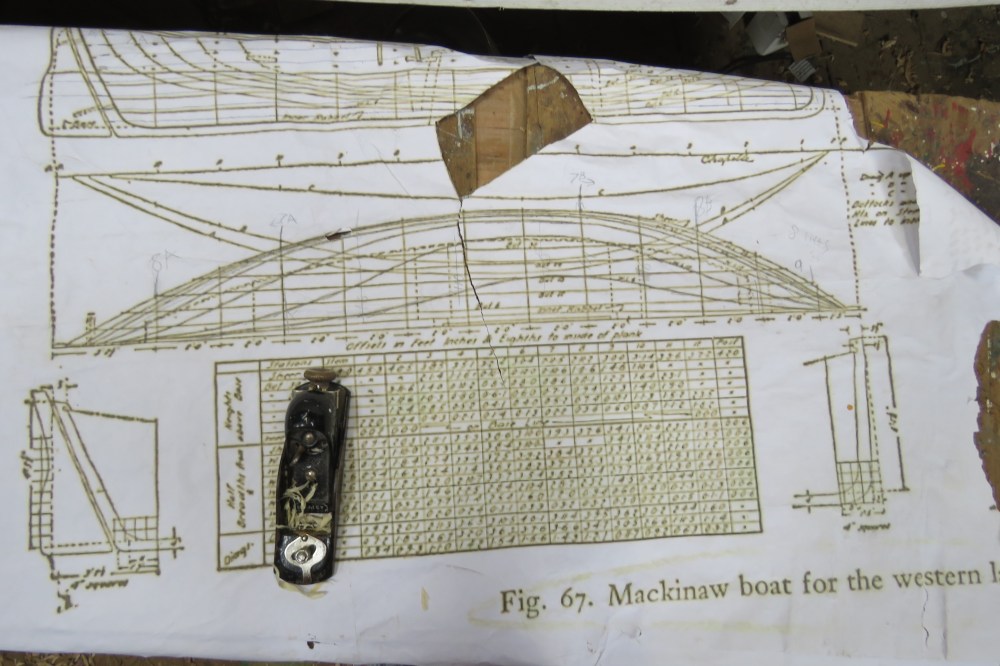

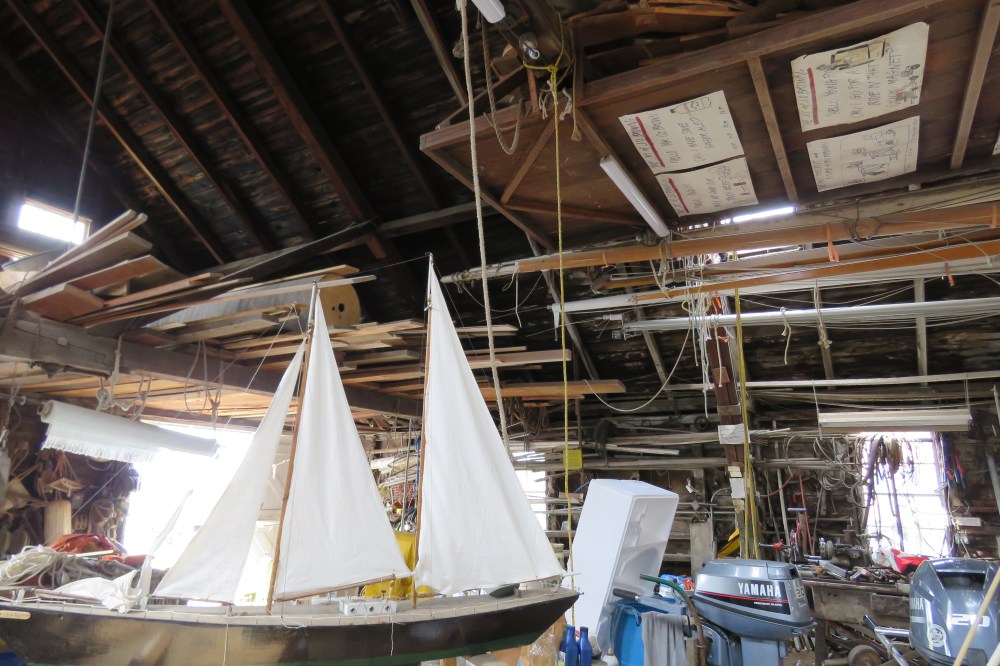
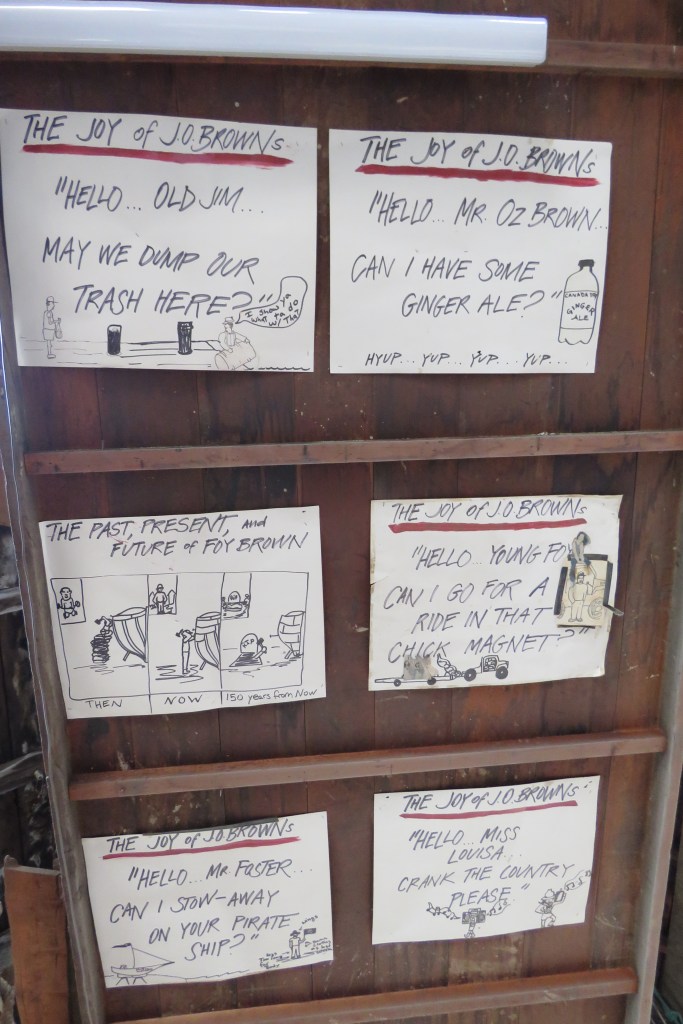


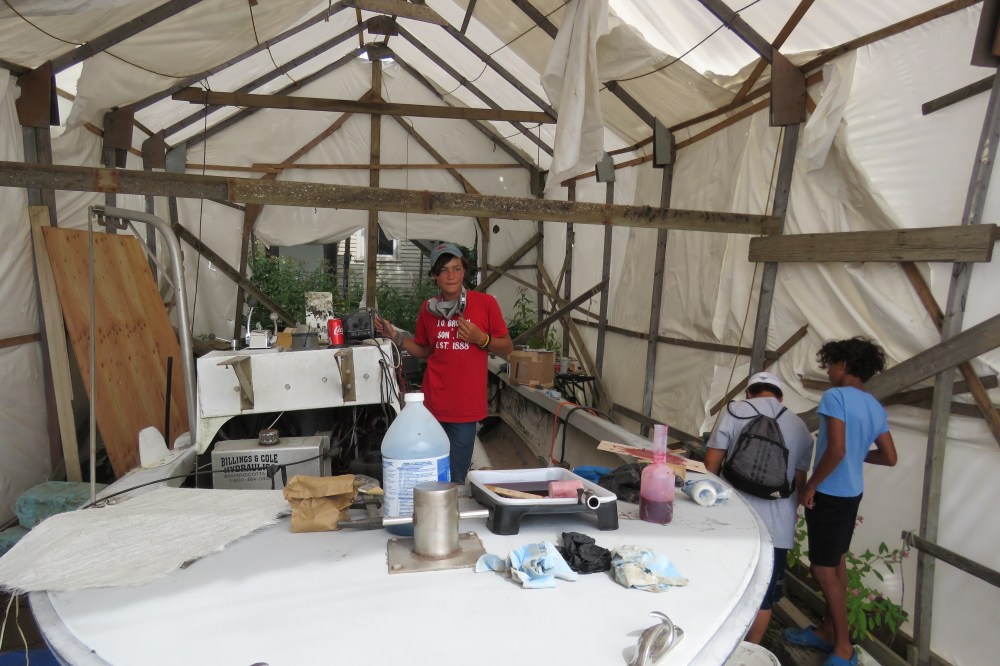
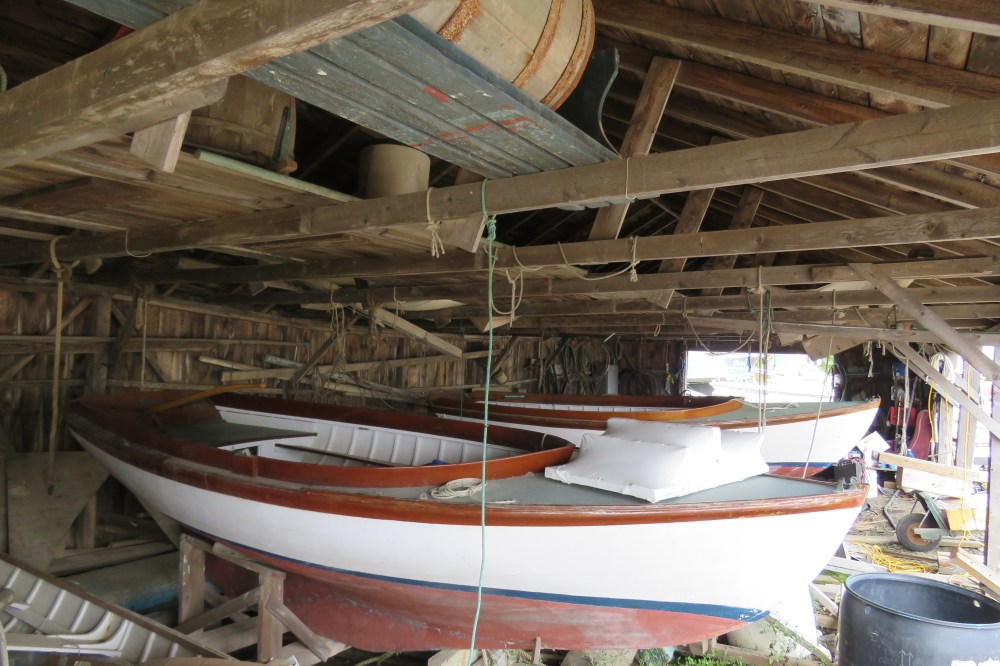

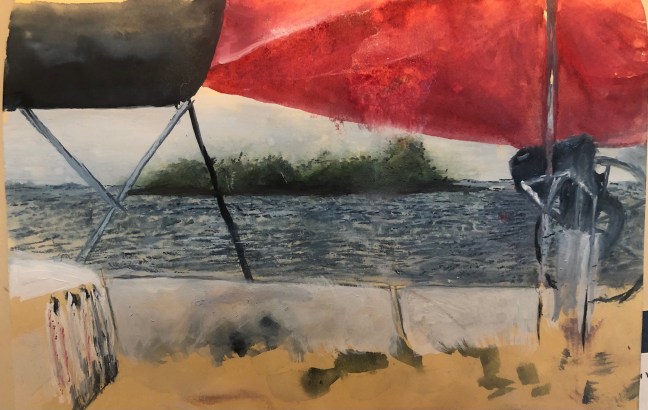

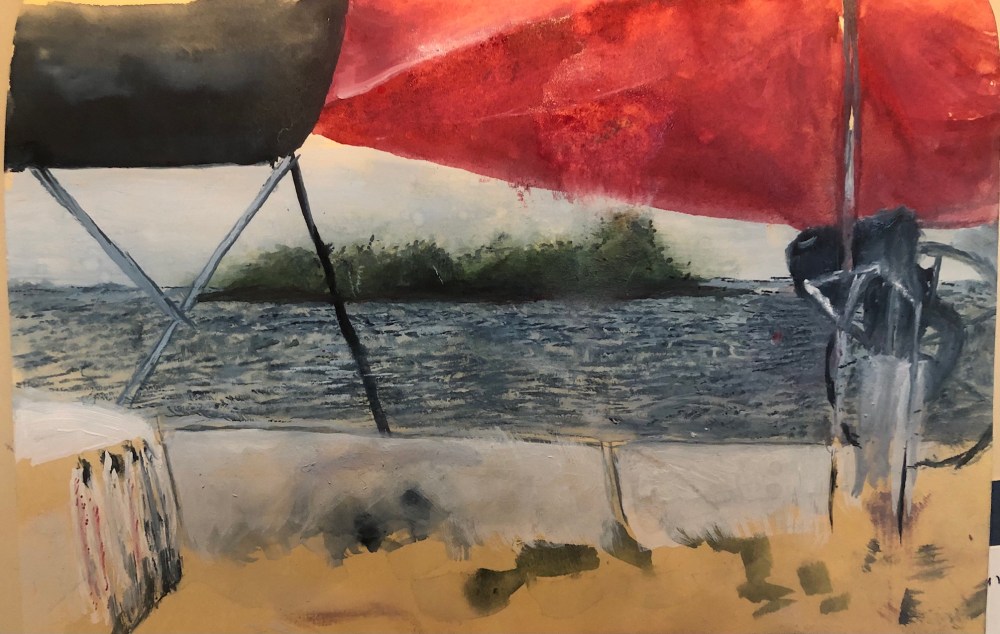

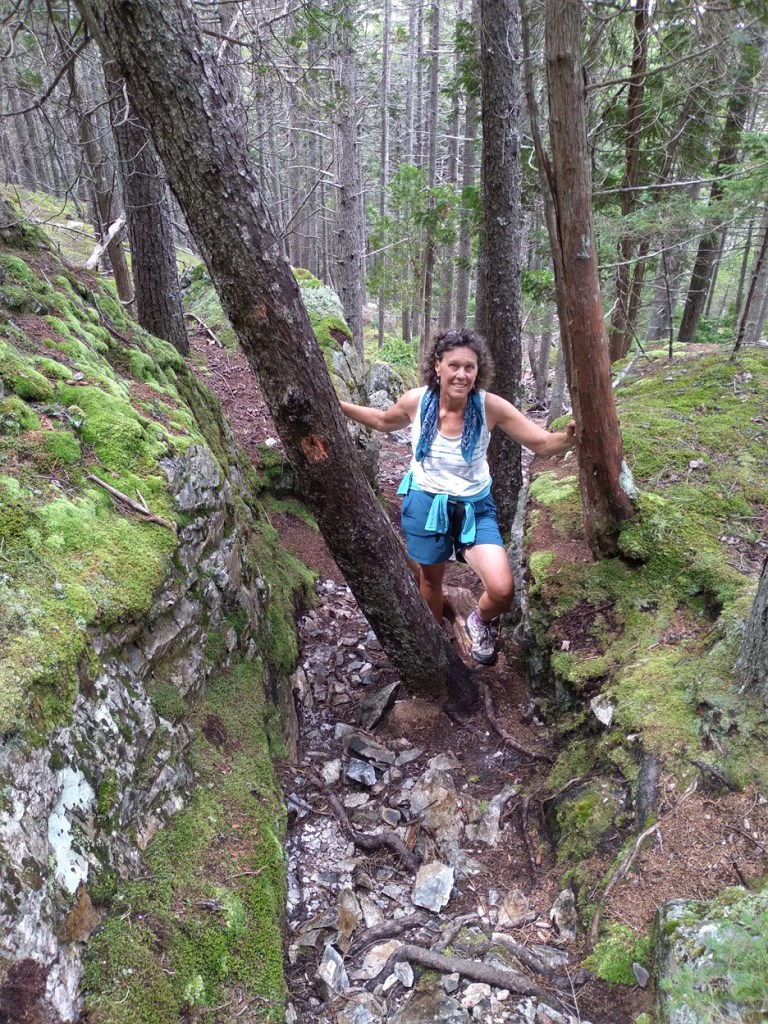
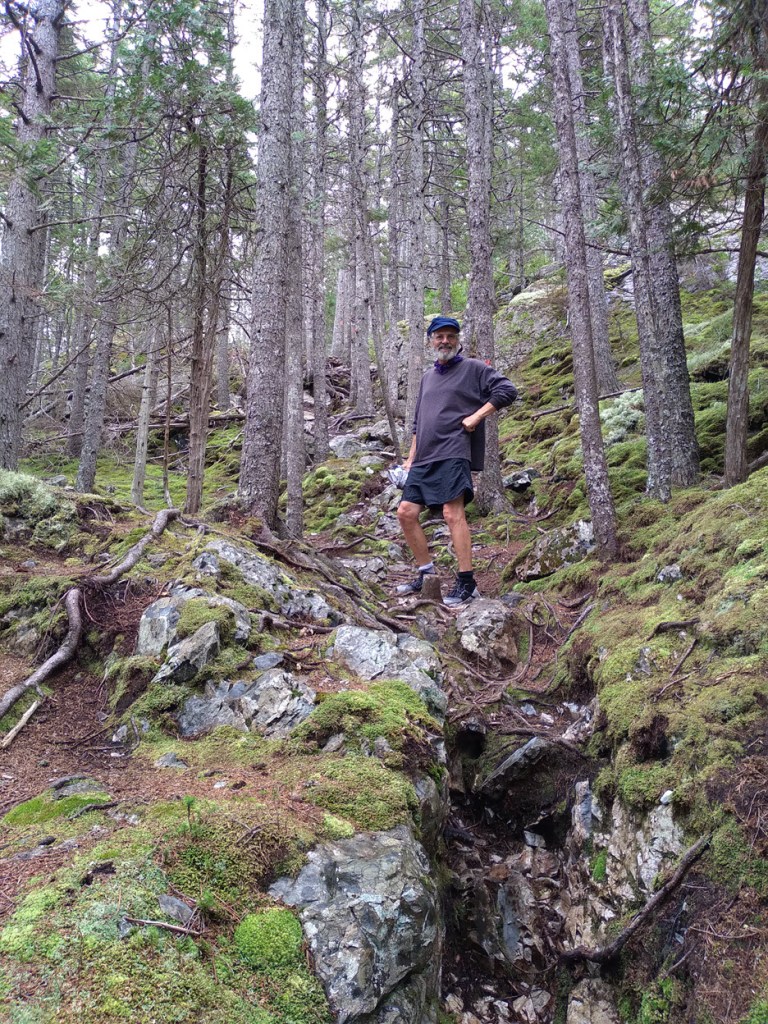
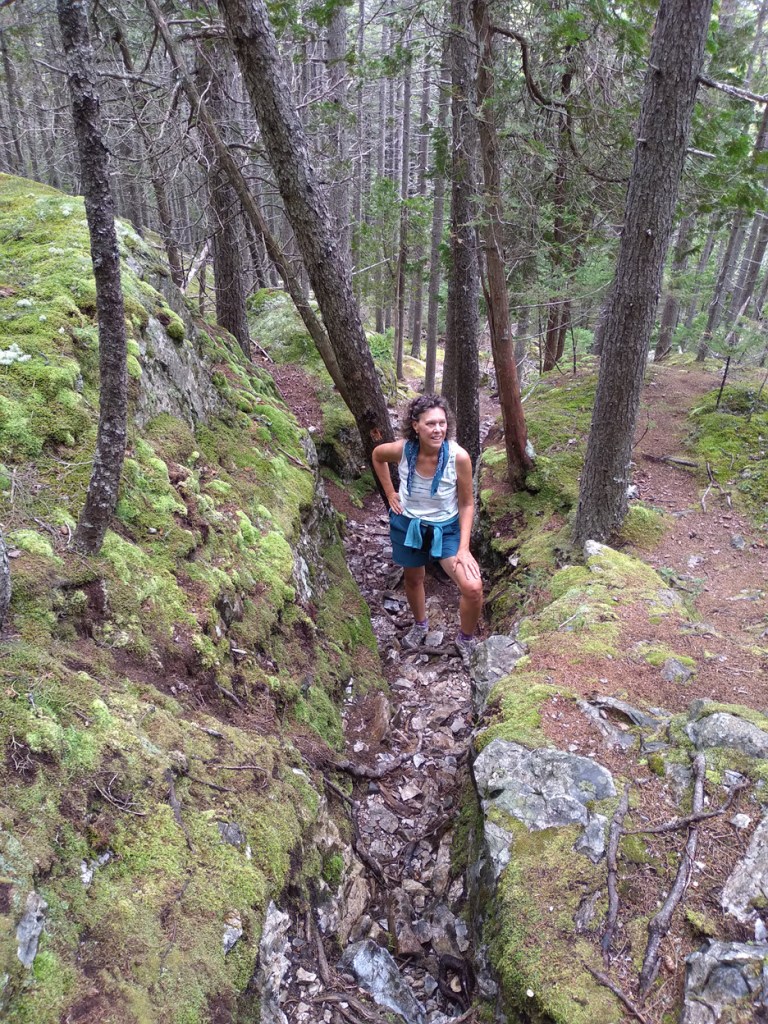

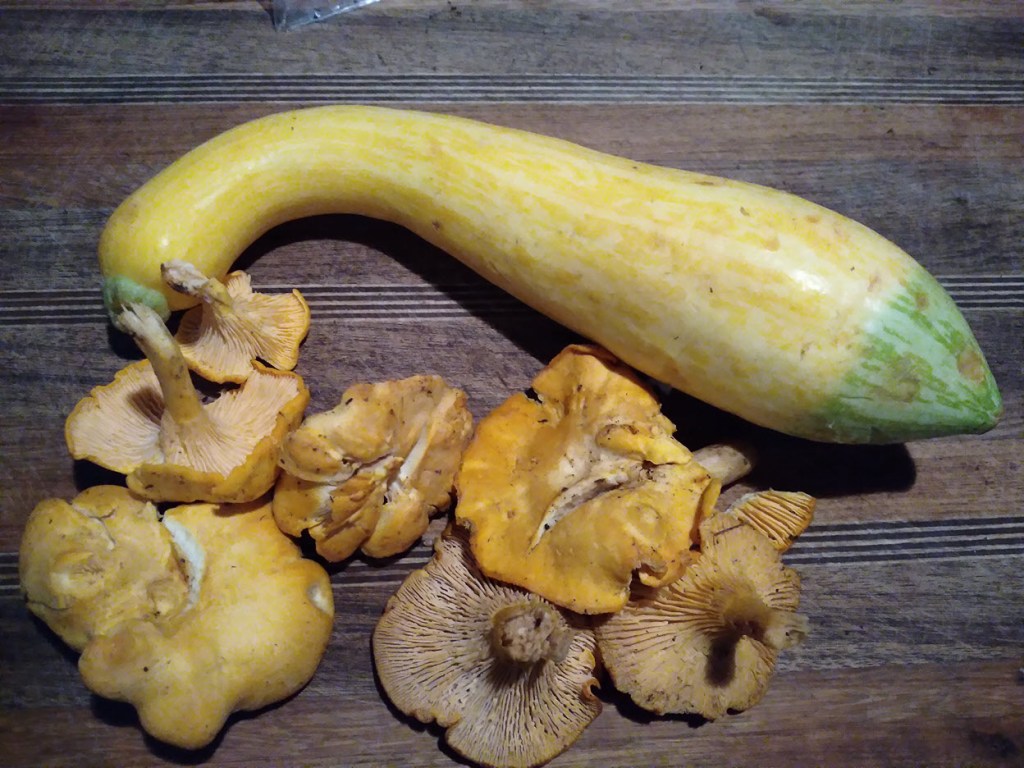

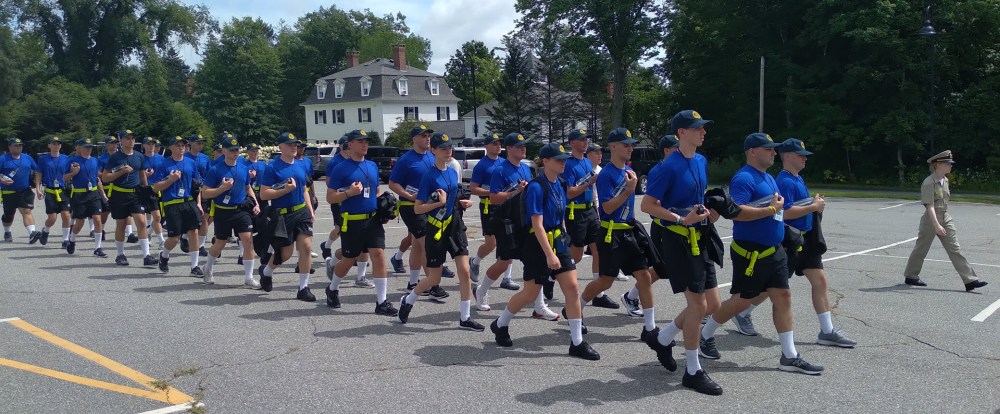
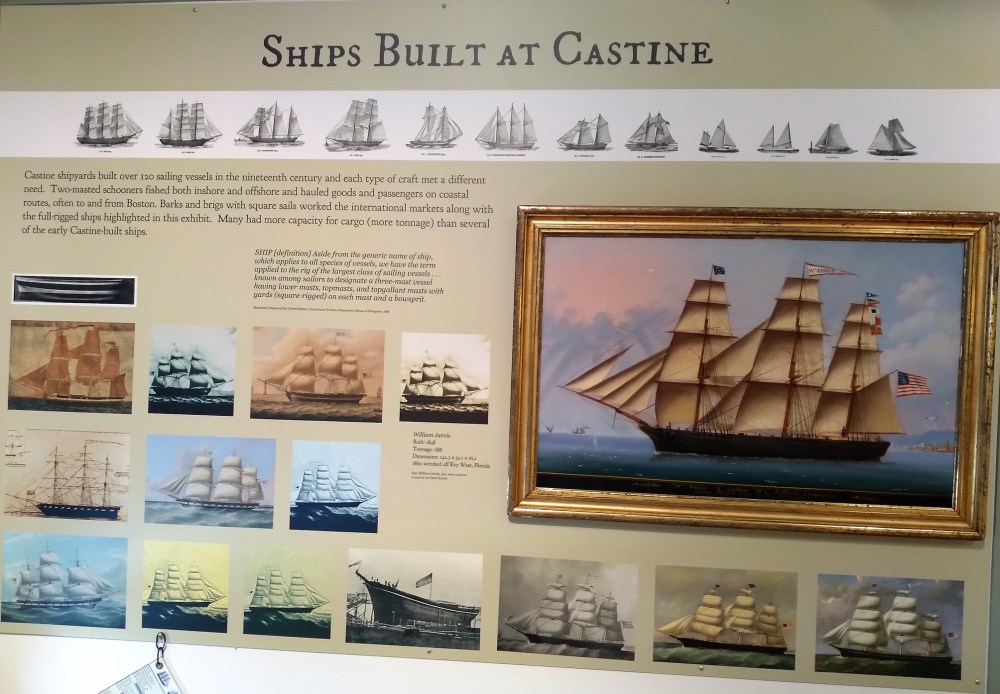


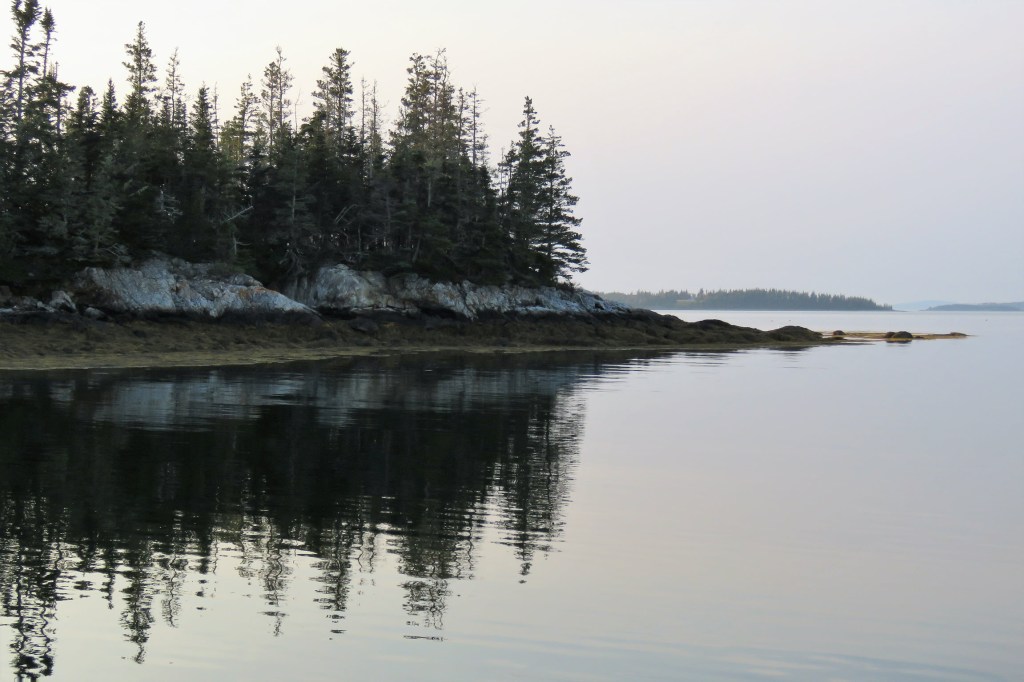
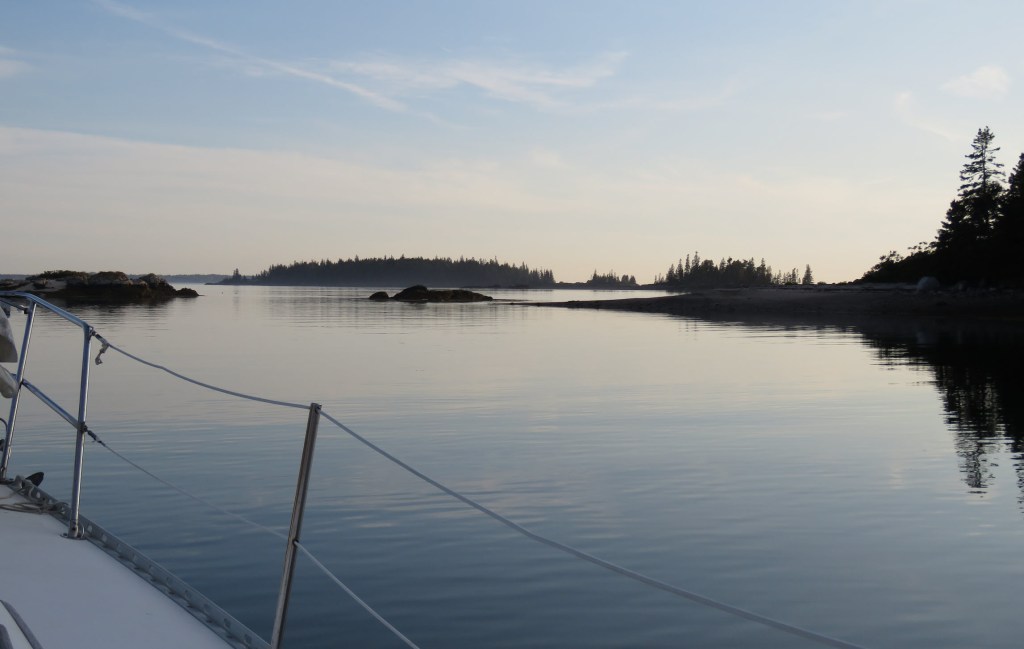

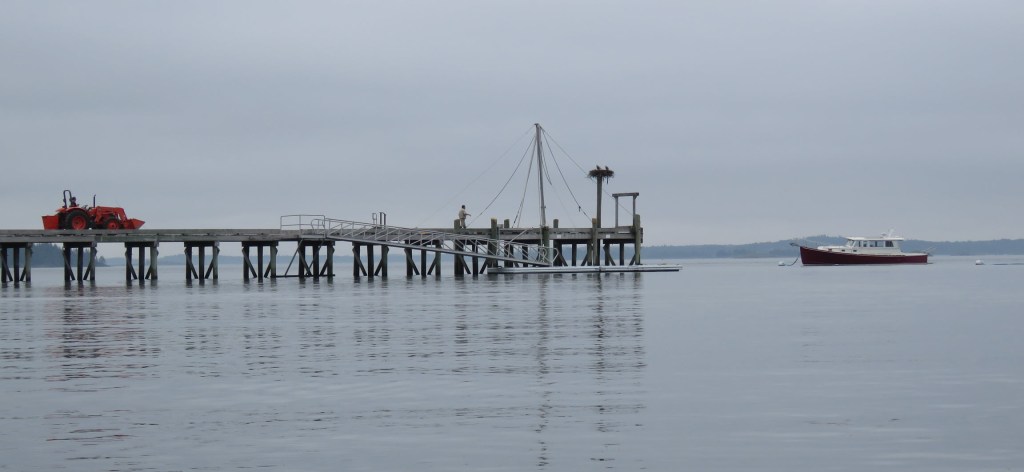
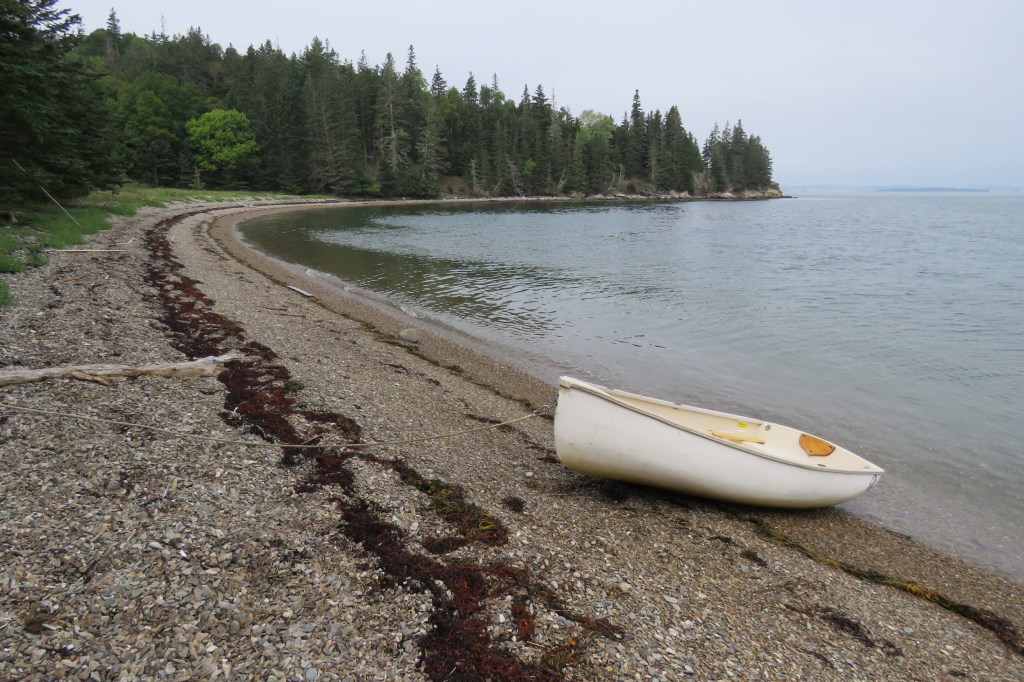


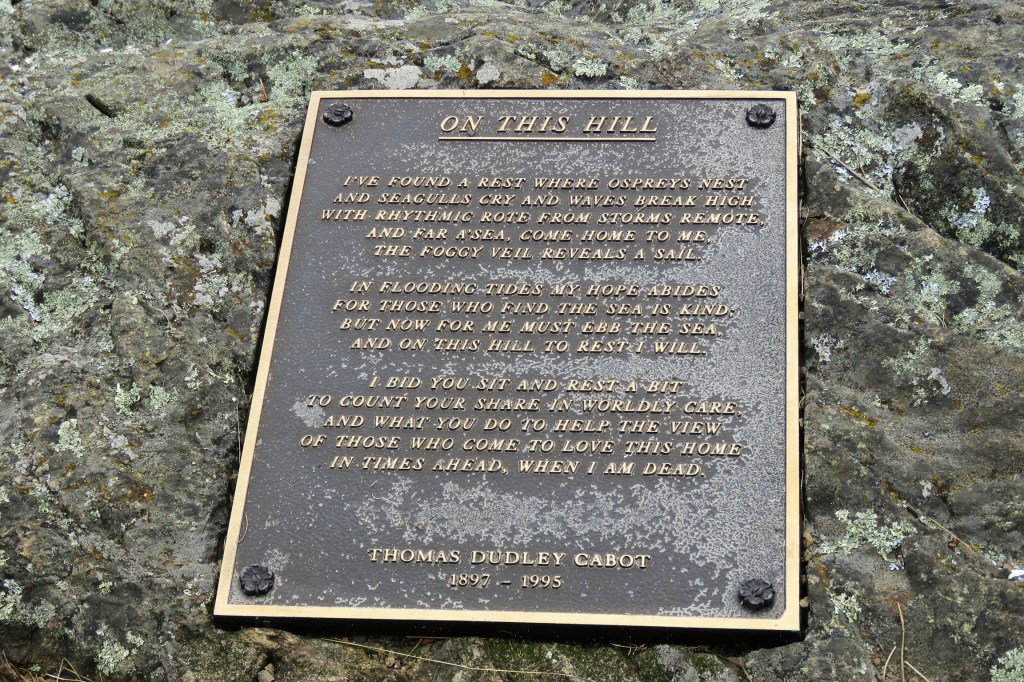


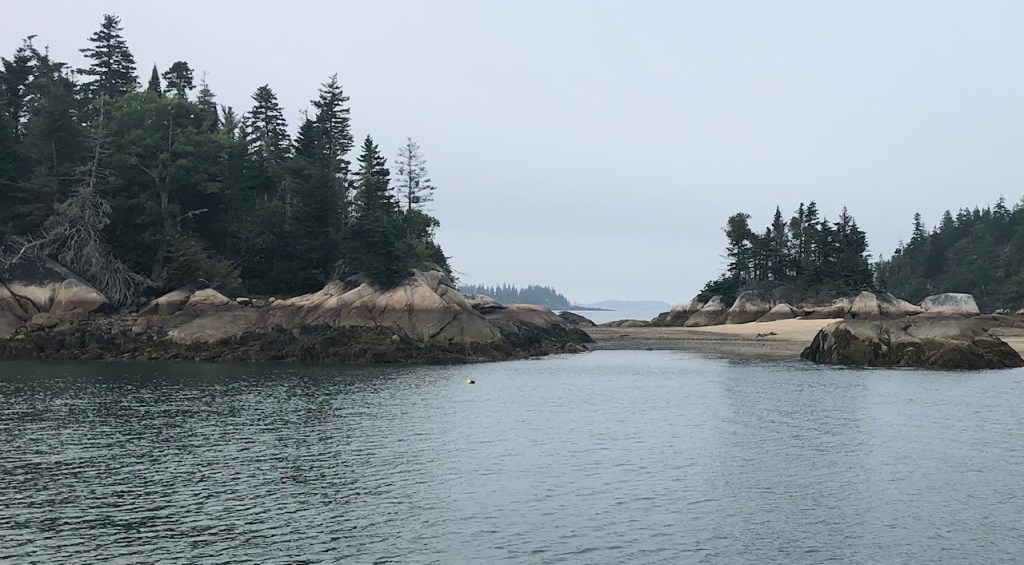
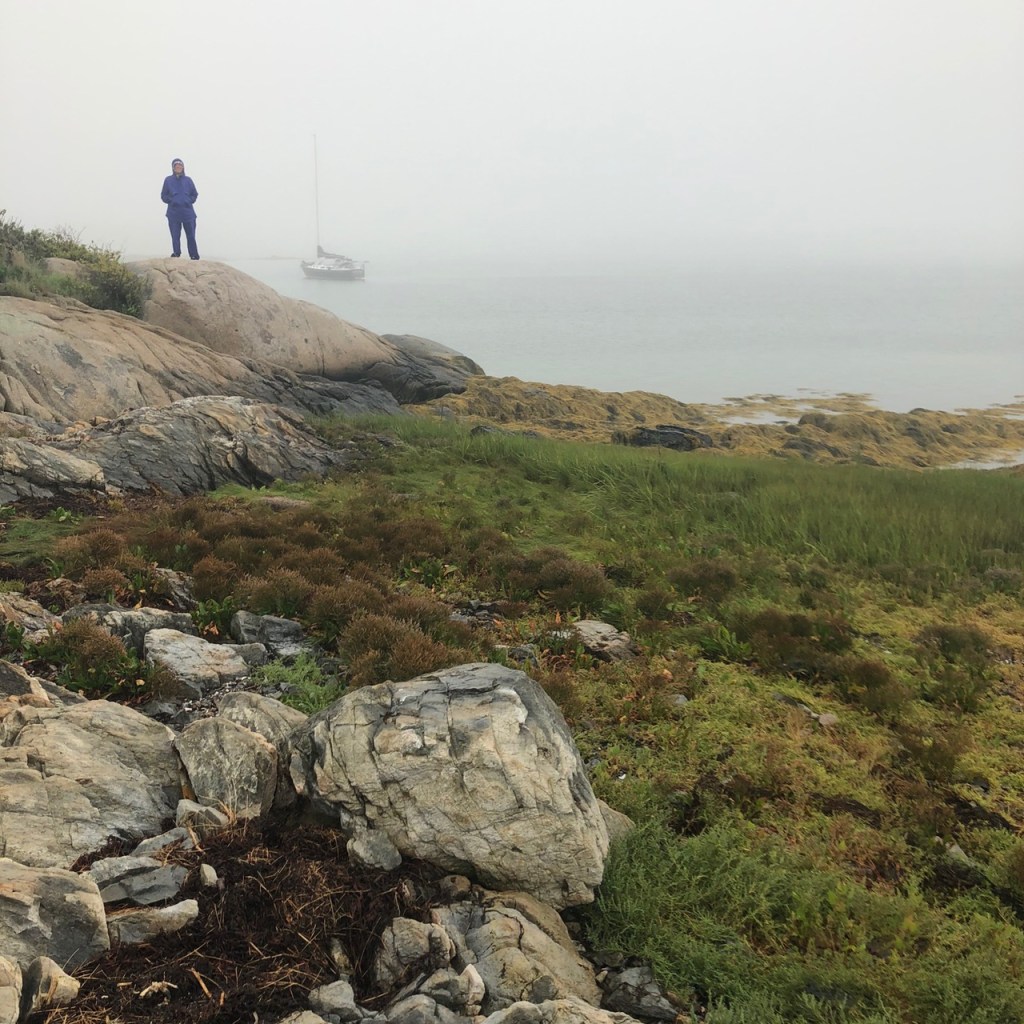


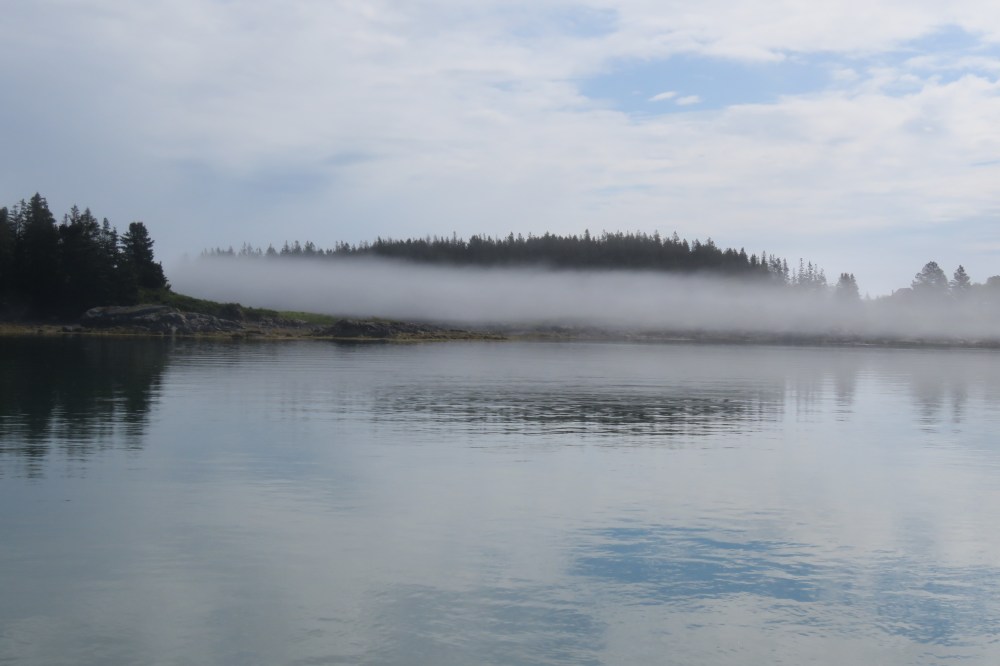
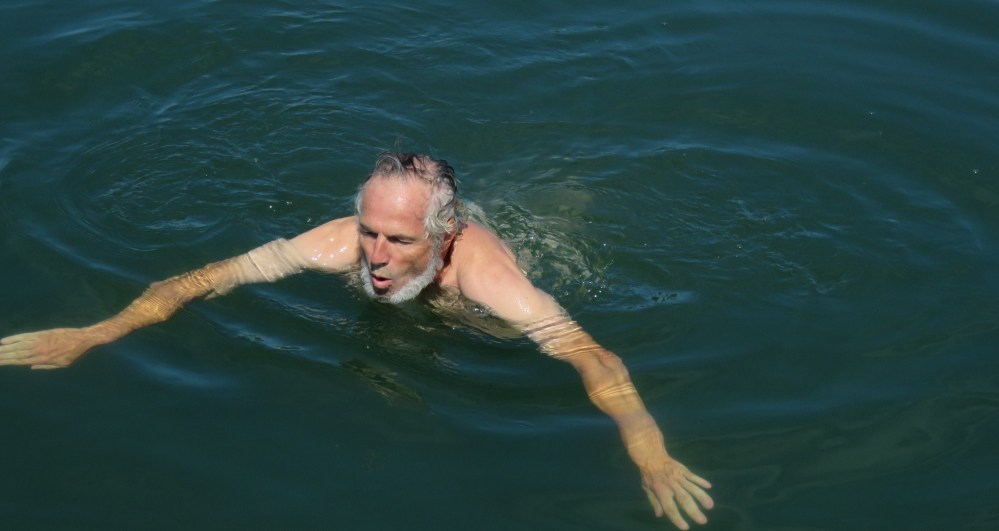


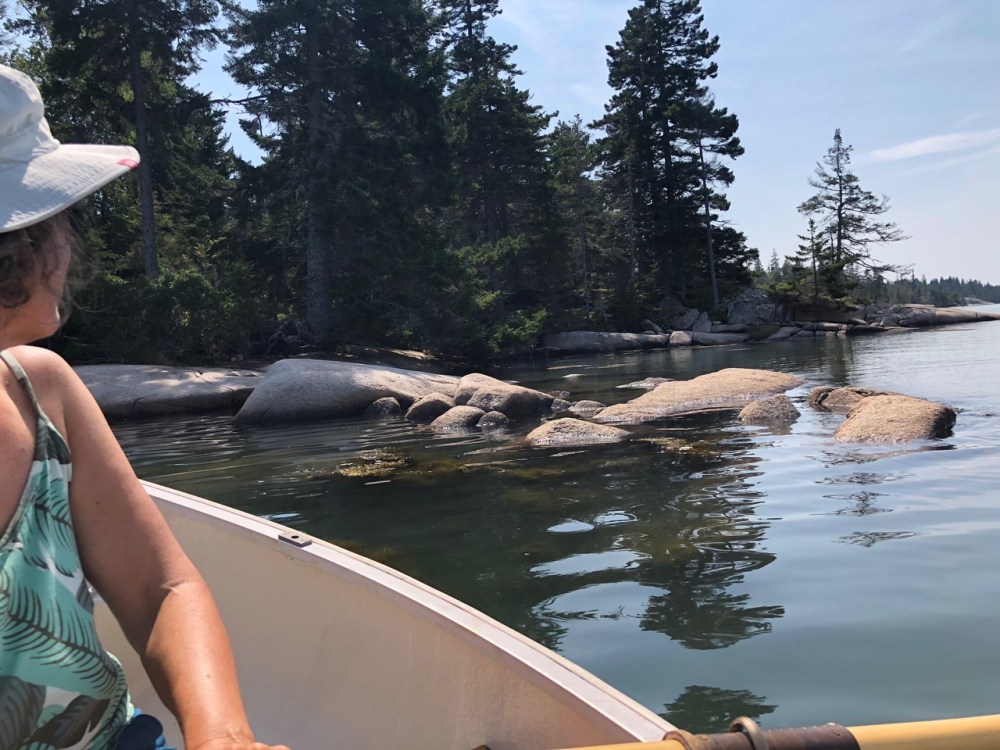


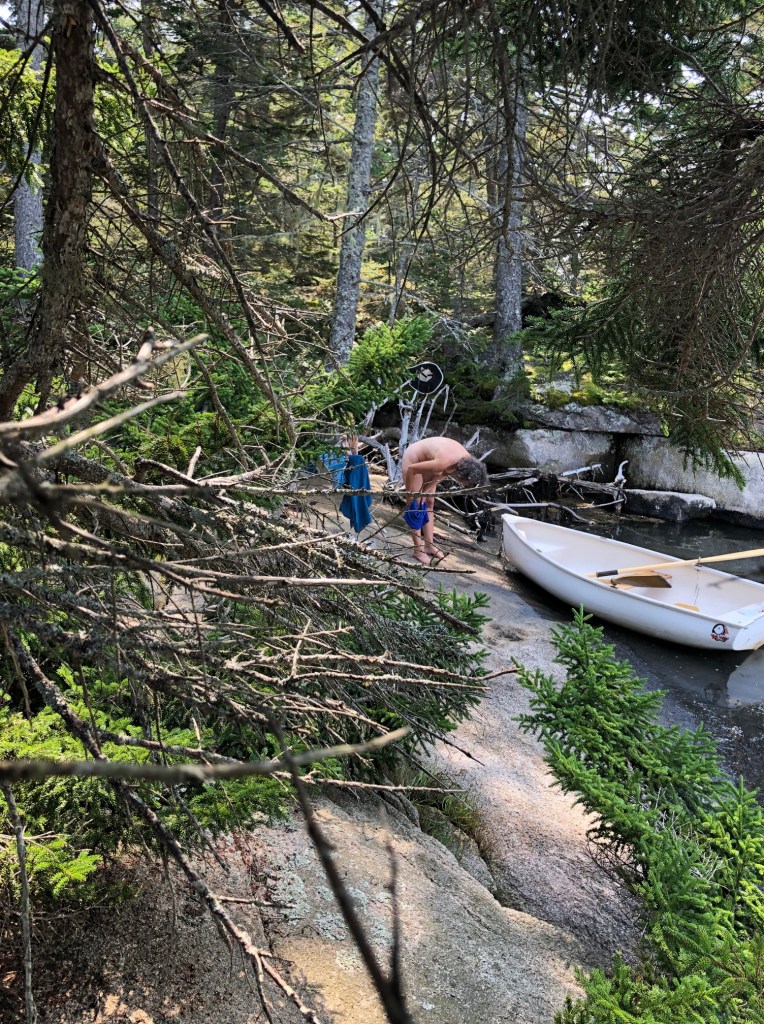
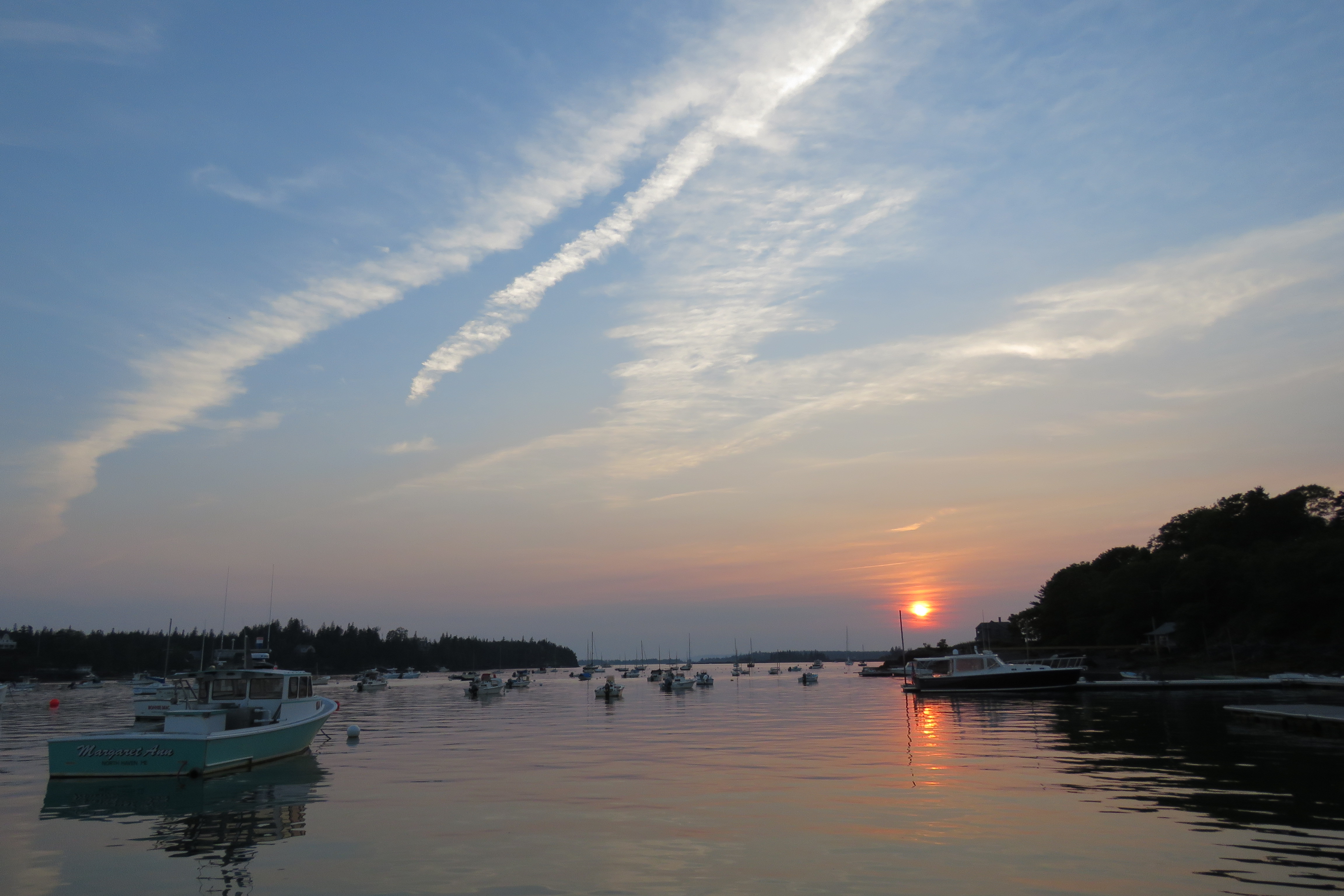
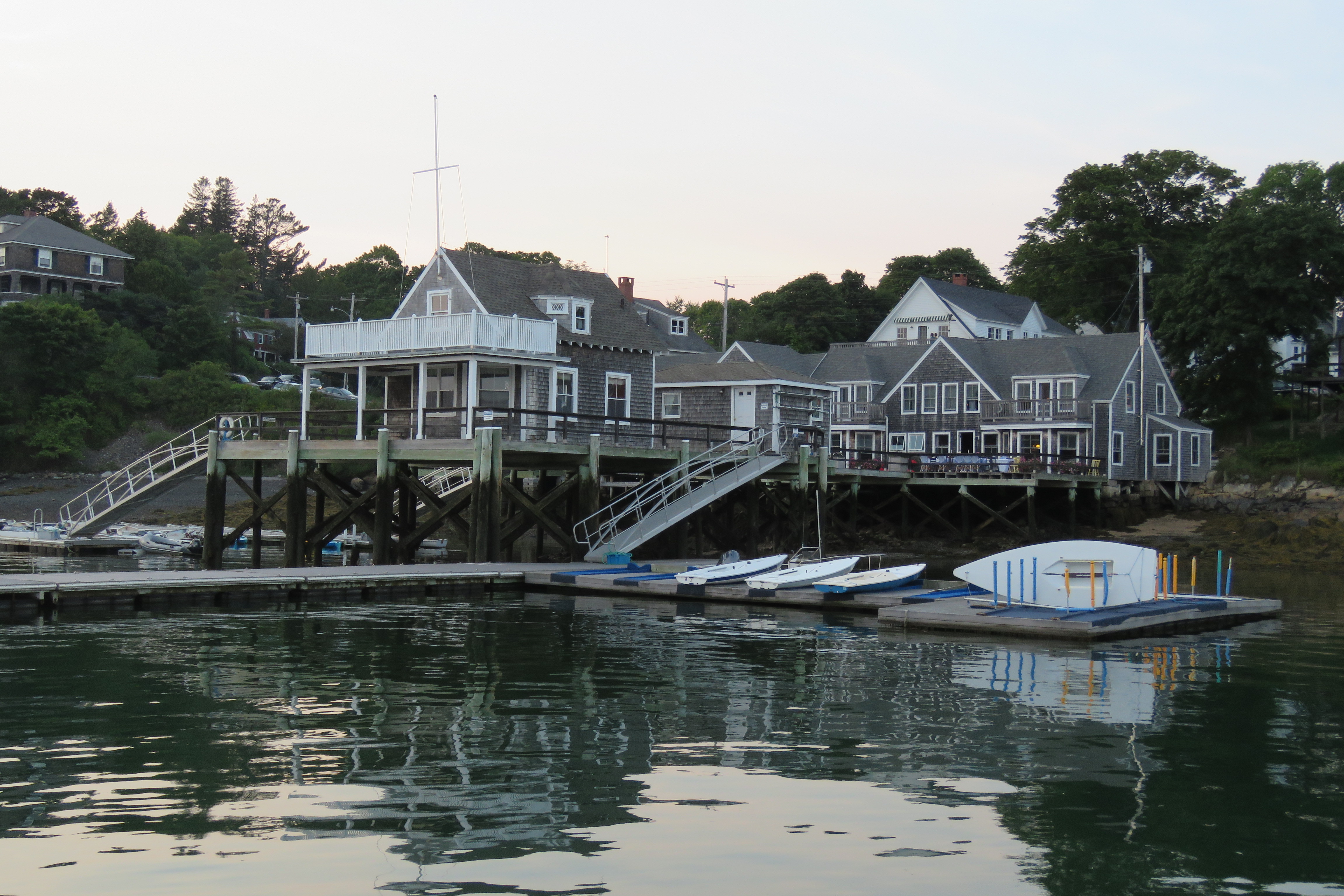
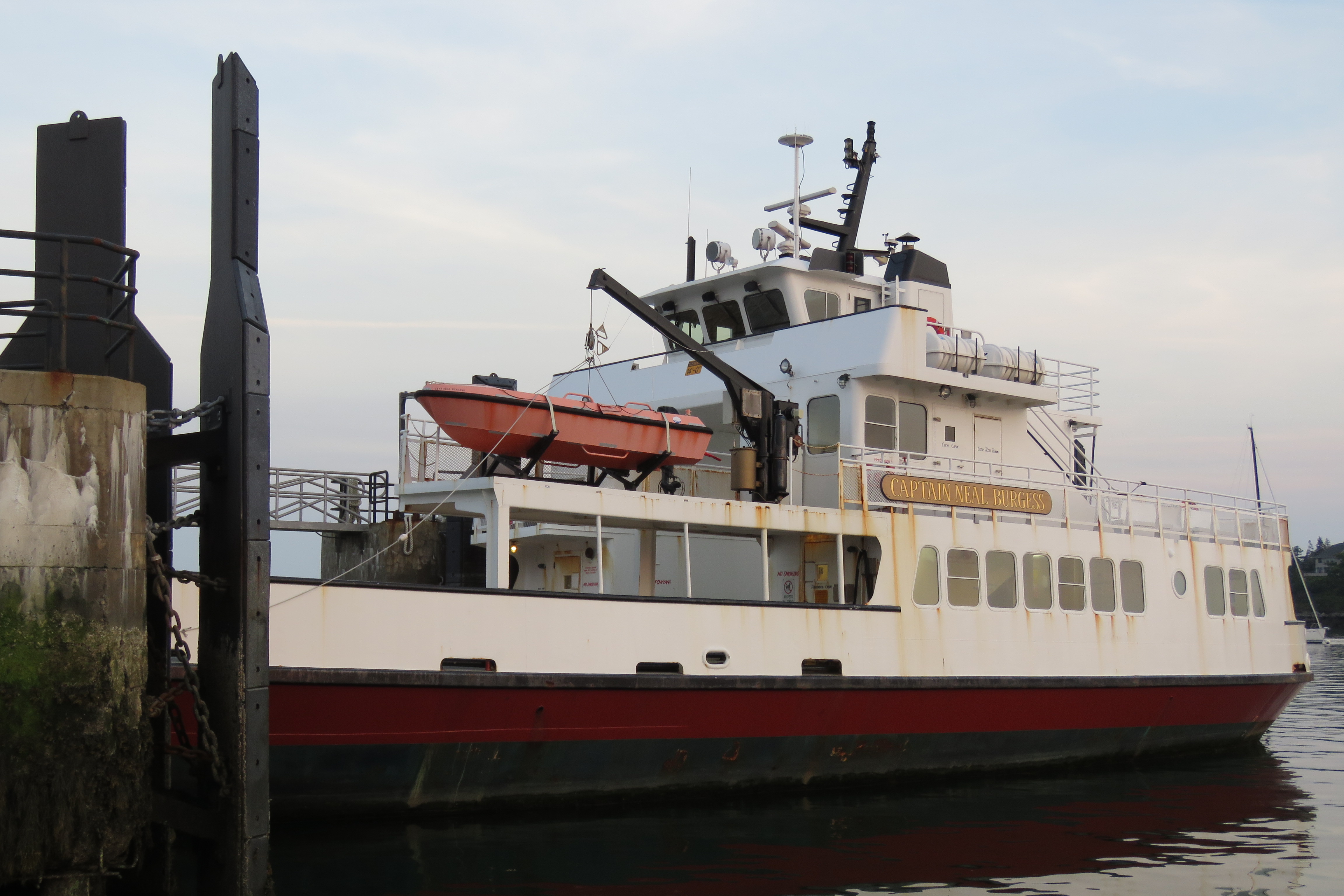


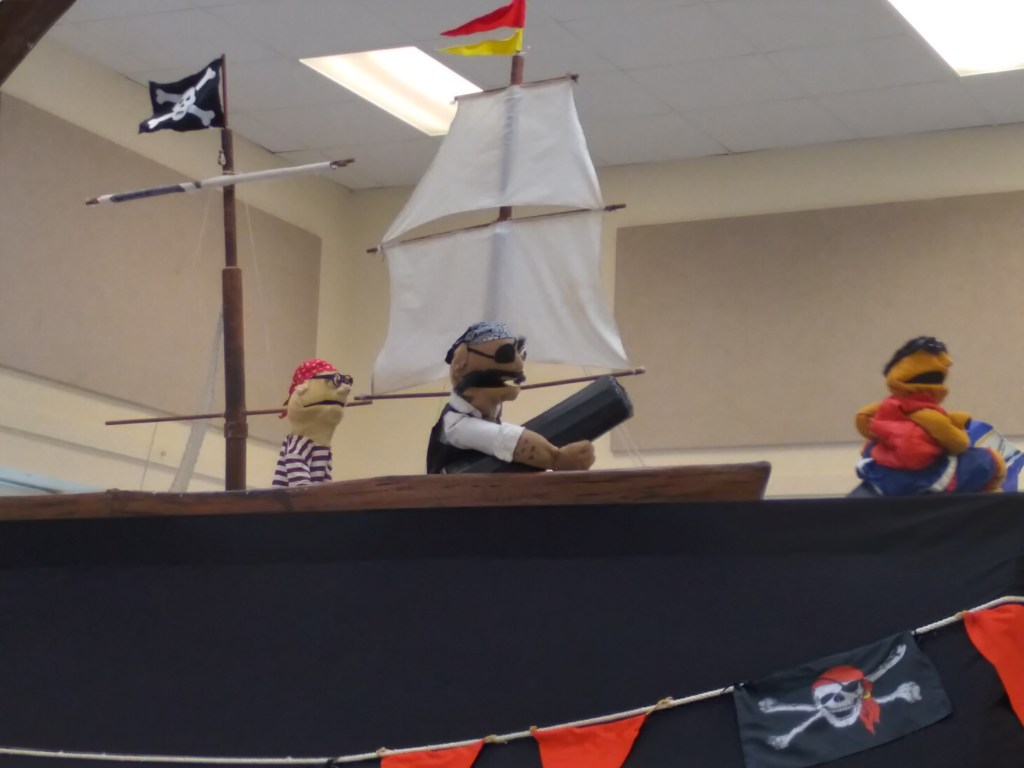

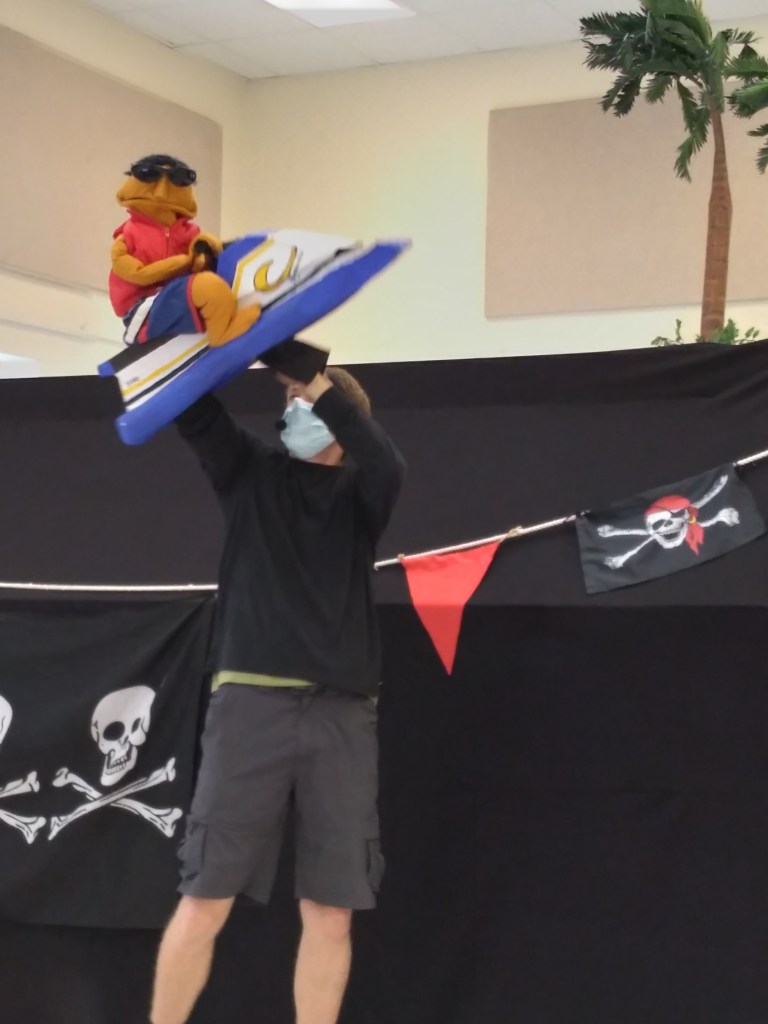

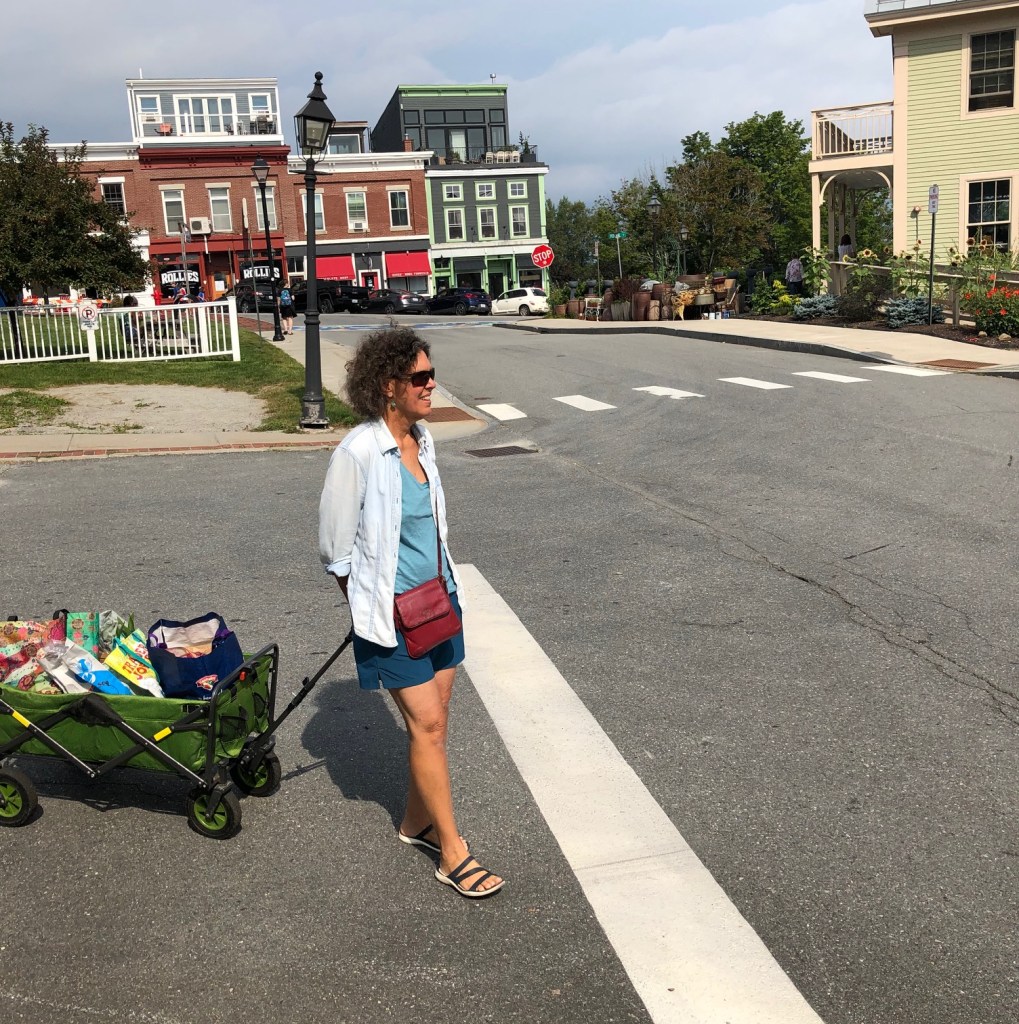

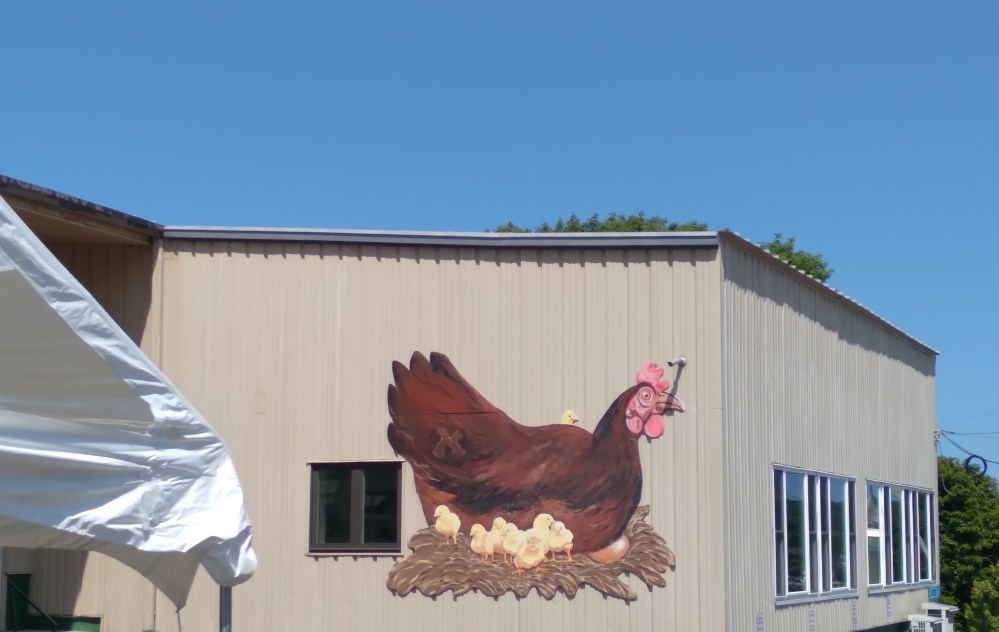
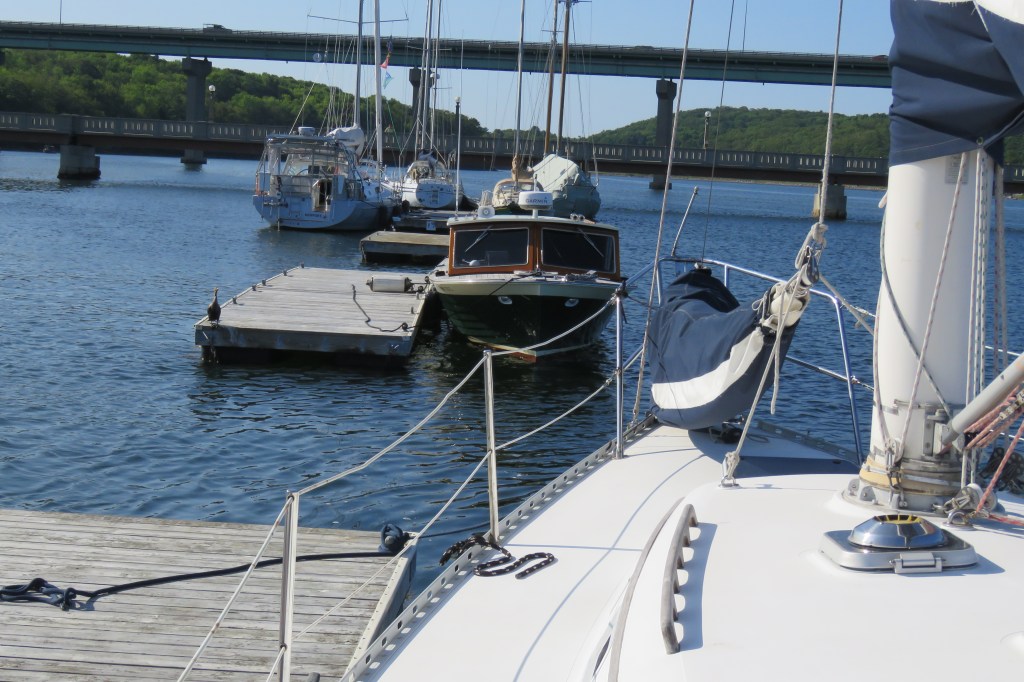
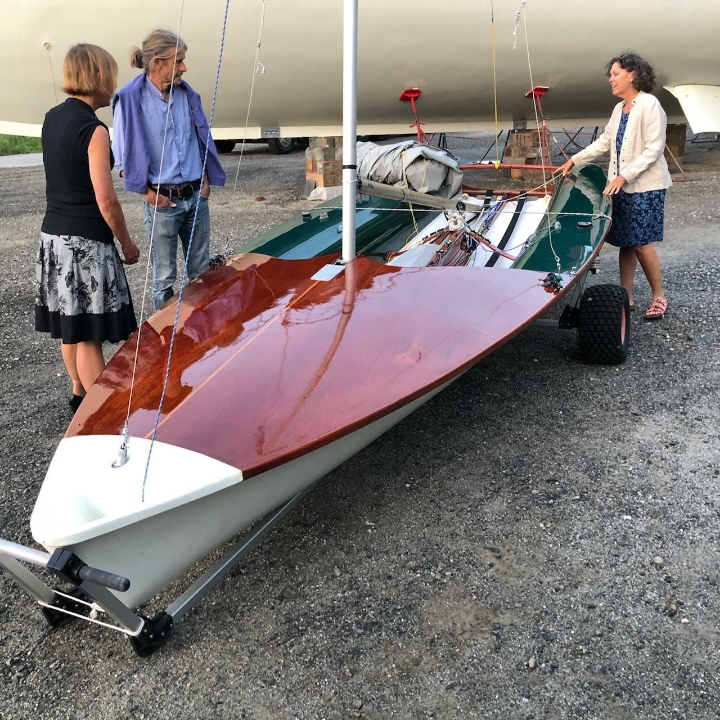


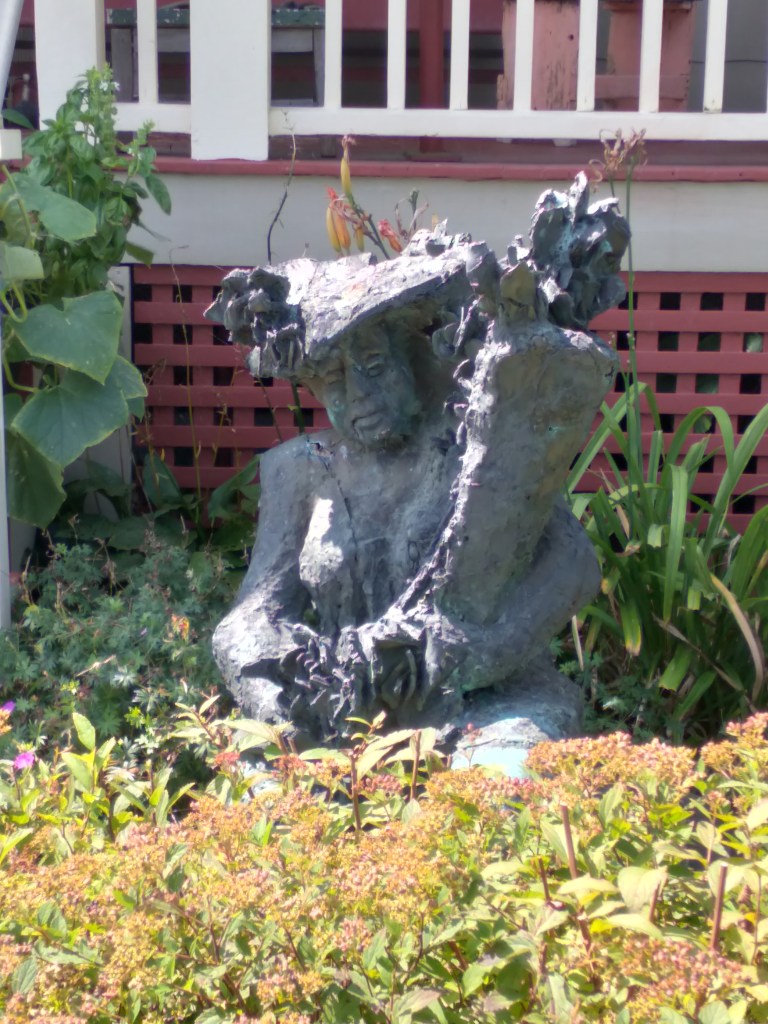
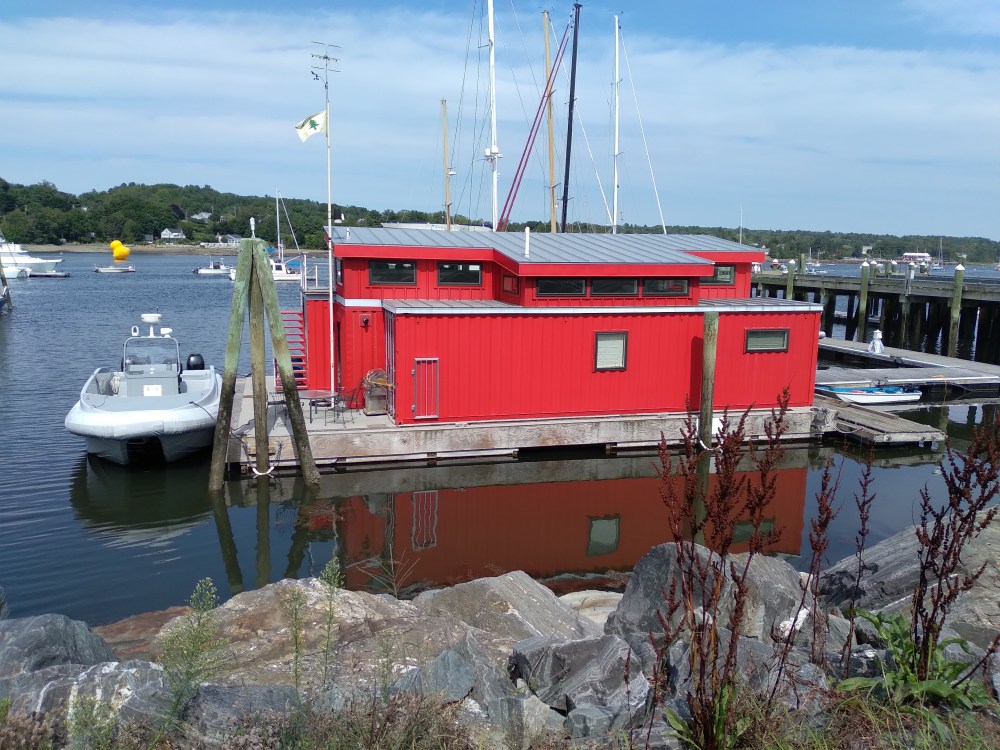


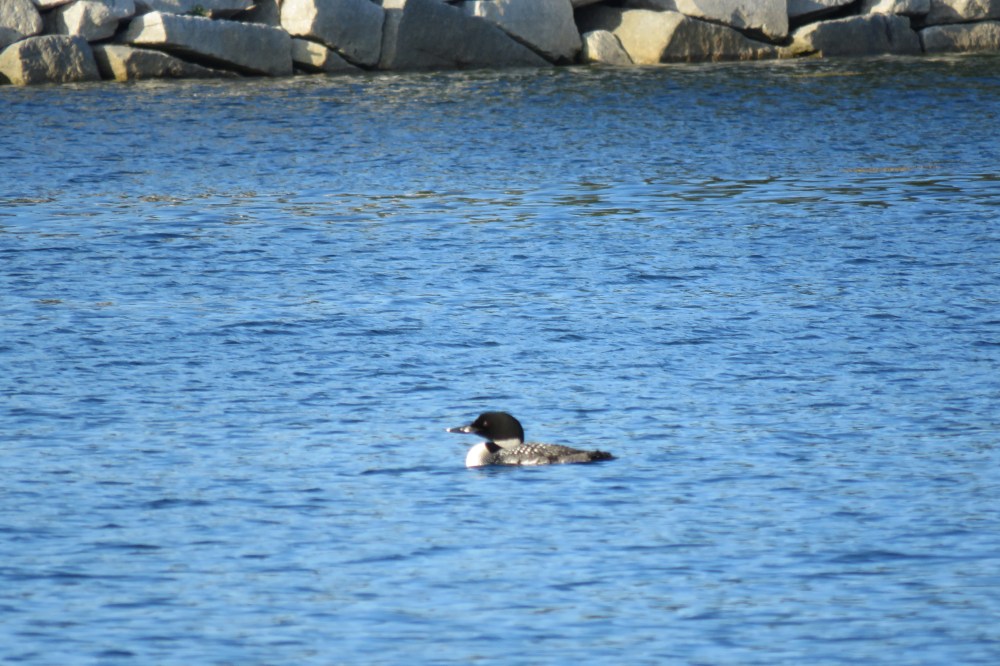


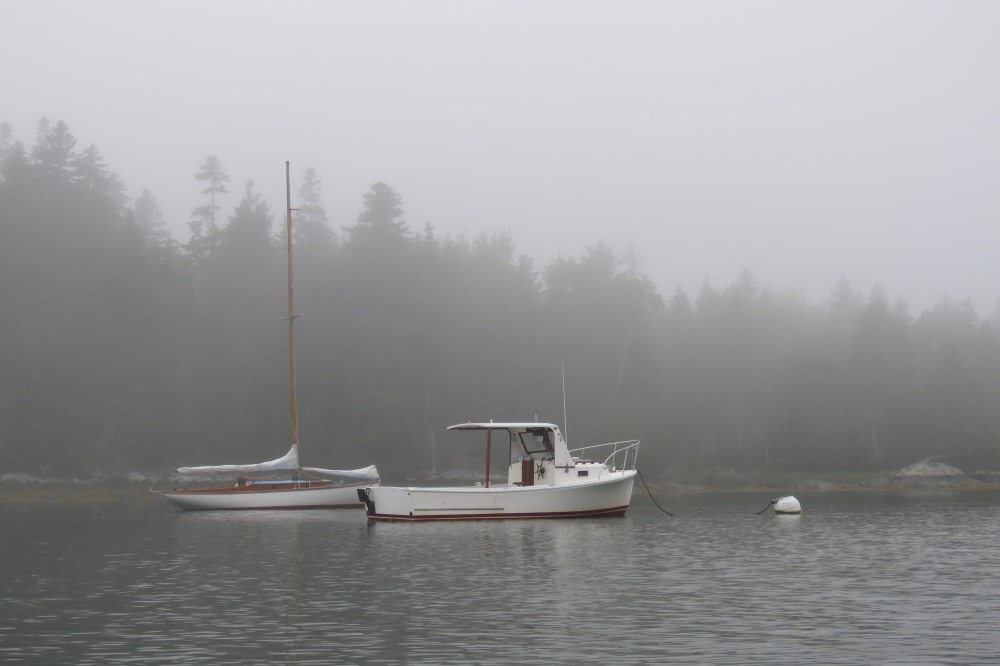


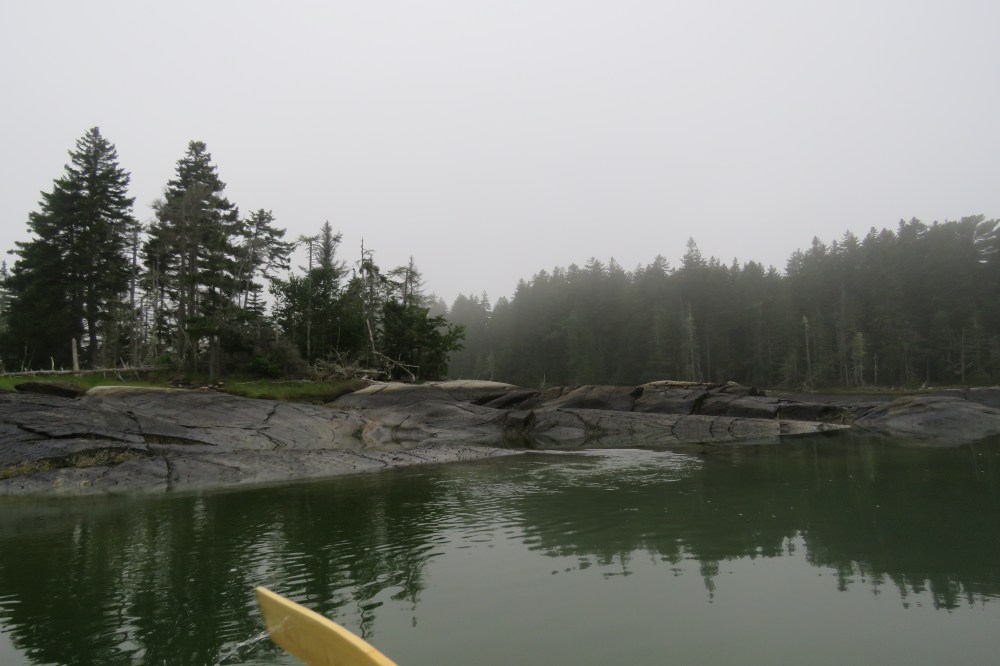



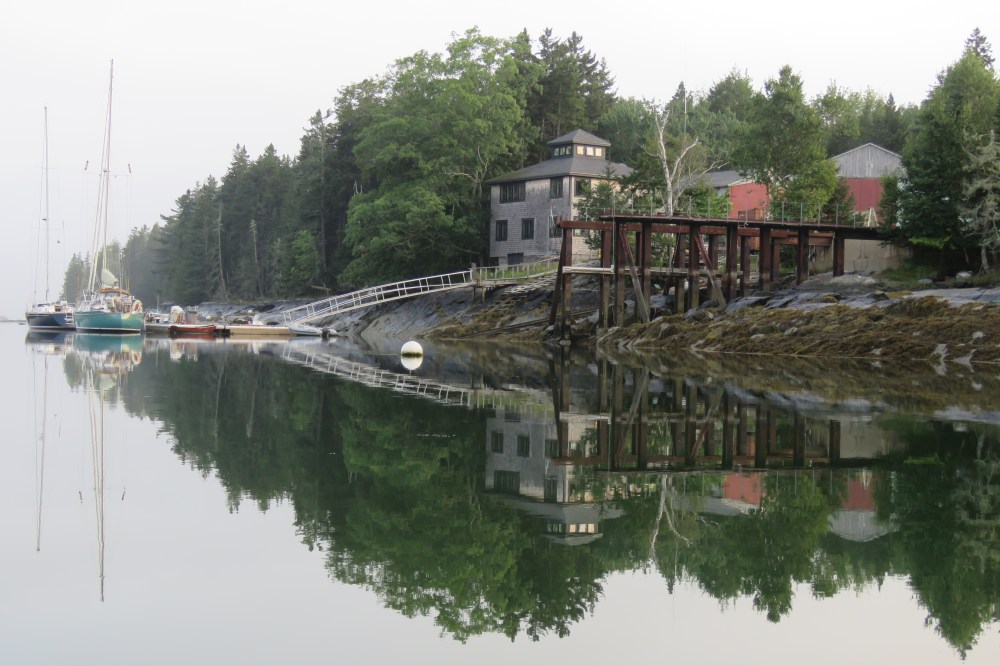
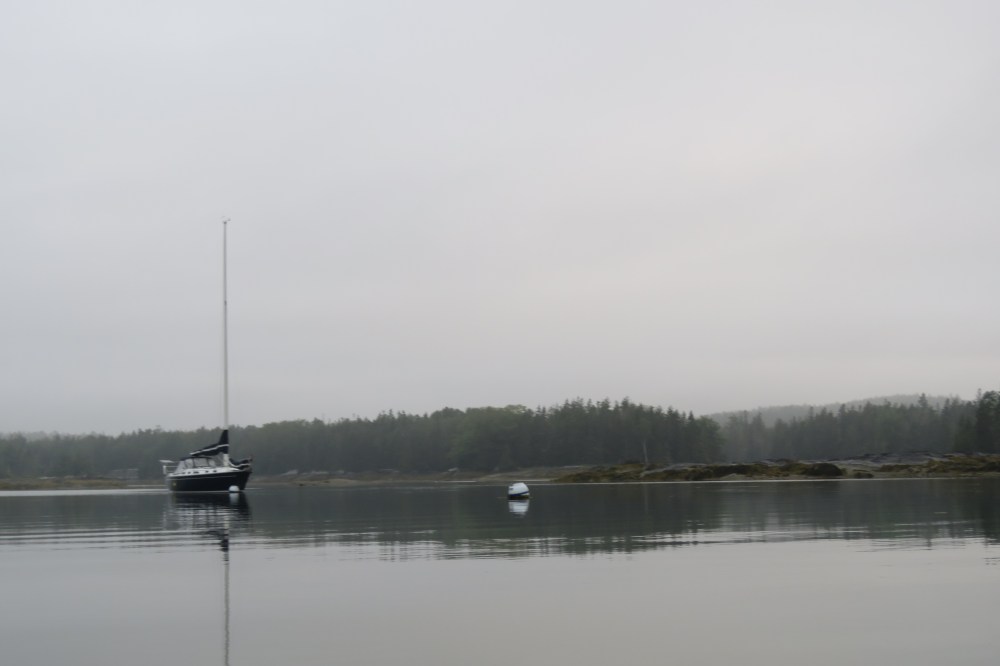


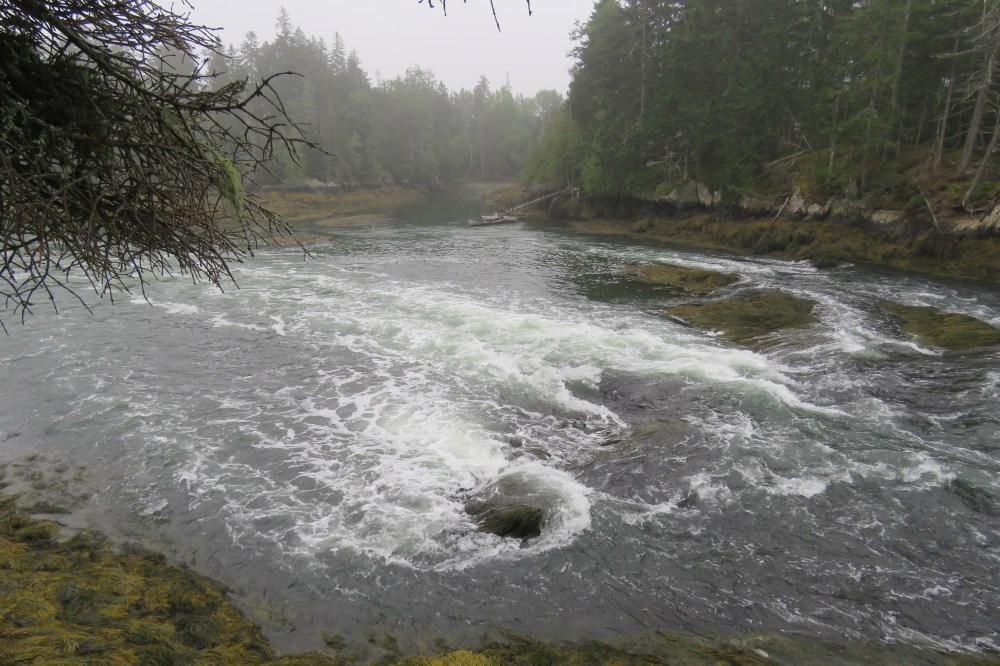


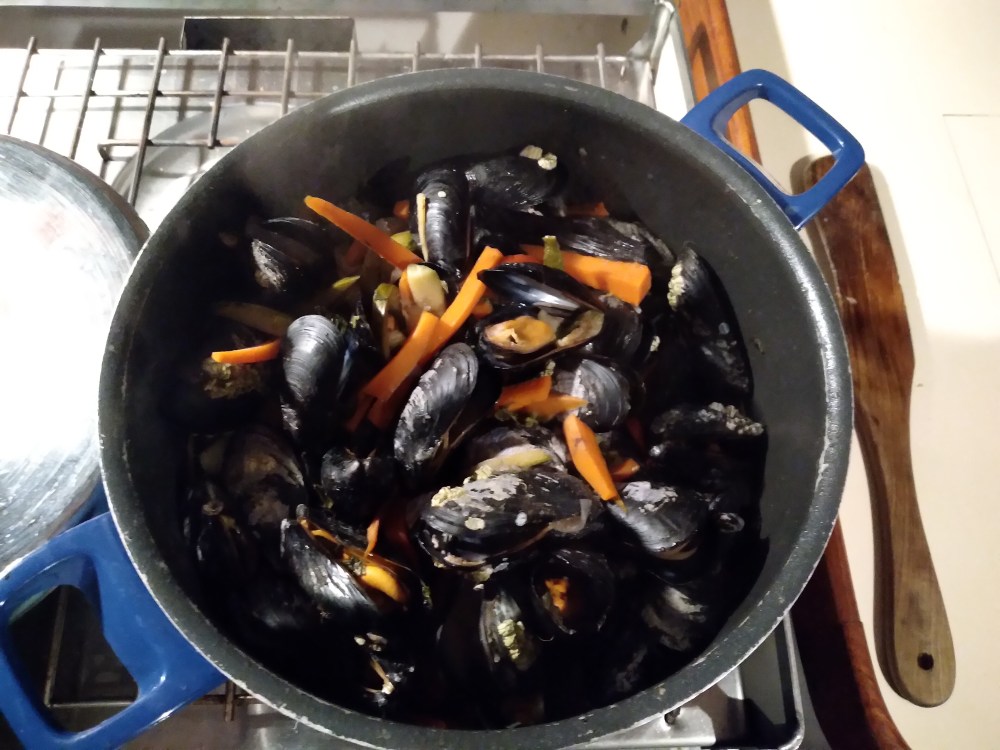


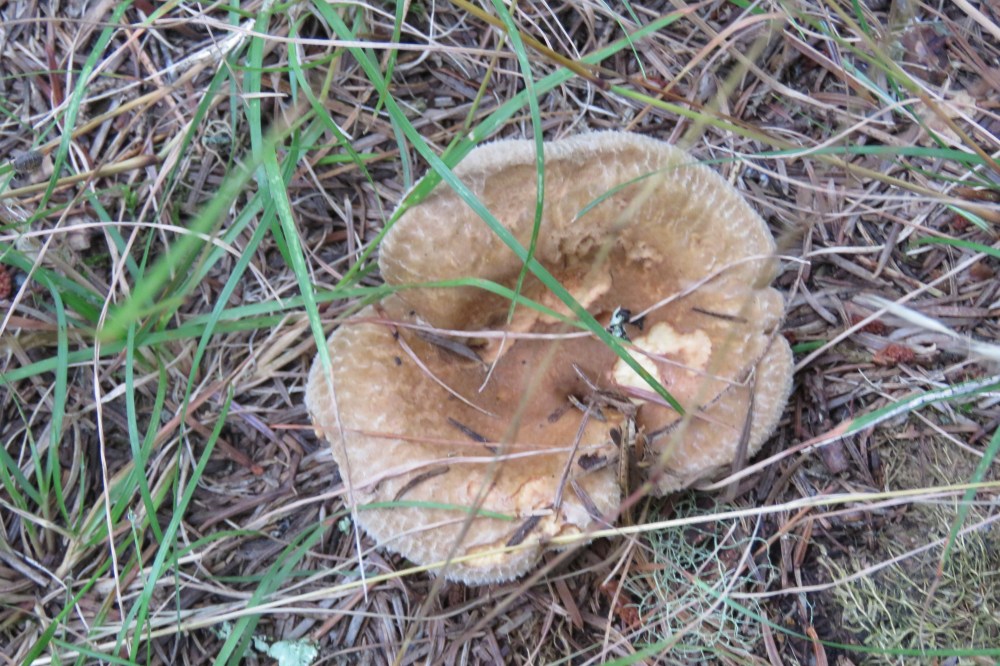


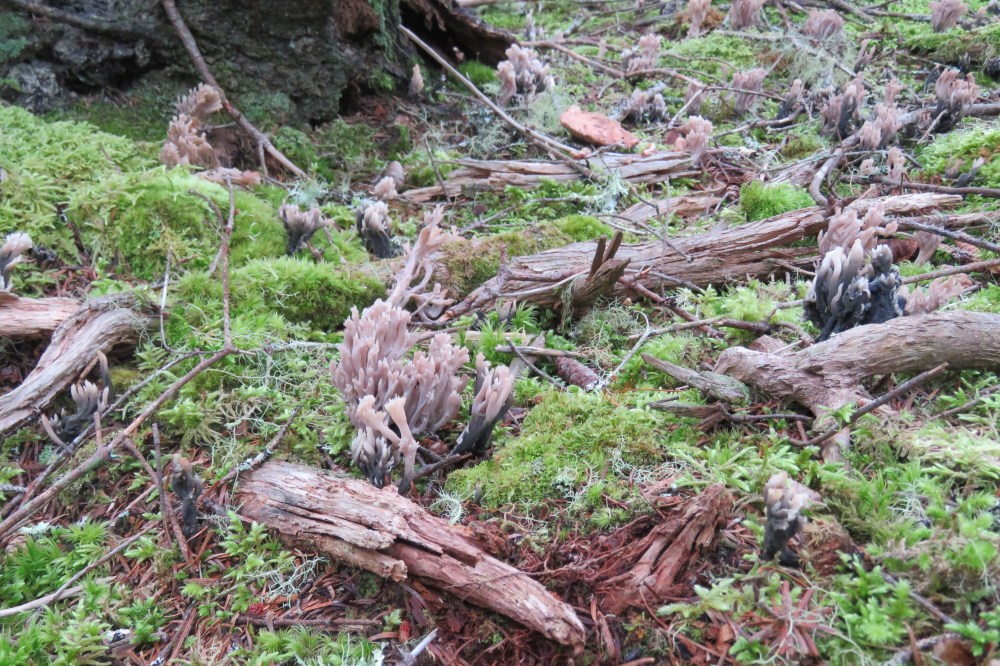


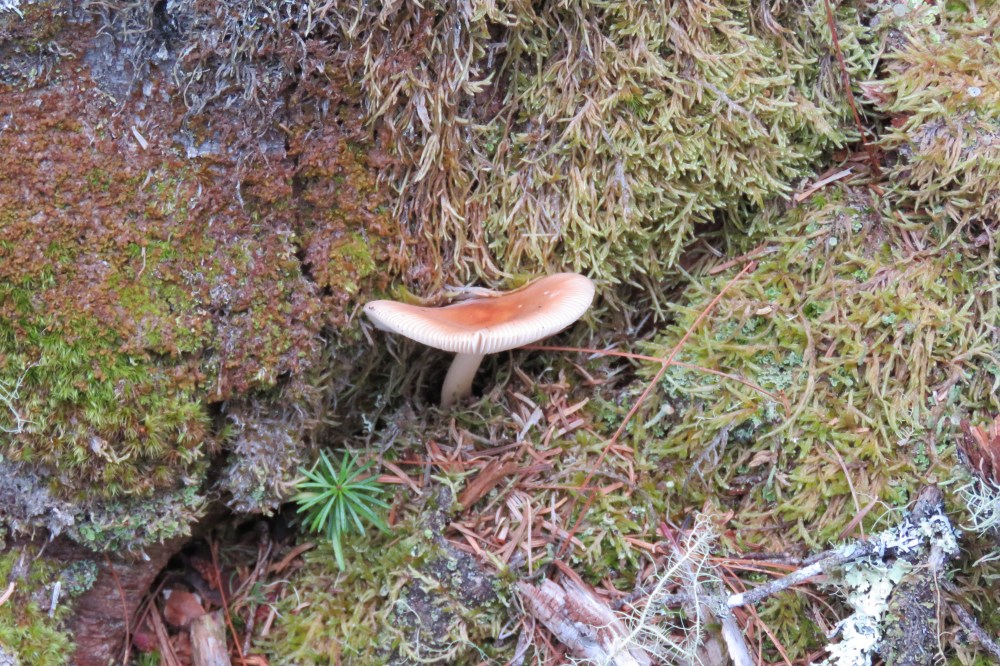


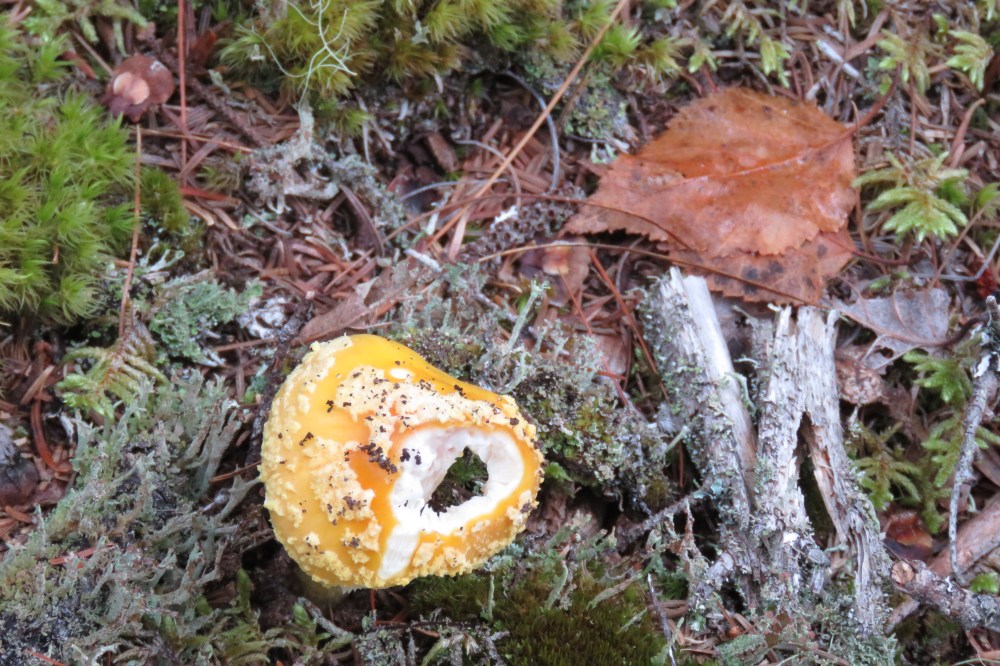
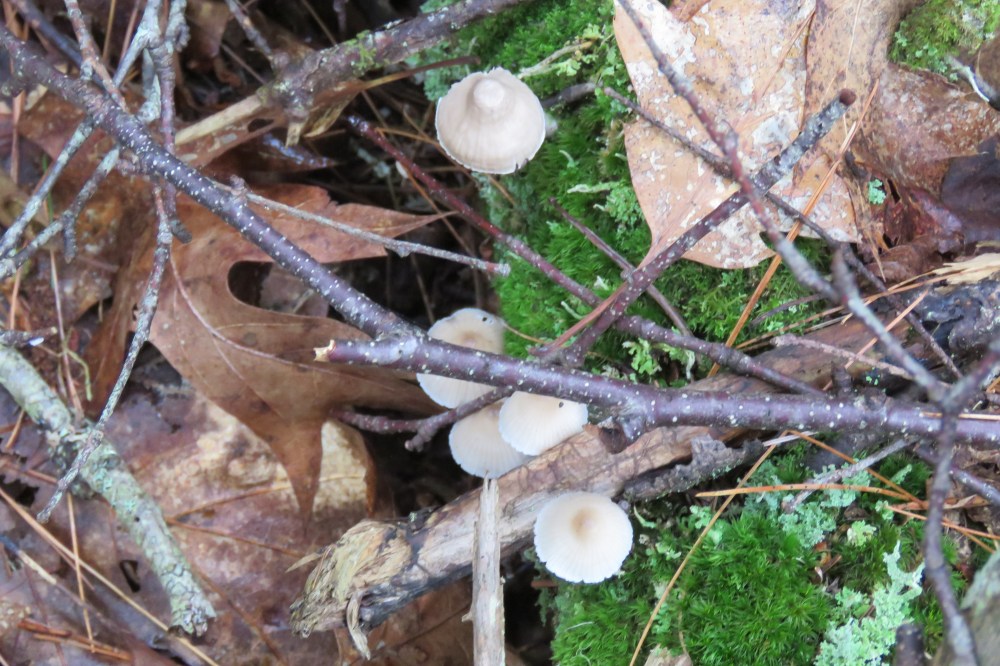
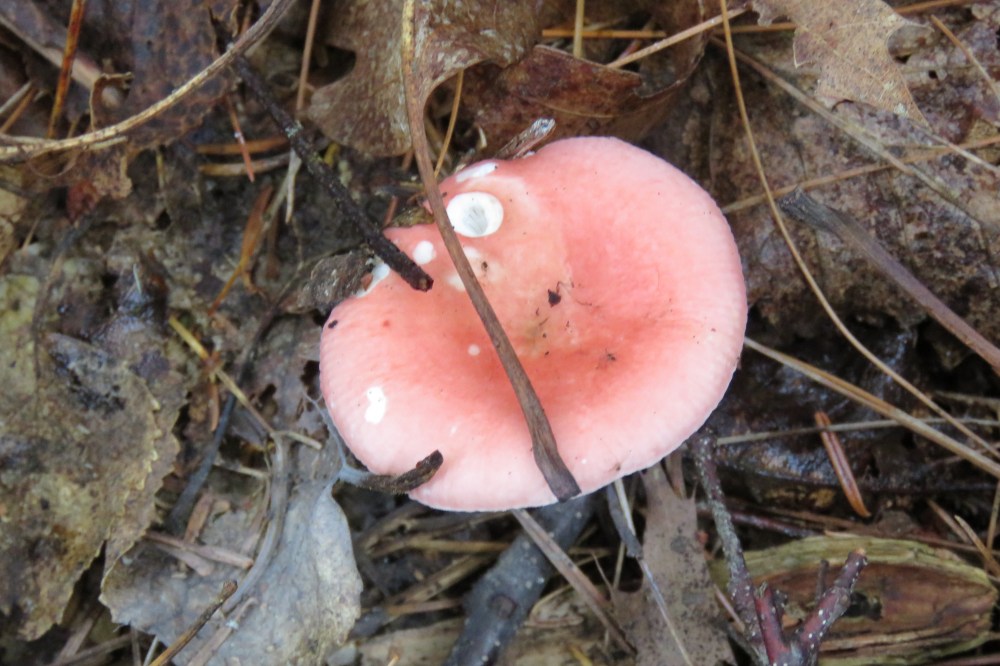

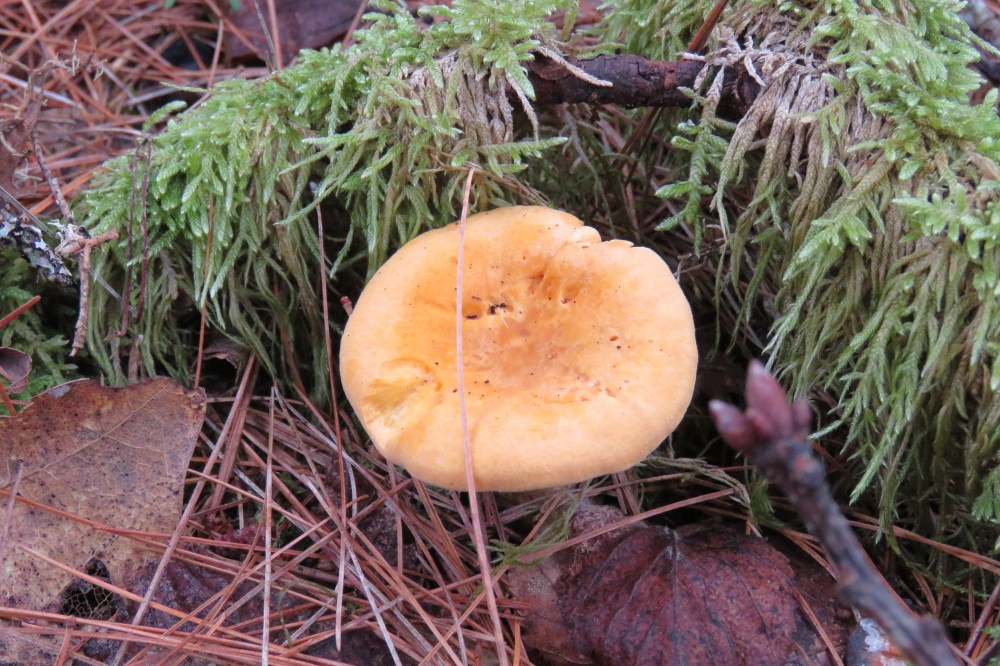

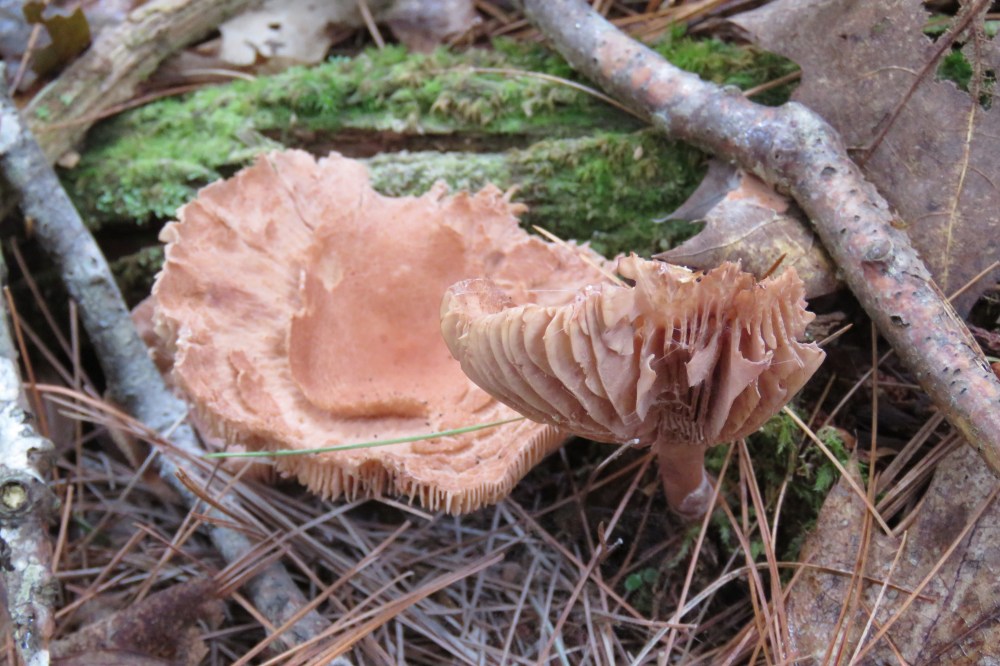


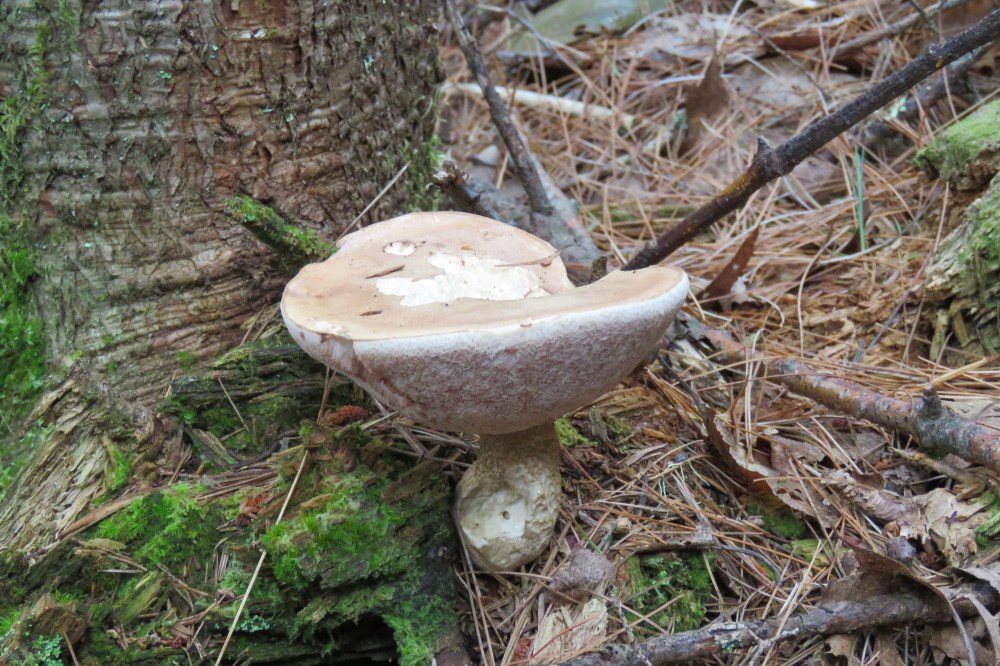

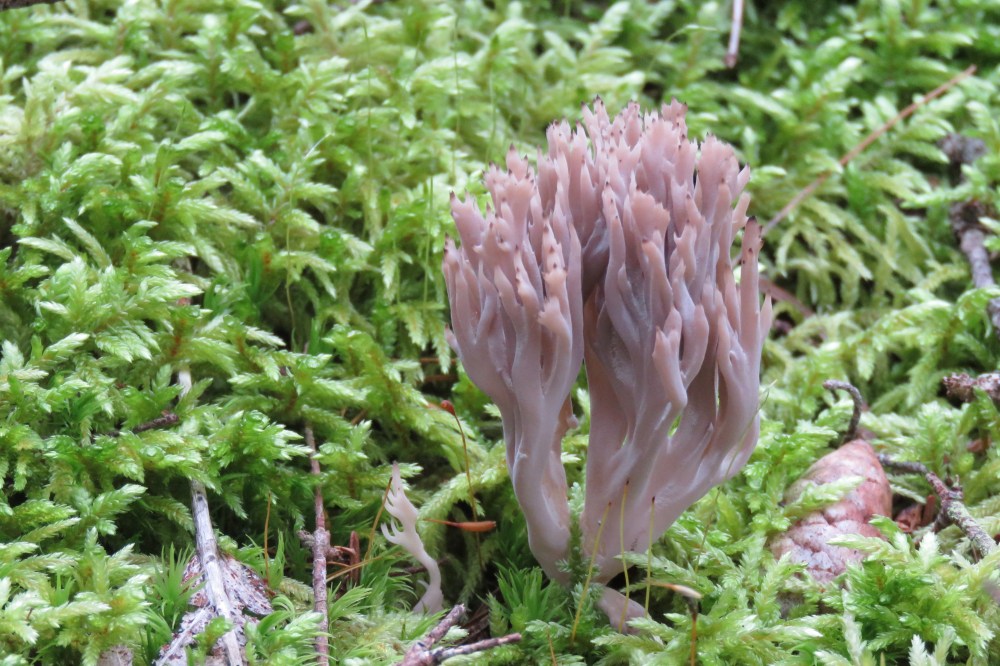

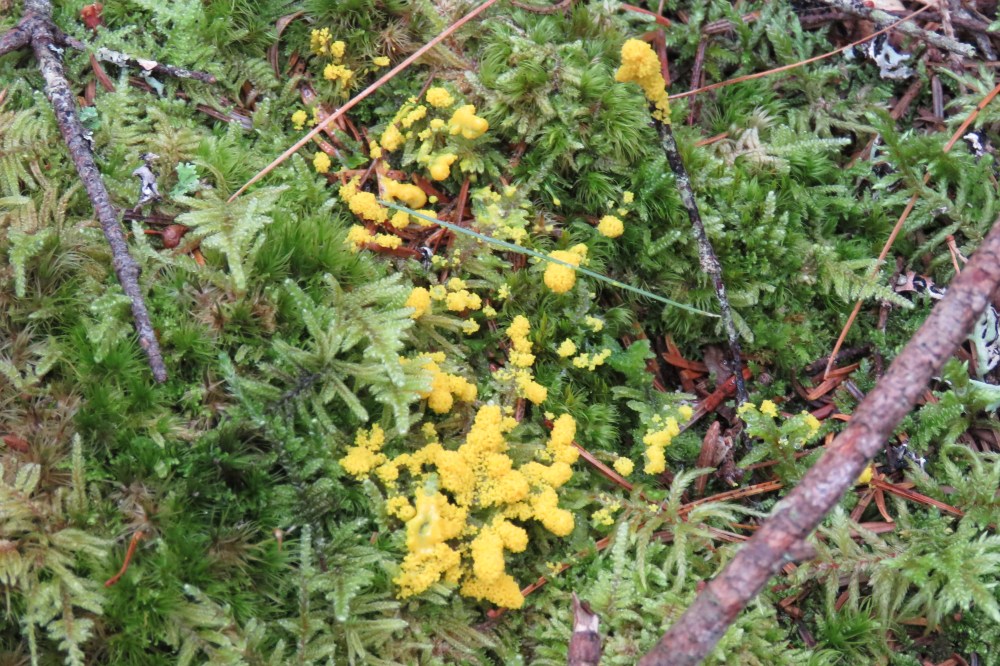

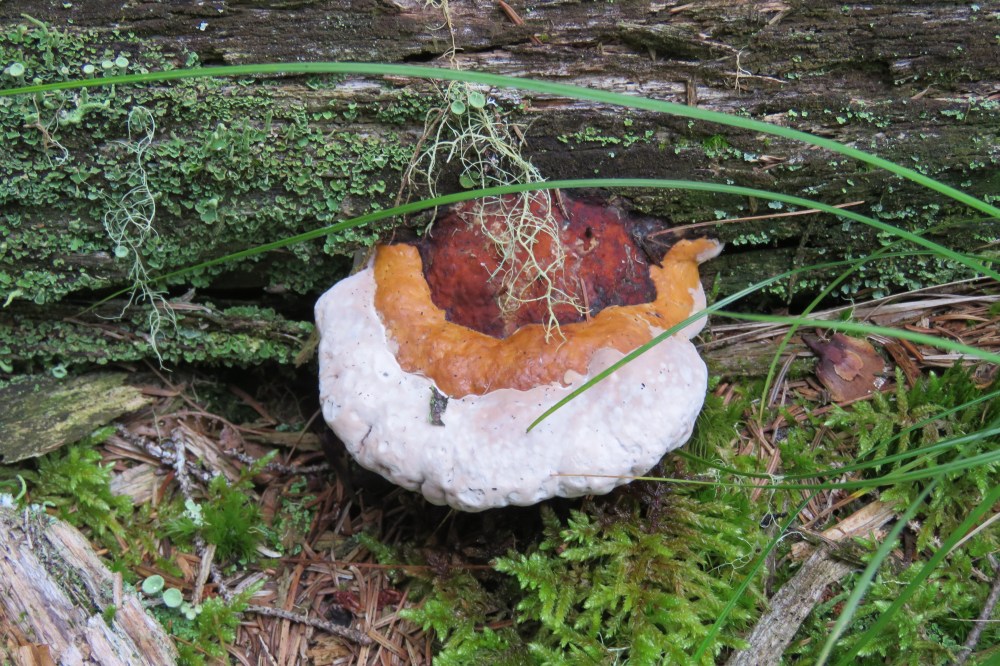
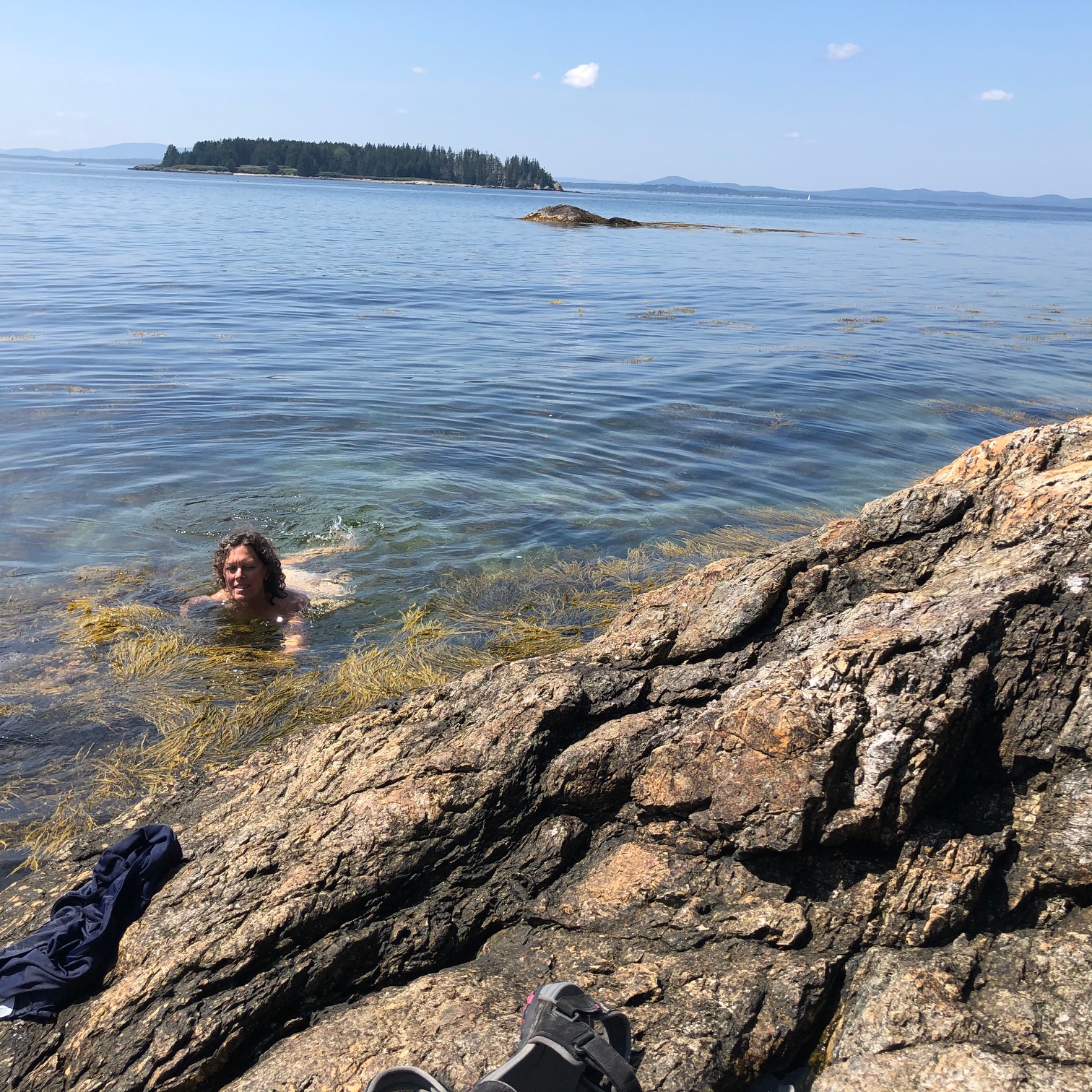


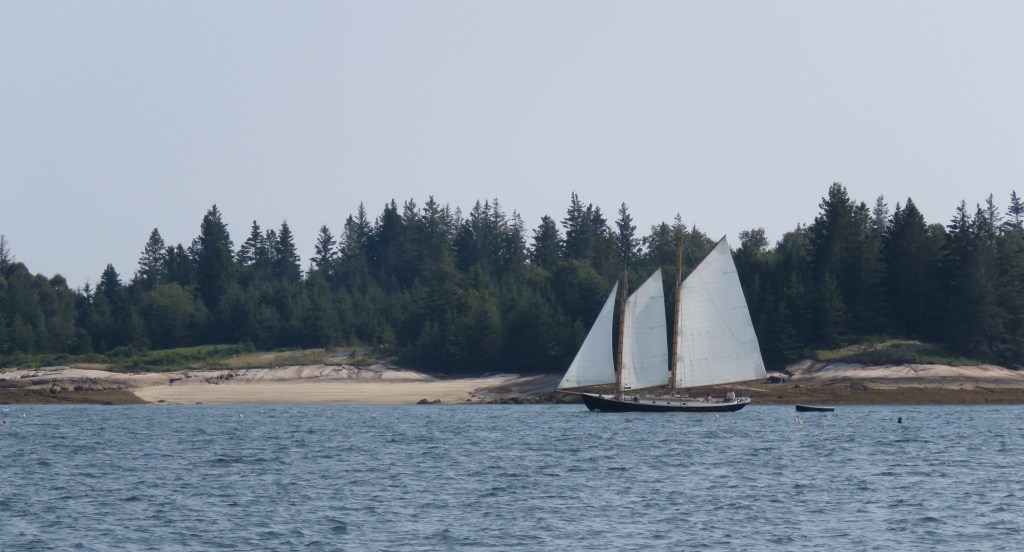
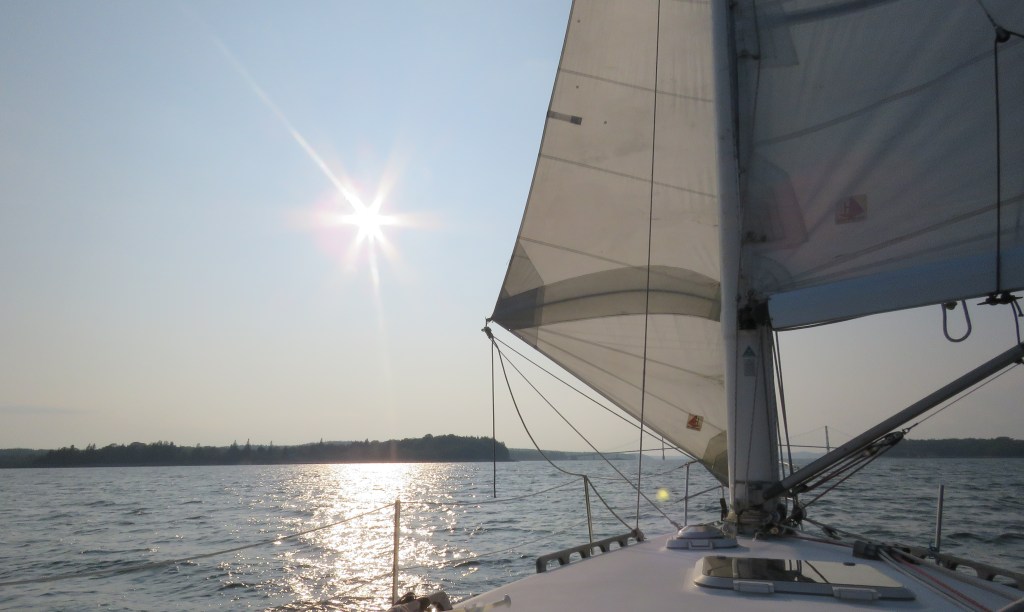
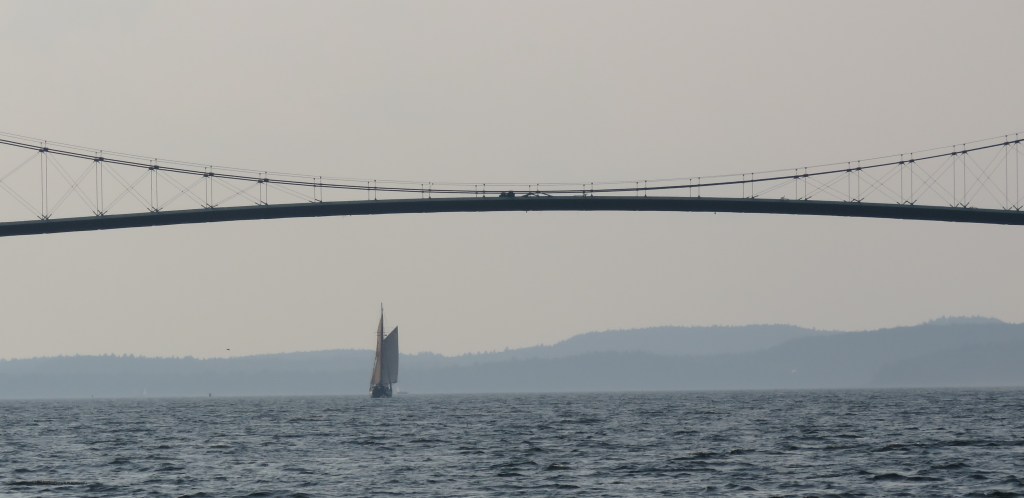
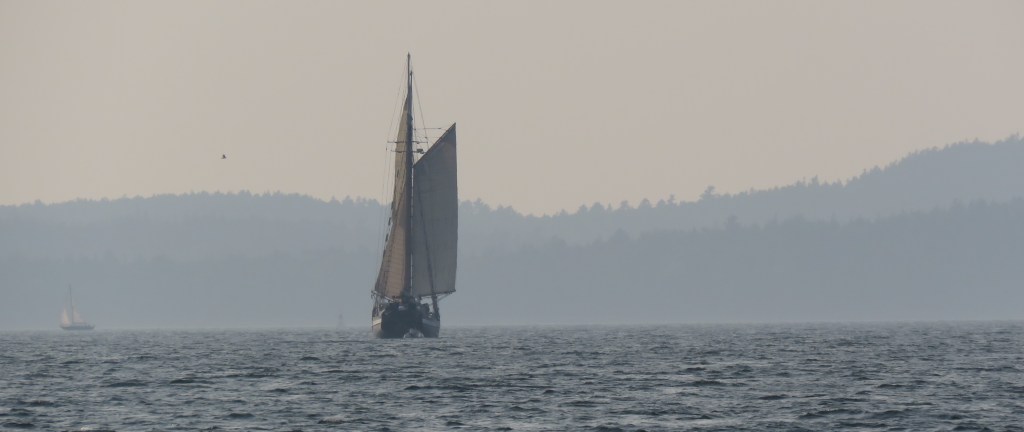
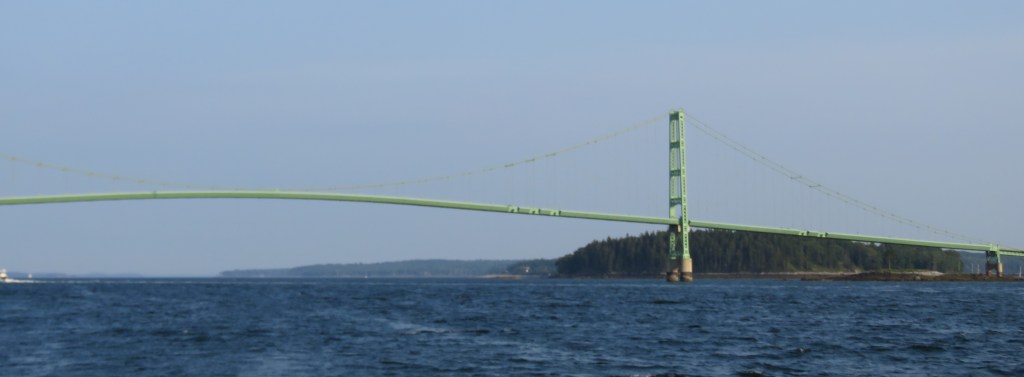

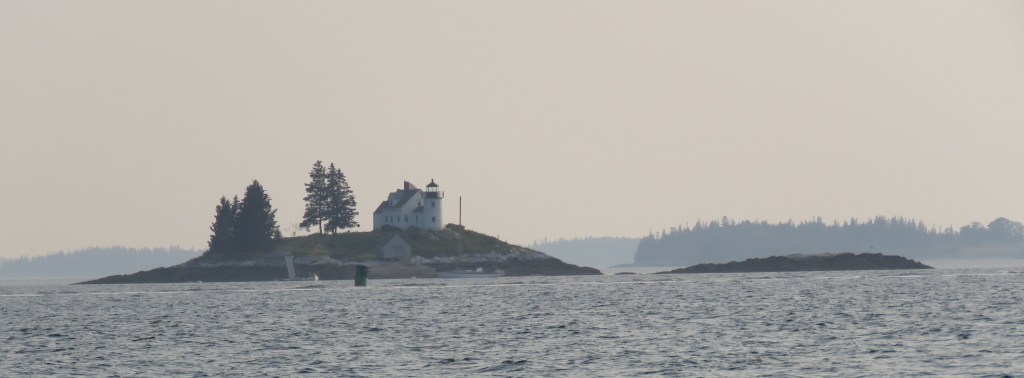
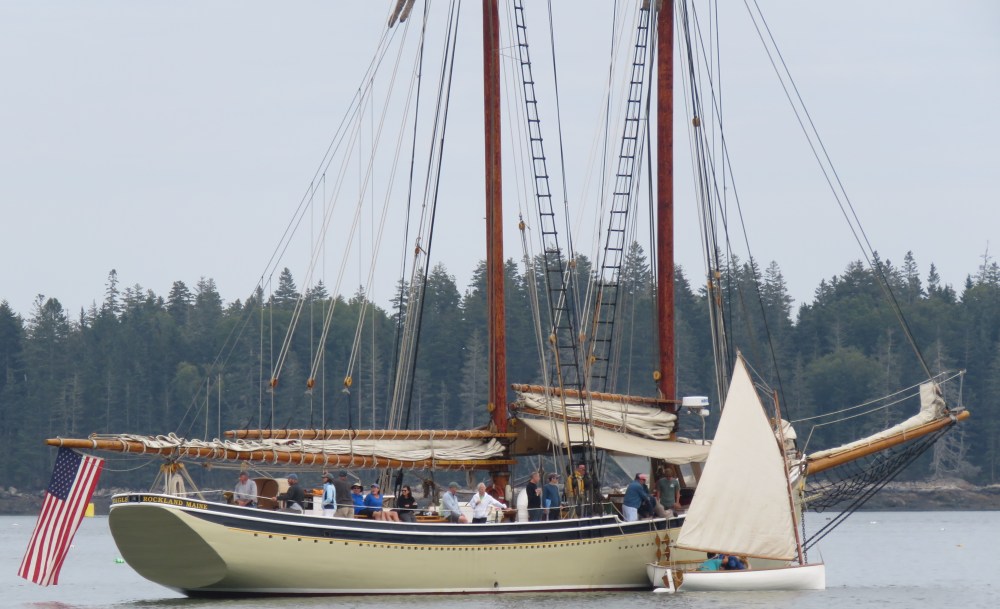

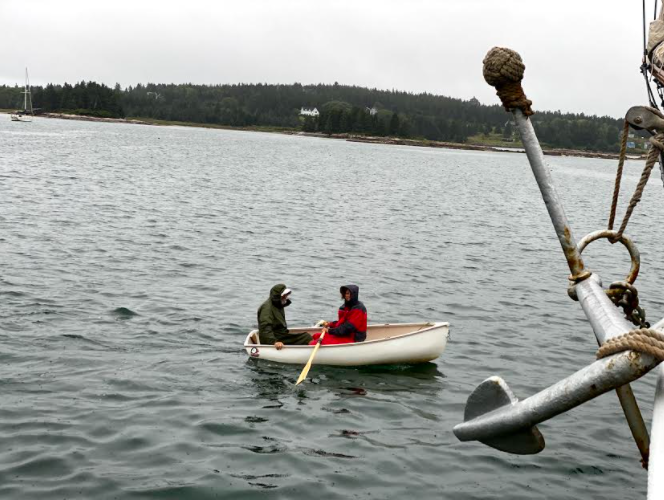
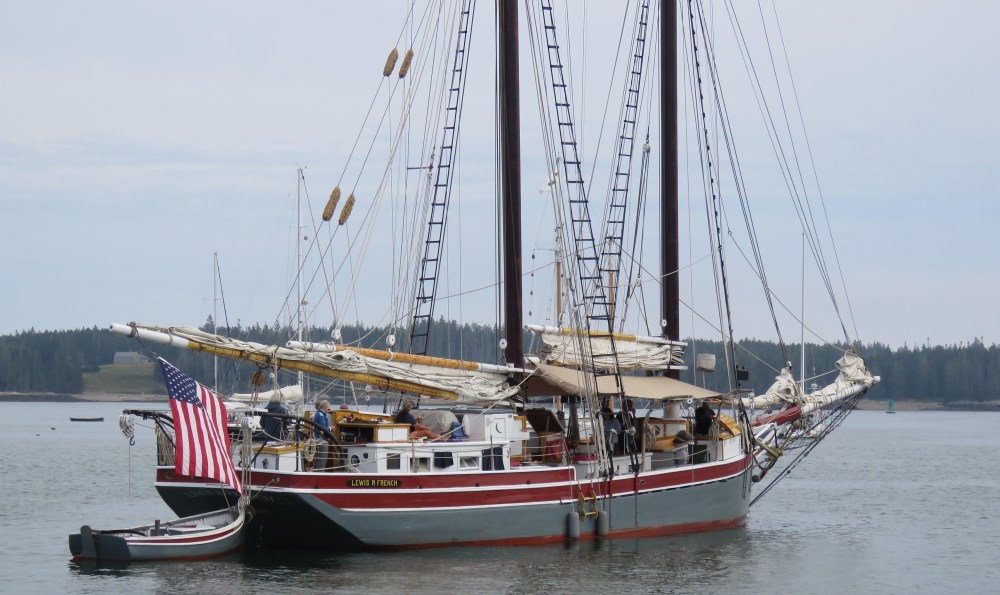
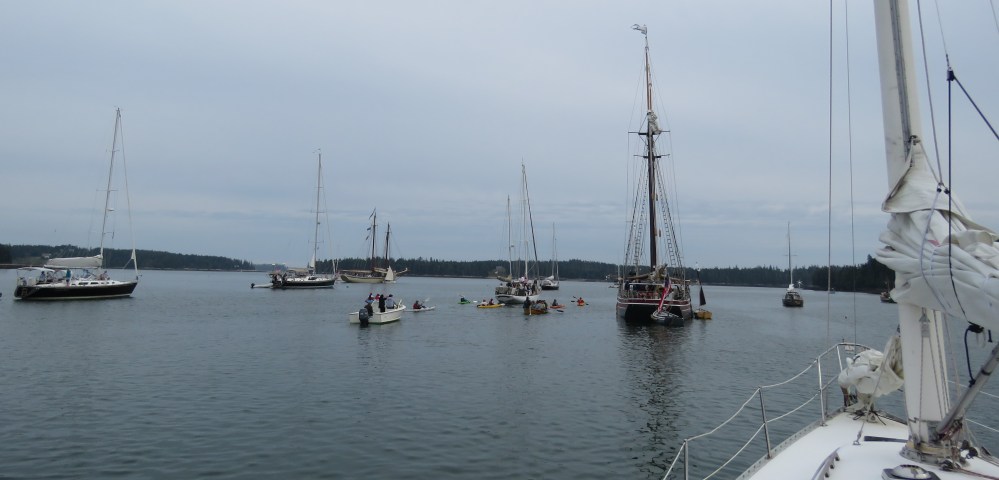
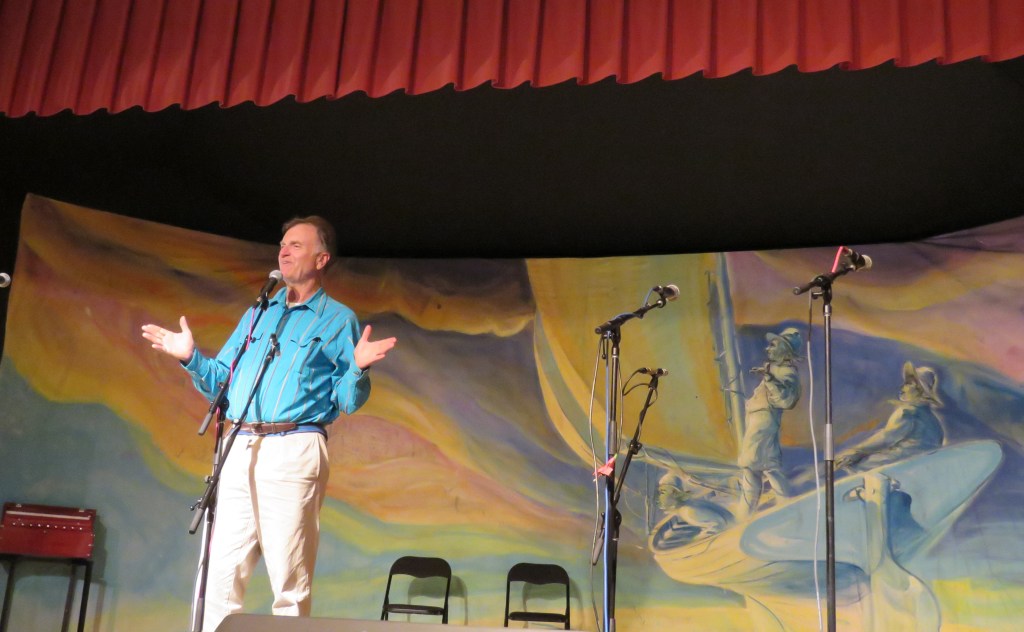
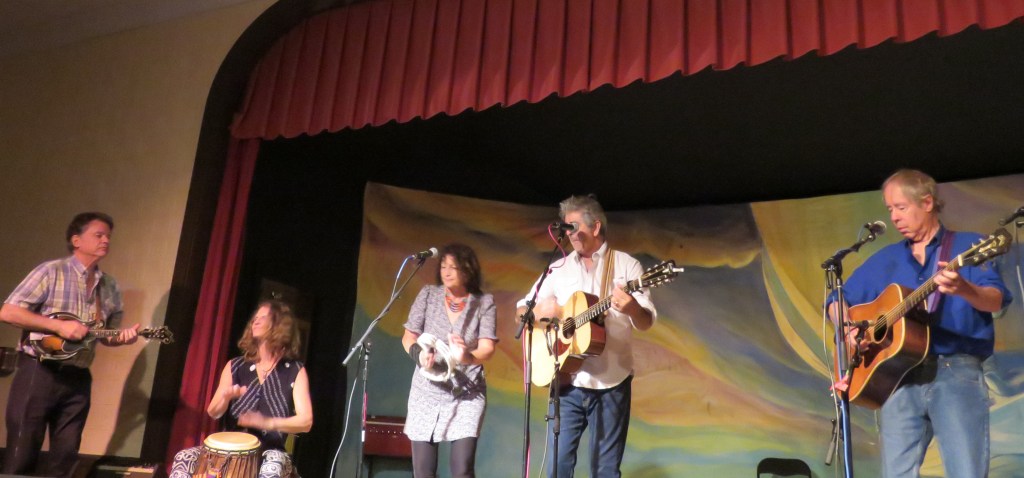
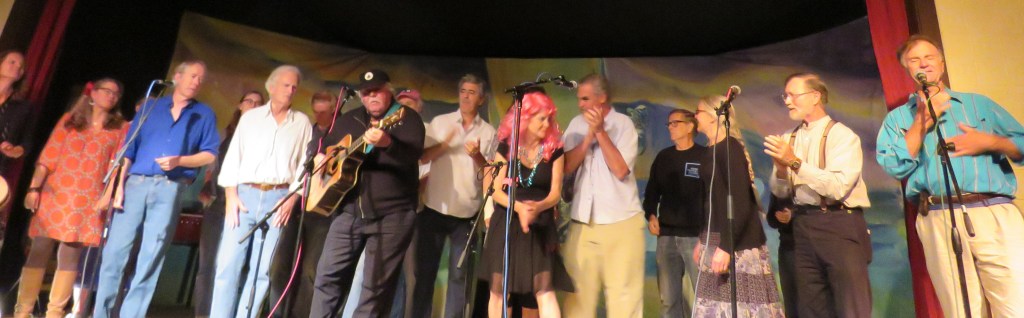


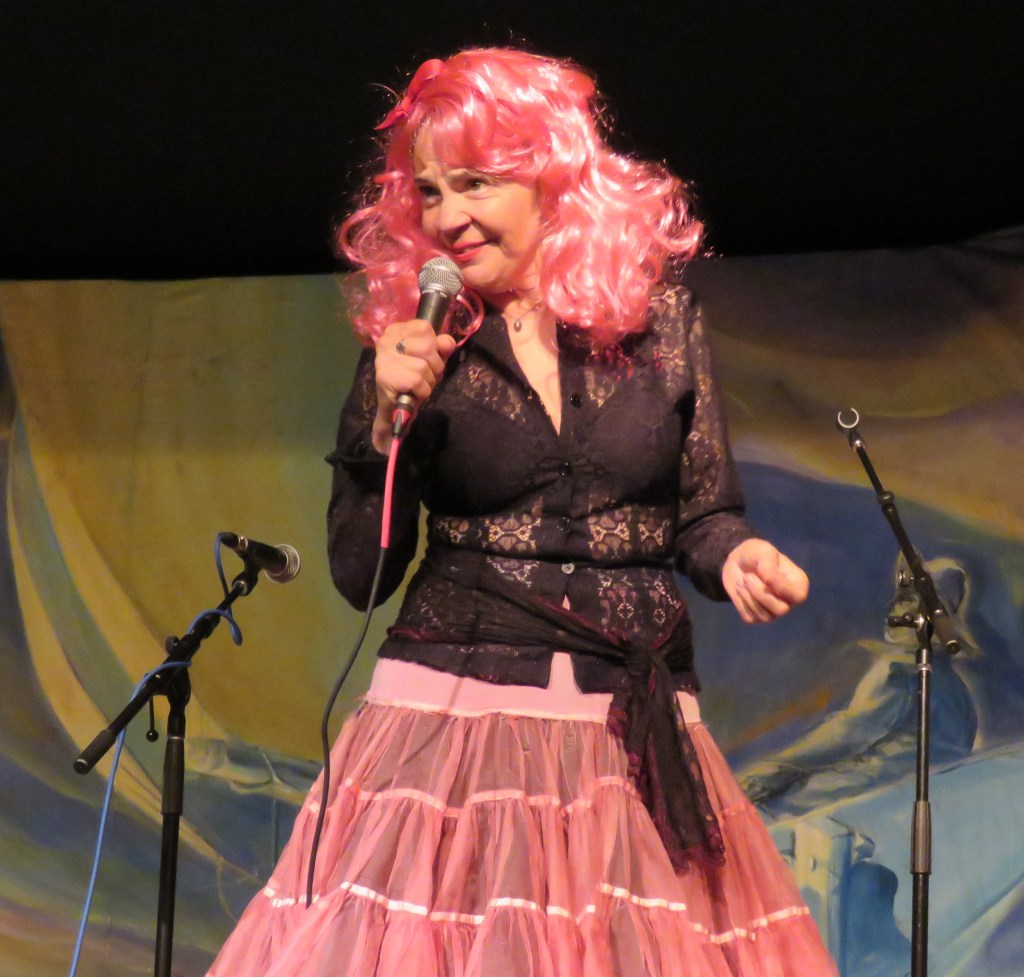
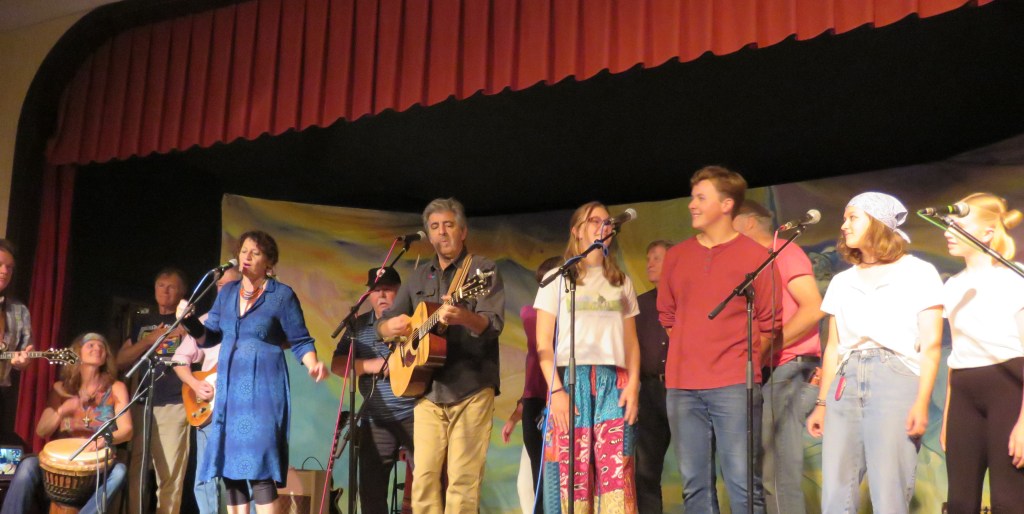

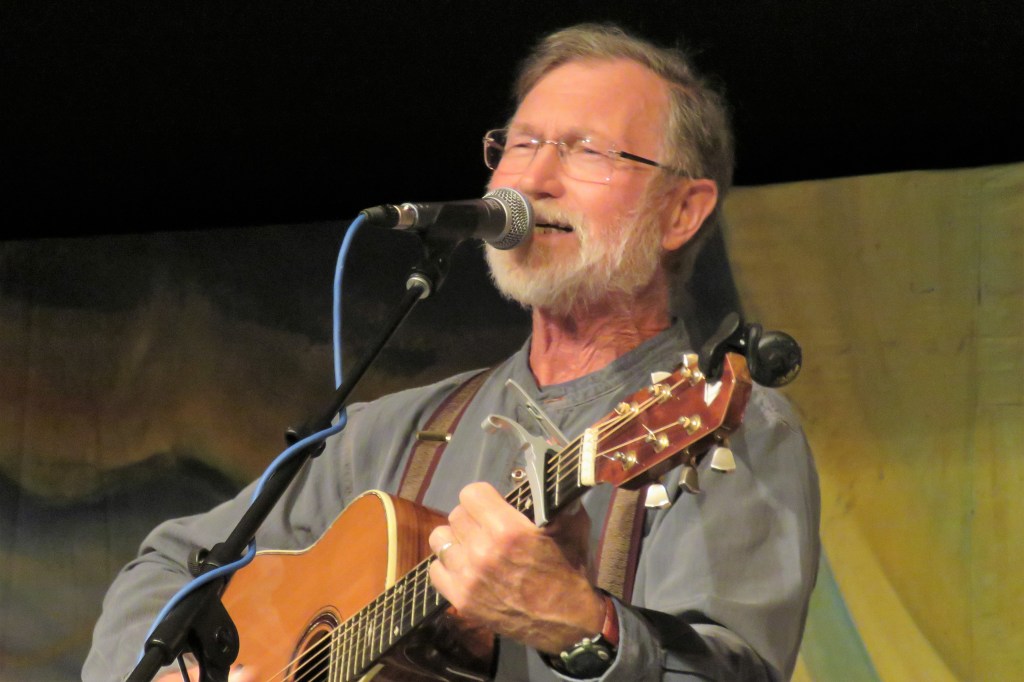
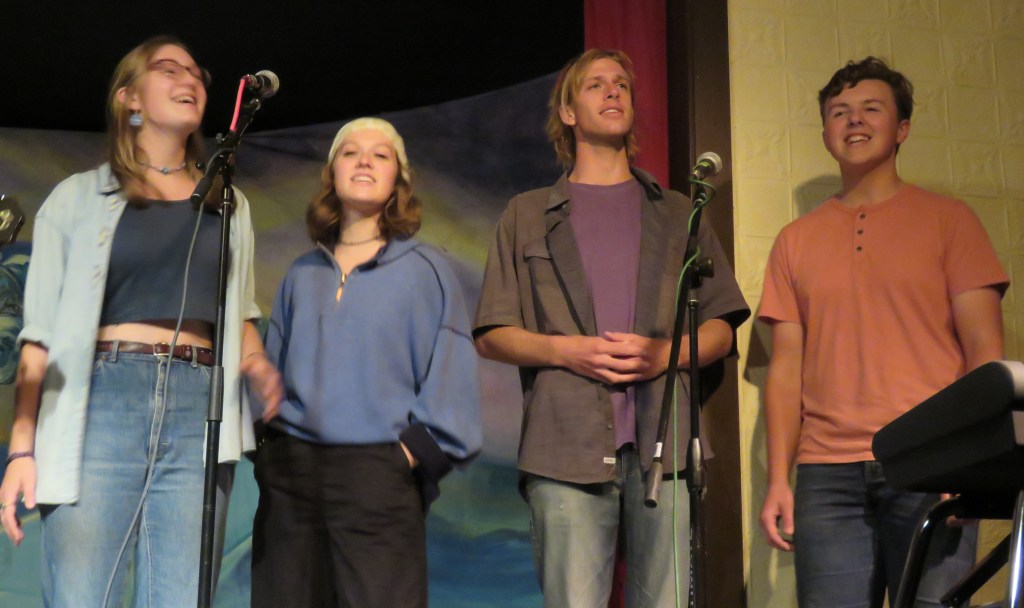


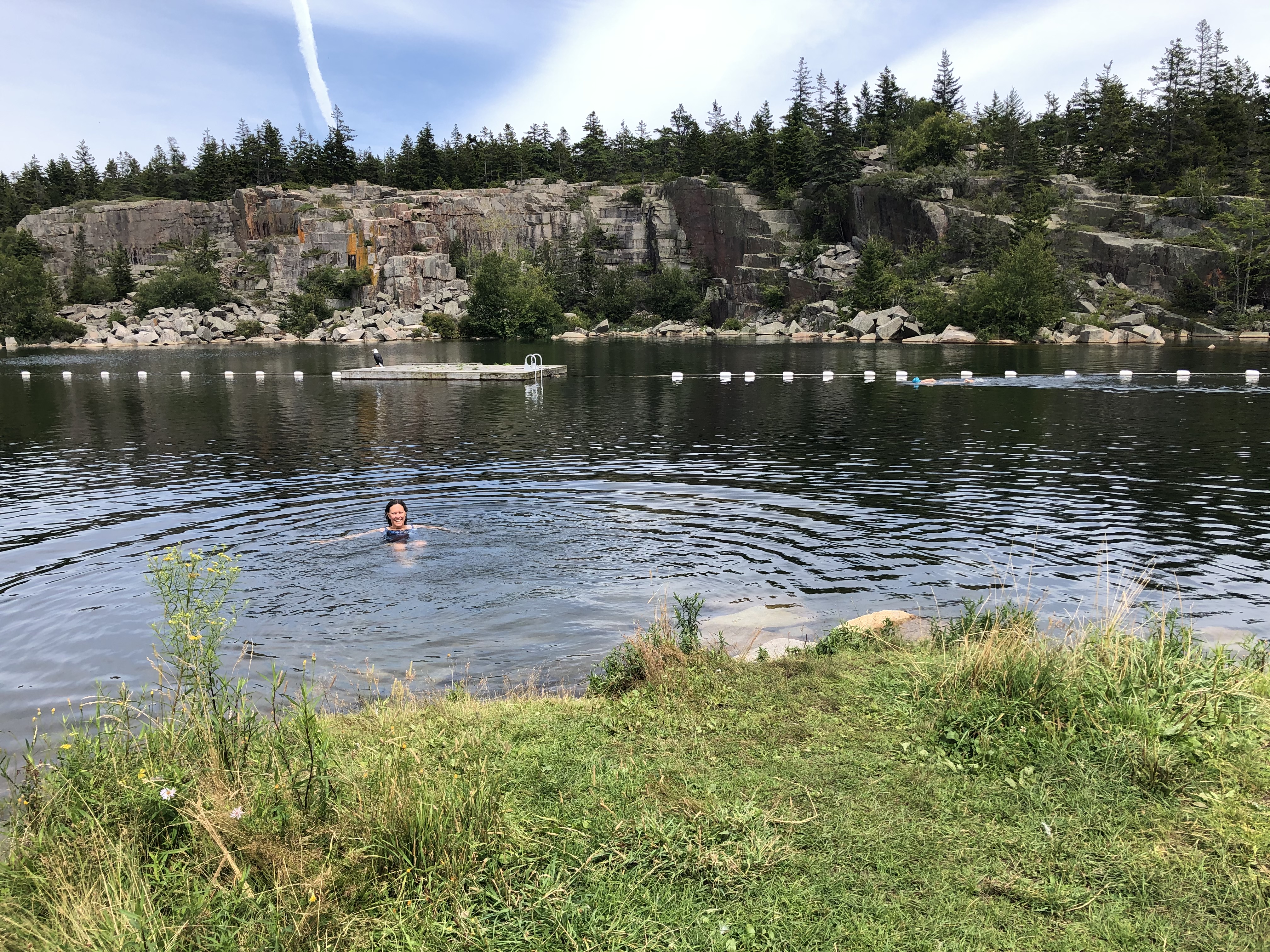
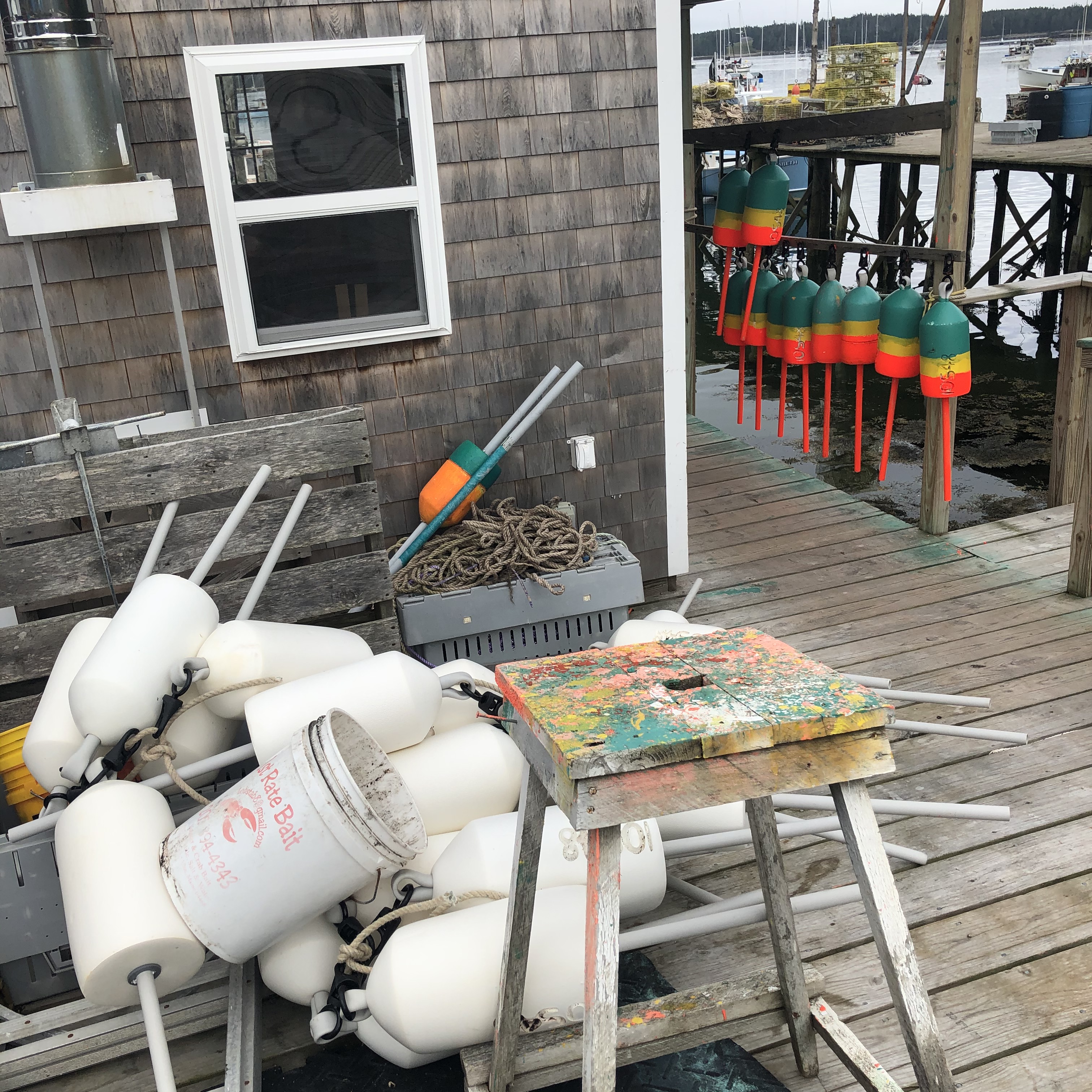
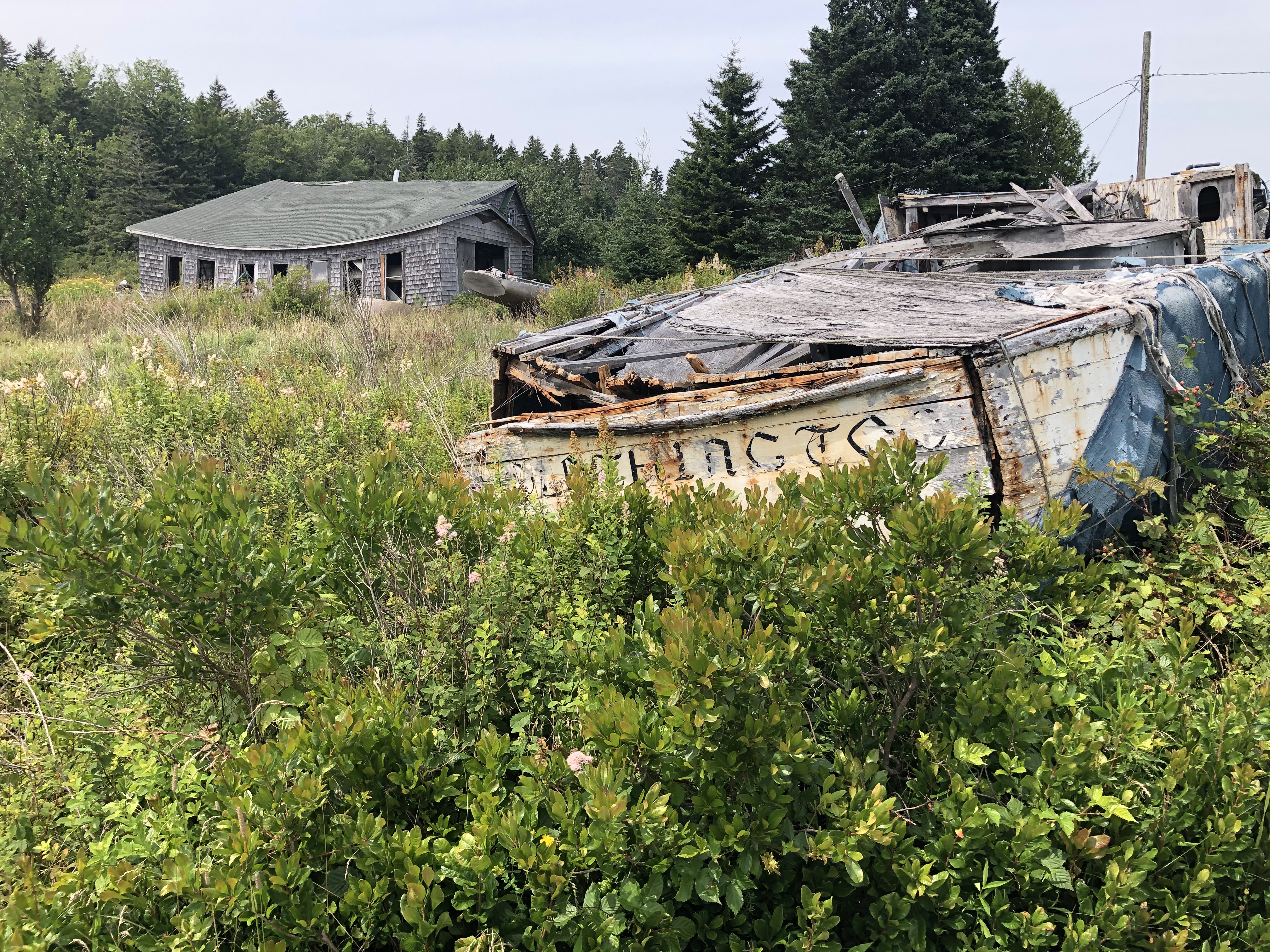
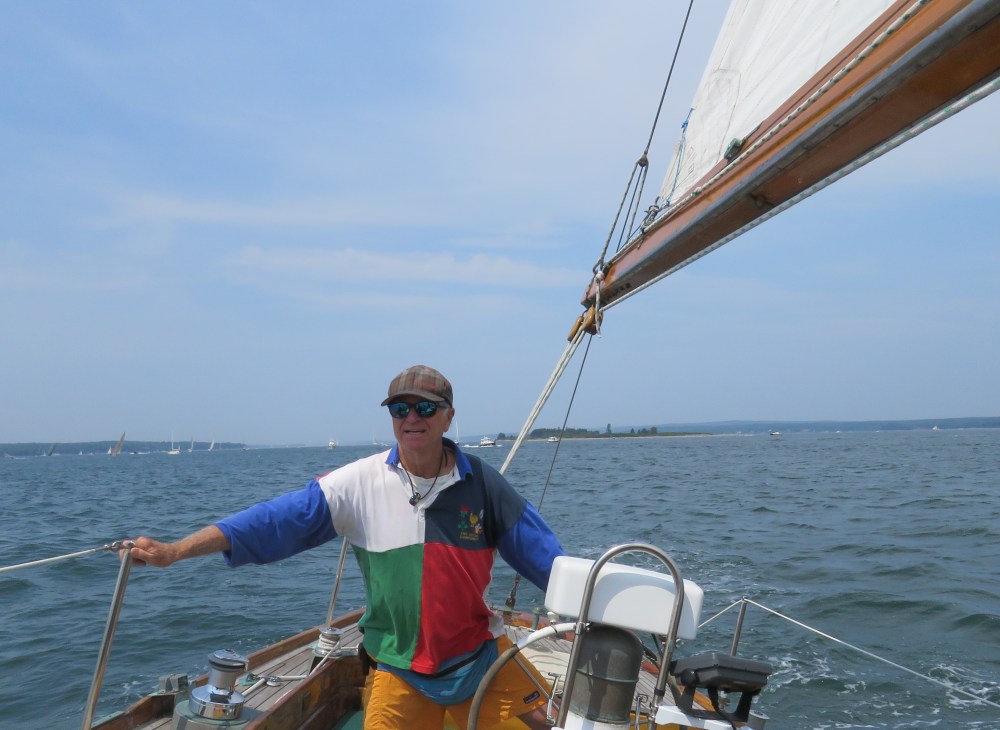
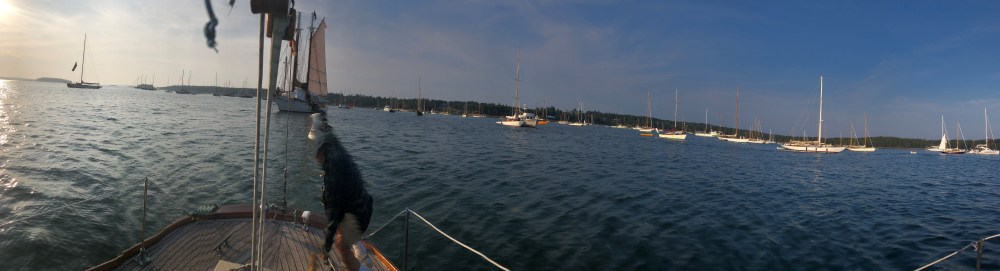
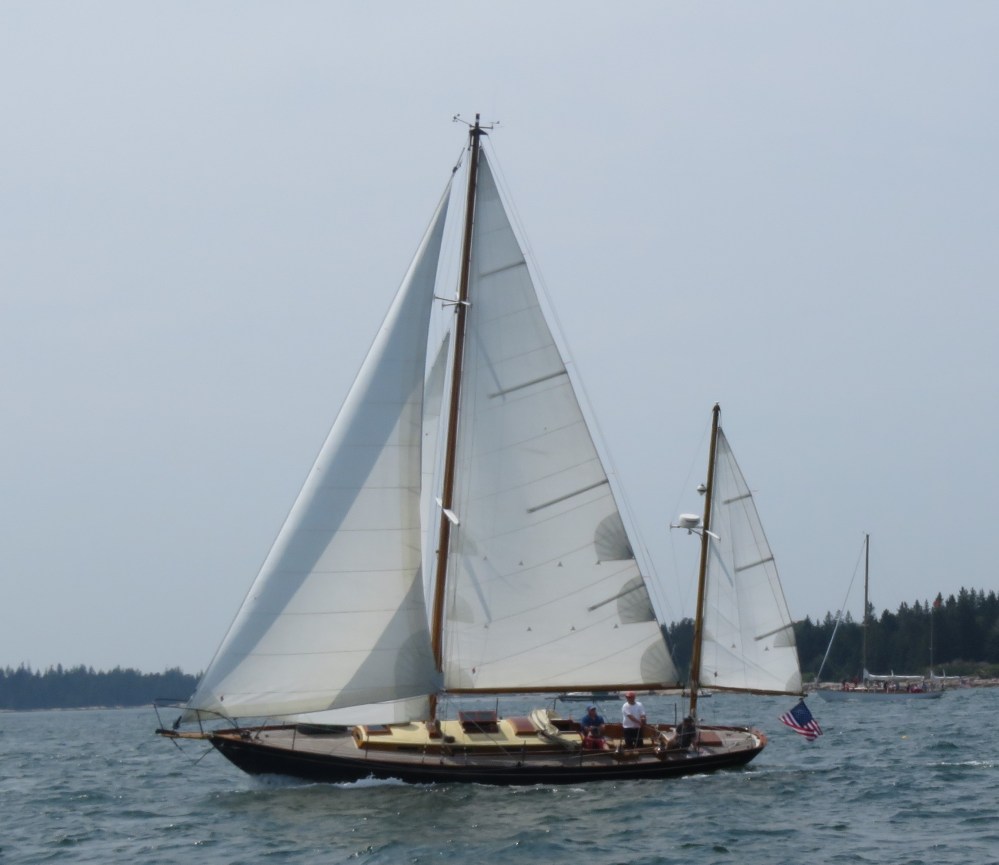
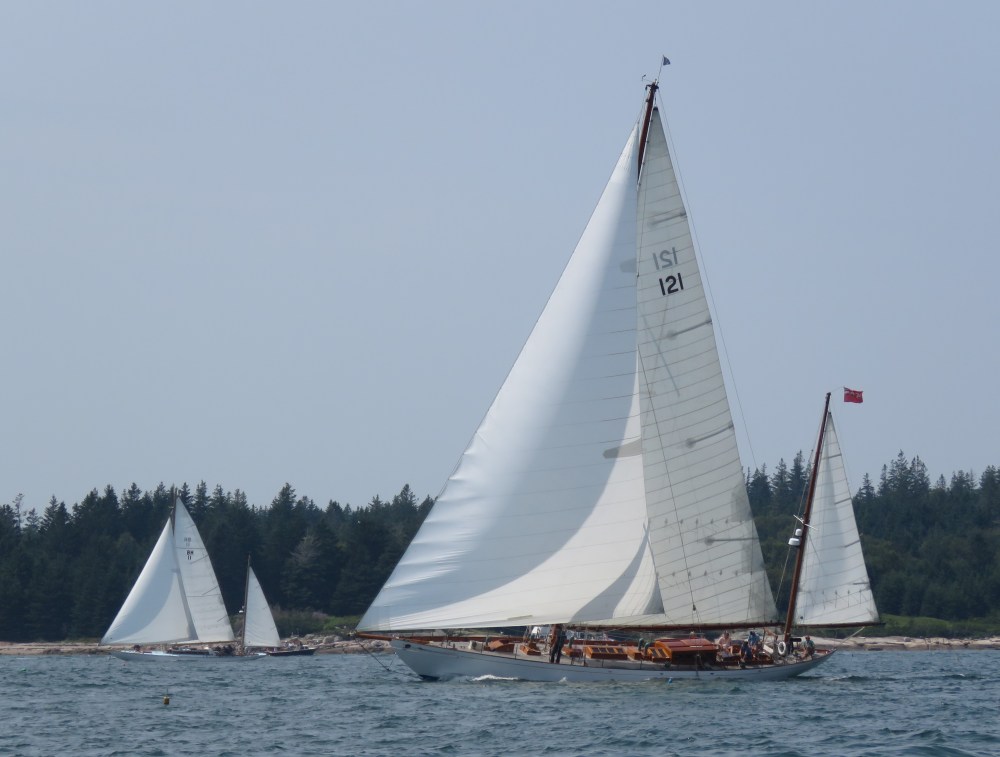
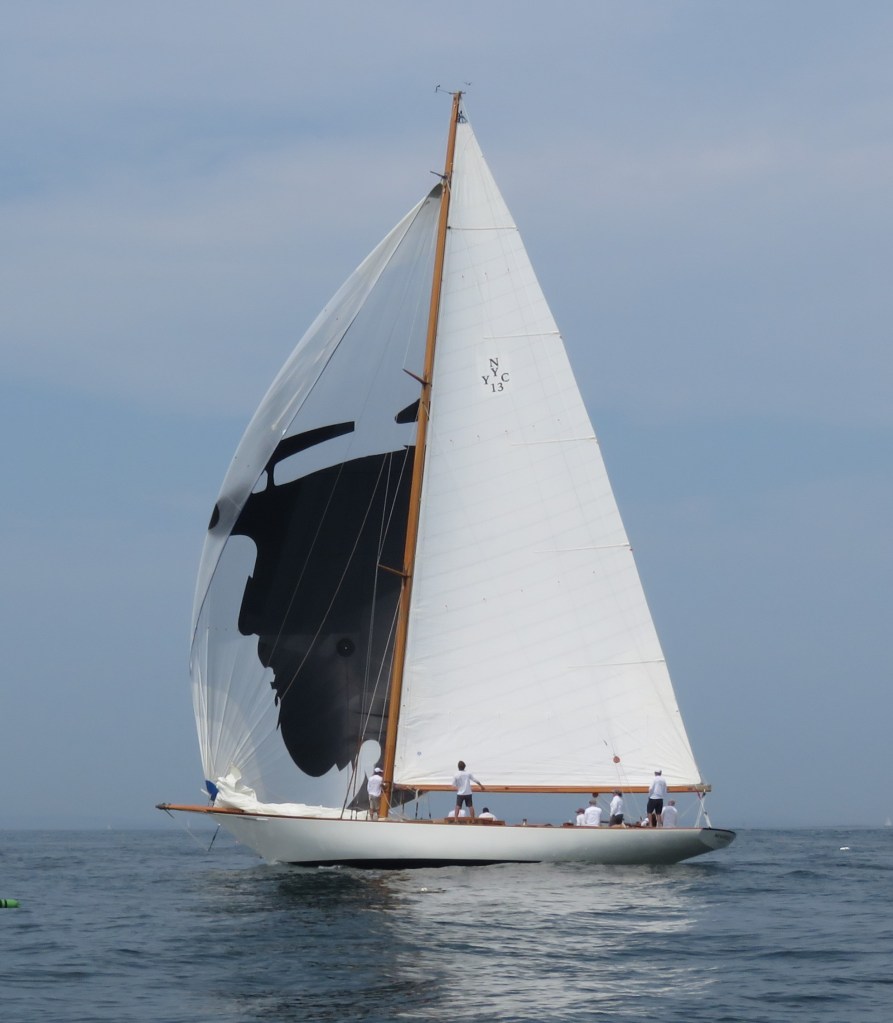
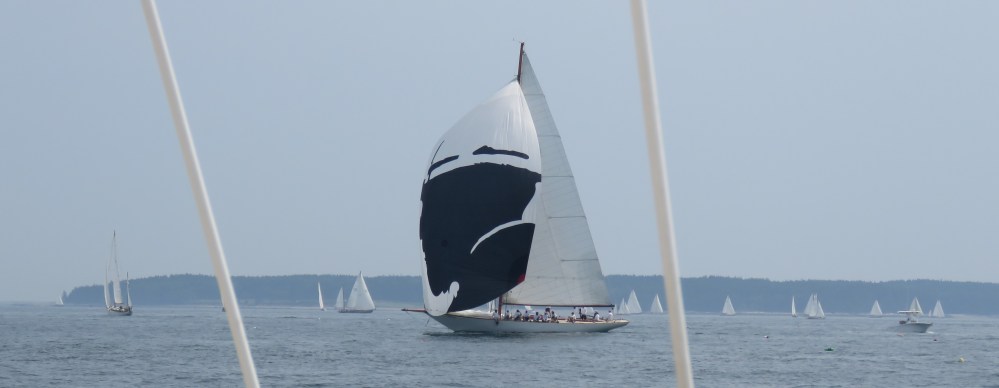

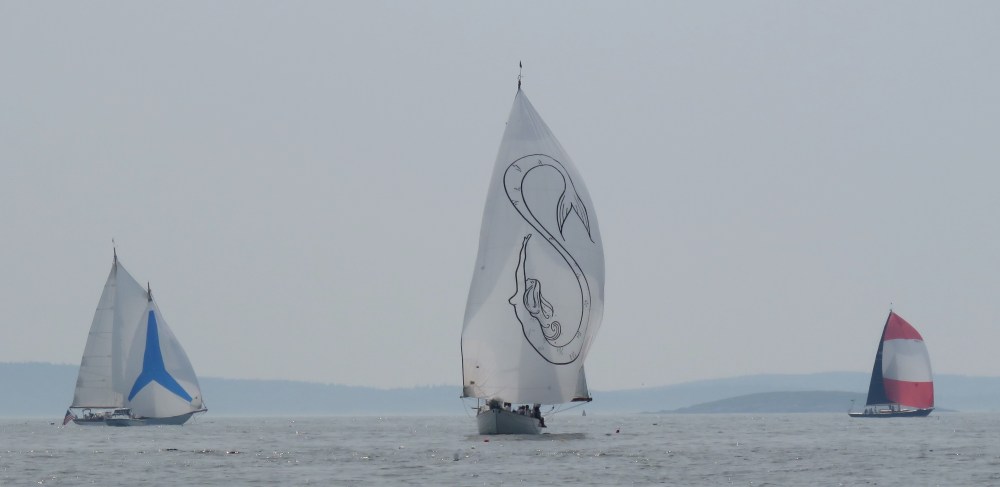


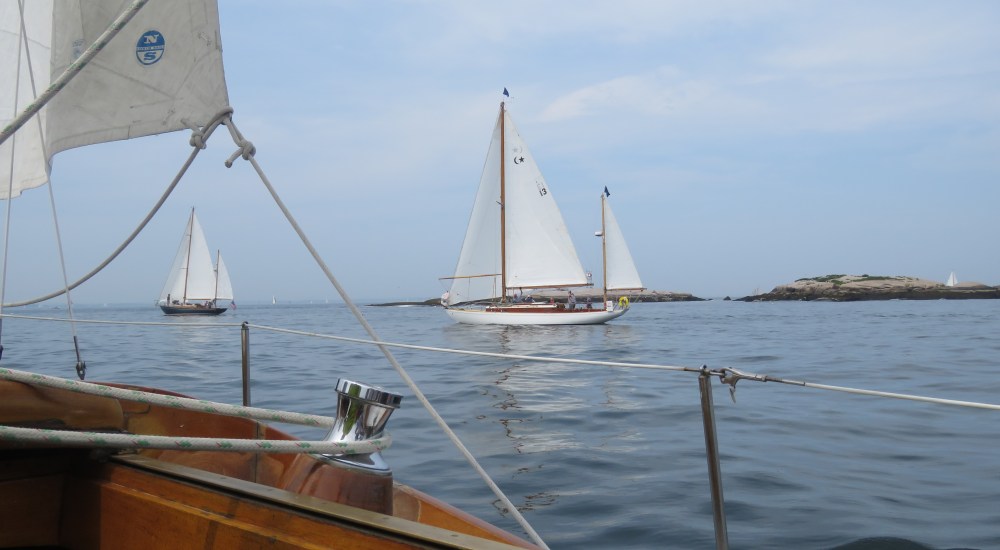
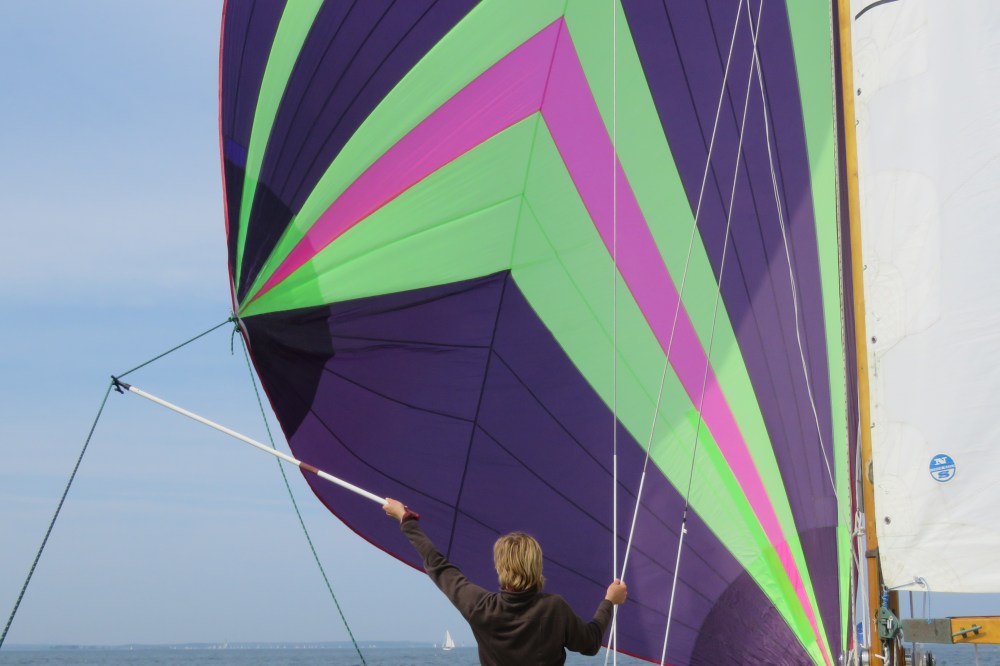


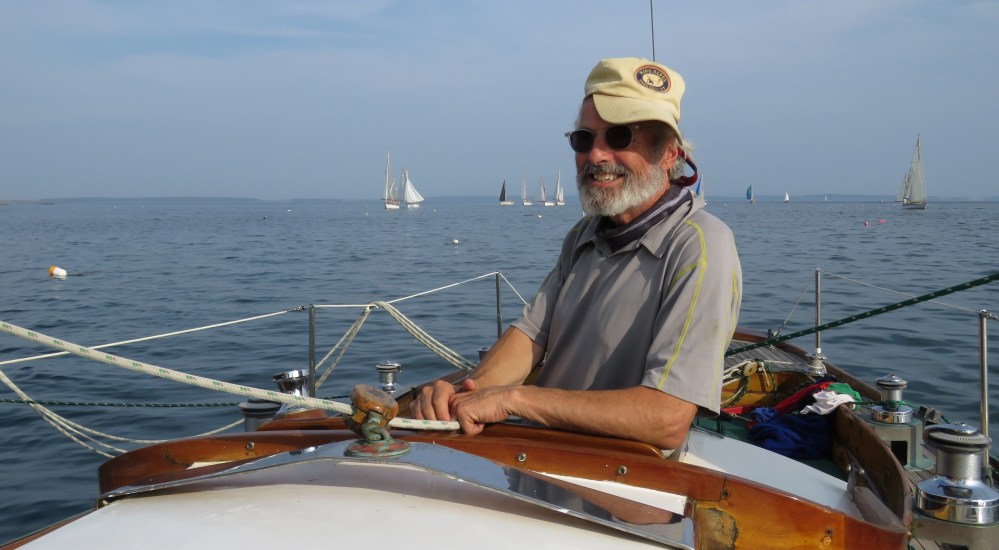


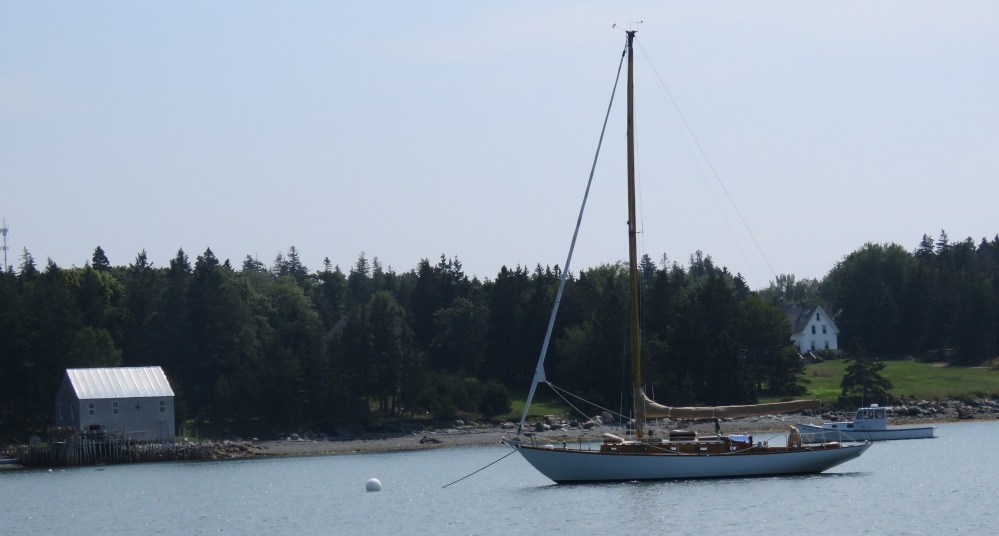


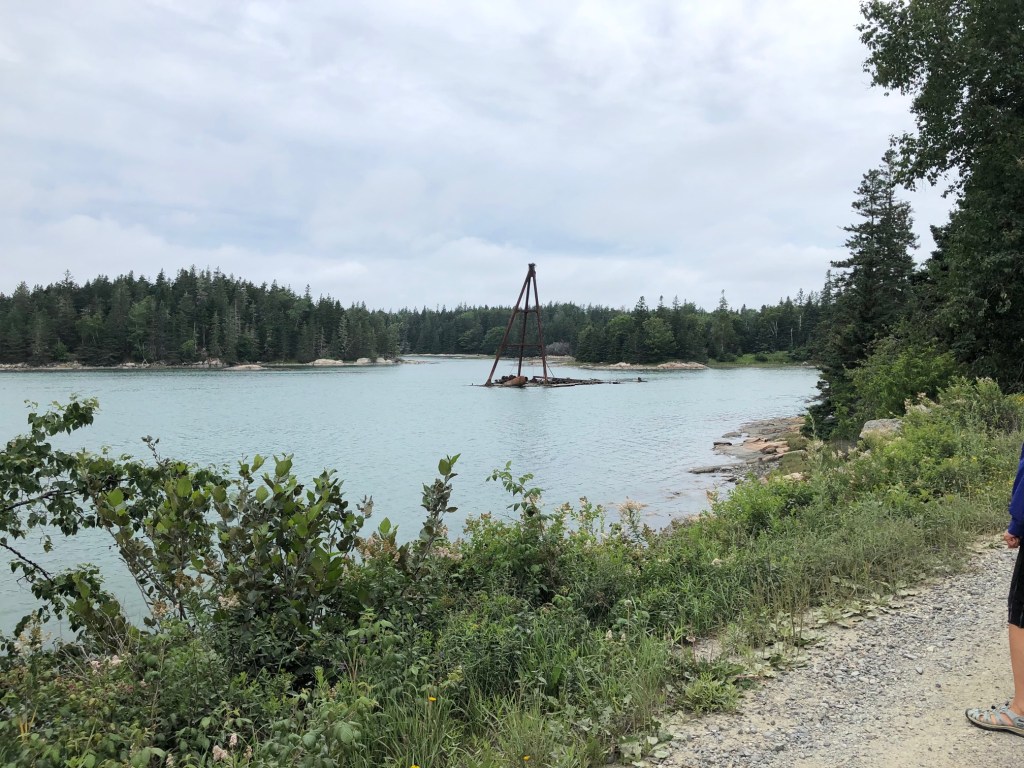


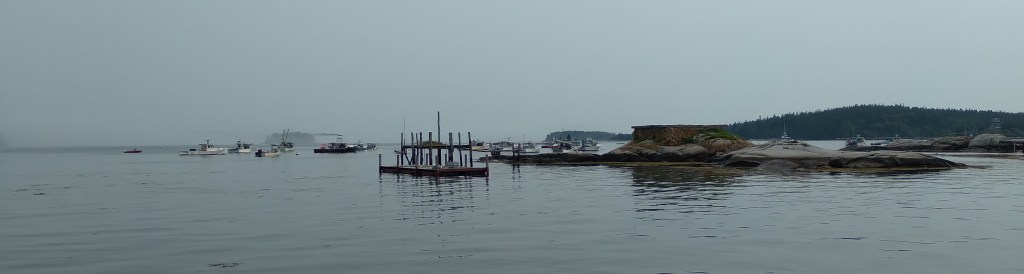
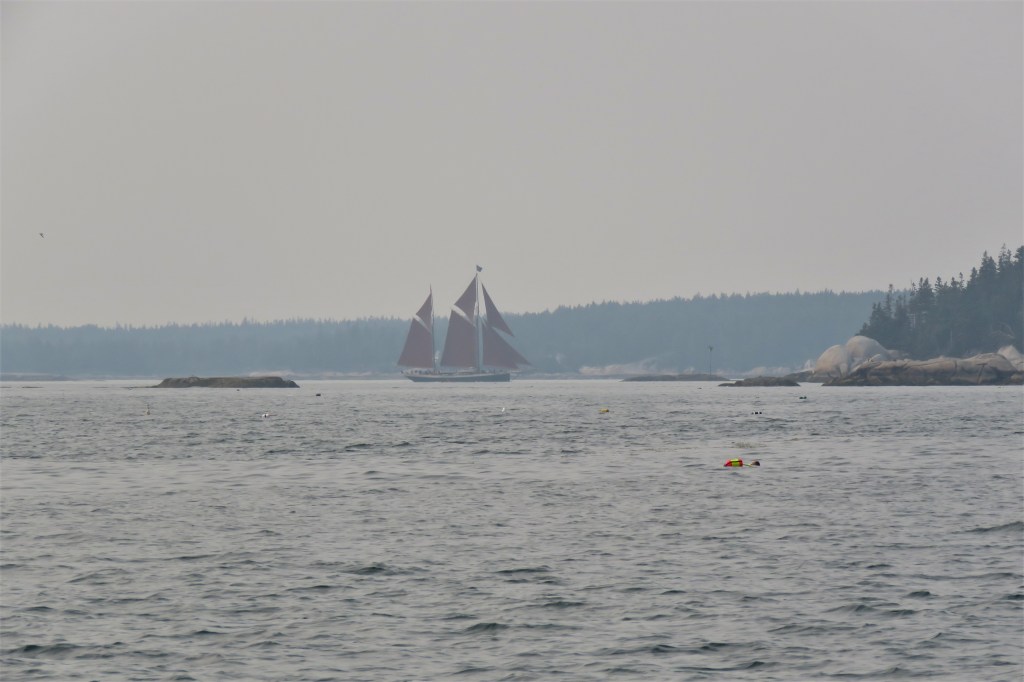

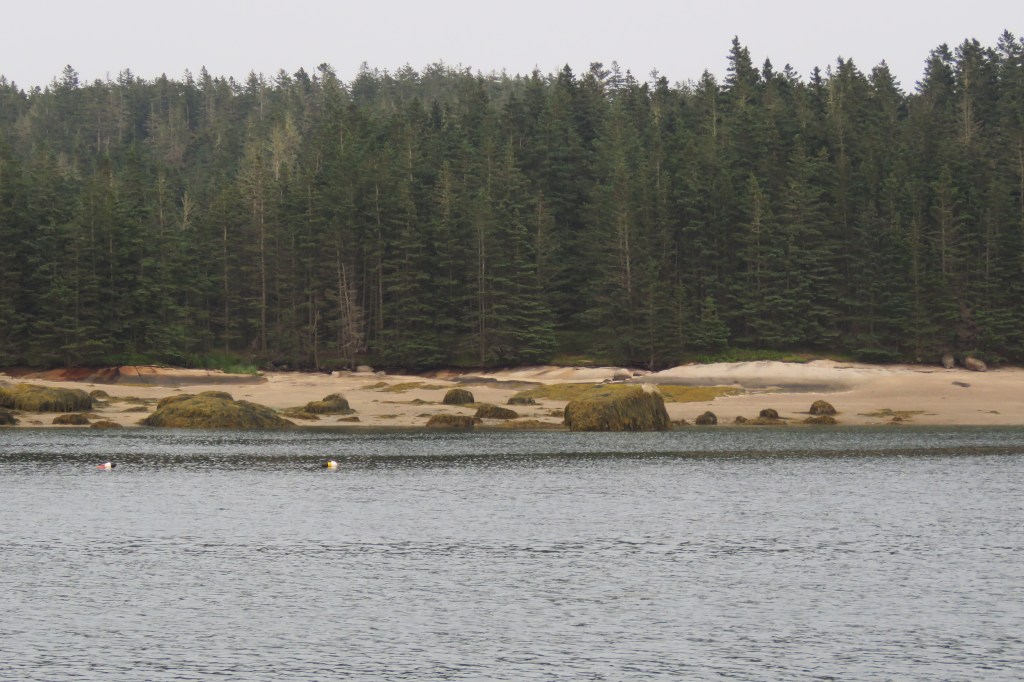

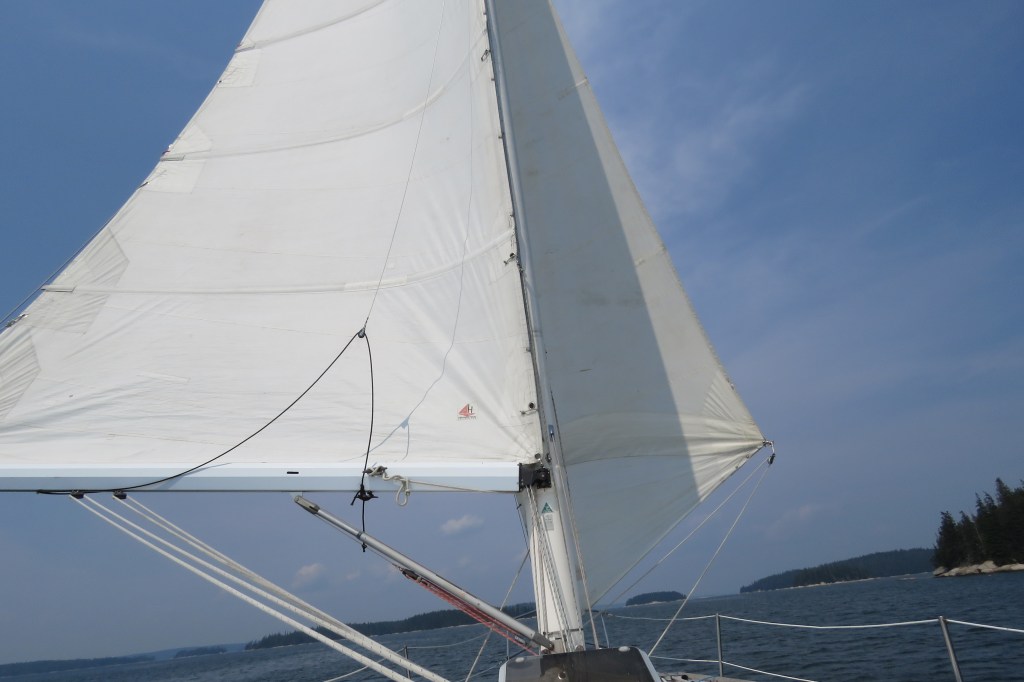
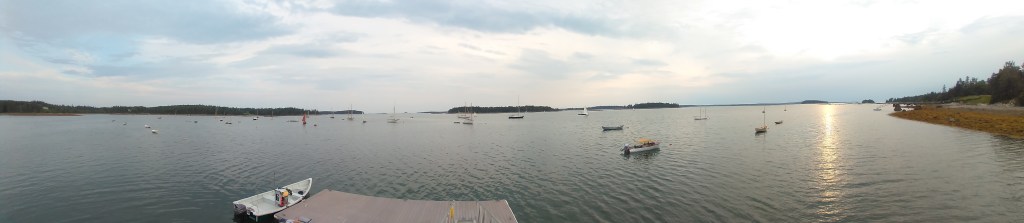


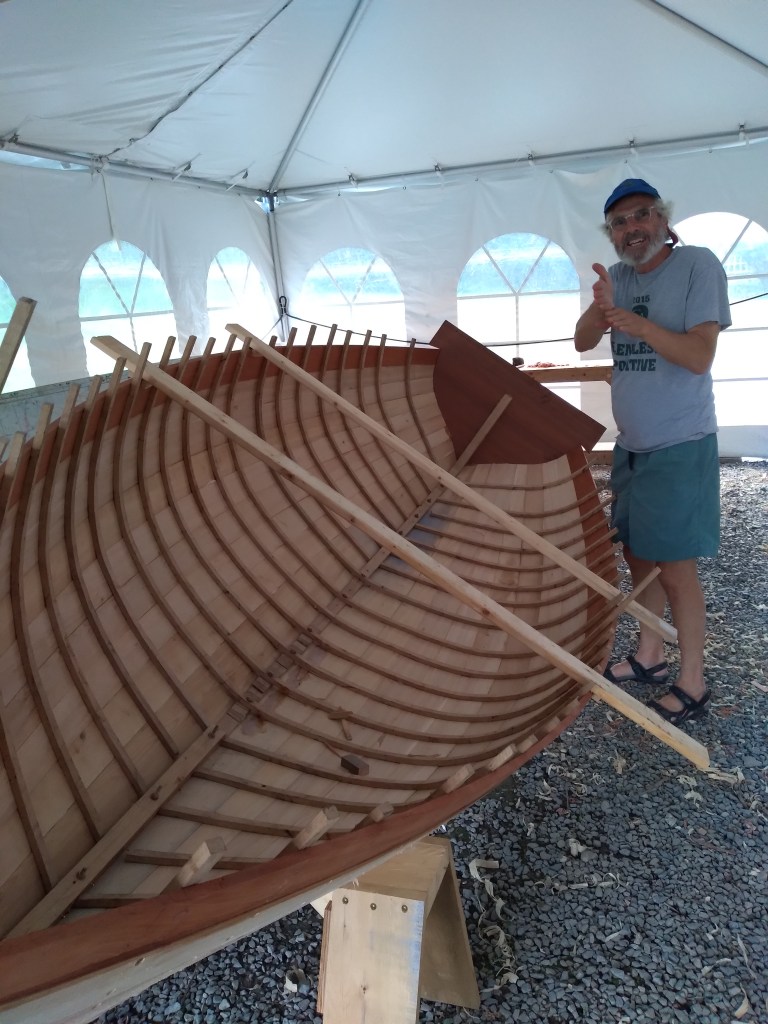

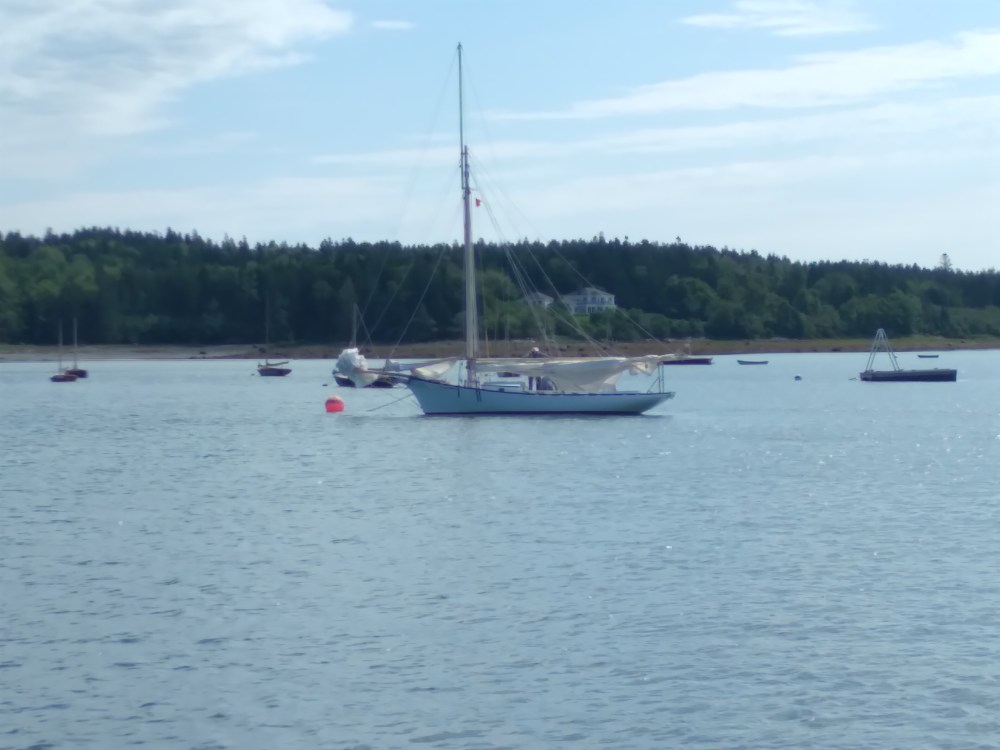


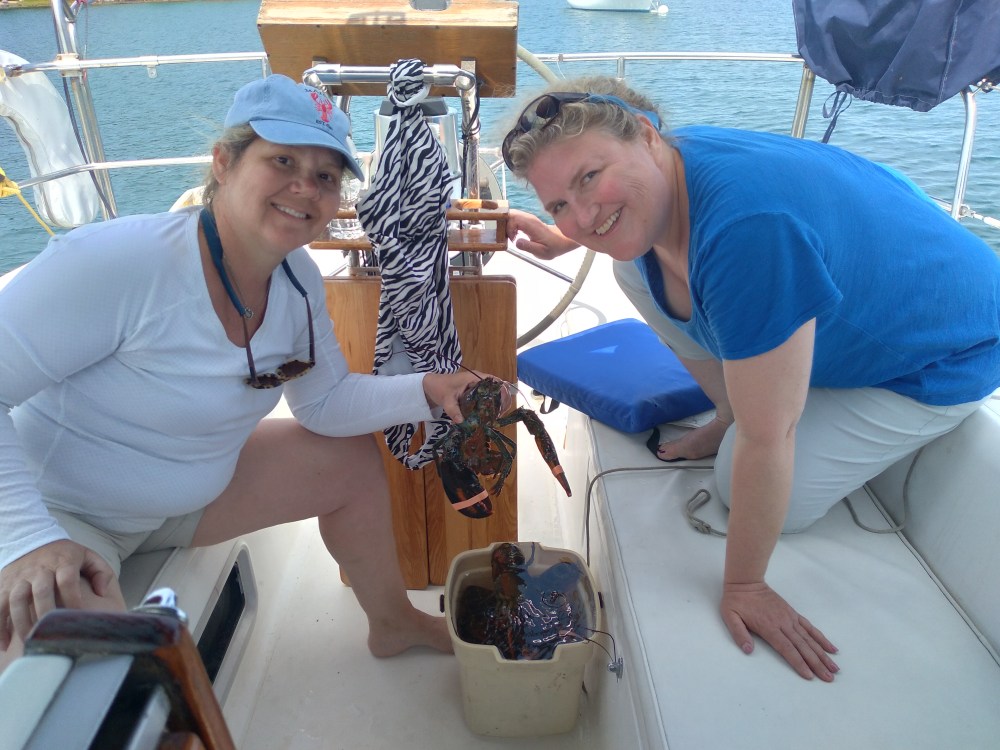


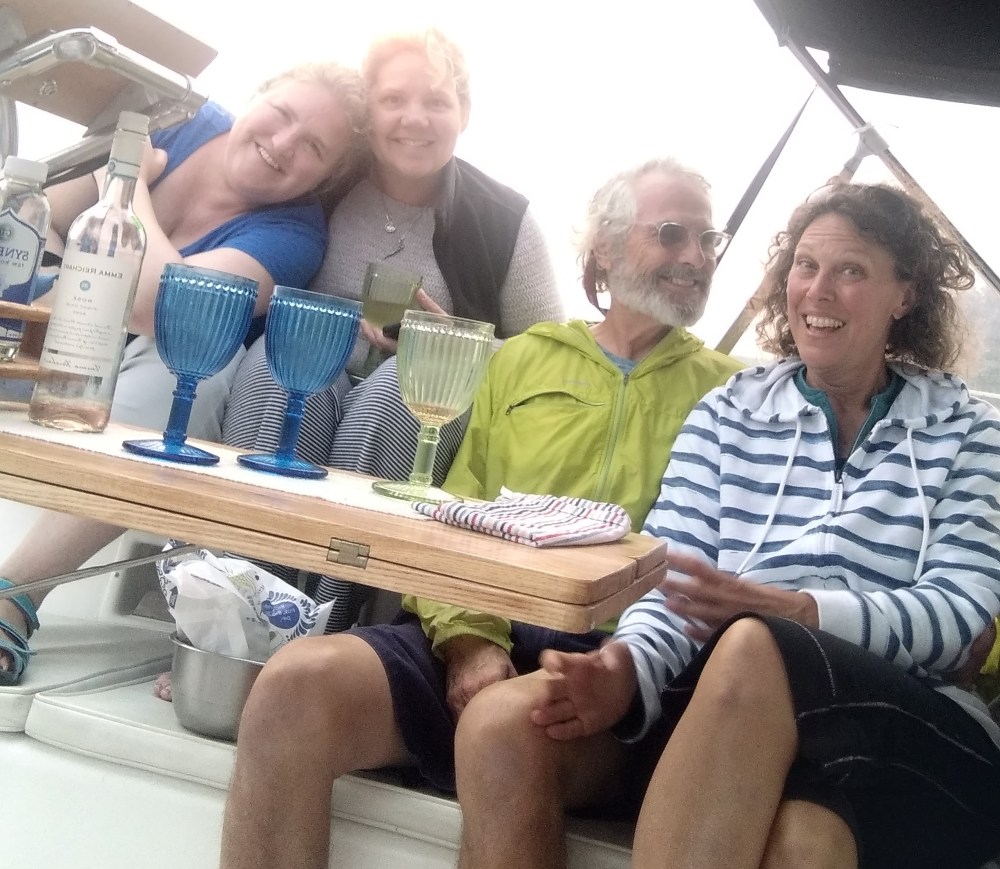


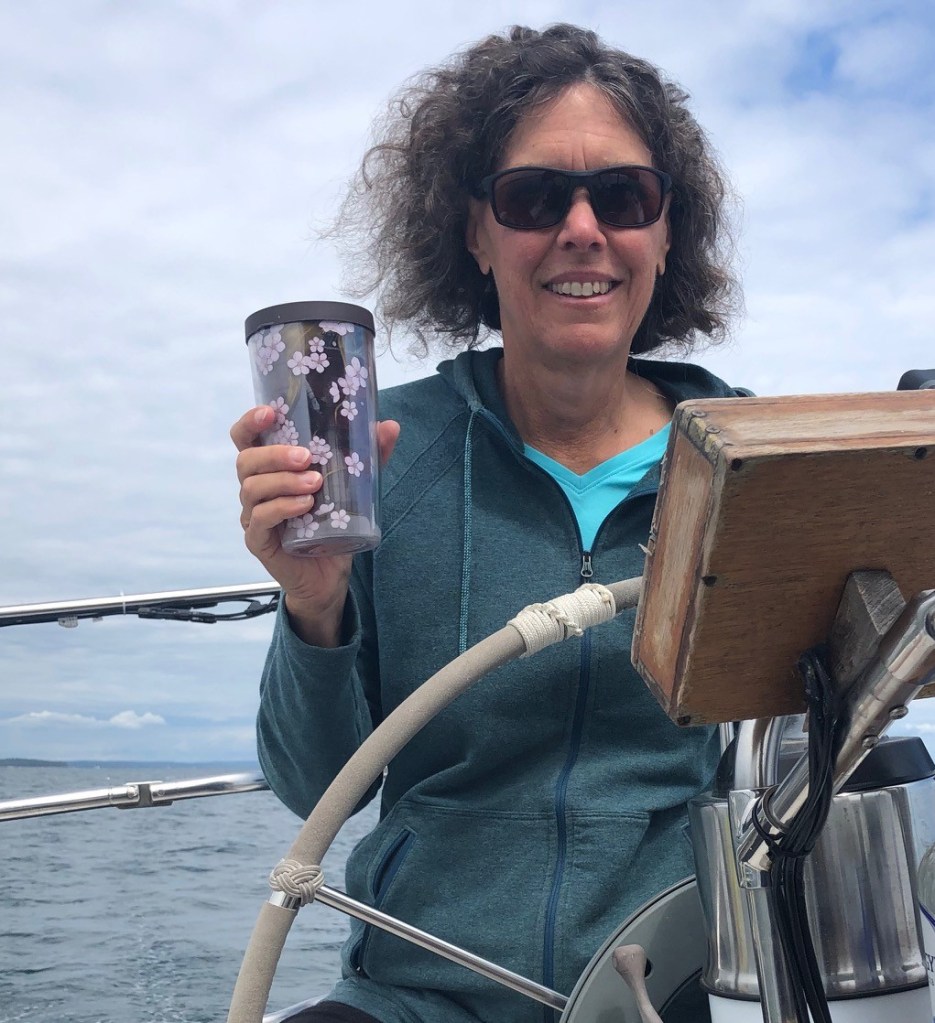
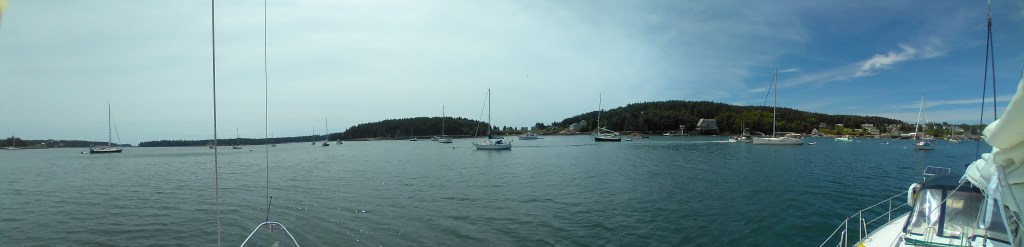
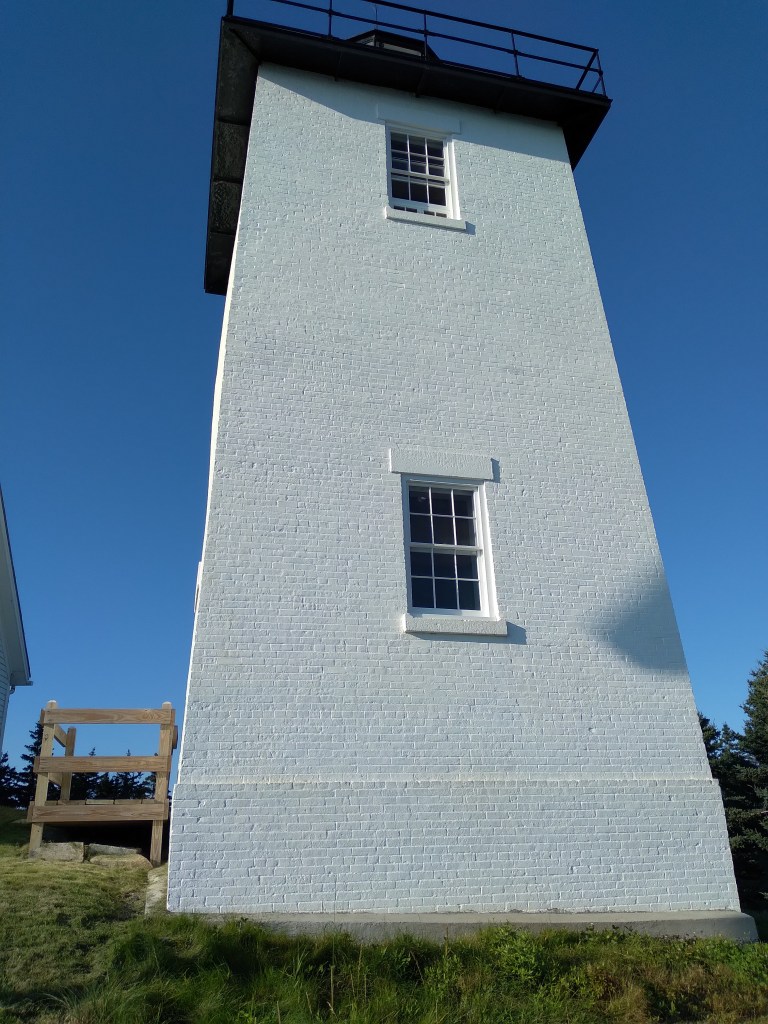

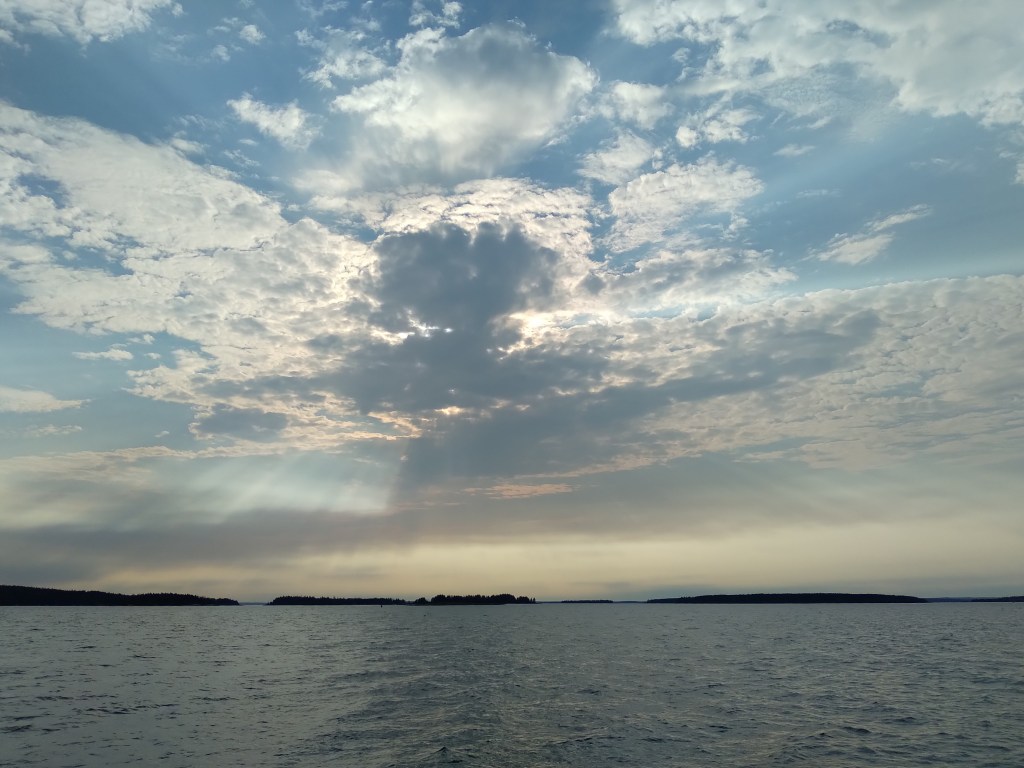


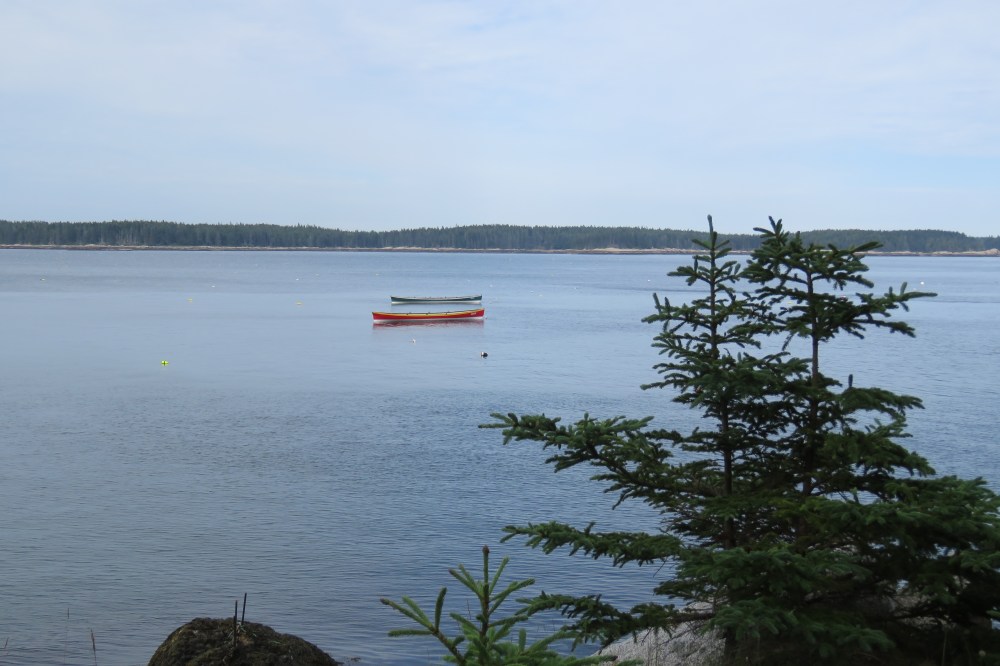

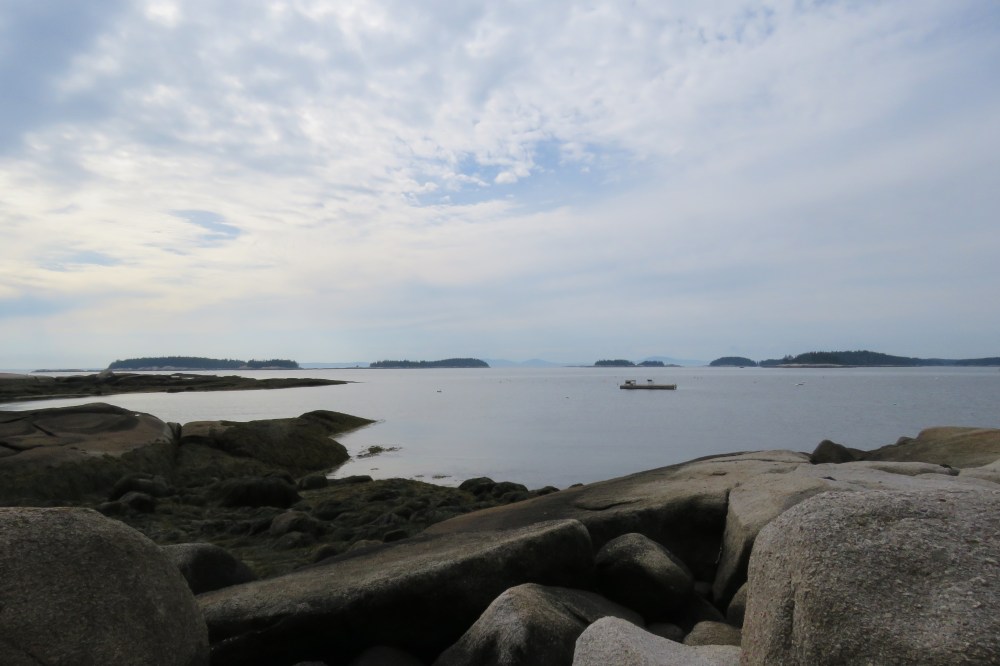


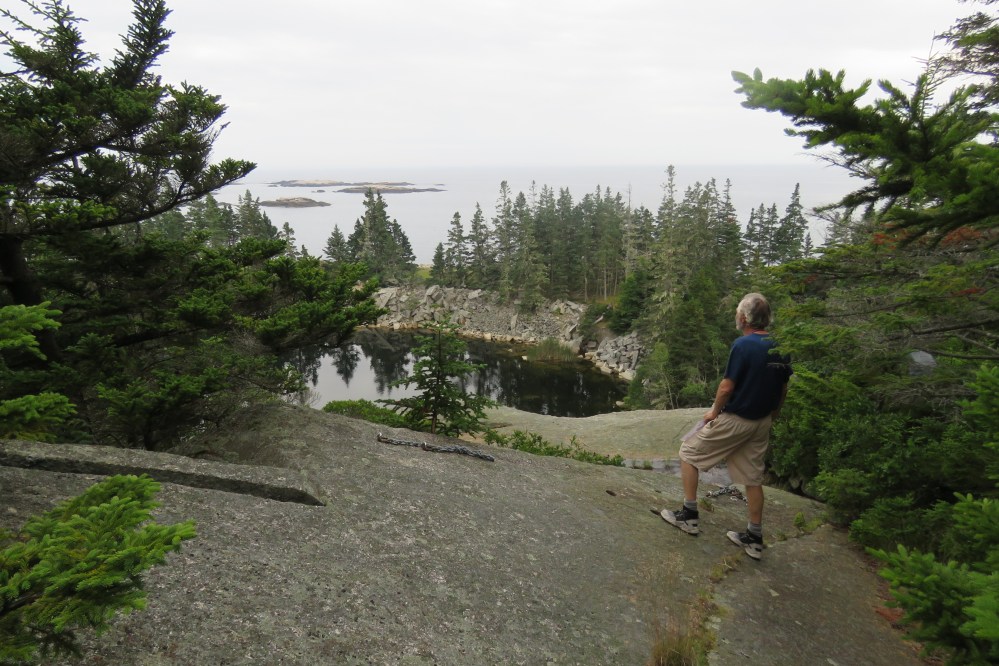

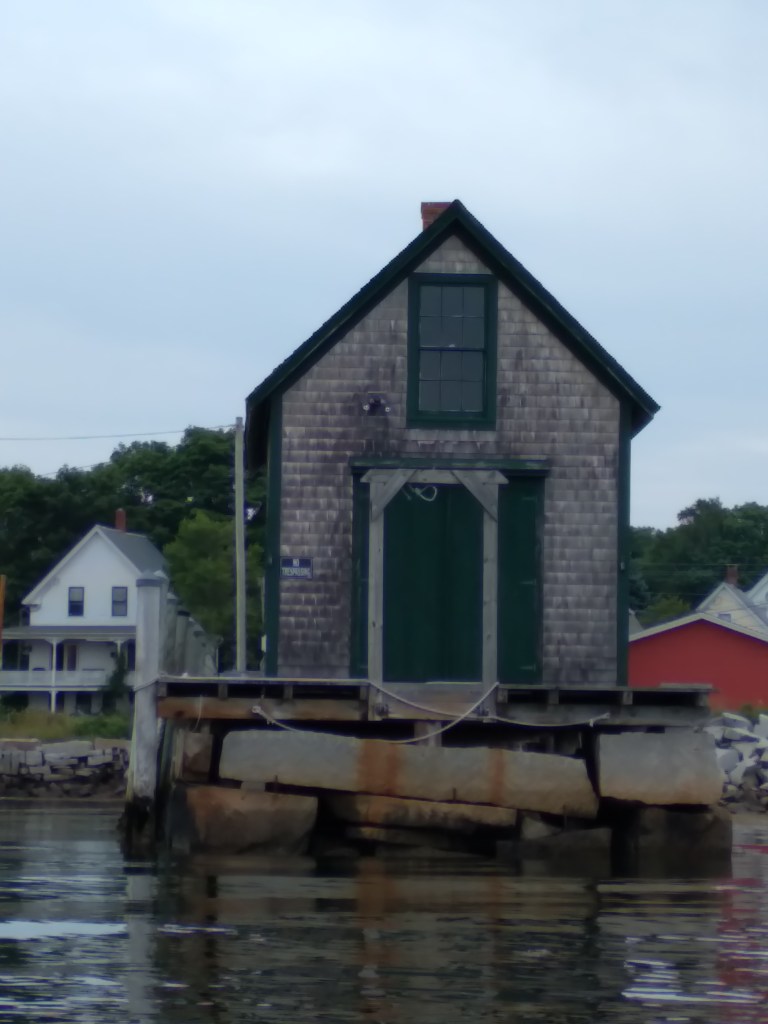

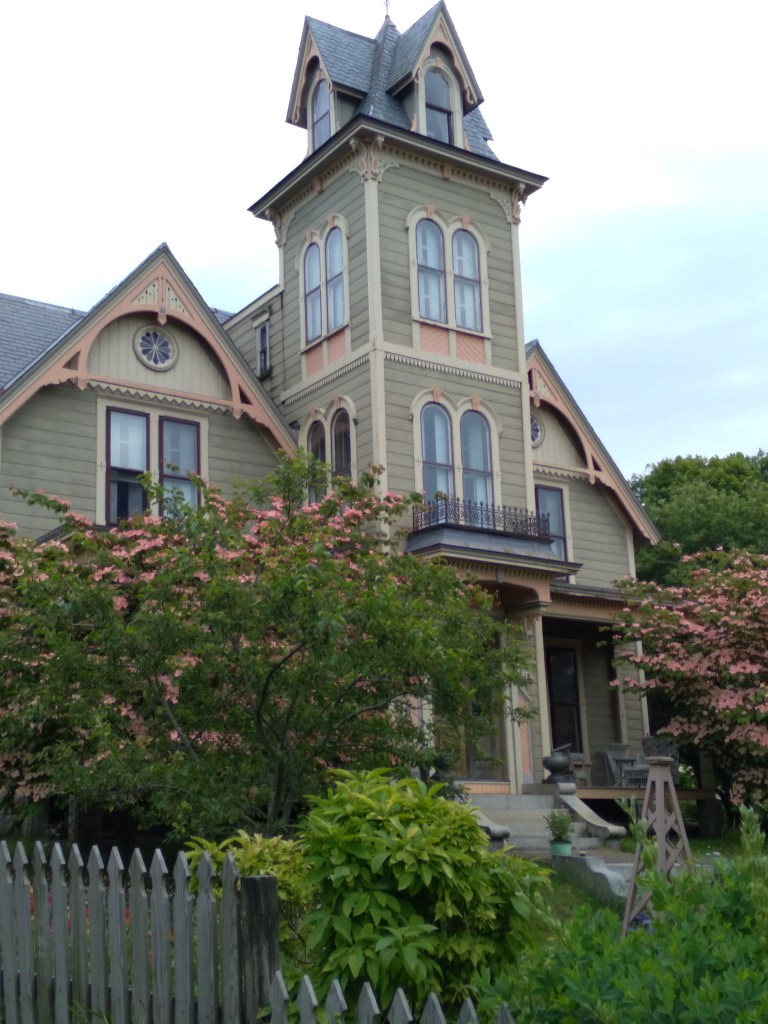
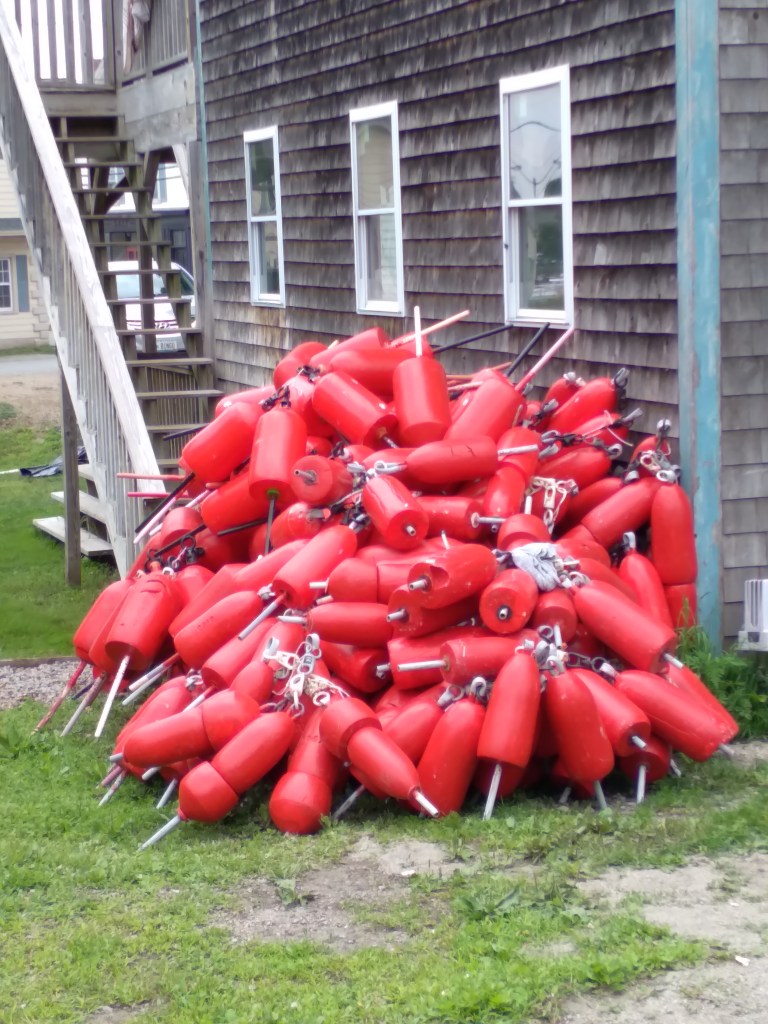


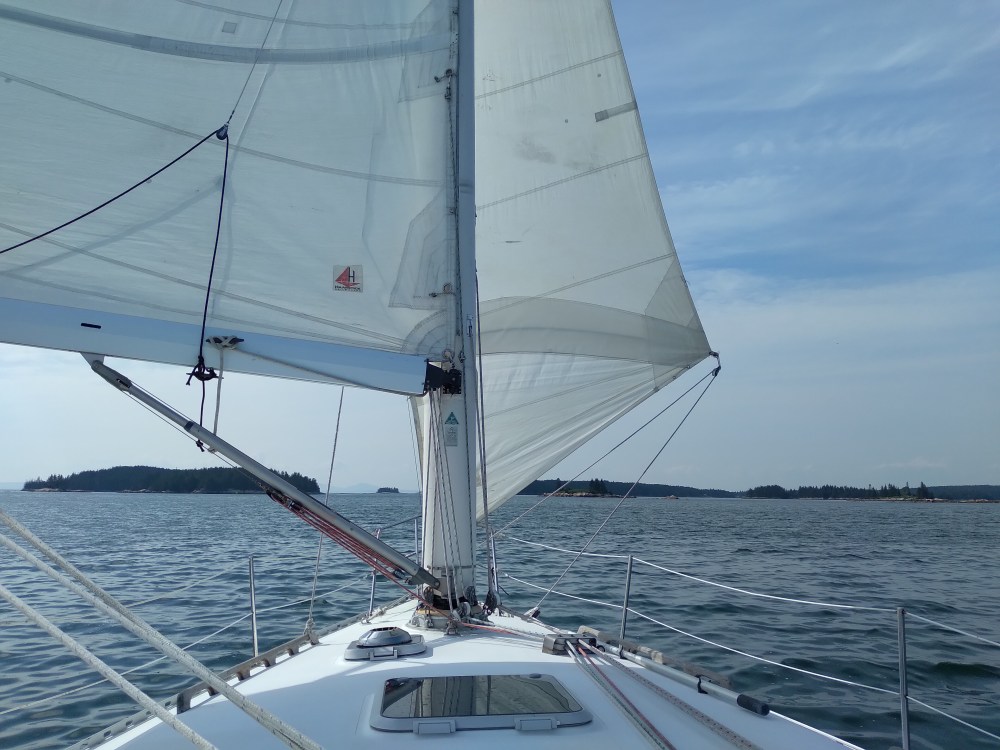

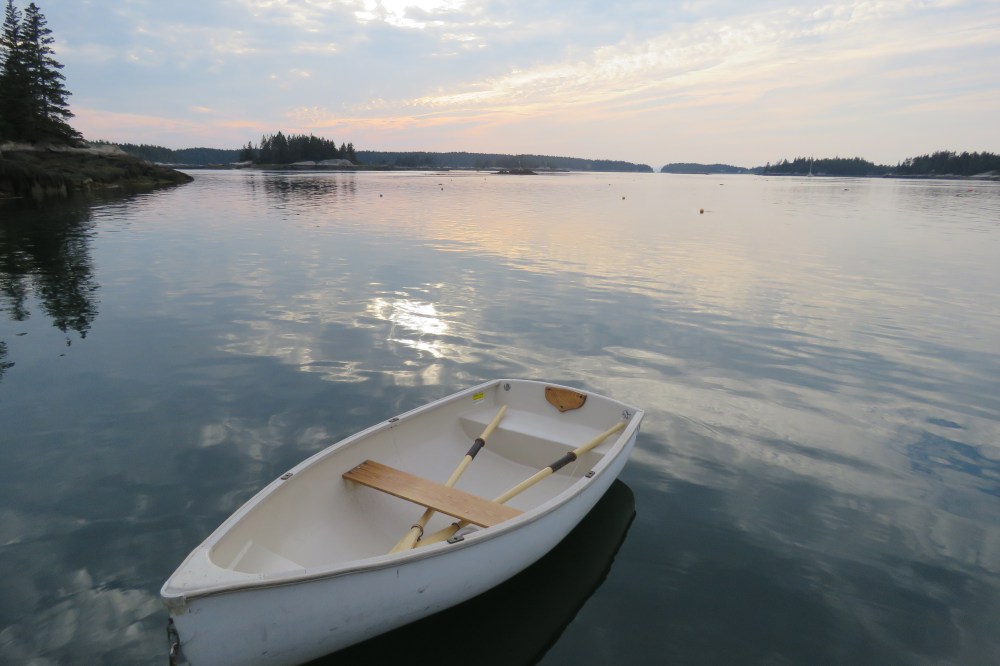
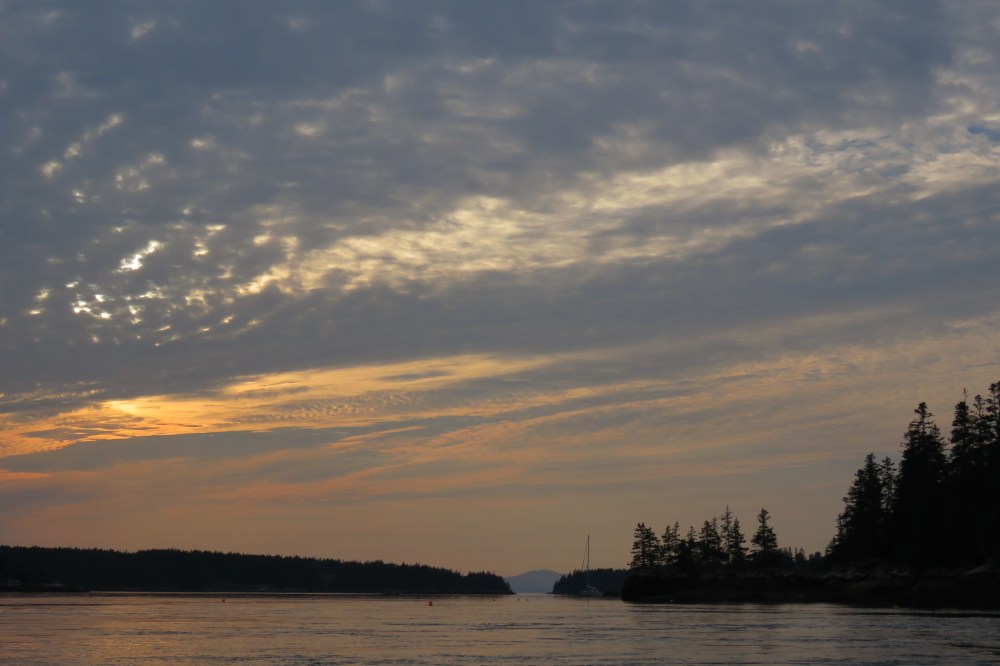


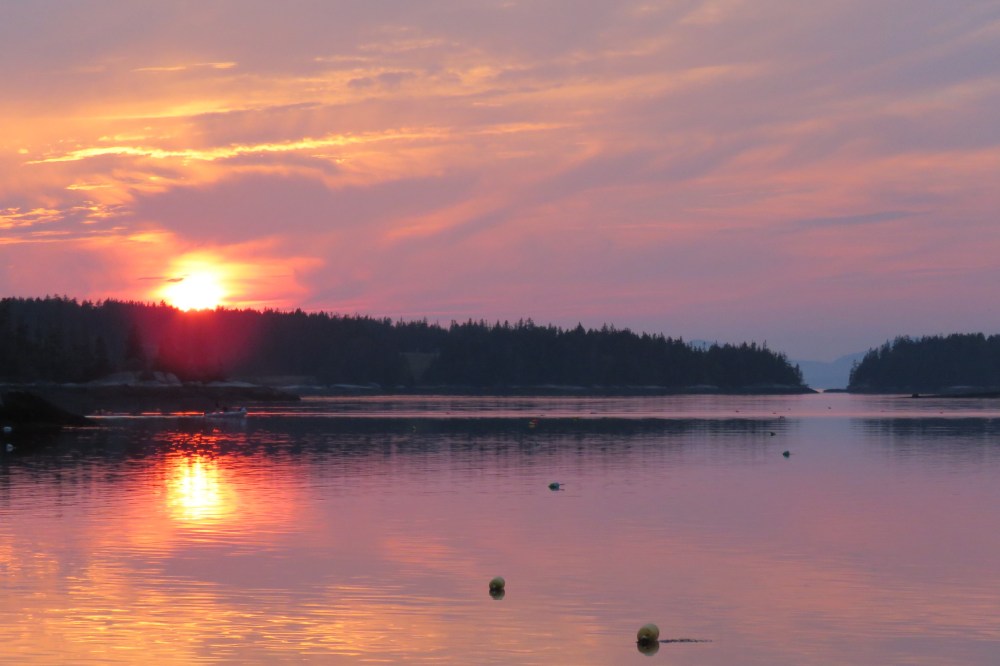



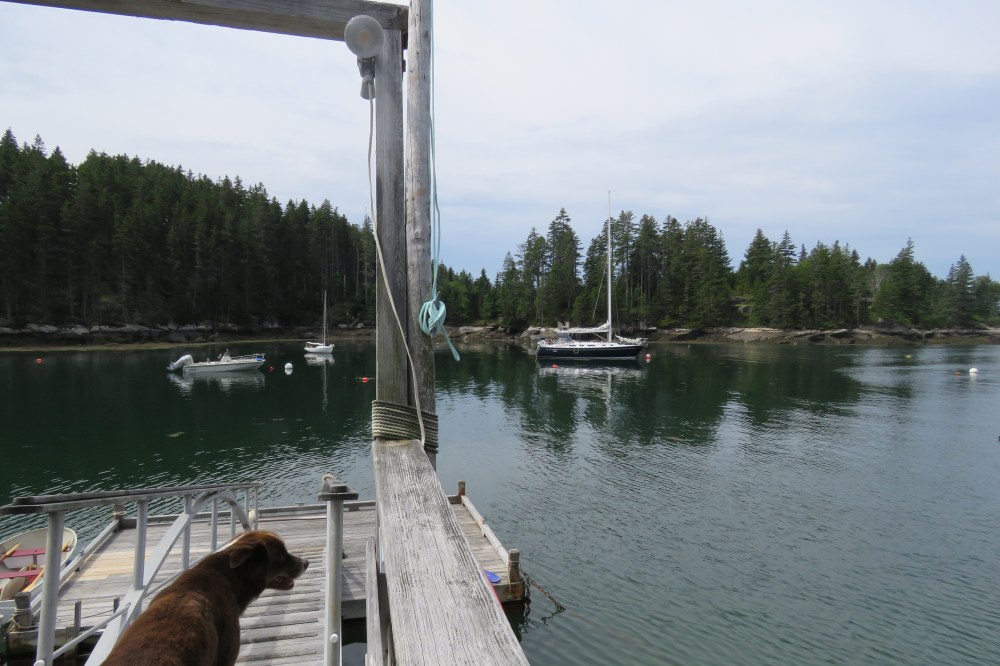
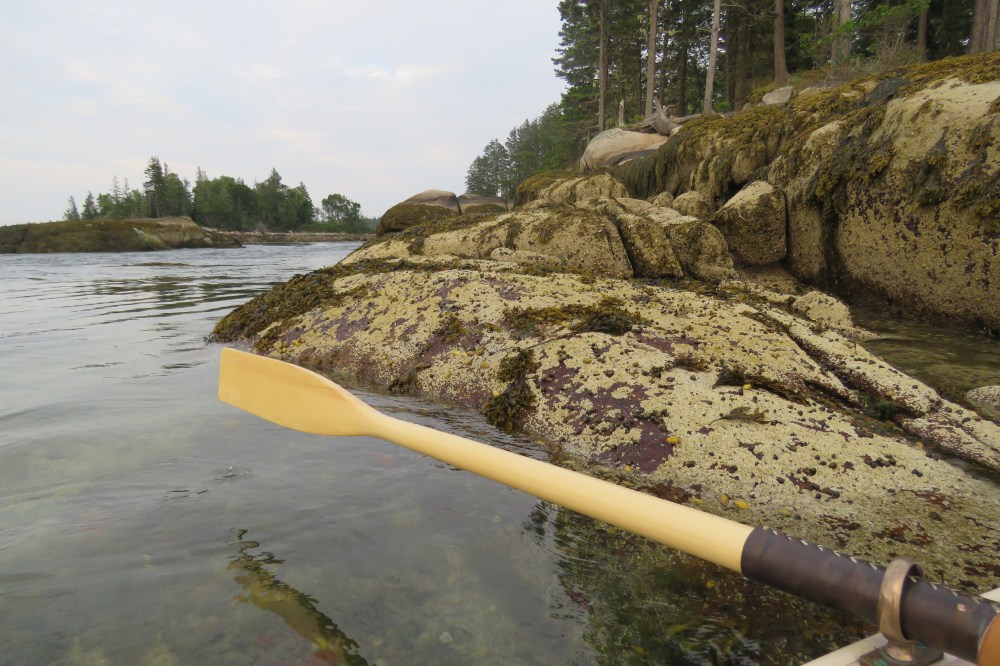

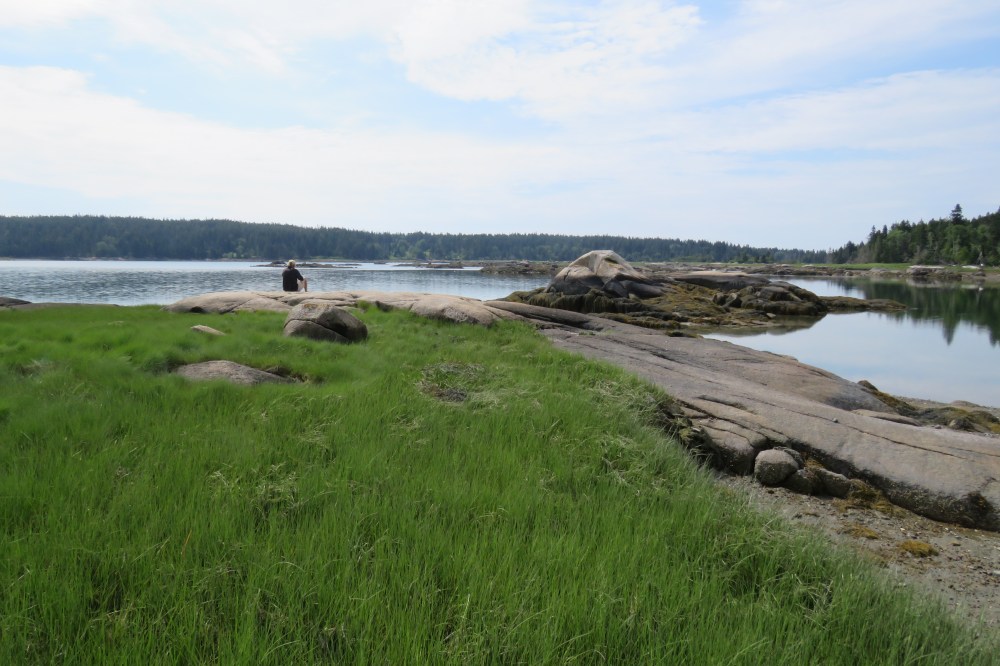




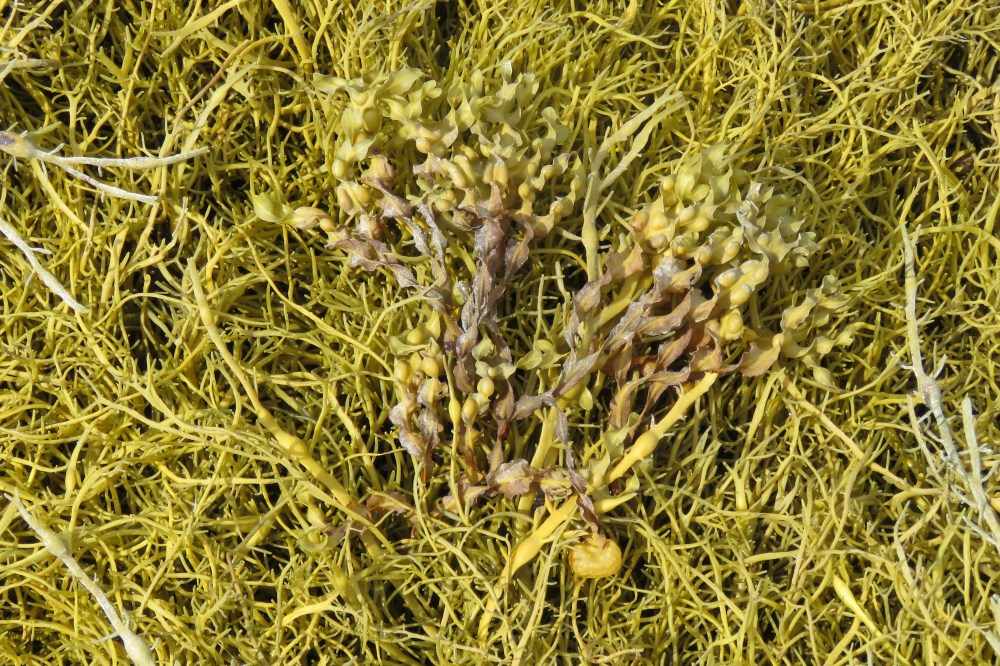

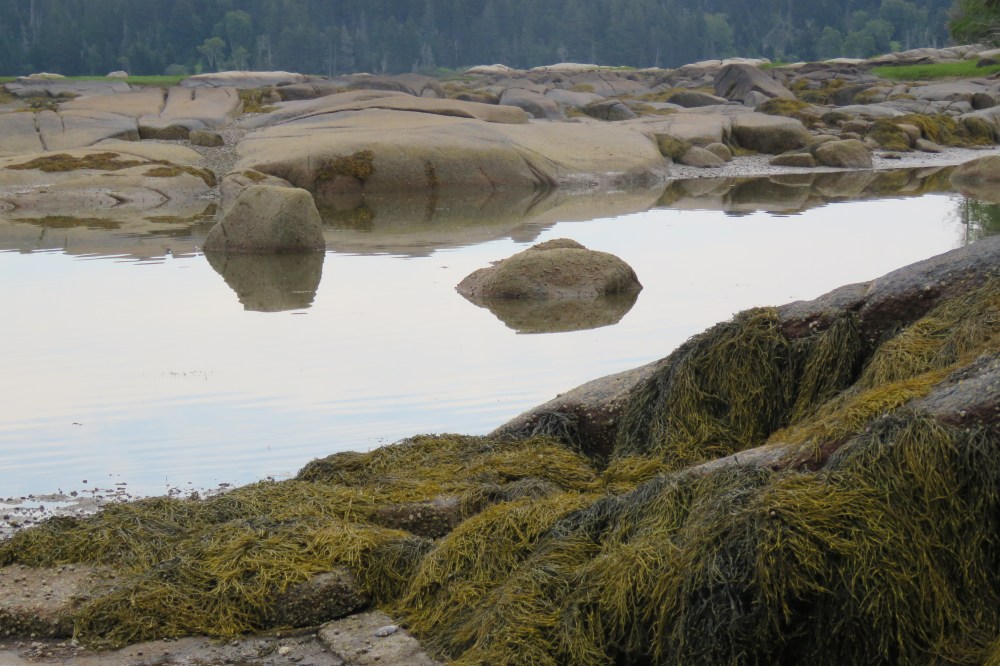

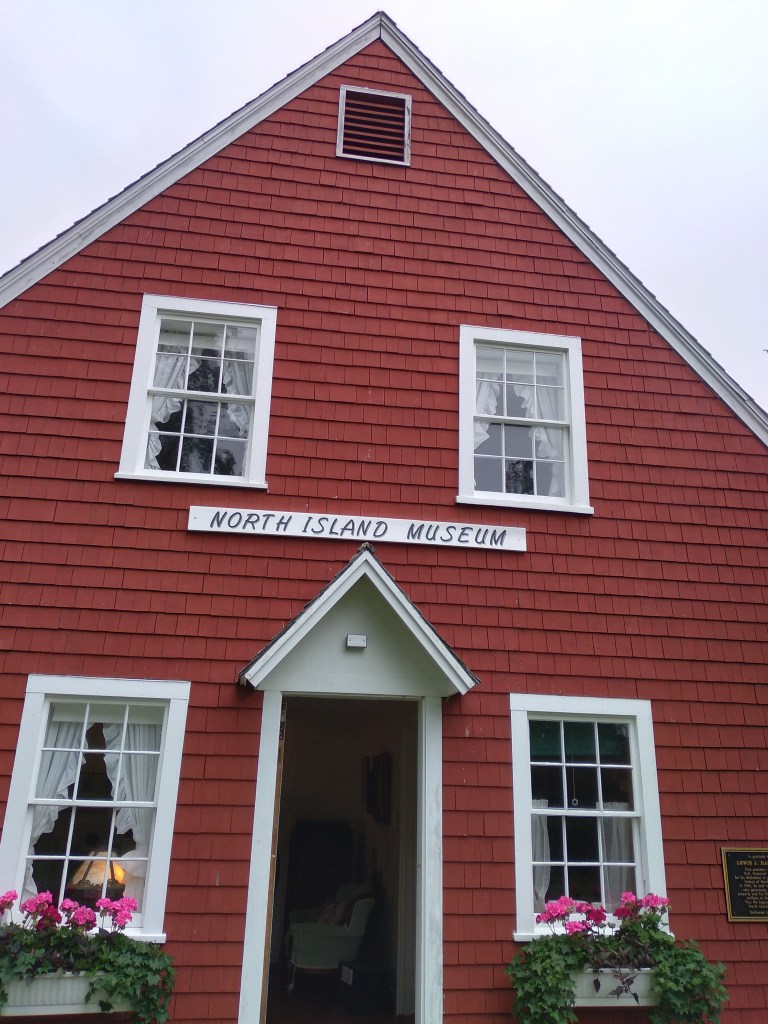


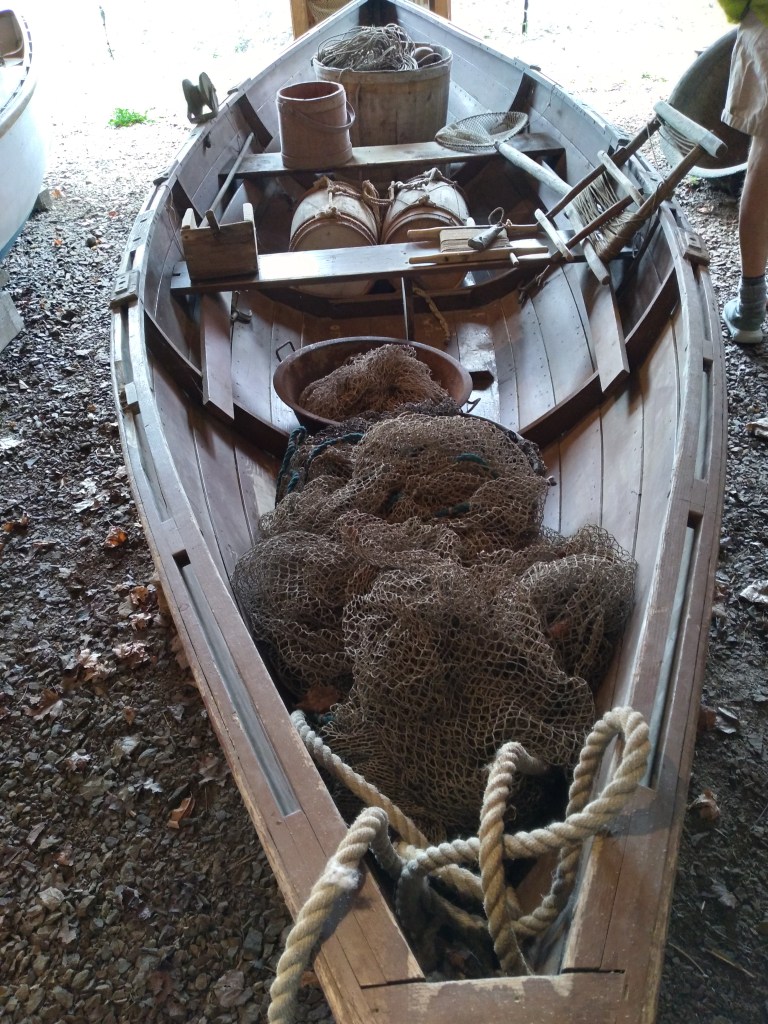


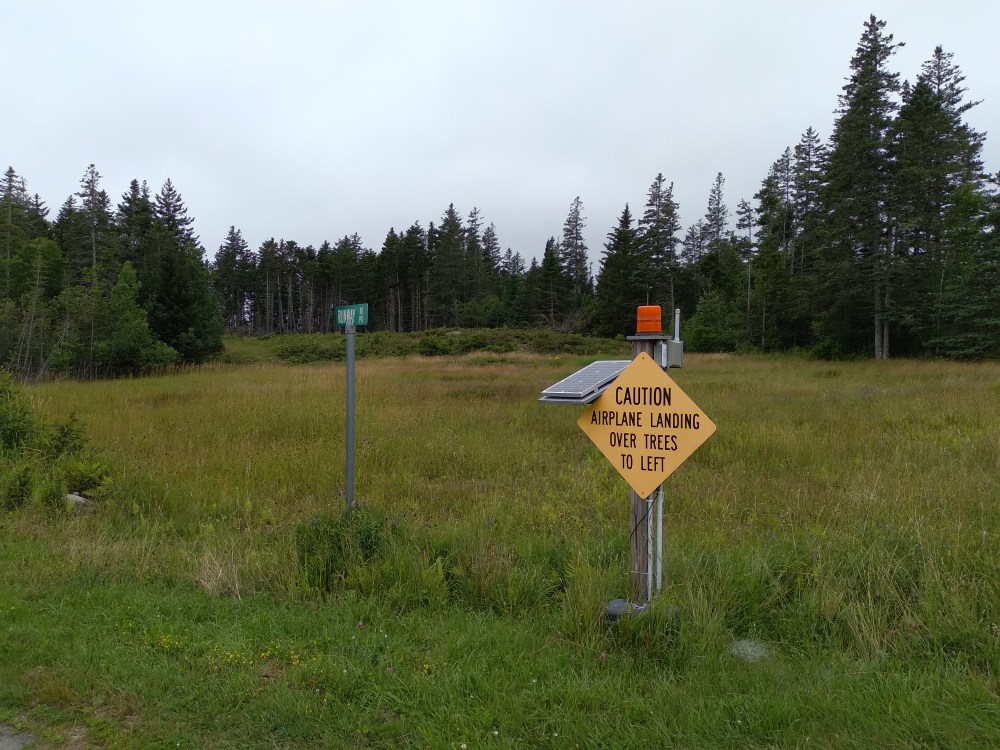
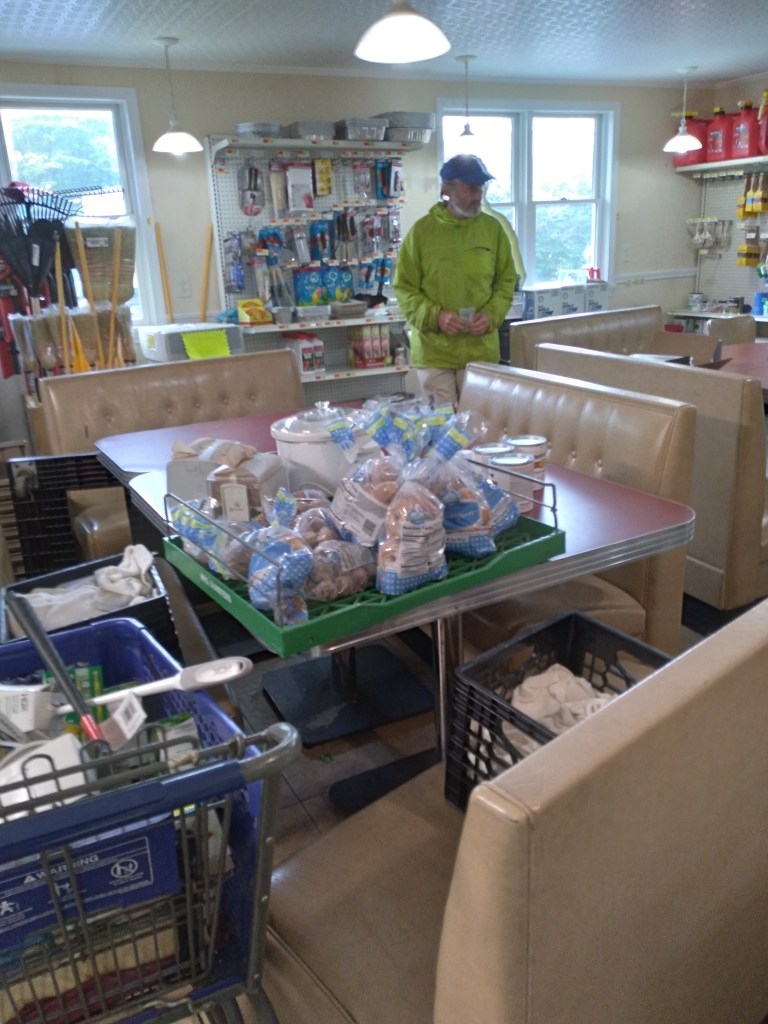

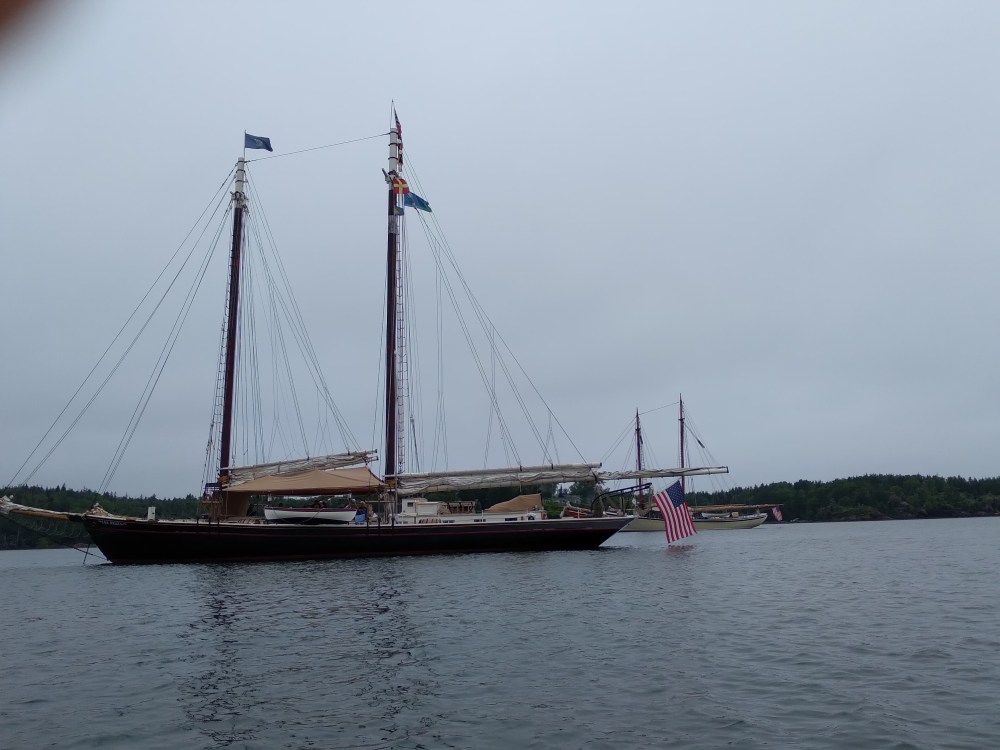
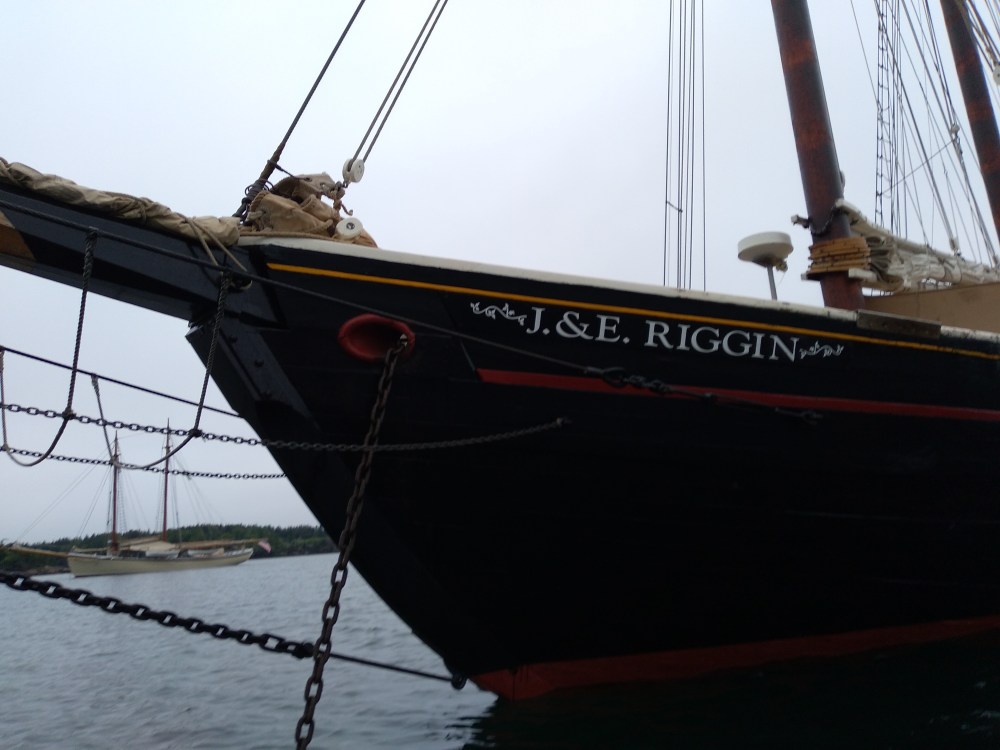

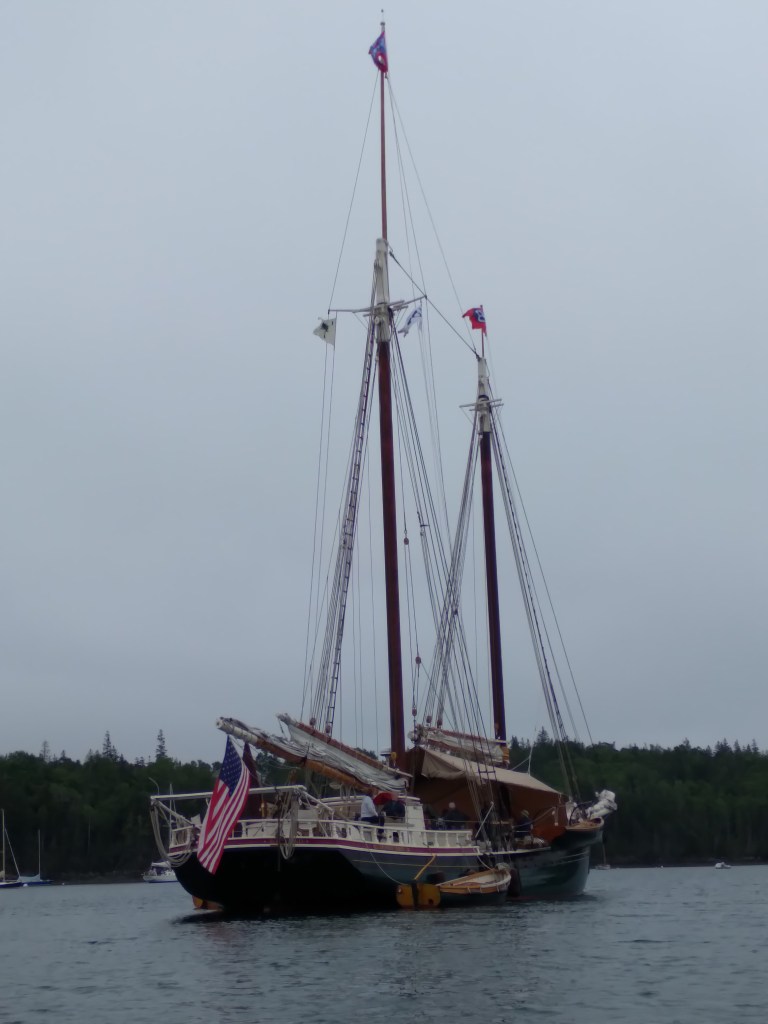
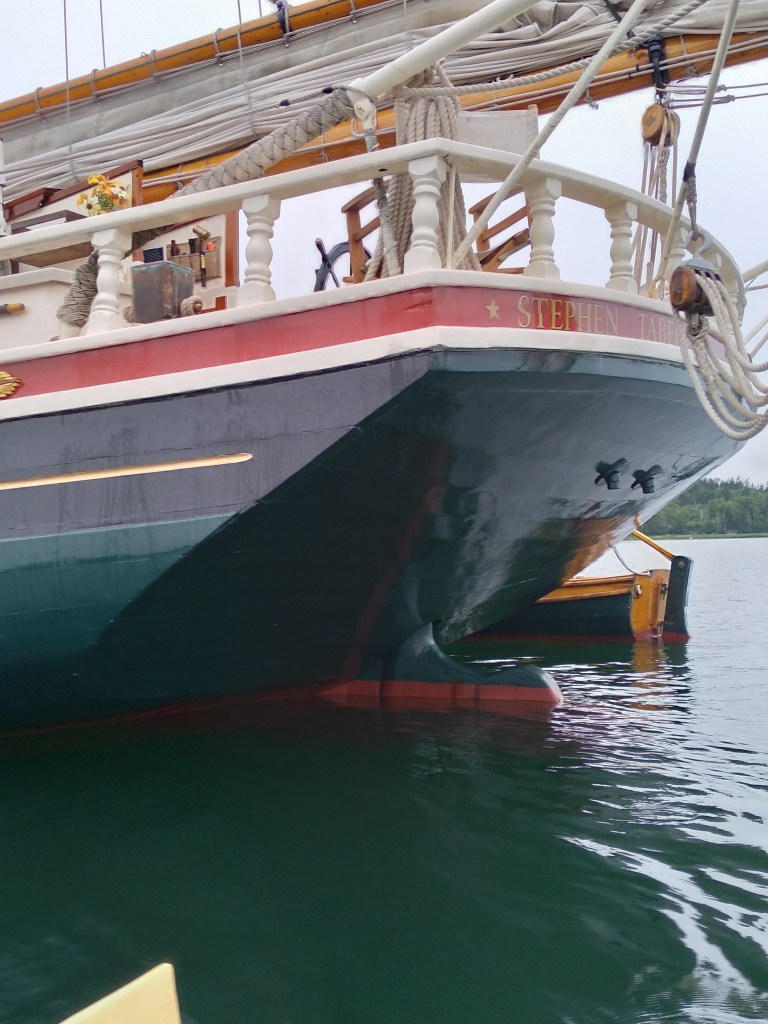
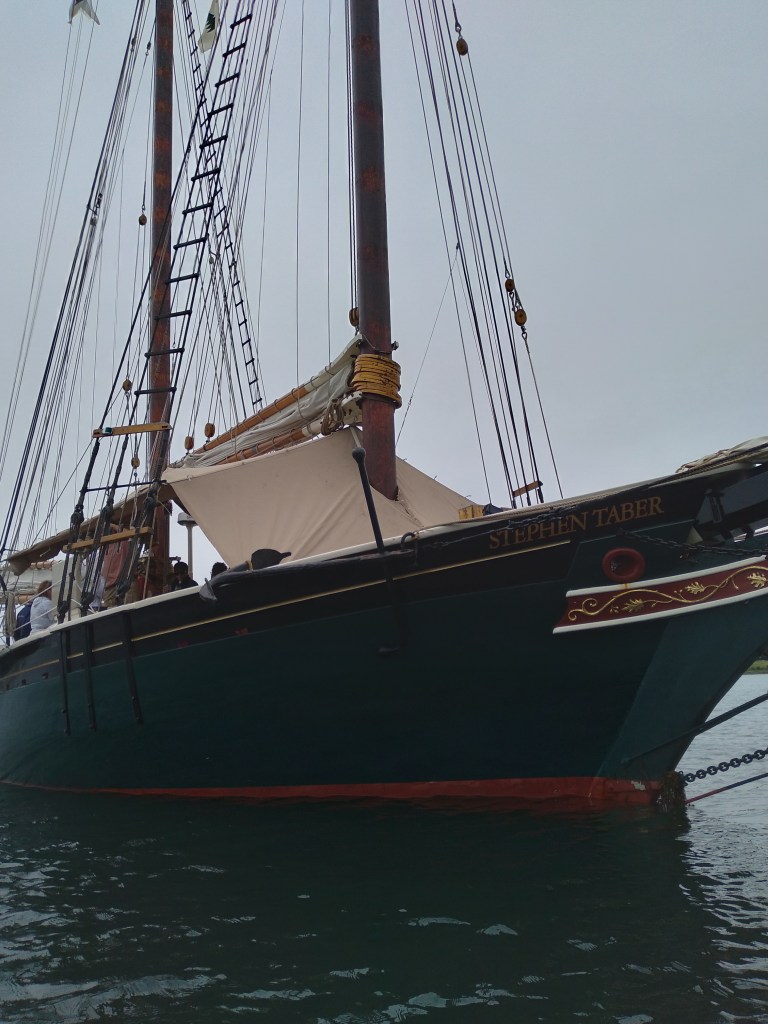
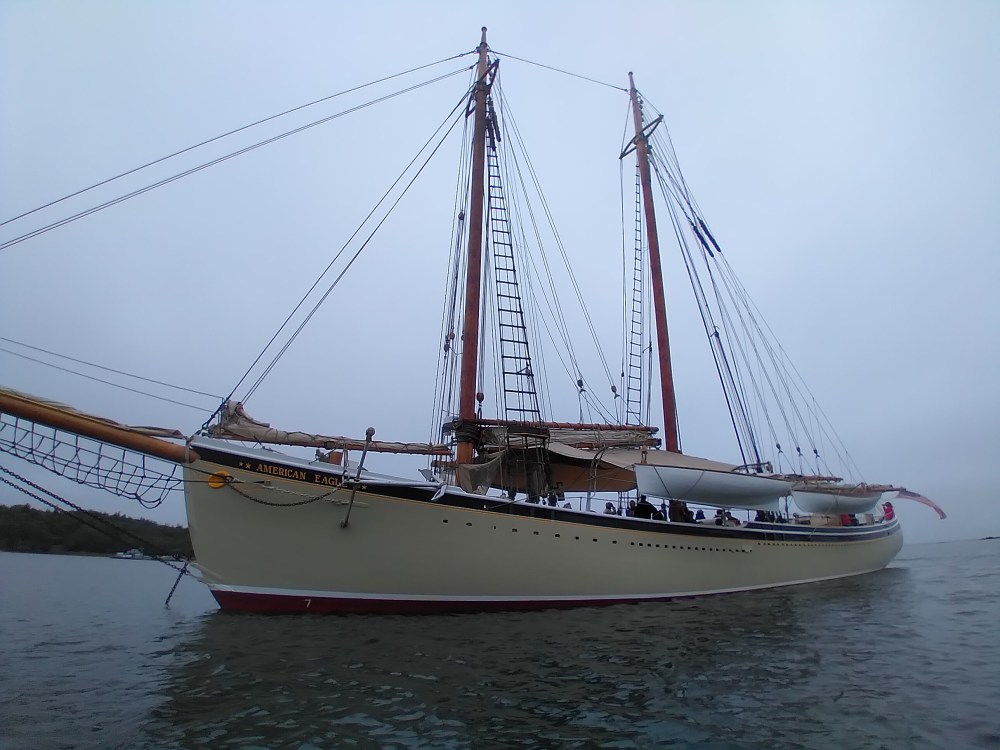

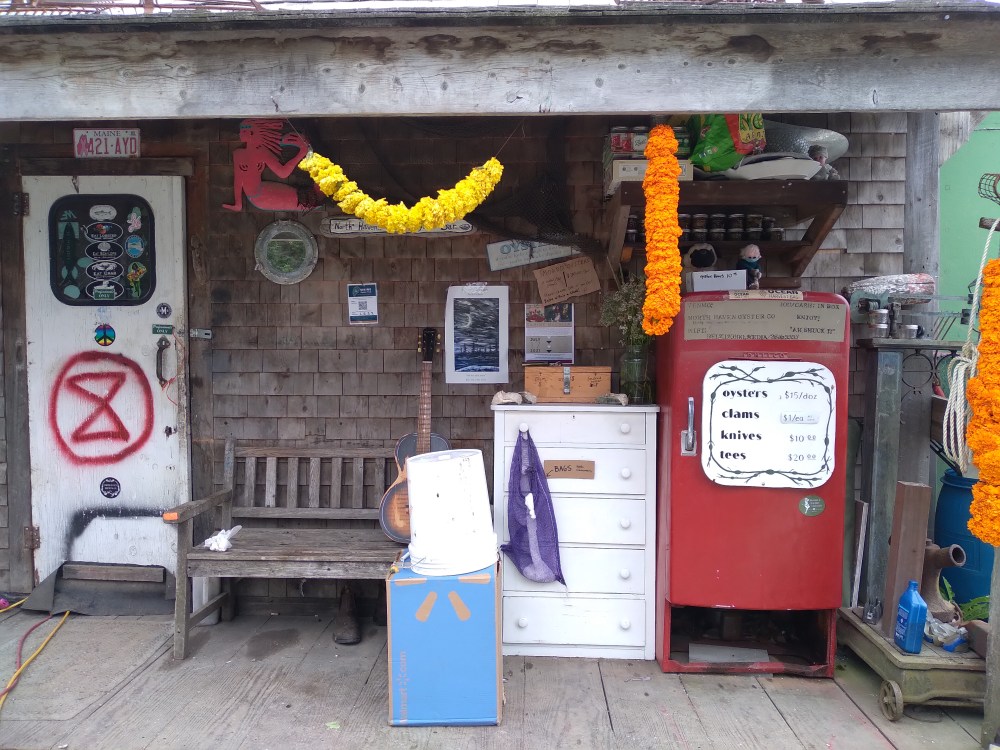


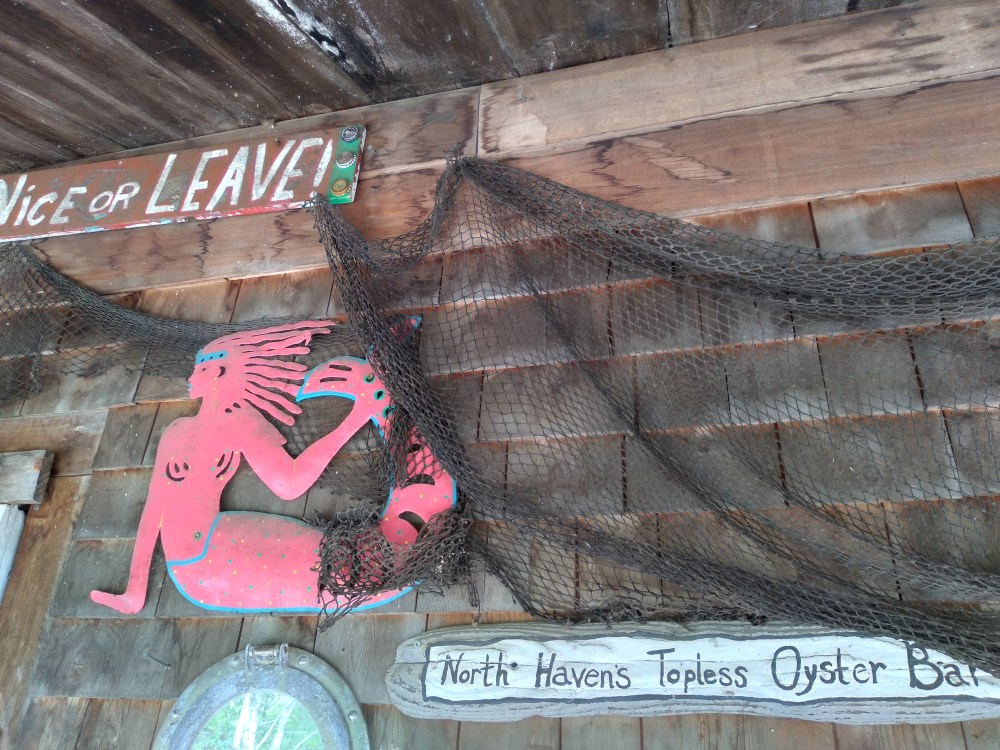


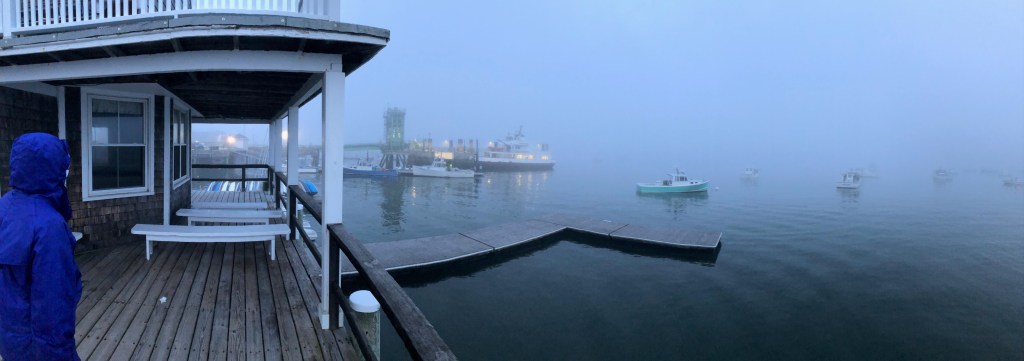

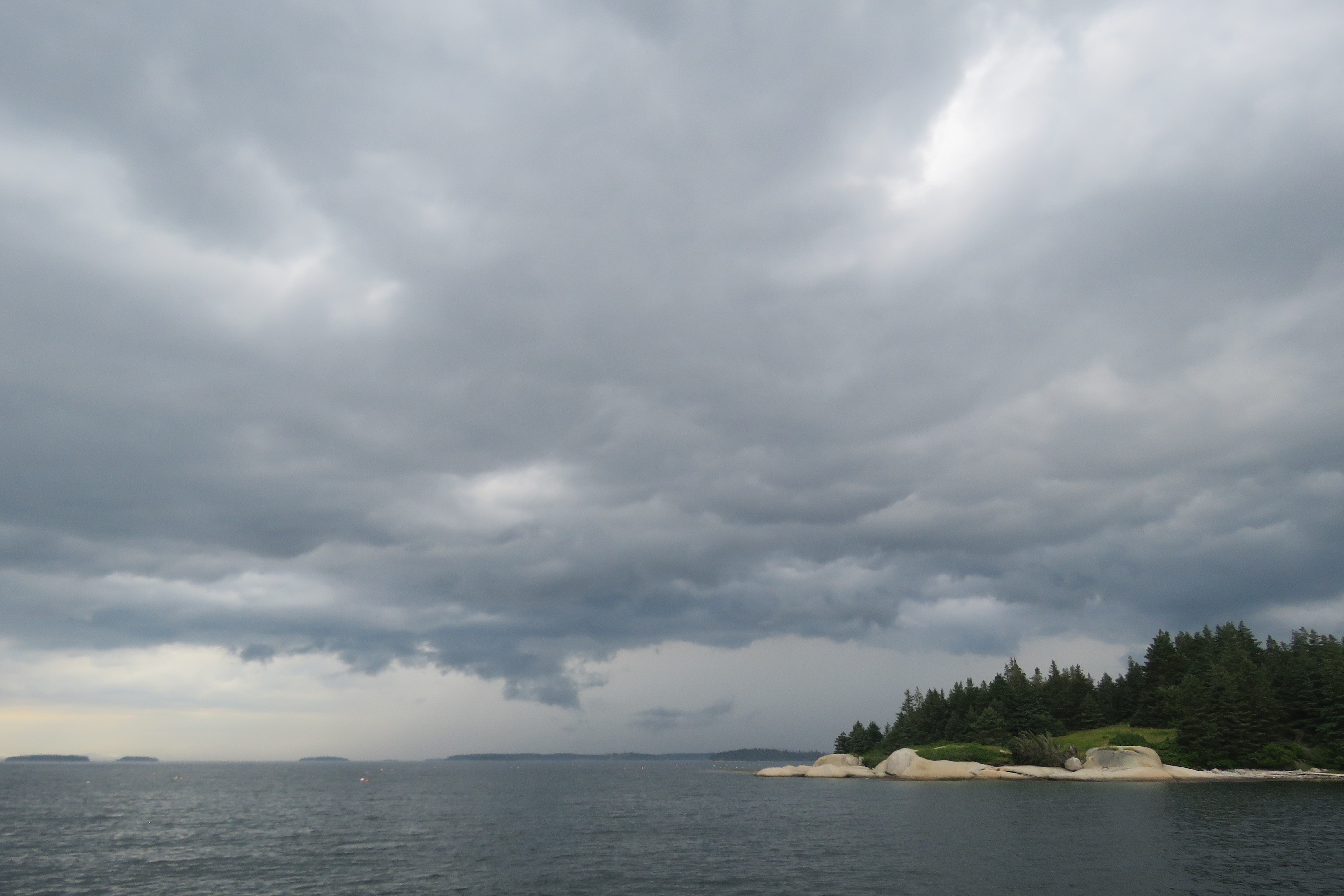


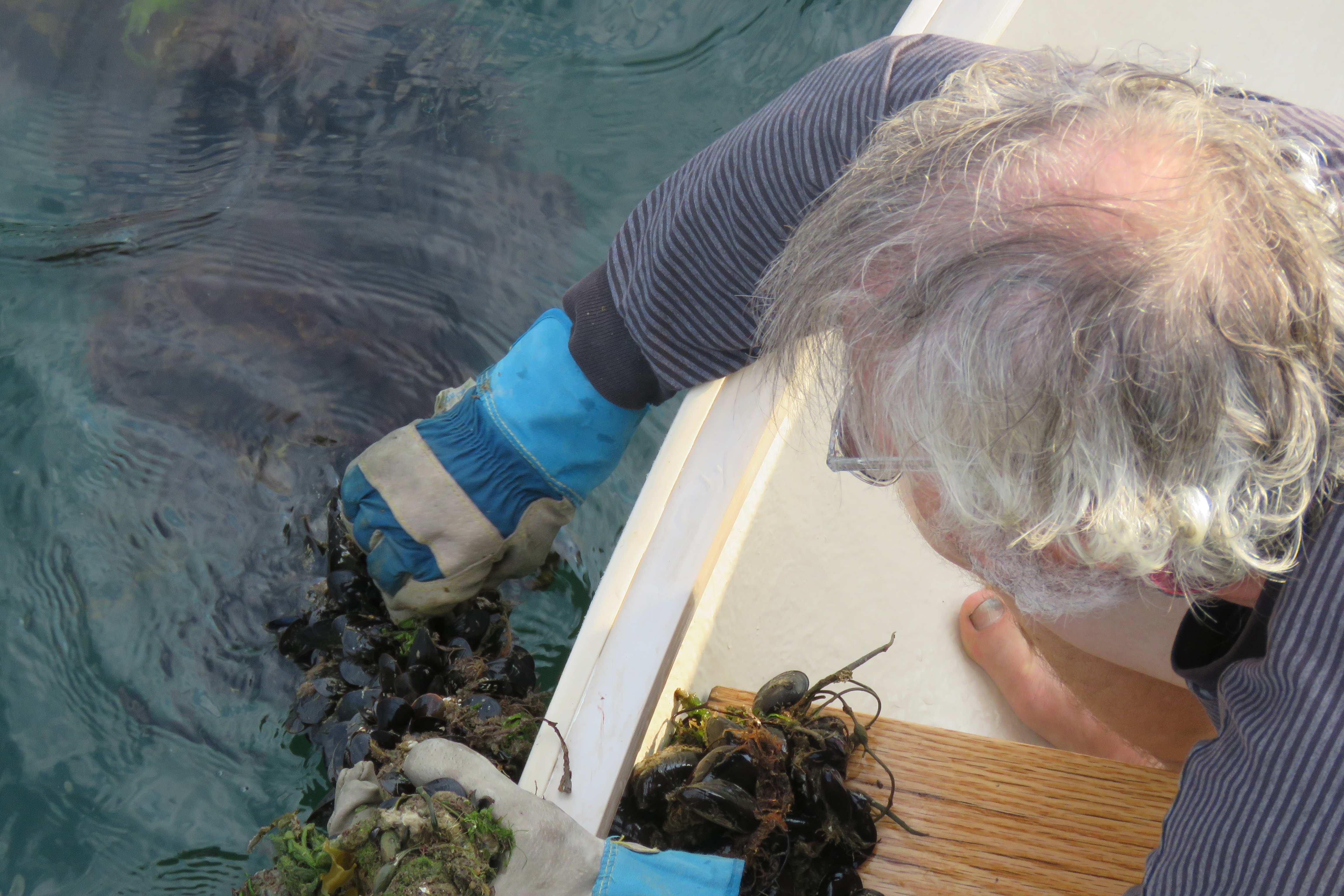
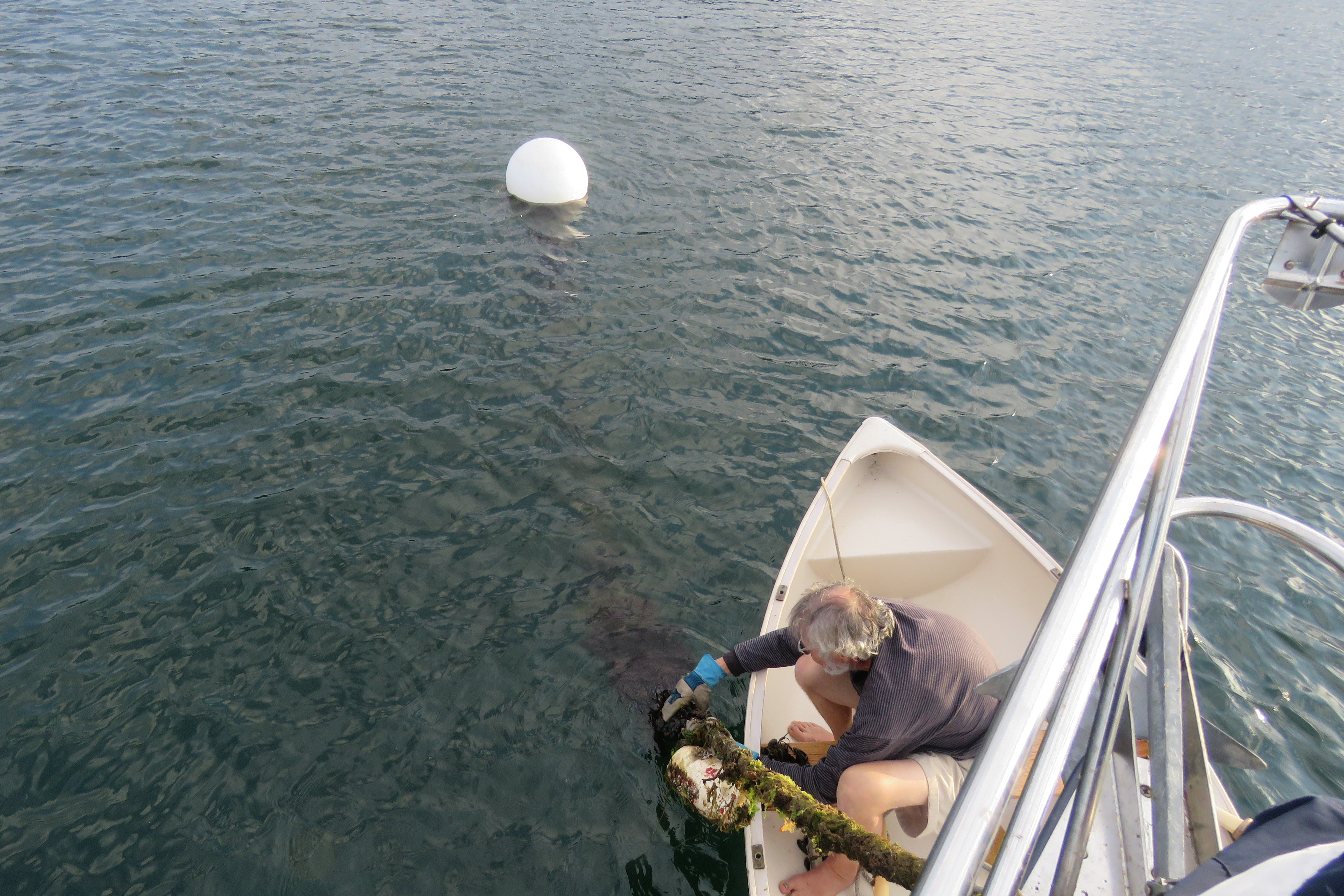


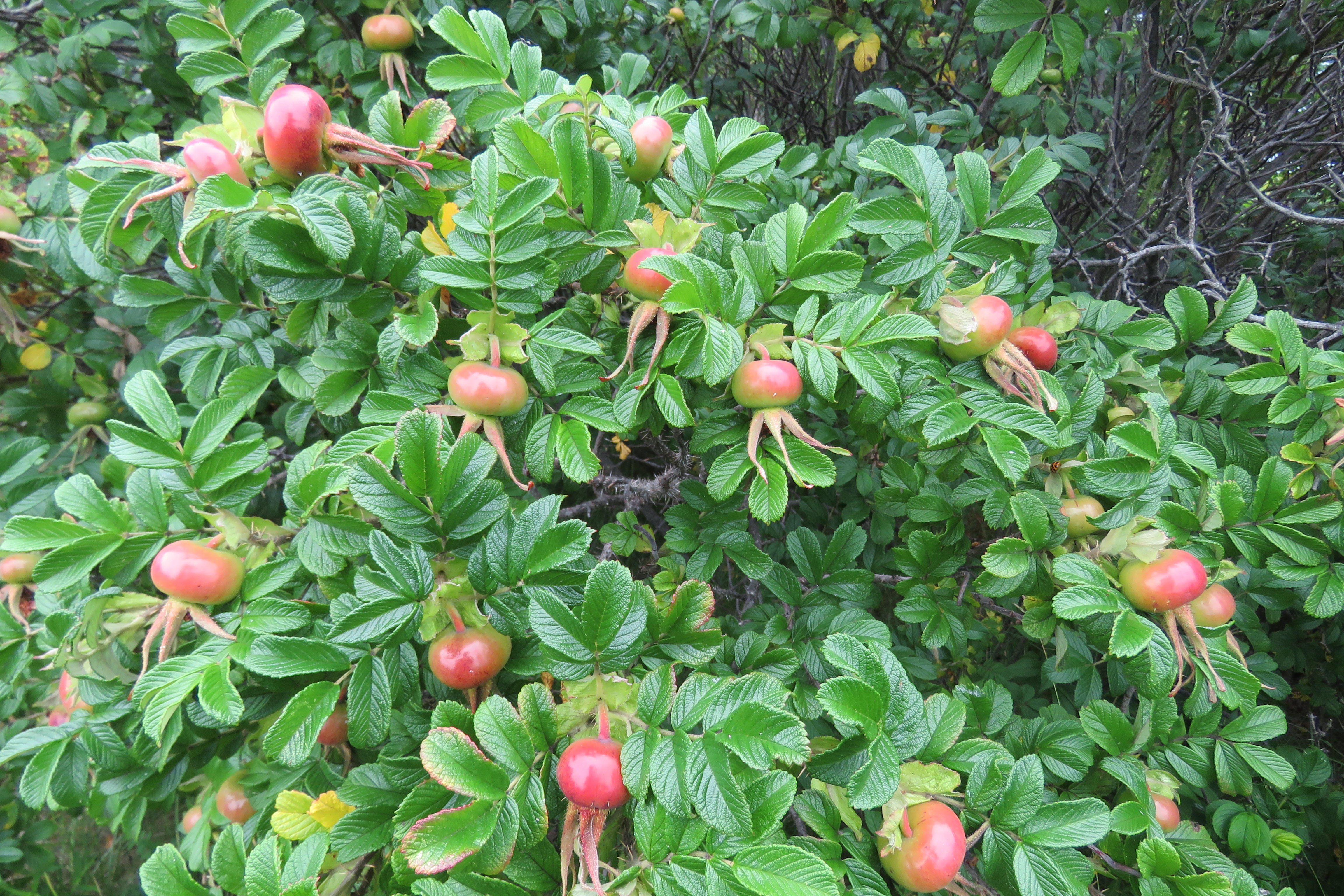

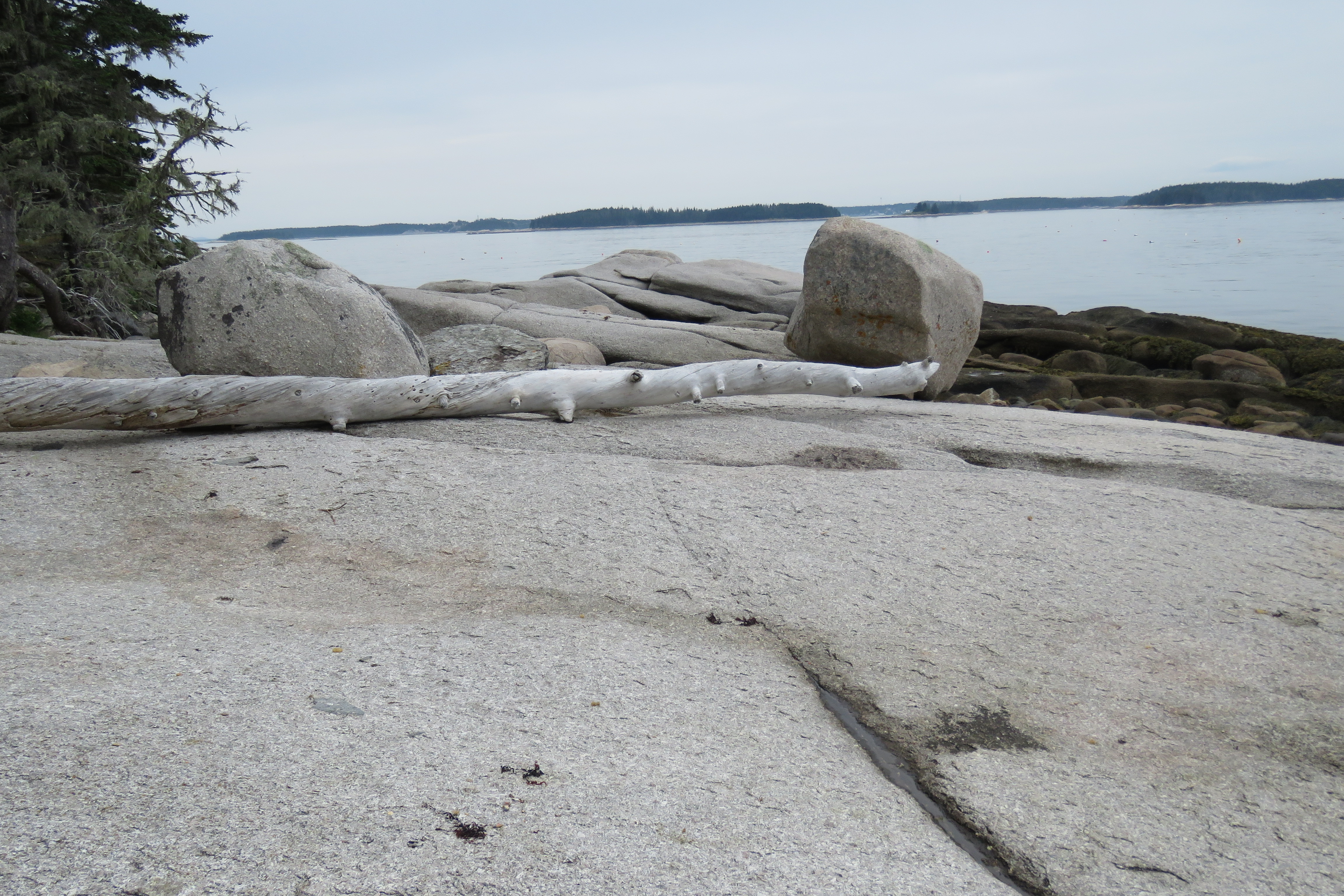

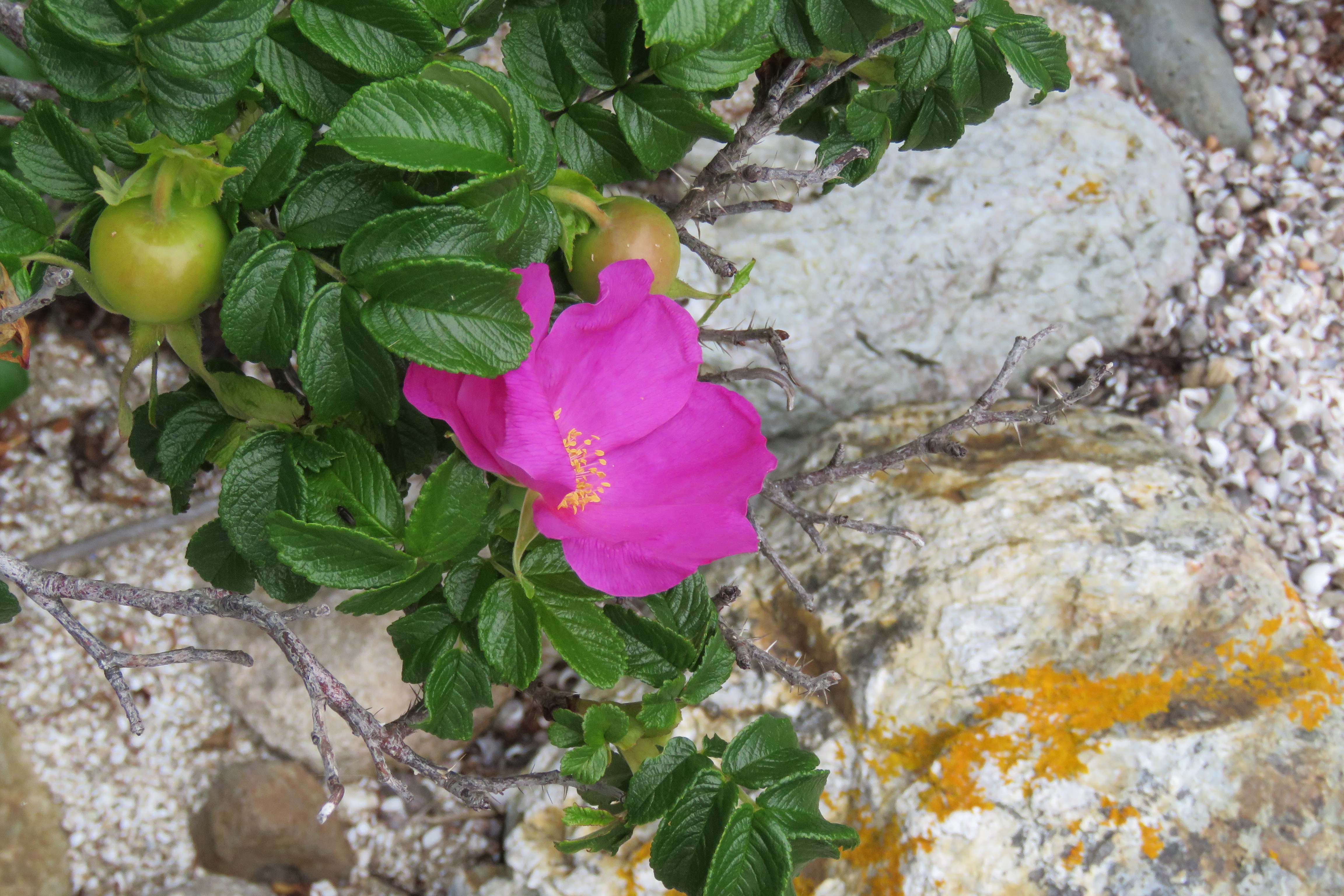






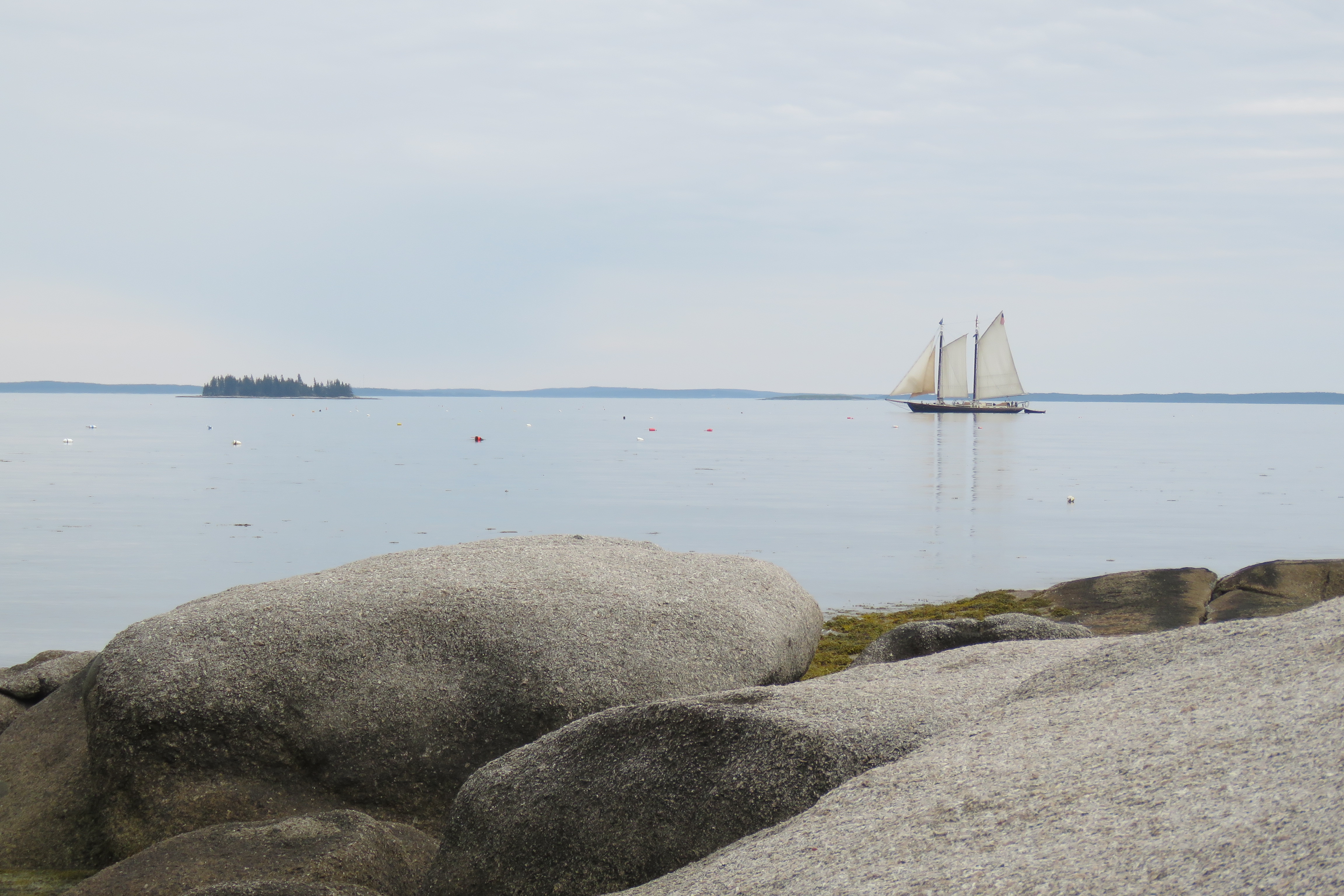
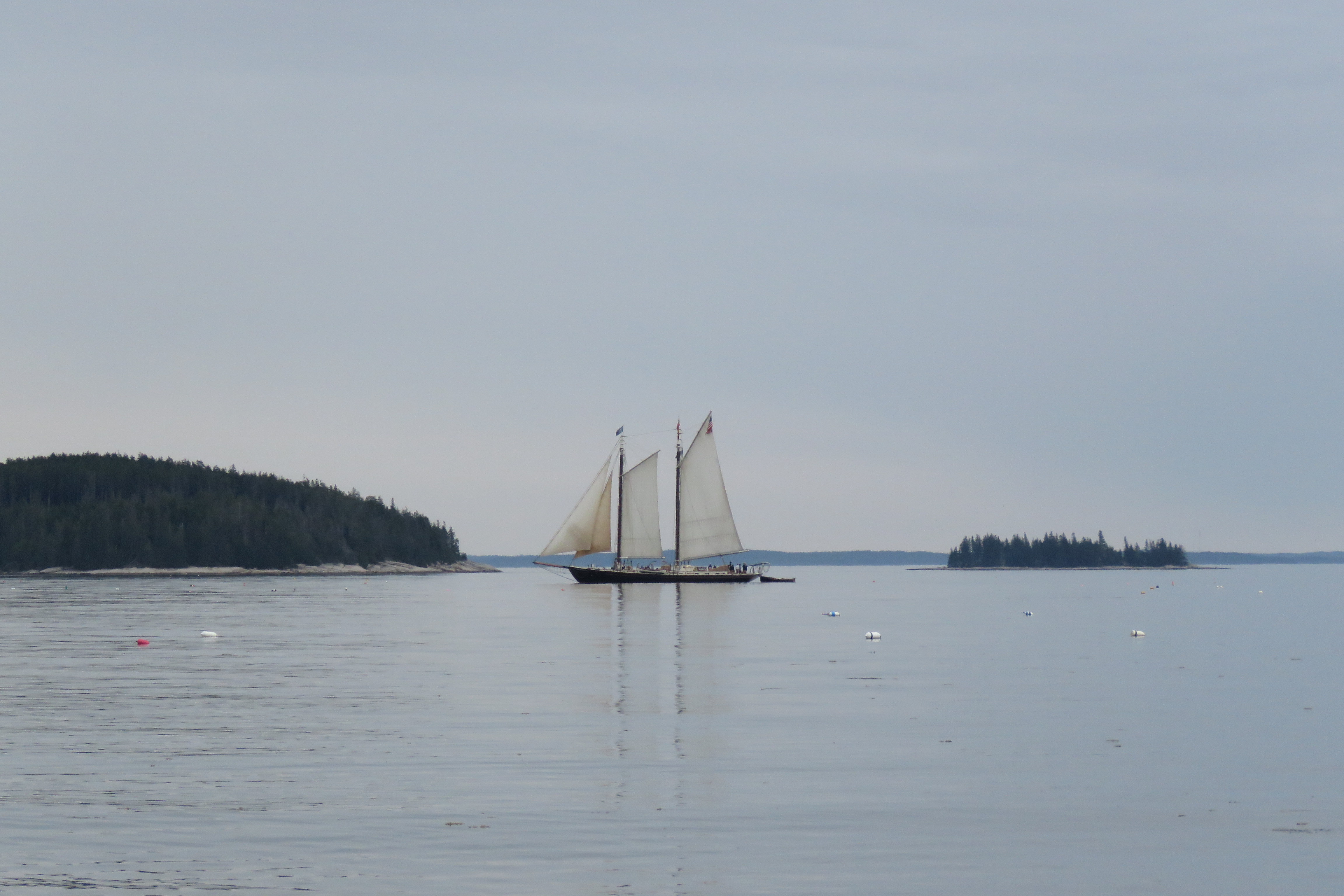



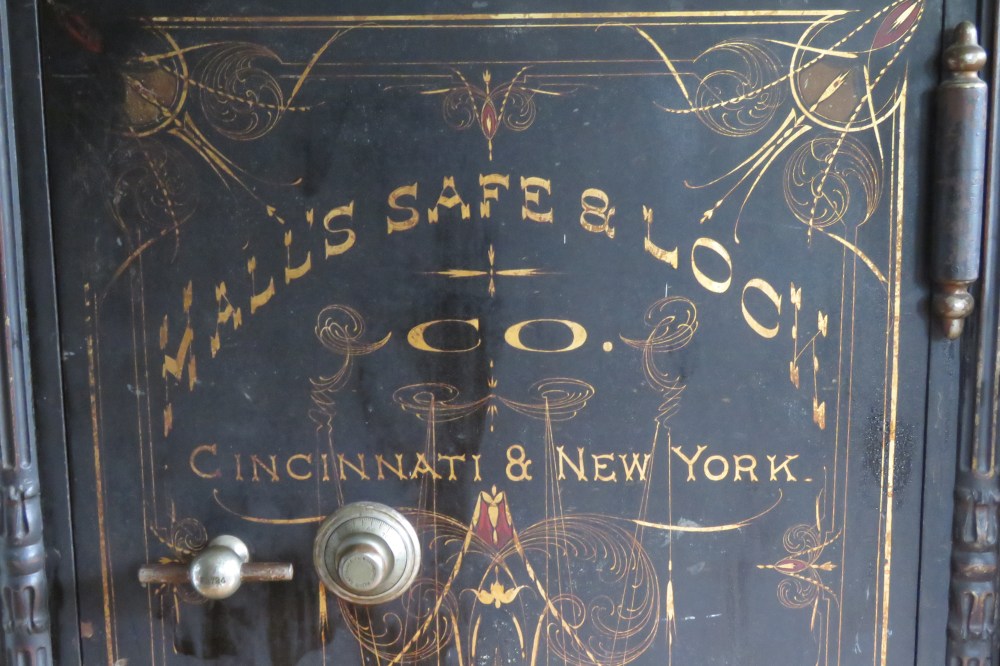


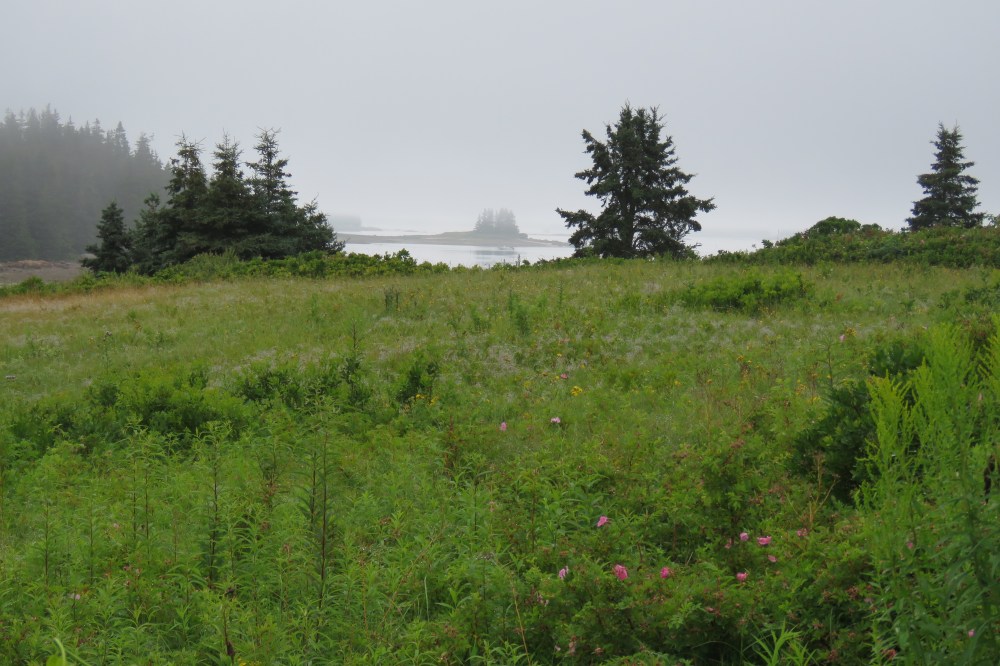


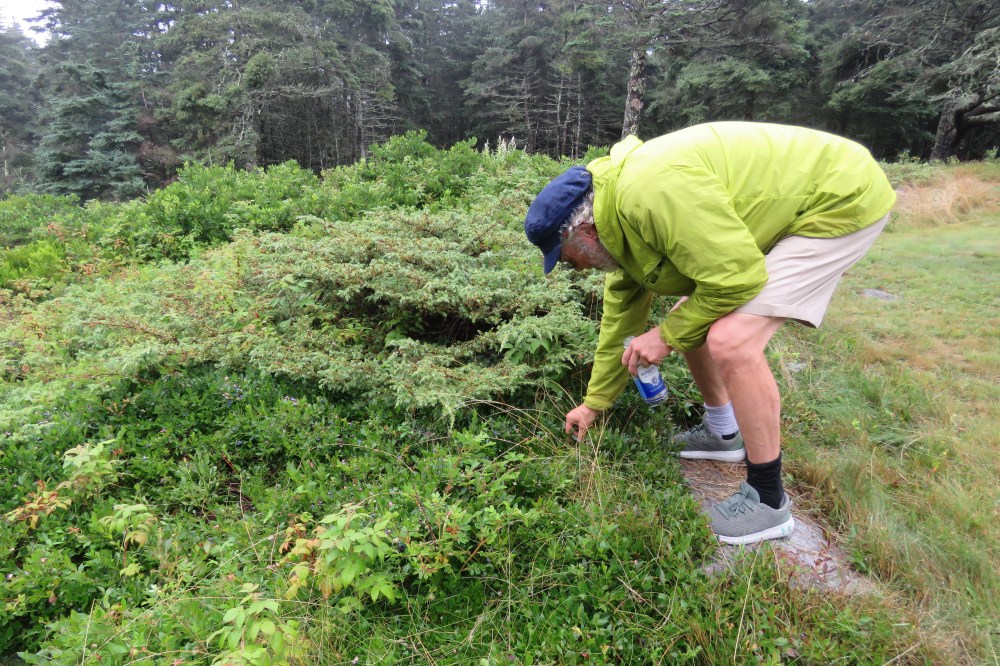

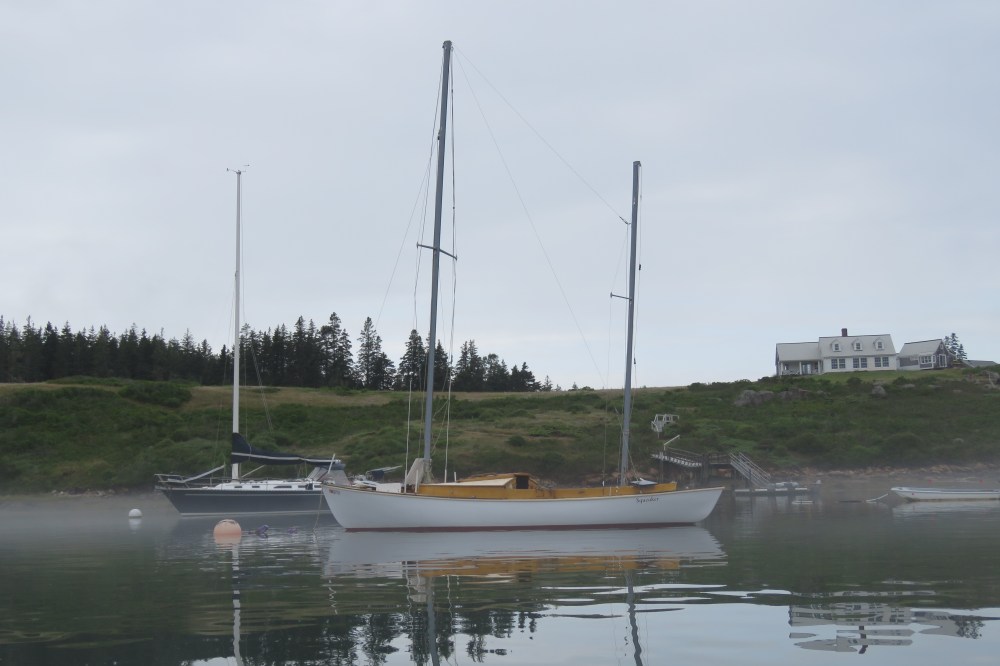
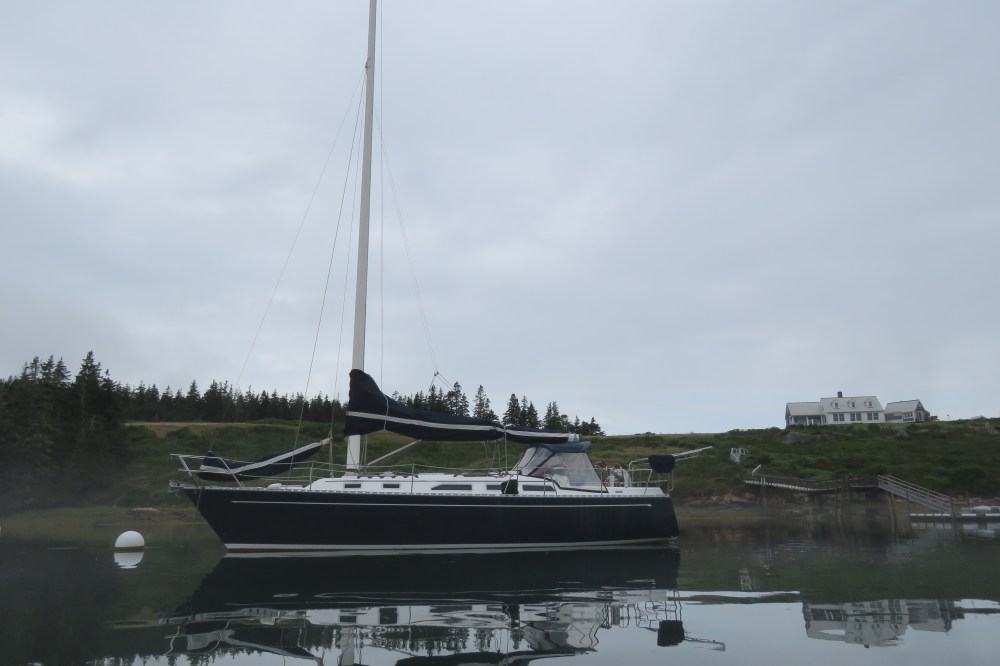

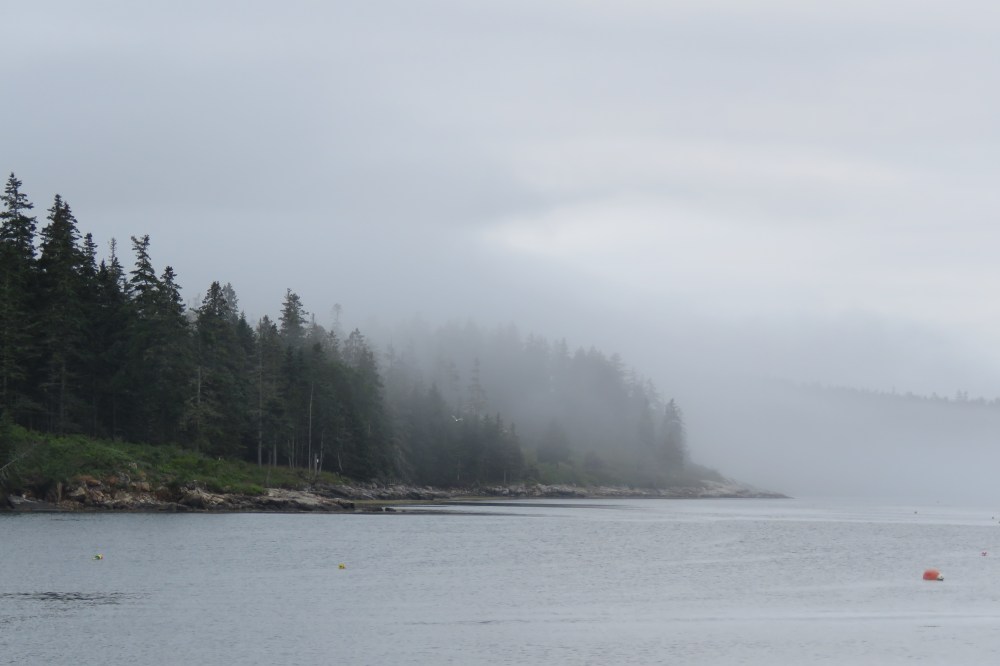
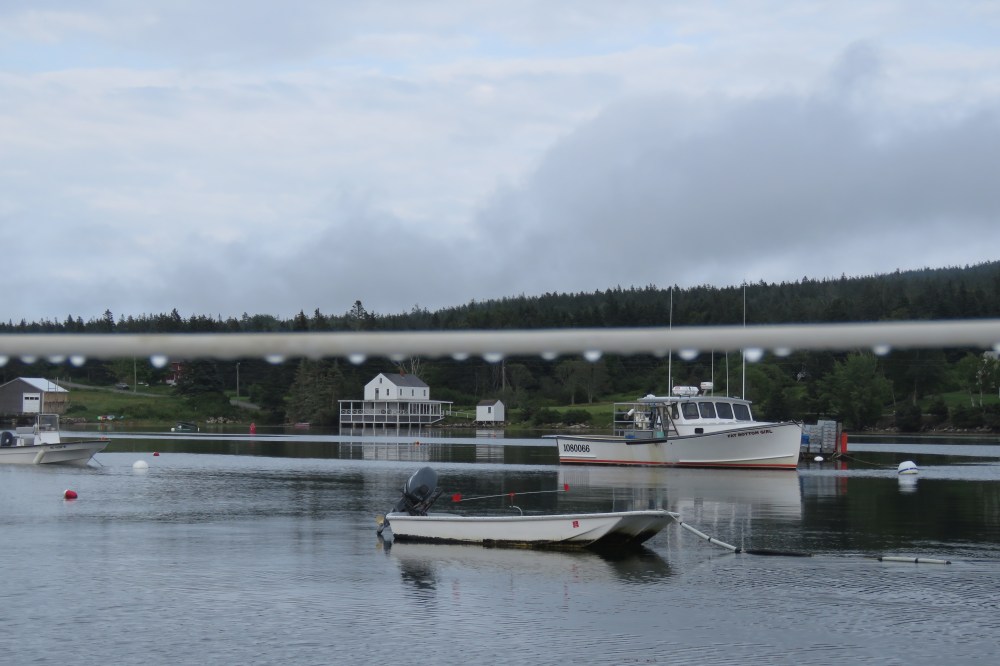
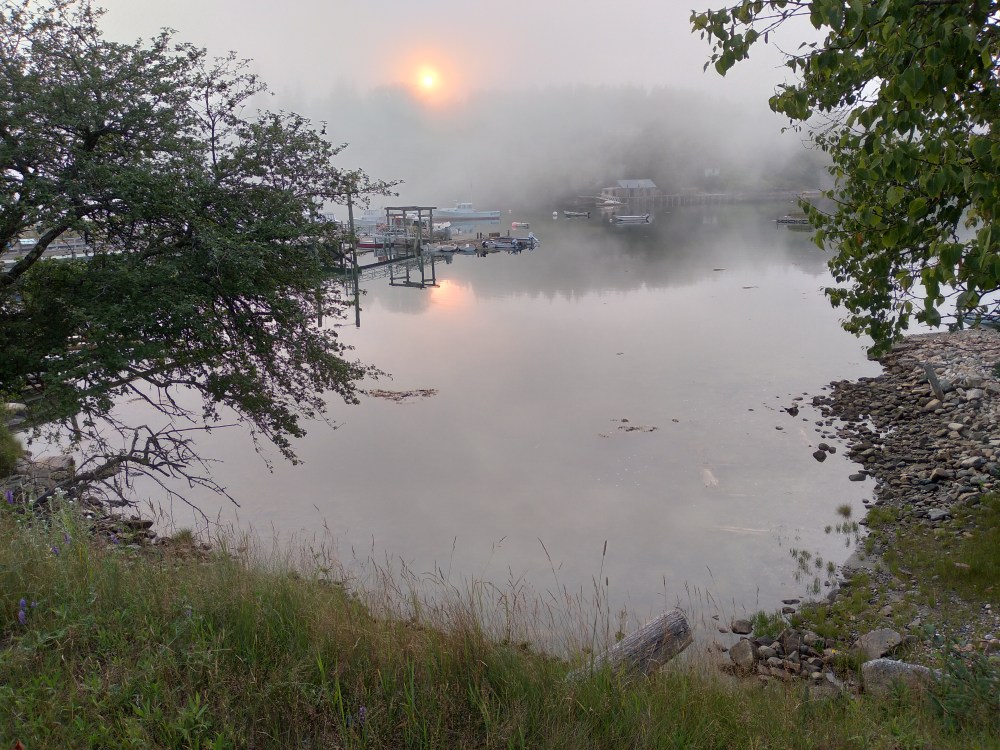


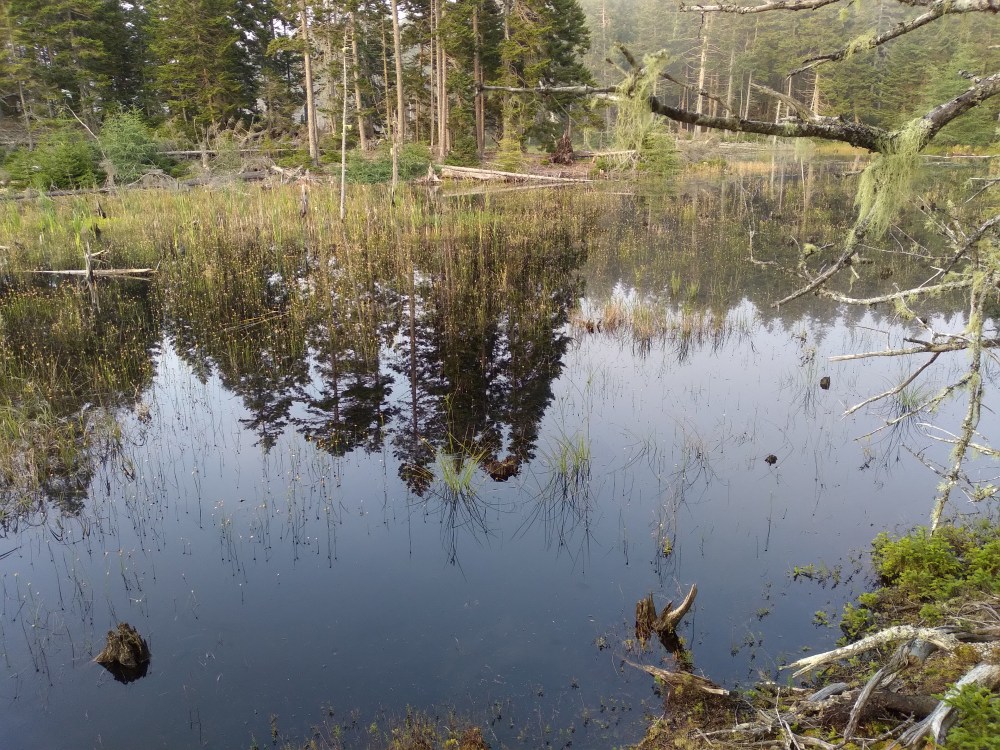


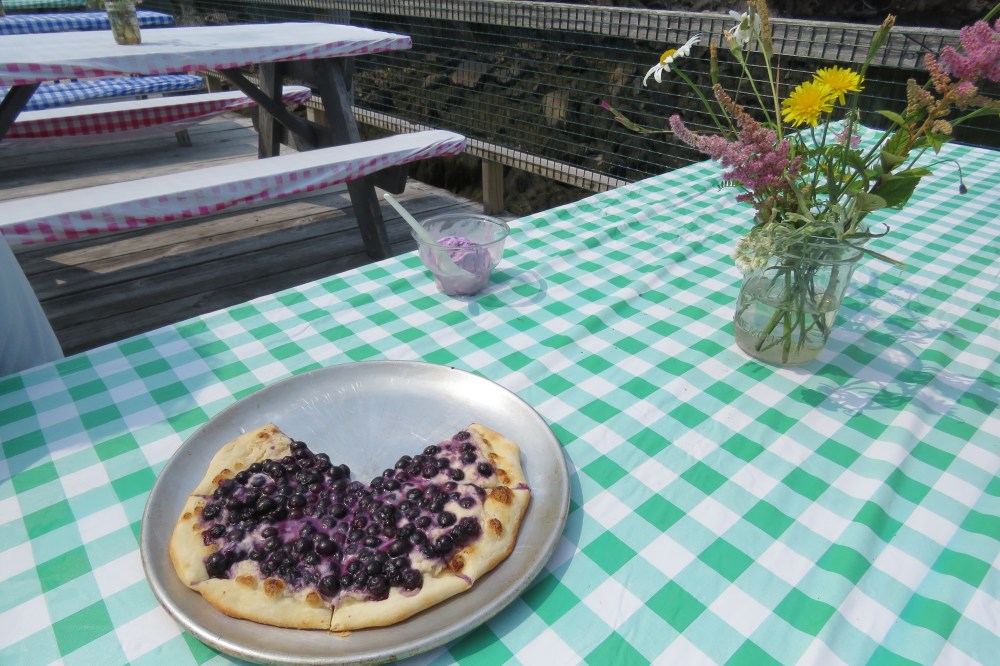
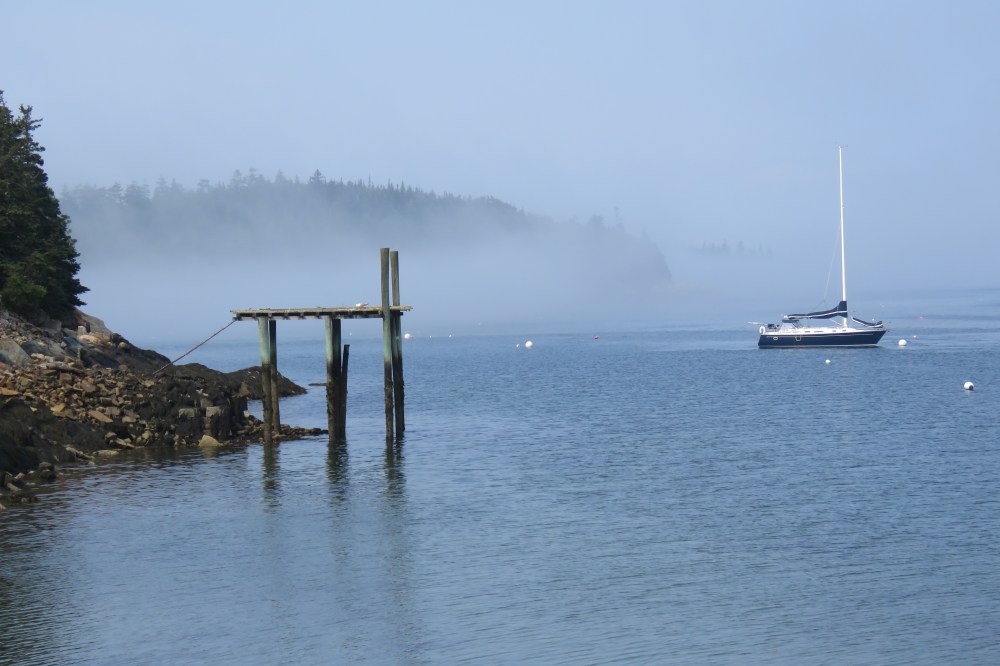
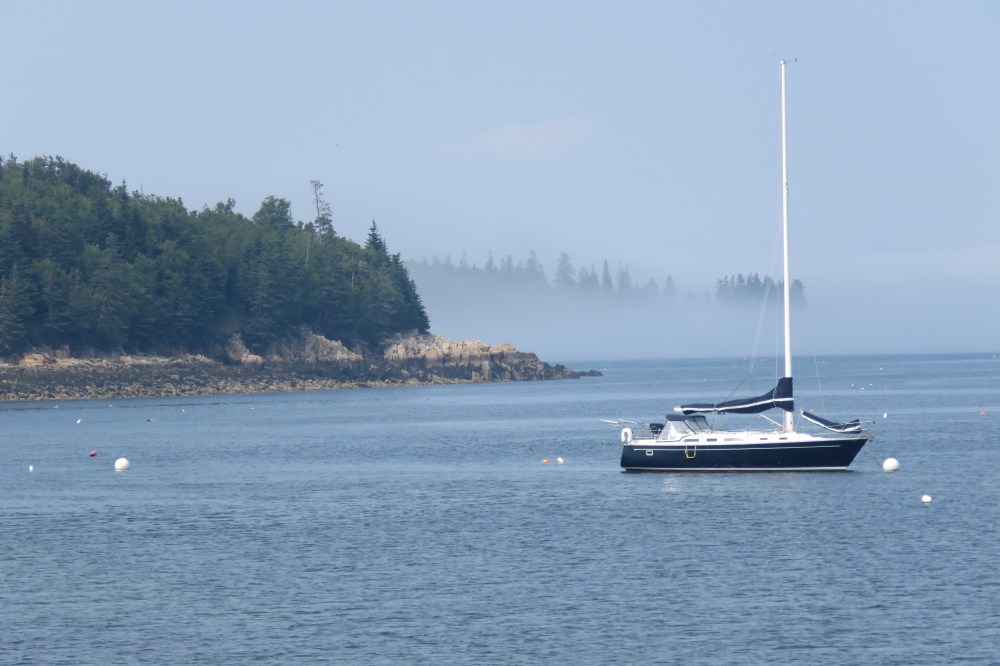


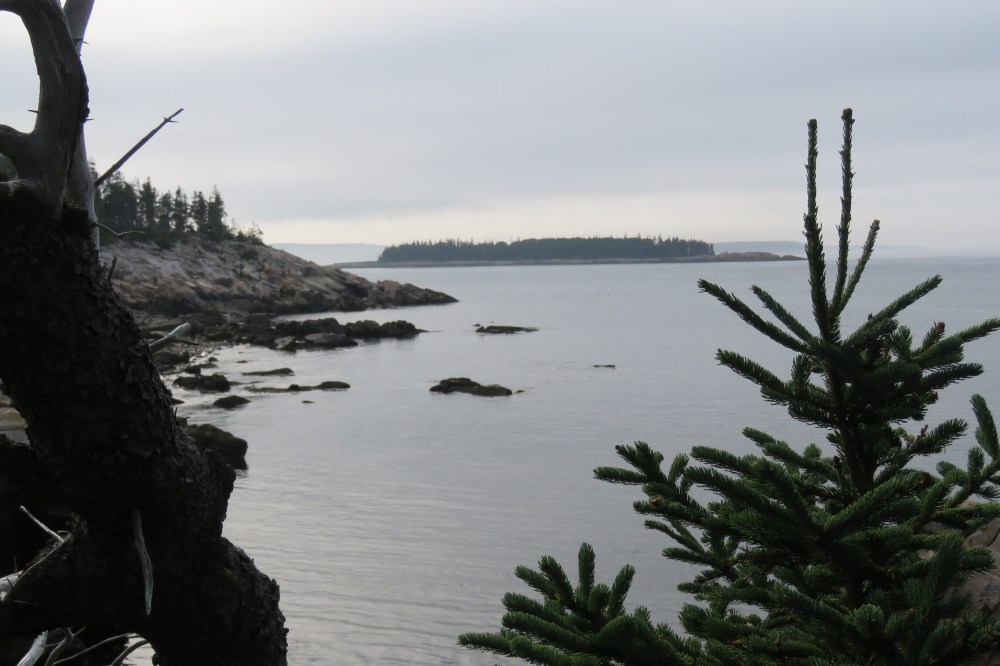

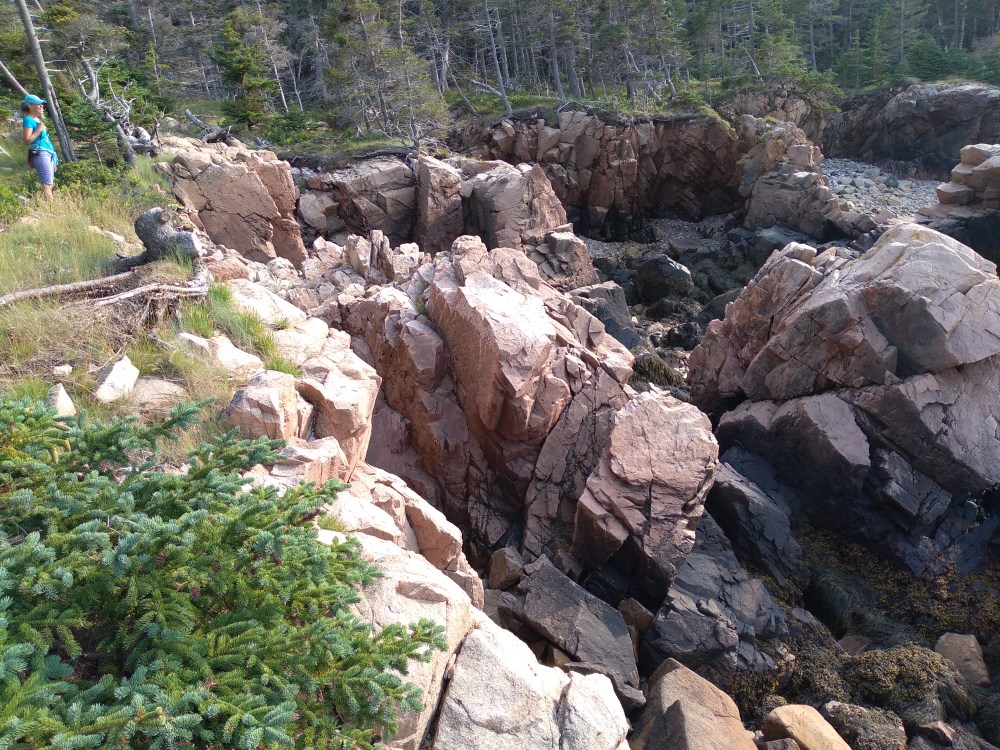


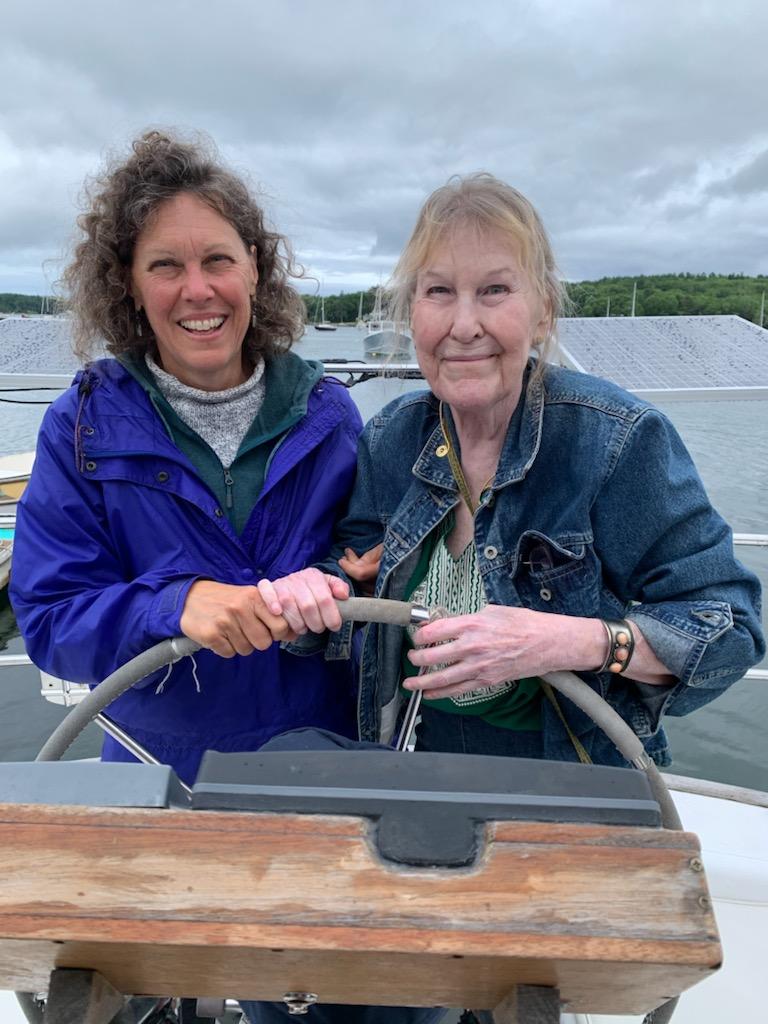
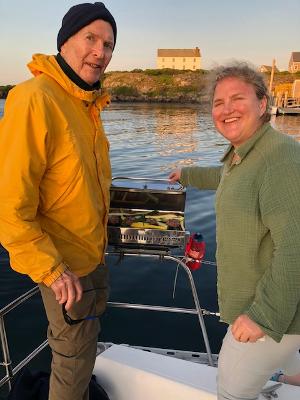


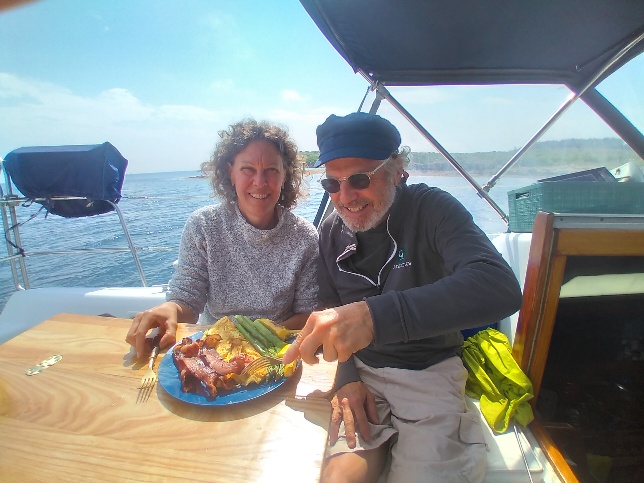
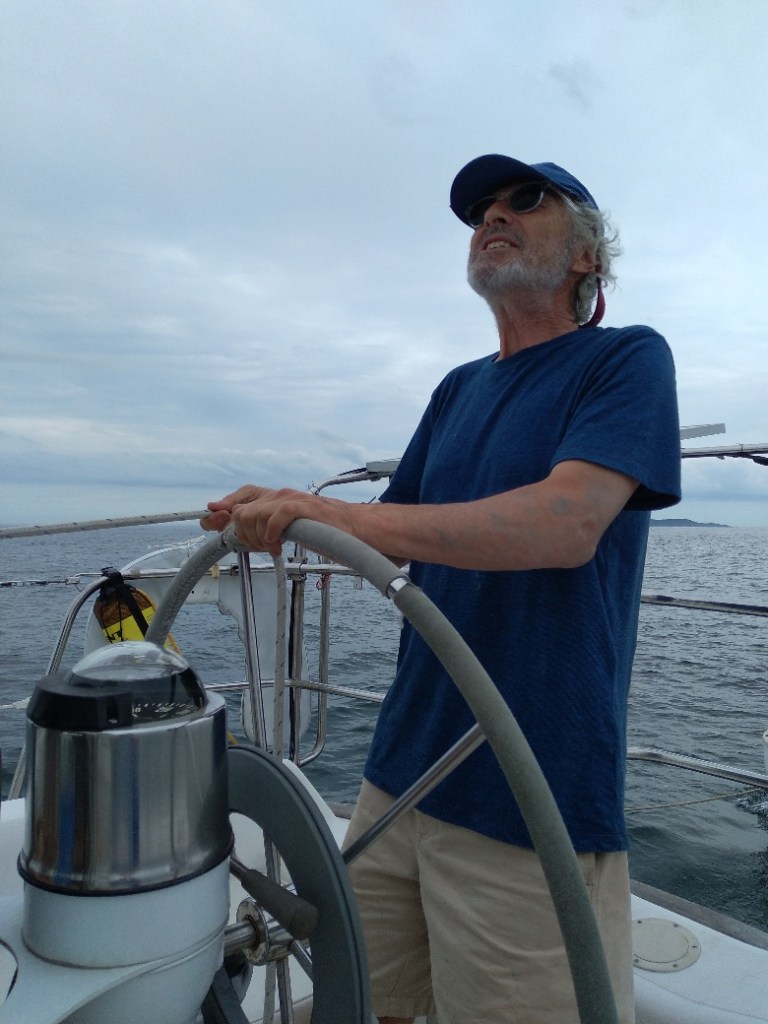
 Surrender to the Abundance