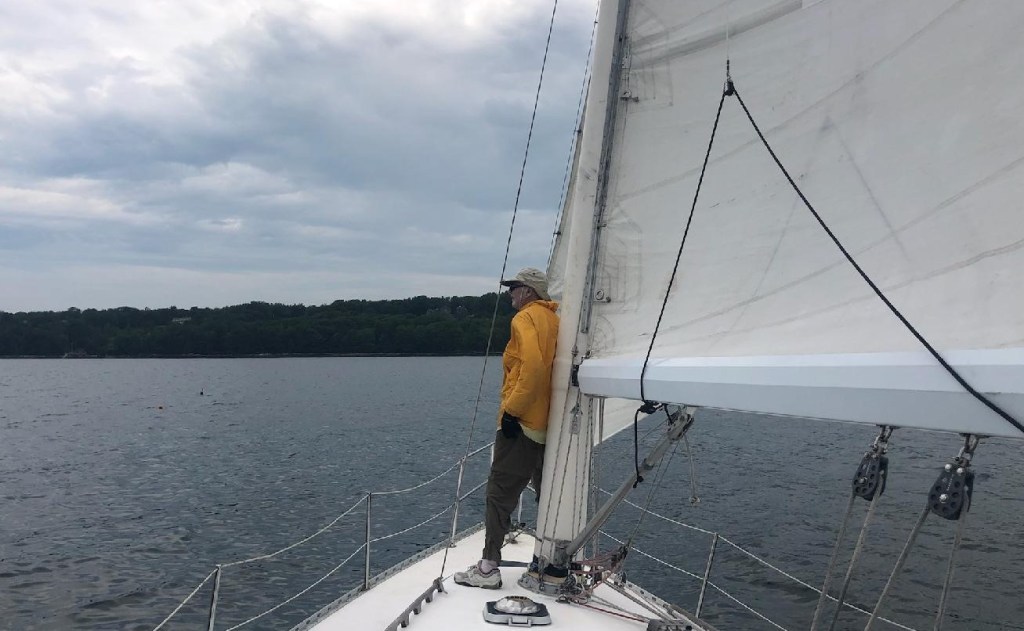
THE TRIP OF GENEROSITY: S2:E5

May 18, 2022

While I fill in for our errant scribe, it is more than filling in because I am so happy to be writing about our house-sitting stays, mostly at our friend Liberty’s house, and our west coast trip. (Details and photos of that trip below.)

The planning Tash and I did in preparation to spend 17 days away—with most every detail of that trip, including its duration—was totally guessed at. We vaguely needed to be back by mid-May to complete the commissioning of our intergalactic vessel, and we vaguely thought about the Seattle/Santa Cruz split, but we also just identified the least expensive days of the week to arrange airfare and off we went.

Prior to traveling to the west coast, we were house-hopping—or as Tasha liked to say “floating on land”—as she was not thrilled about living on a non-sailing sailboat. We had originally planned to winter (mid-October to mid-April) on our boat at DiMillo’s marina in Portland but only did that for 1.5 months because Tasha’s generous 0.5 brother Tyler offered us his boat to live on in Sicily—which we jumped at before he finished the sentence because we both love Italia. Once back, we both recognized our belief that boat life is great but that sailboats are meant to be sailed, and our one passage to Siracusa was not enough. Further, there would be no pre-spring passages once back in still-chilly Portland, and so the piecing together of places to stay until at least the warmth of mid-May was upon us.

Generous couple Simon and Jill, Tasha’s son and daughter-in-law, were still away on their Ski-RV grand tour in the Rockies, so we gratefully luxuriated in their manse on Ocean Avenue in Portland for 3 weeks. This spacious resort was complete with a stand-alone sauna and a home theater. Completely true to form, we basically lived in front of the wood stove adjacent to the wall of glass facing the East 40 that they call a backyard.

We were then to go to Savannah to meet up with my mom and brother, but the former had a stroke and the latter just happened to be calling right as she was fading, so a dynamic helicopter ride ensued instead of a ride in a much slower vehicle. Mom, who is 95, is doing well and is also lucky in that the stroke seems to be mostly just making it hard for her to regain use of her right hand. This might be a blessing in that I hope she’ll quit driving altogether (you still reading this, ma?). So I went south alone, since it was to the hospital, and Tasha stayed at her own home that week, thanks to the generosity of her cousin Joanna, who is renting it but was away that week. The universe just keeps providing.

Transitions take time for Tasha, and we were not thrilled with the upcoming prospects of a week here and a week there for another 9 weeks. Her good friend Liberty was off with Roameo (no typo, this is her homemade converted van) in the southwest. After our own heart, she likes to wander and very possibly said she might be out exploring all winter. A few calls and ground rules later, we had ourselves a cozy place to stay in SoPo (South Portland) for nearly 7 weeks!

I first met Liberty at Dance a year ago, though I hardly knew her when she next appeared. She was out for a walk and stopped by Tasha’s house in SoPo when I was taping together a huge sheet of shrink-wrap, to be a boat cover, in the driveway. A few words later and she was right there with me wrangling plastic and huge rolls of tape as if this was the most fun one could have on a beautiful day.

We also spent a few enjoyable days with Liberty and Roameo at the Swan’s Island Music Festival last summer. It was so great to be out in the hinter lands together, pitching in with the locals helping put on the cooking portion of the event by volunteering in the kitchen. Roameo was a fortuitous addition as Swan’s is bigger than it looks on a map and having a vehicle was the ideal way to get to the venue, the after-parties, and other sights.

One house rule of Liberty’s proved serendipitous for us: no meat or fish in the house. Why not, we said, as we had toyed with the idea of eating healthier before. Tasha introduced me to the movies Food Inc. and Food Choices, and I was instantly sold on giving up these and other “factory” foods. Not only was the food over the next 6 weeks nutritious and delicious, but even when buying better produce, our groceries are less expensive. Thank you, thank you, generous Liberty!

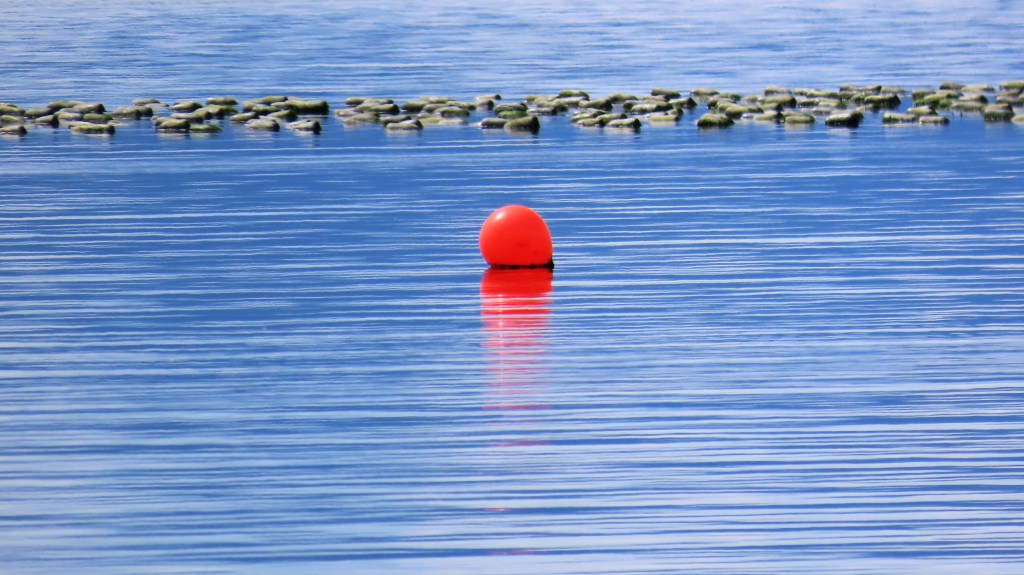
It was now April 15 and time to move Nirvana out of our slip at DiMillo’s marina. Though we had sold our mooring off Spring Point last year, we had been in touch with the next (and next!) owner of it and asked permission to moor there until we got back from our West Coast trip. This was largely because we knew the ease with which we could row ashore there and safely leave our dinghy on the beach, and because very few people in Maine put their boats in before Memorial Day anyway. Not only did the owner say yes but we got Tom Simpson, the old salt mooring diver and inspector, to get “our” ball in the water early enough that we could tie up to it before we left.

* * * * *

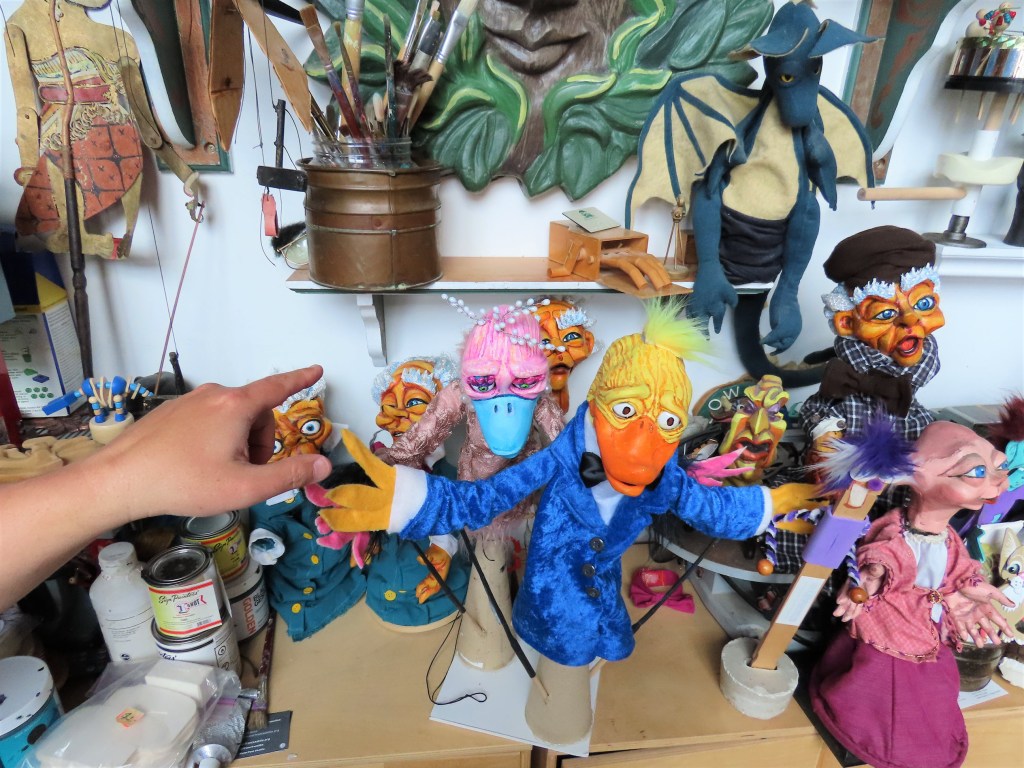
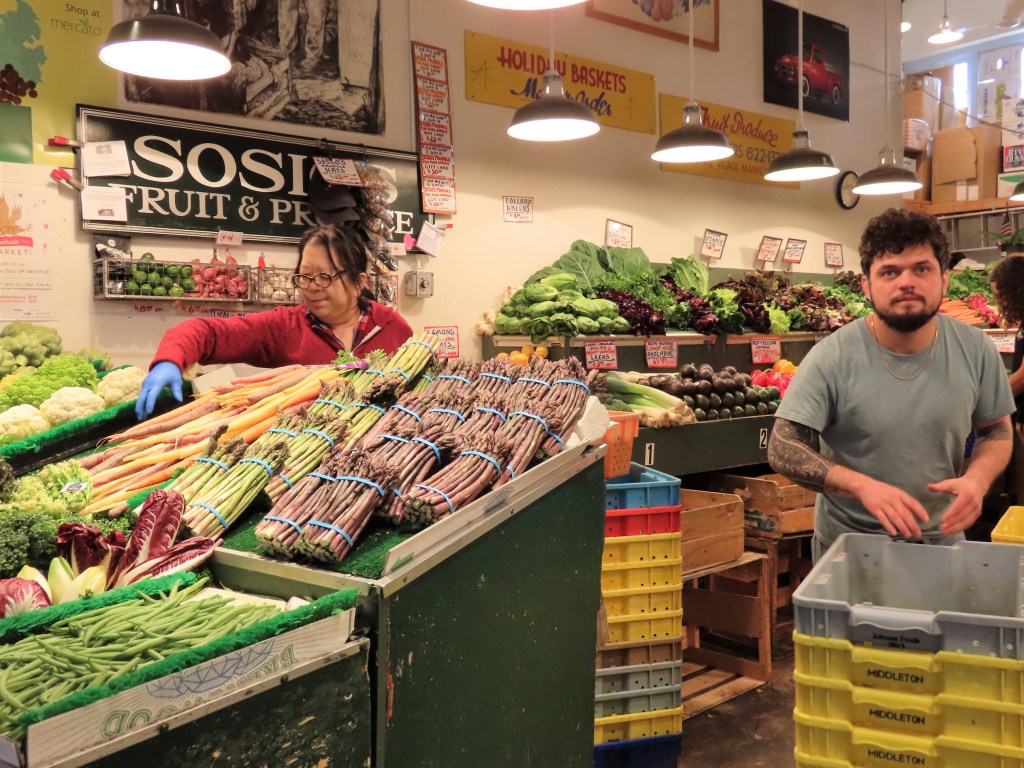
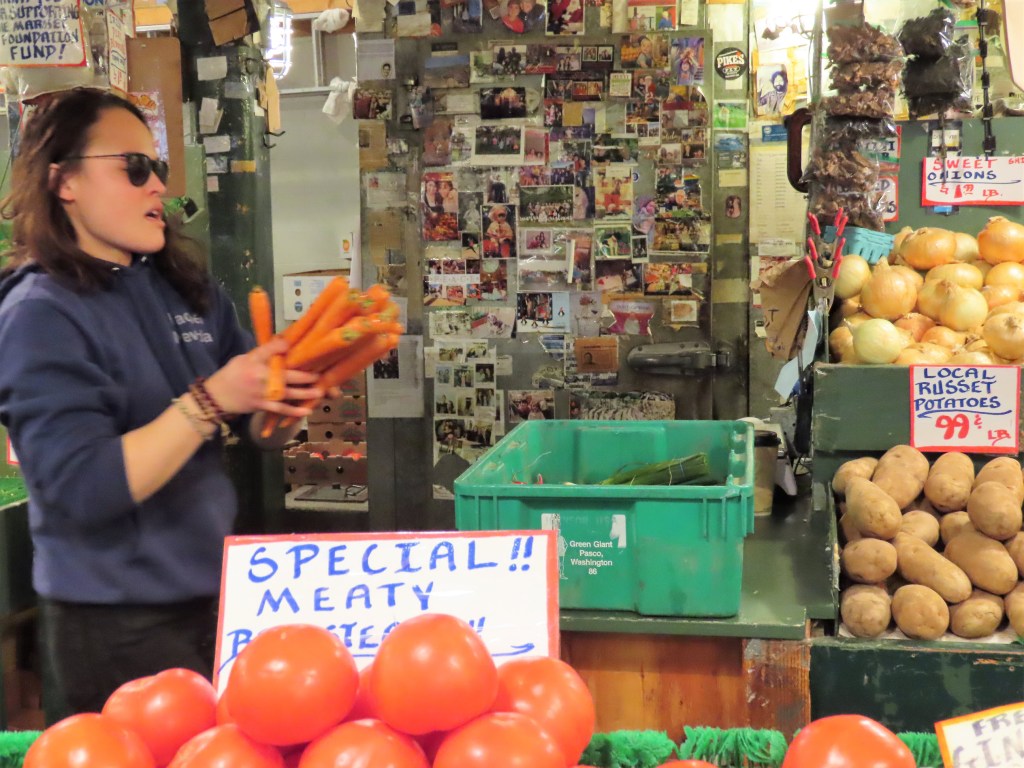
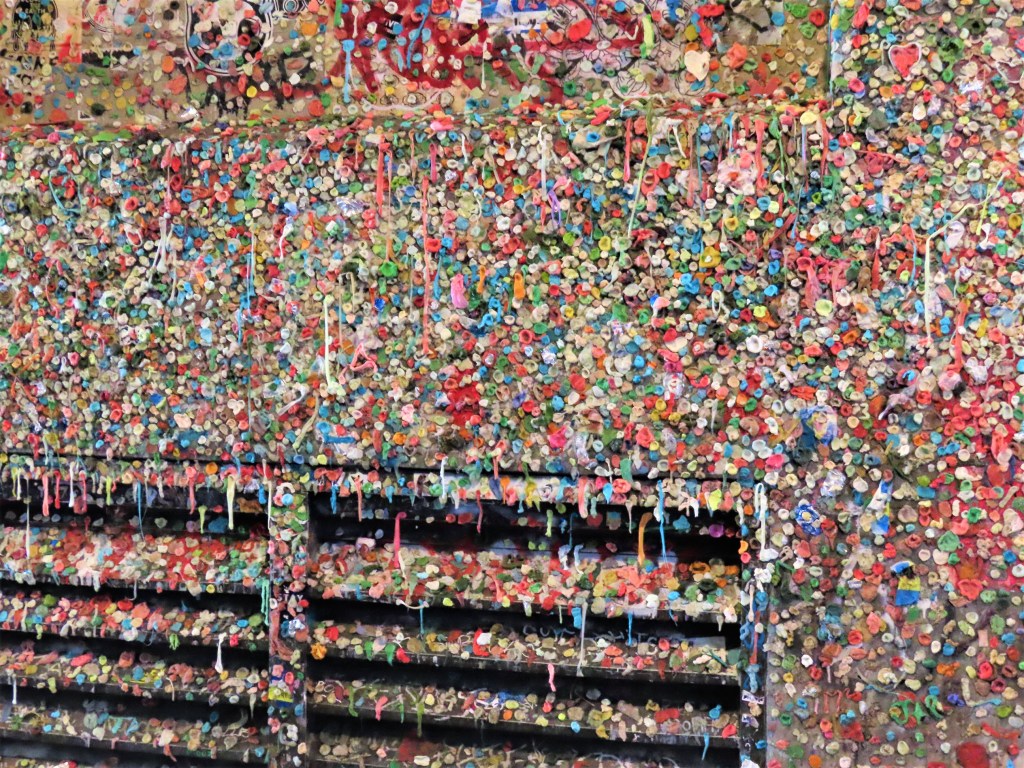
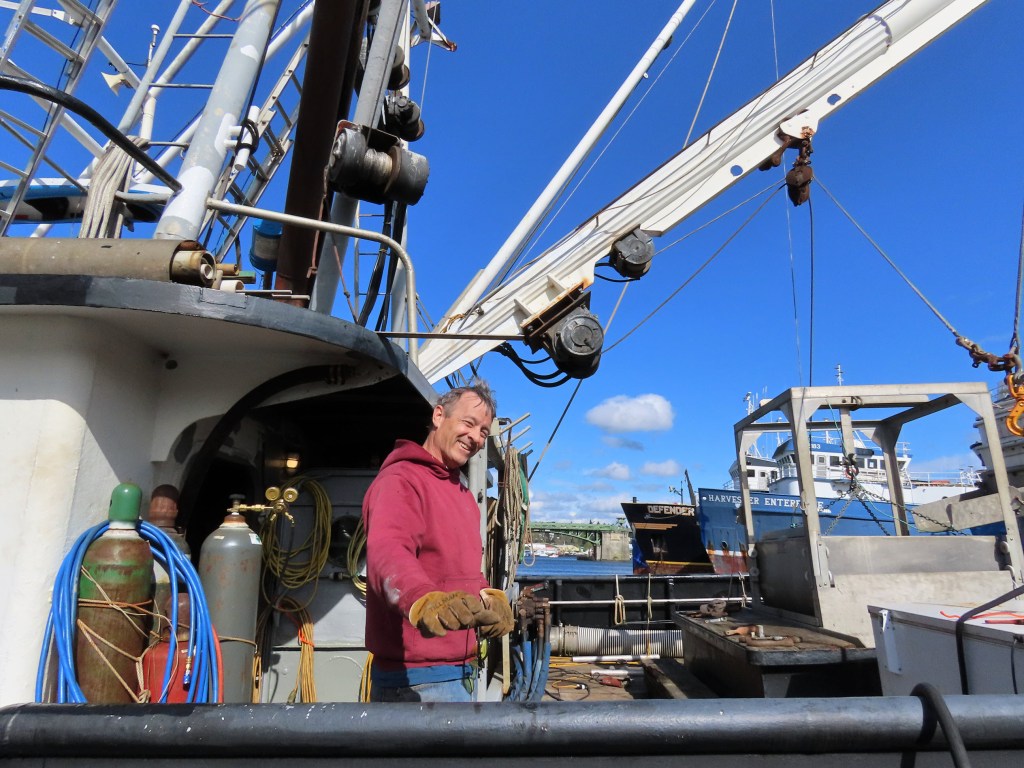
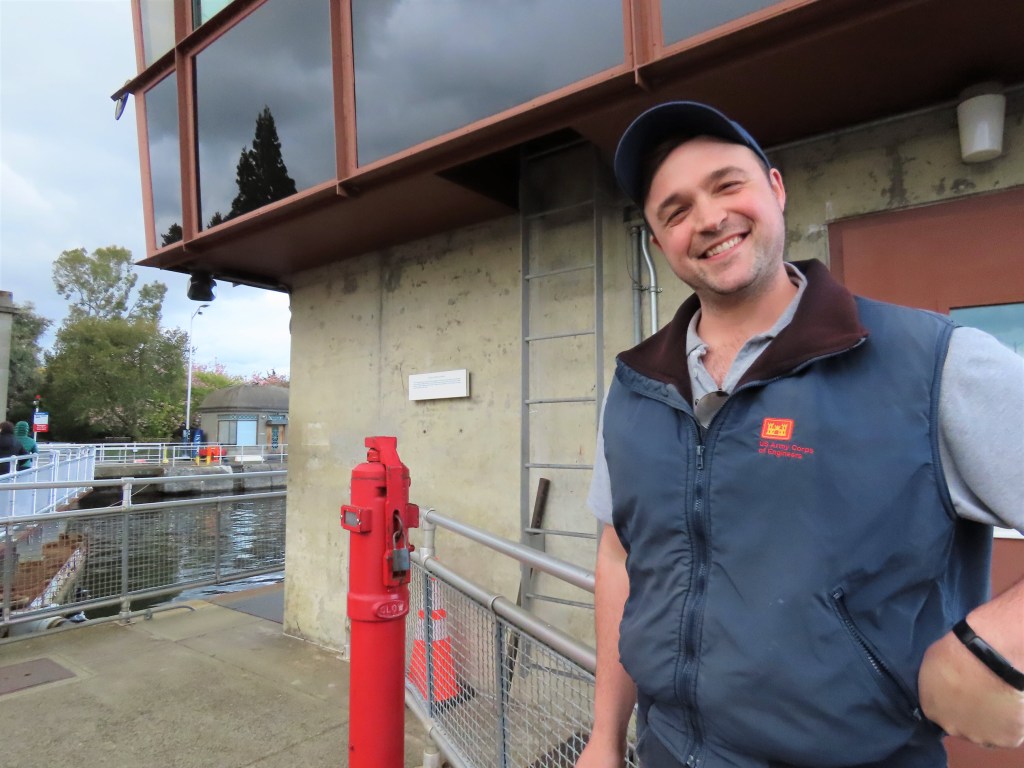
First stop on our west coast jaunt was Seattle, which was great. We stayed with Tasha’s stepmom, Sandy, mom to Tasha’s brothers Tyler, owner of the boat we stayed on in Sicily and Jason. Generous Sandy was like a college roommate and shared her house with us with such ease. Tasha credits Sandy with giving her her aesthetic eye, and Sandy’s living room addition was full of the Pacific Northwest wood detailing that make Seattle’s modest houses so gorgeous. Tasha has a fair number of Sandy recipes she’s shared with me, and I can see why she’s saved them. Sandy took us to a “moveable feast” art show dispersed through several neighborhoods and to the family cabin on Puget sound, built by hand by Sandy’s father in the 30s. She also generously gave us a car to use to see Seattle and the farm…

Pike Place Market
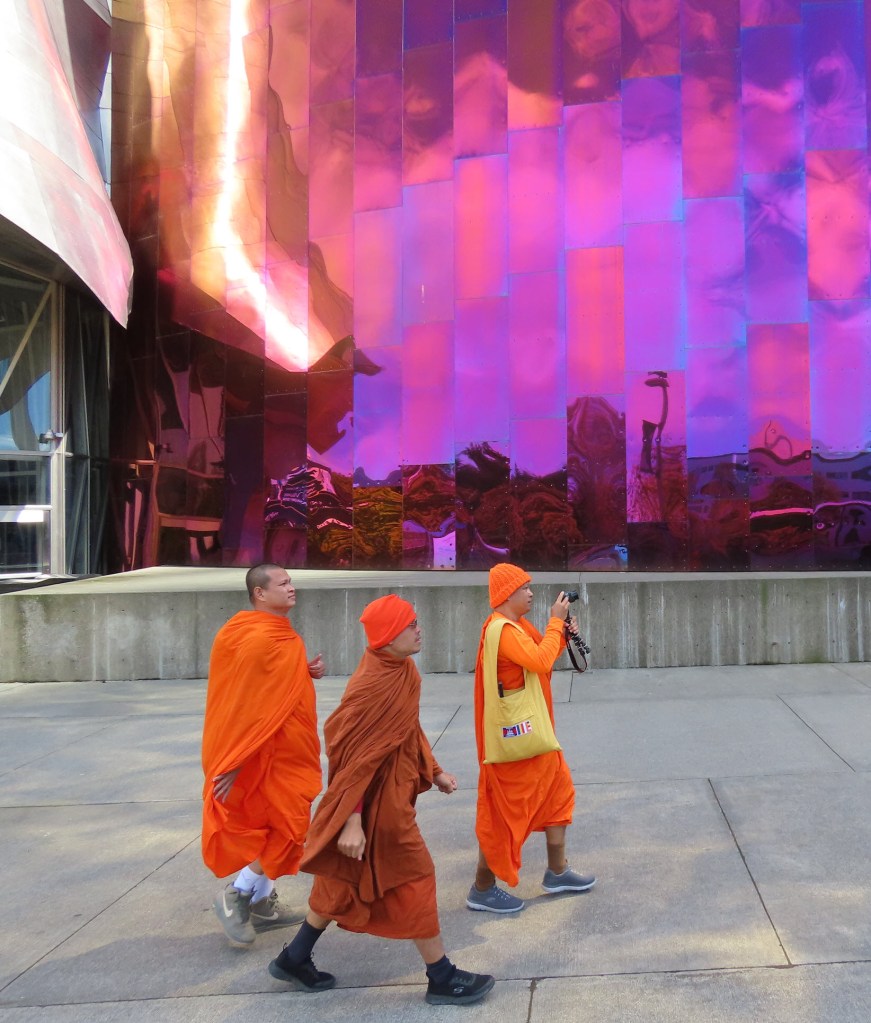
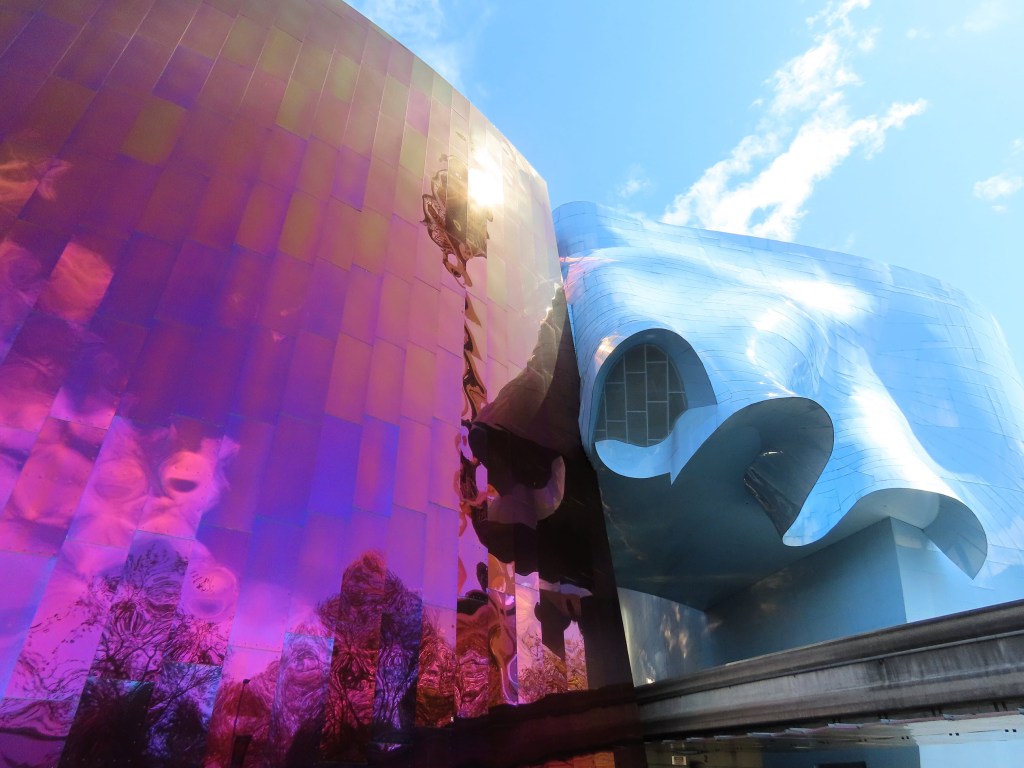
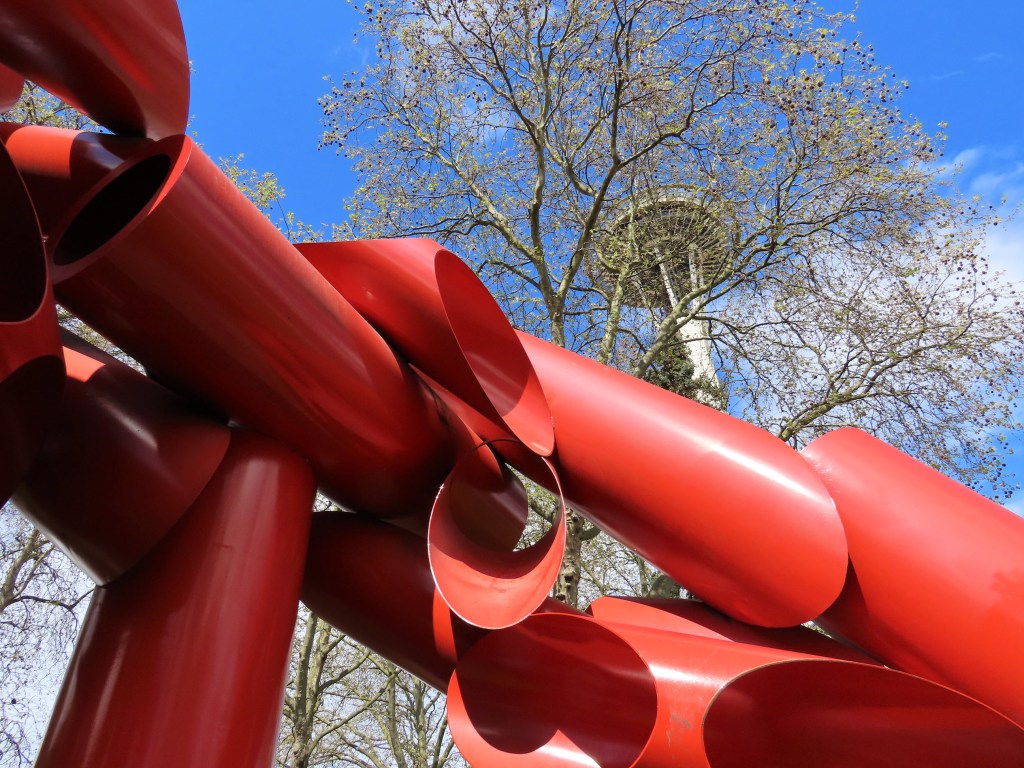
Seattle Center

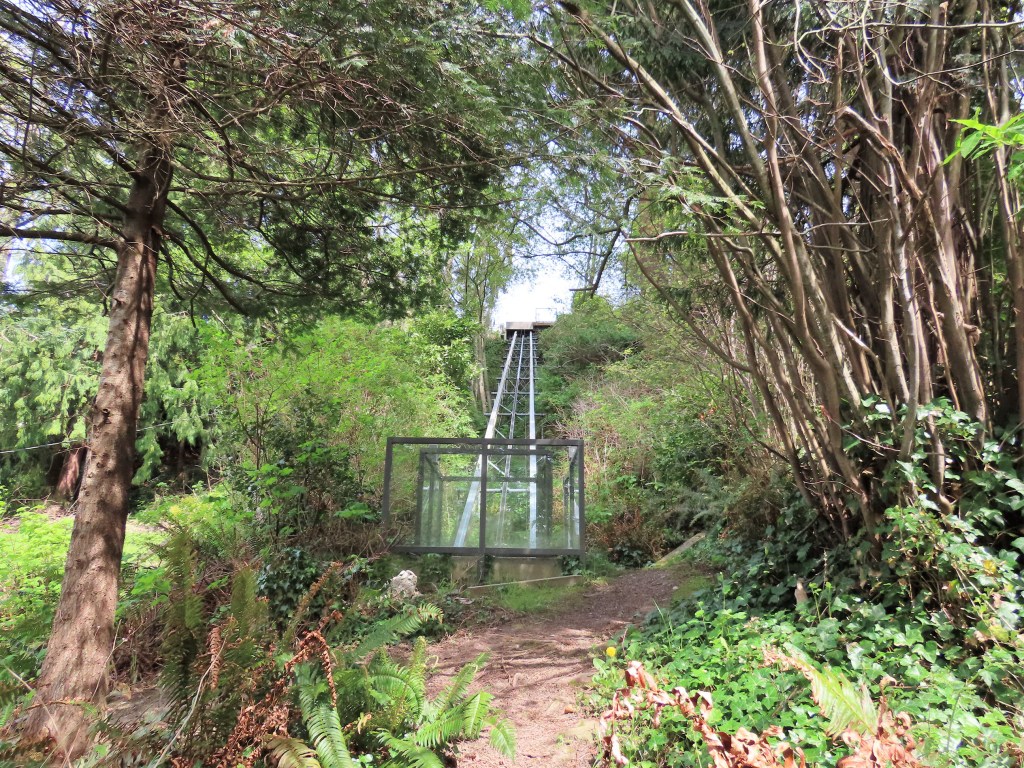
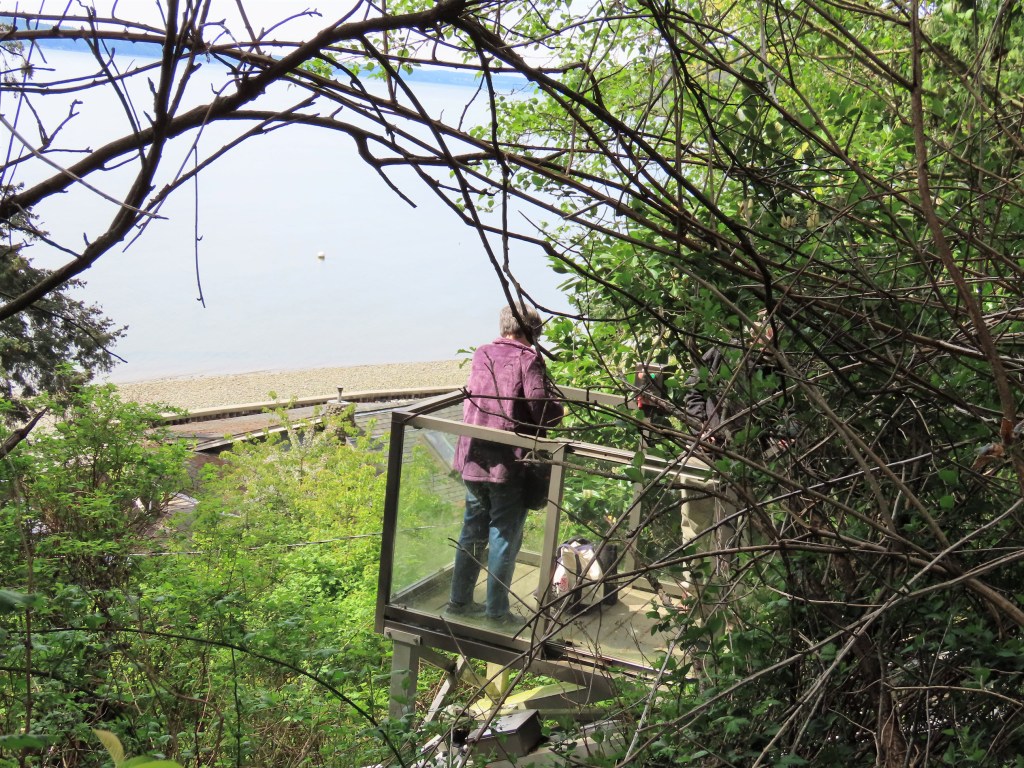
The Family Cabin on Puget Sound

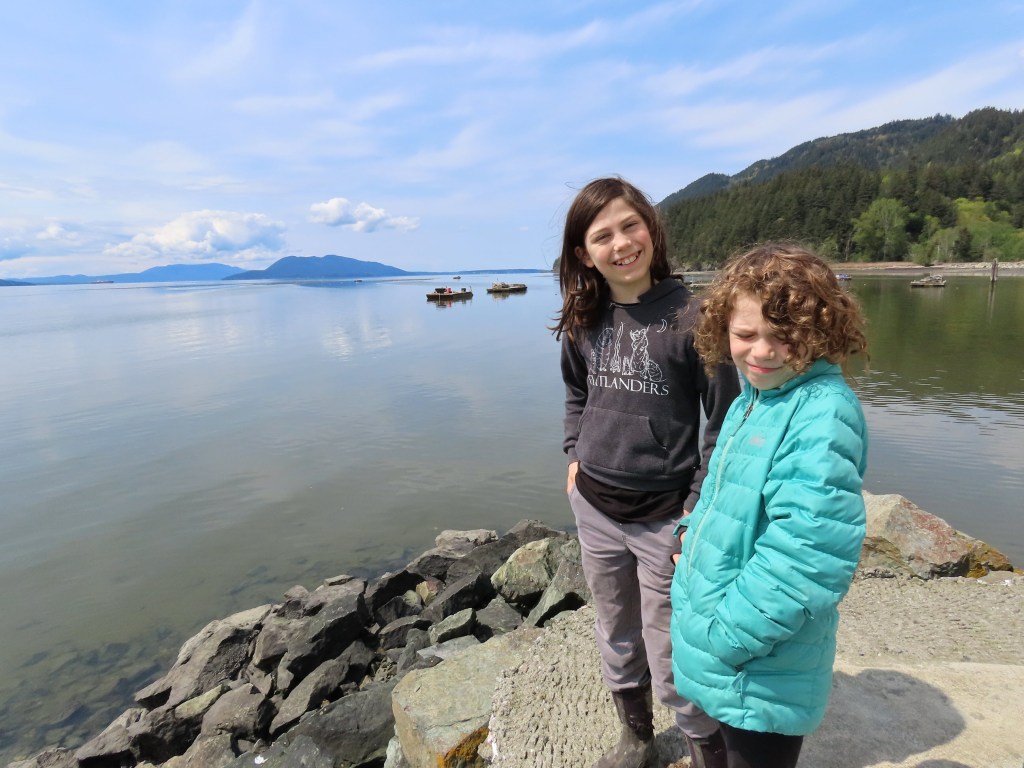
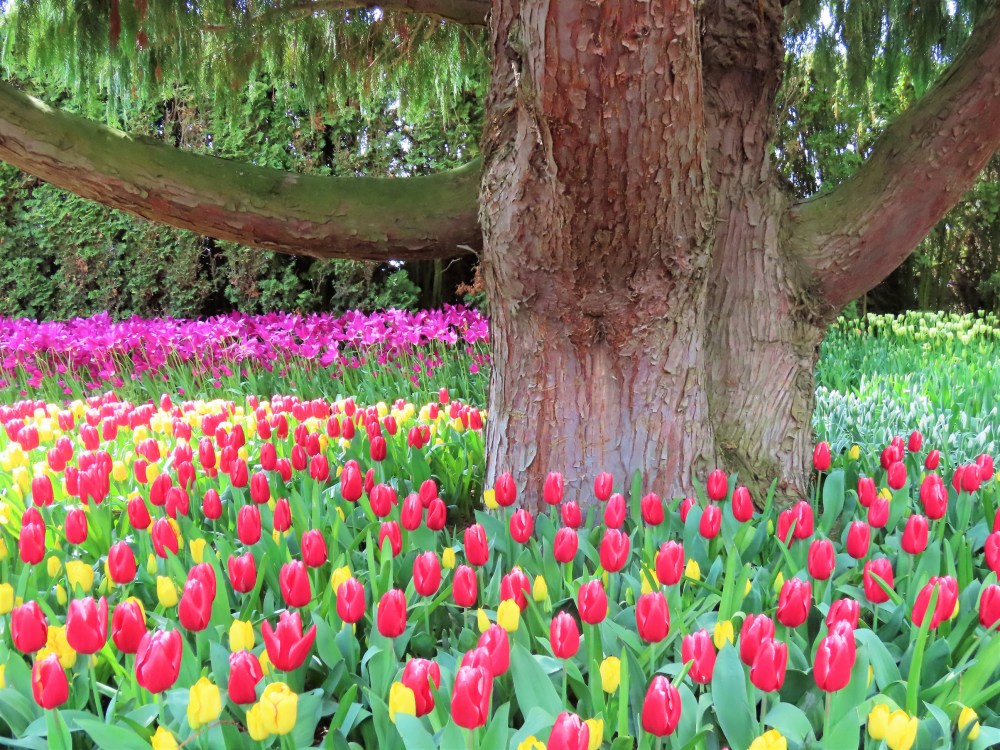
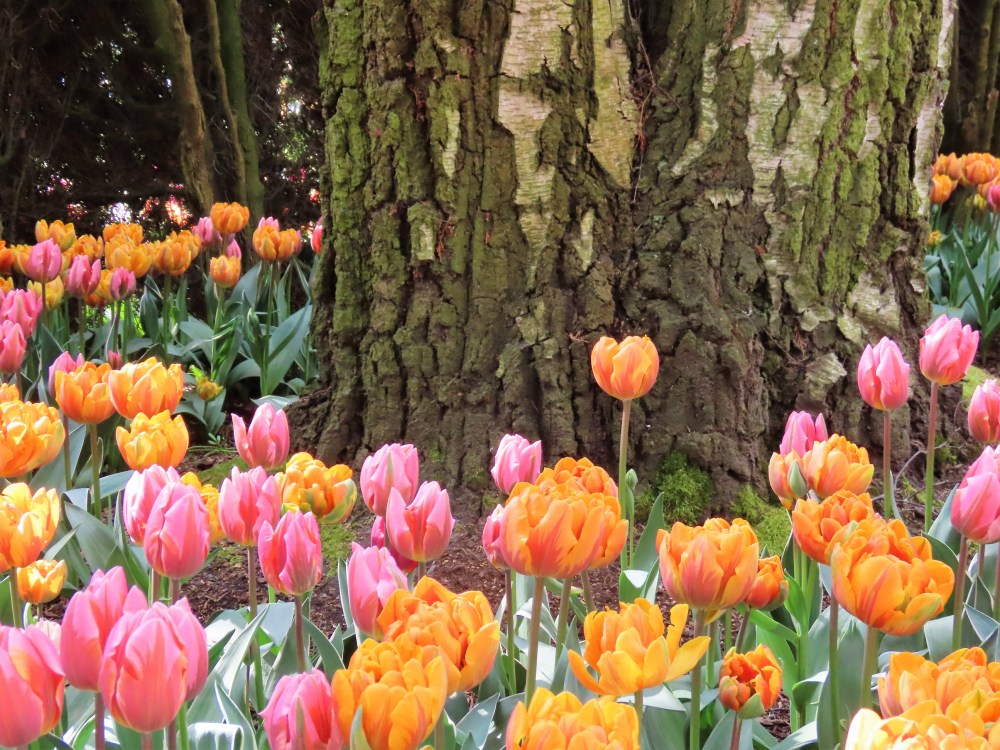
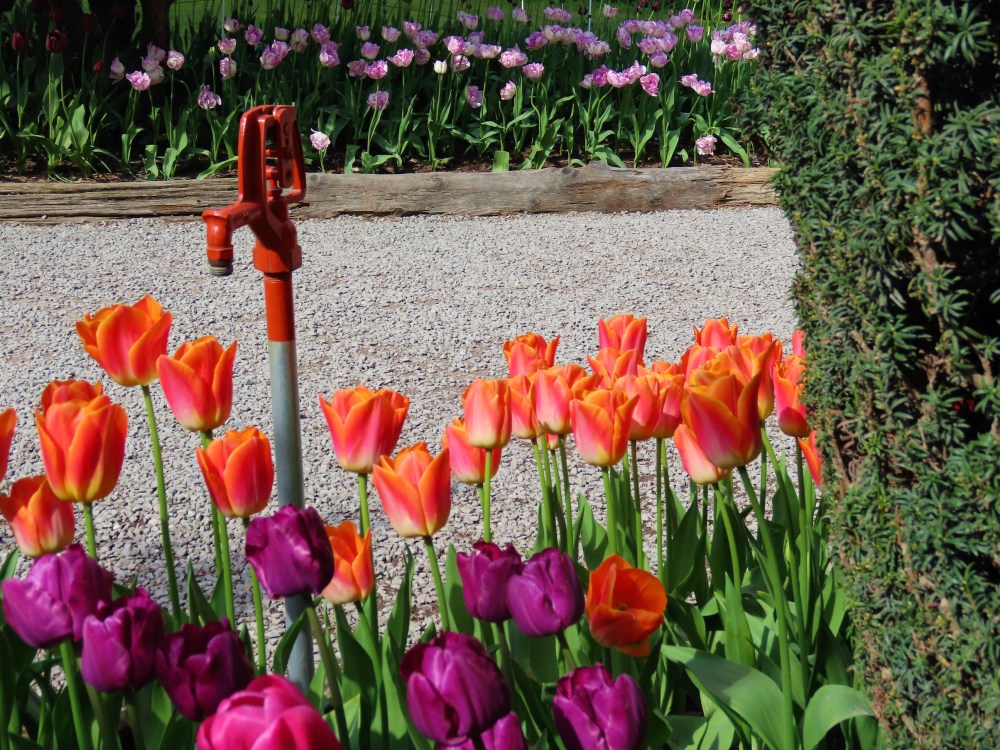
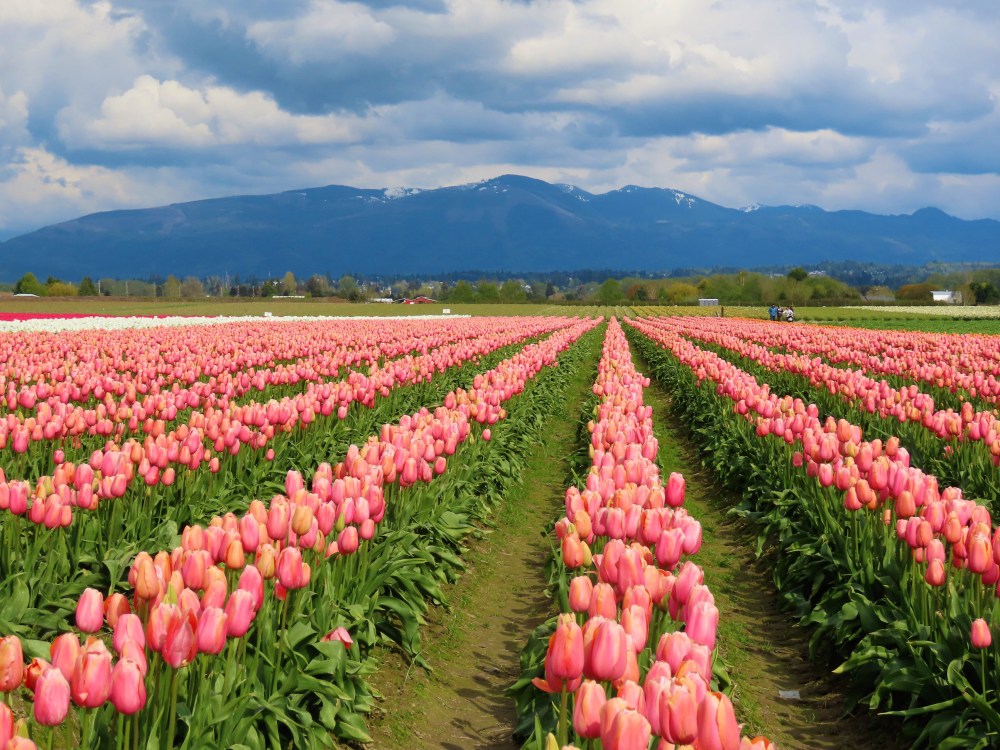
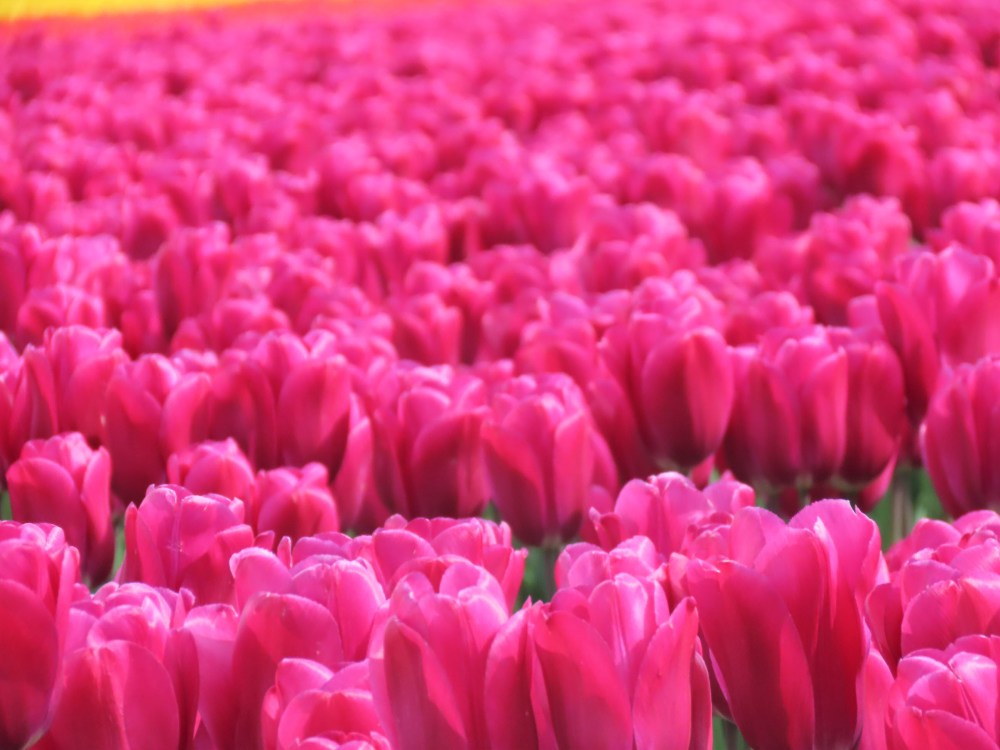
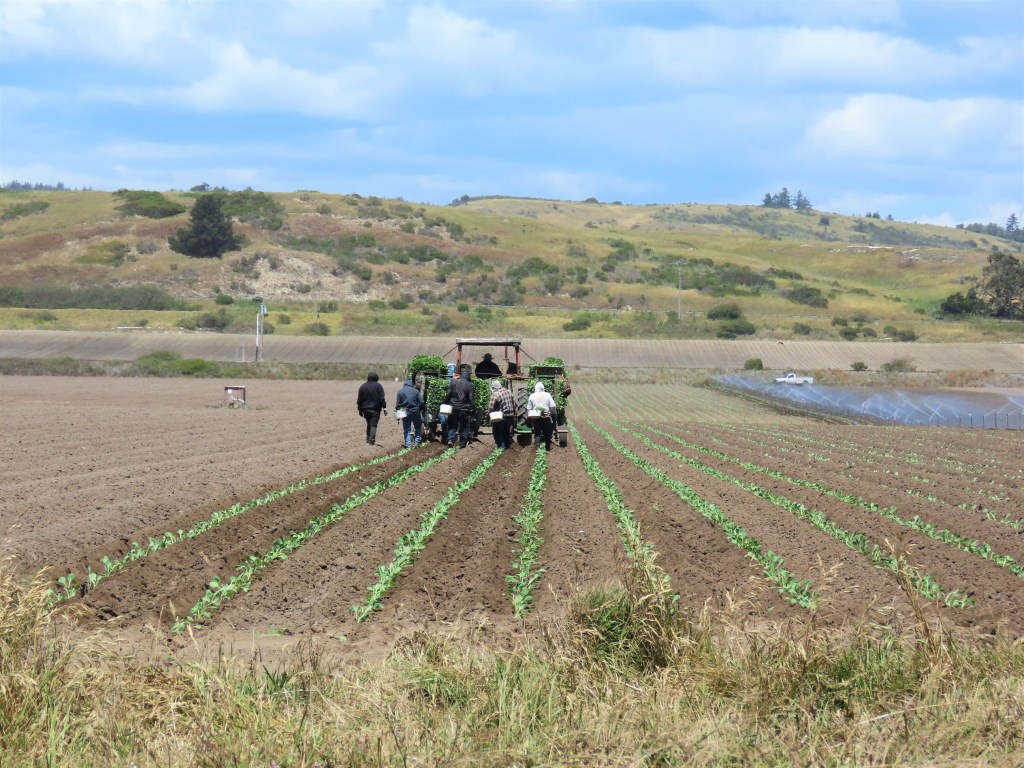
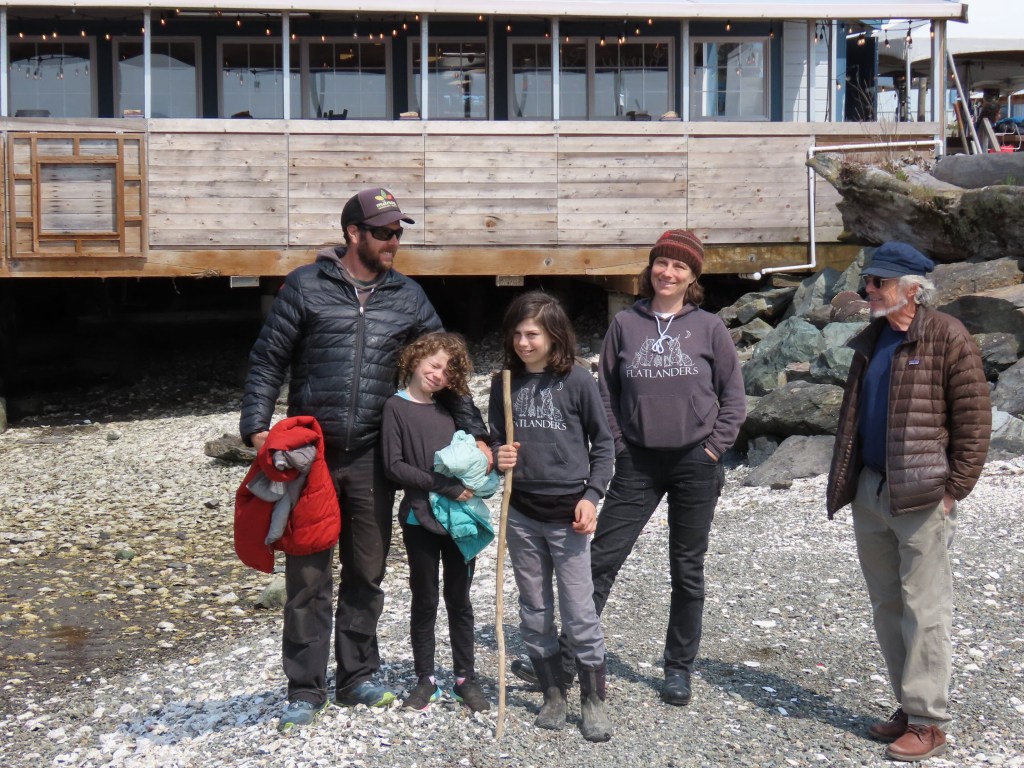
Local Roots Farm is brother Jason and Siri’s, a thinking person’s organic spread on 80 acres just 30 minutes from Seattle but in a lush valley such that it feels a world apart. We had several lovely occasions to spend time with the—yes, you guessed it—generous couple and their two bright-eyed kids,10-year-old Felix and 8-year-old Bea. We toured the farm and ate fresh rapini that we’d snap off as we walked; I learned to fish on the banks of the Snoqualmie River with Felix; we heard the ongoing education they received from working the earth the right way; we spent an afternoon at a tulip festival and a riverside seafood shack; and, of course, Tasha had the kids under her spell and learning to use a digital camera. Thanks S+J for the wonderful meals and jamming into the school night with chords that were mostly right and instrument players who were mostly just playing for fun.

The Farm Family
Tulip Festival in Mount Vernon

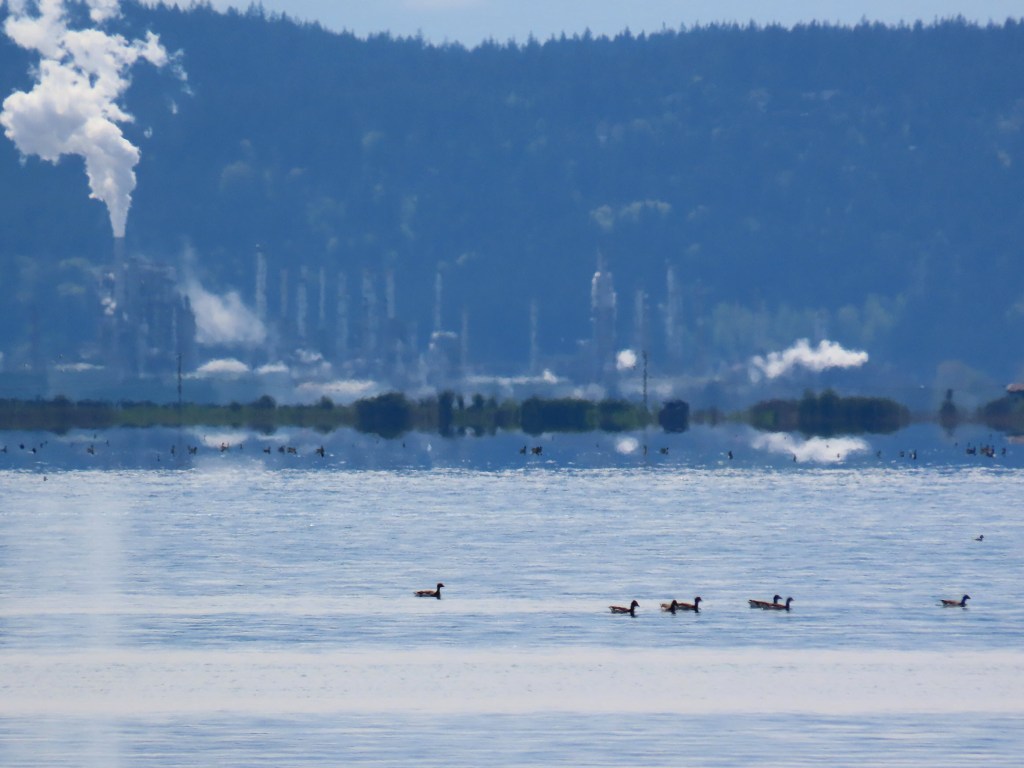
We could have spent more time in Port Townsend, Washington, a lovely sailing village with enough wooden boats to make you think you were still in Maine . . . except for those ginormous mountains looming overhead across the water. As it was, we got to see Mary, one of Tasha’s college roommates, and her lovely cottage and her love, the Recovery Cafe, a safe place and community for any who are in recovery. We could have joined the T-bird racers in the evening, but the nip in the air had us yearning for the lovely country apartment Tasha had arranged for us.
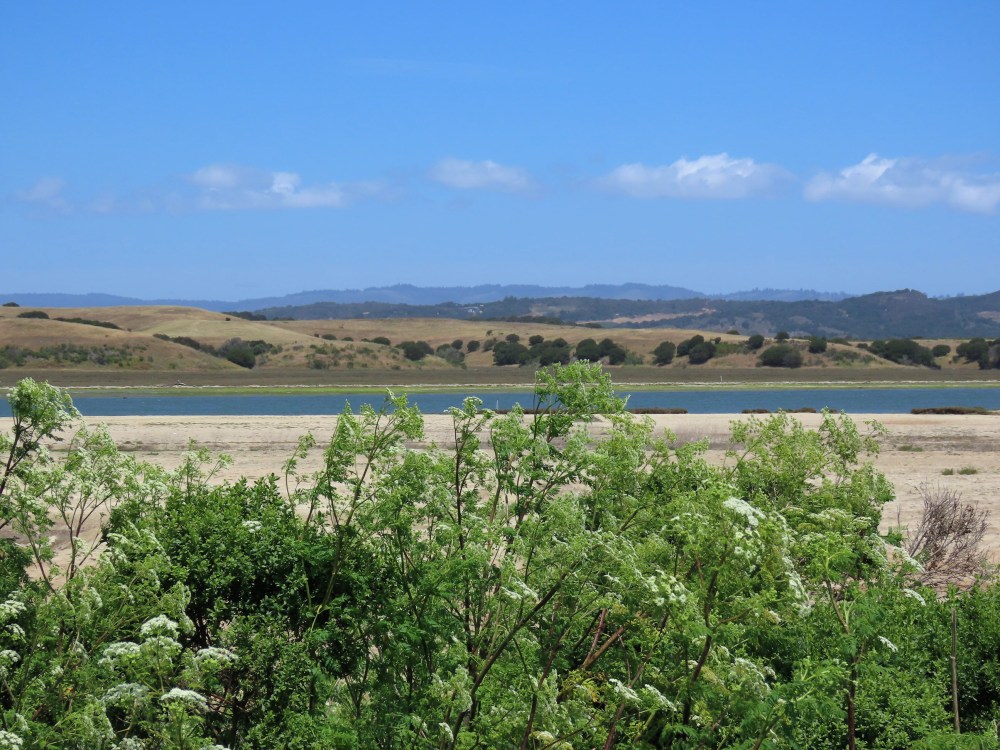
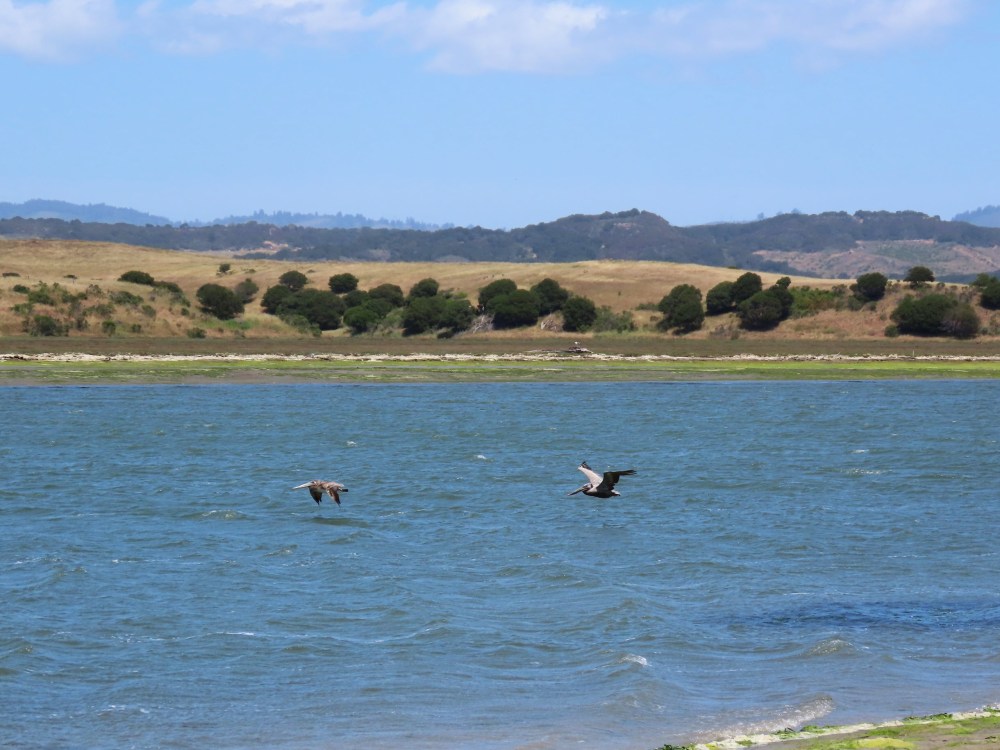
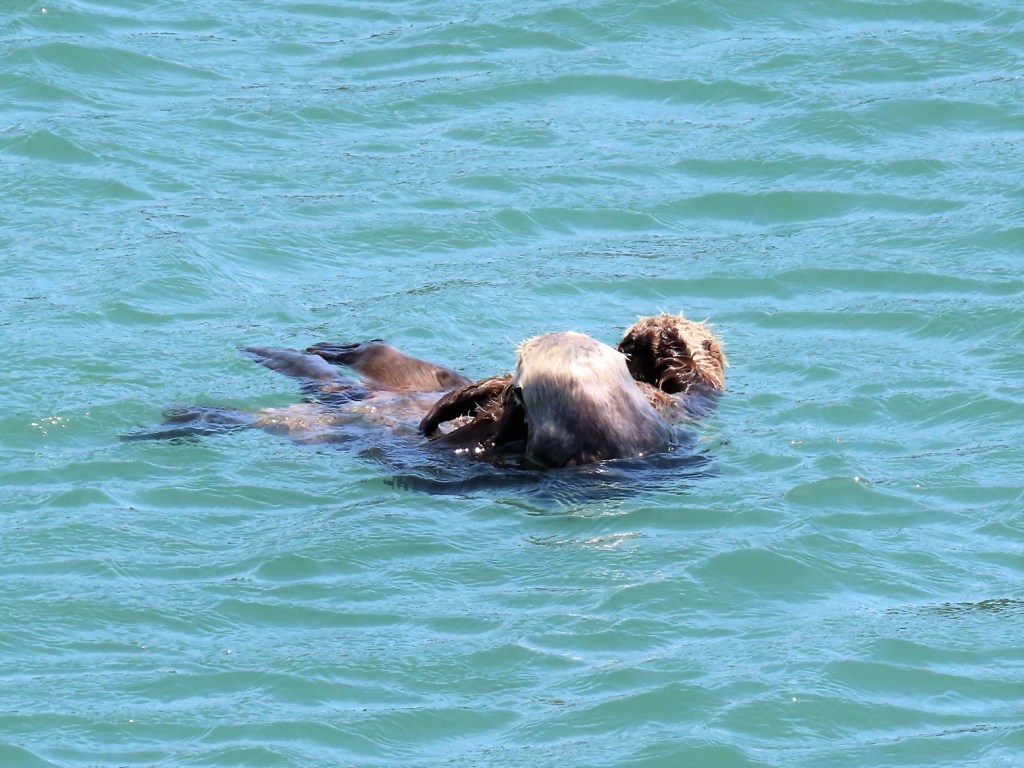
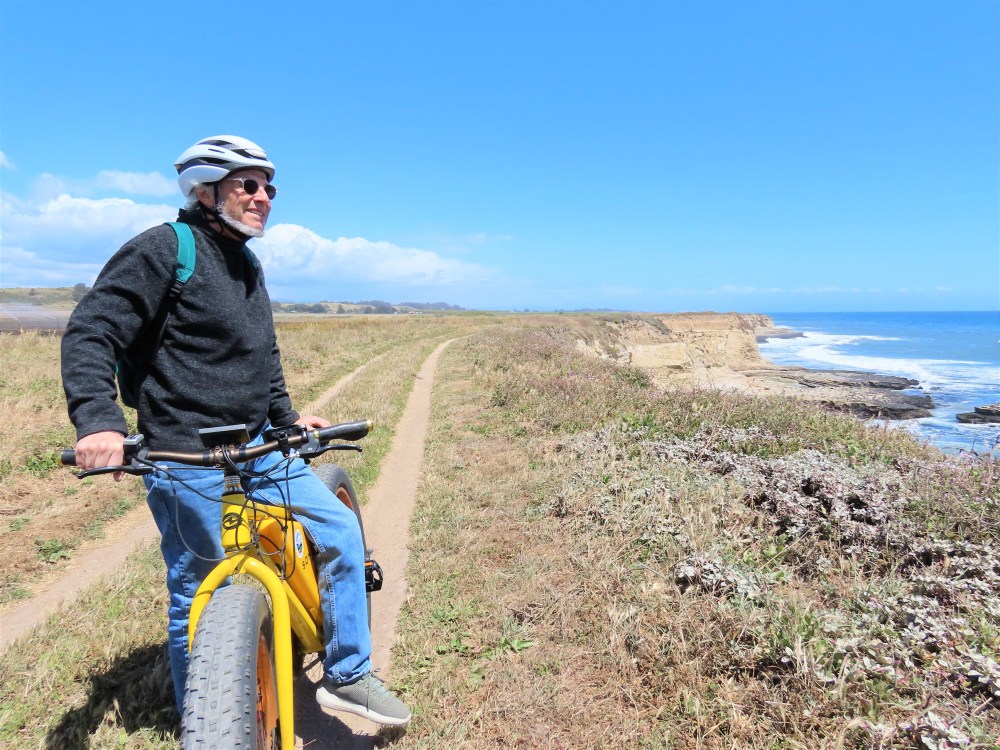
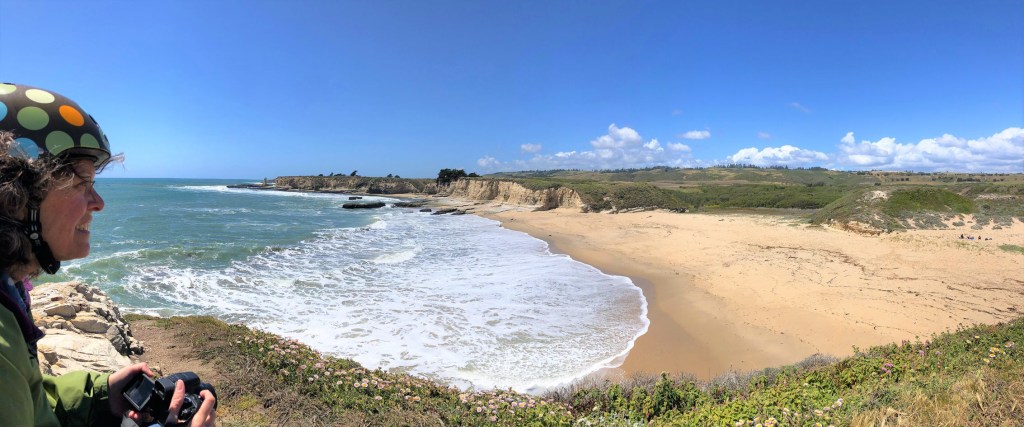
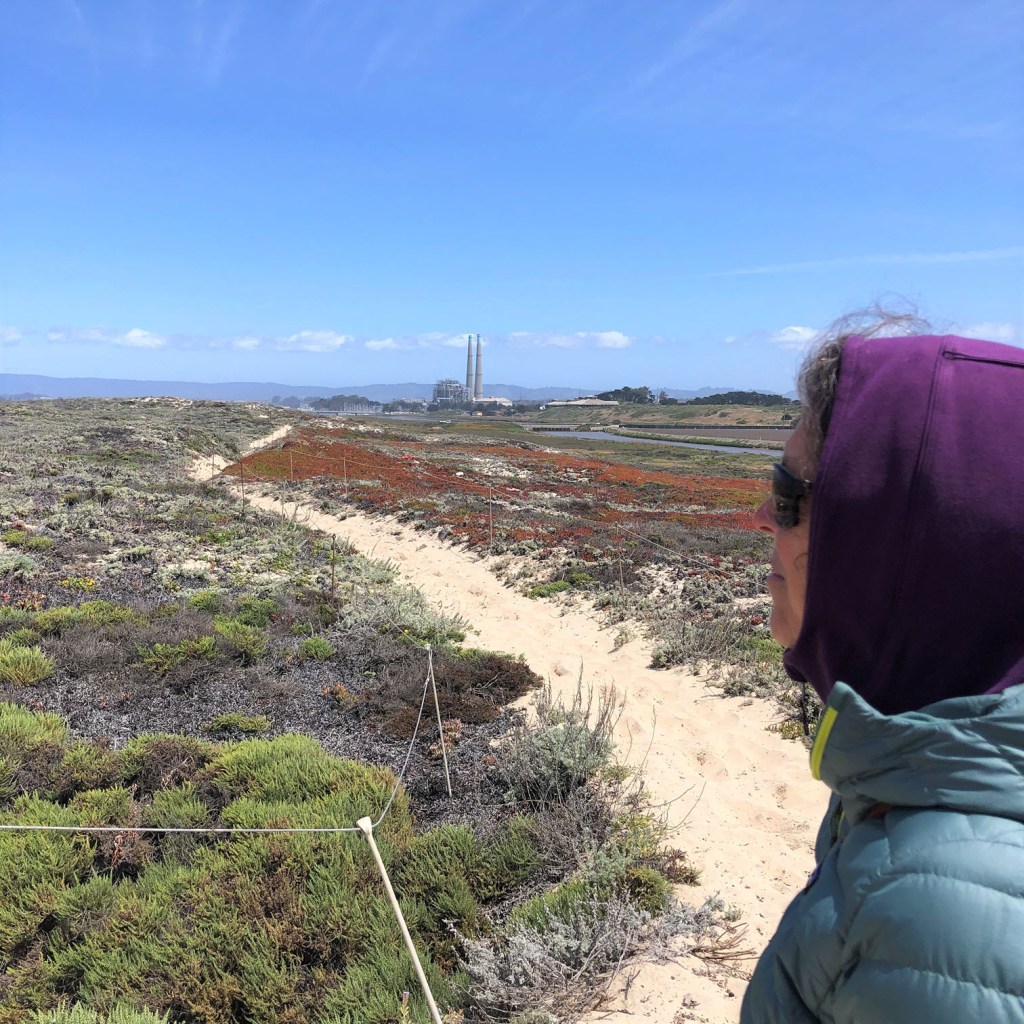
Whirl-wind still whirring, we jetted down to Santa Cruz which I didn’t realize on the outskirts of Silicon Valley. Real estate is nearing tulip-mania prices, but our hosts, generous Jeanine and Eric (eh-reek, if you speak French) have their heads screwed on right, see things for what they are, and get out in nature plenty. Thanks to another car loaner and e-bikes, we managed to get out and enjoy the rugged California coast. I’ll never forget the seals meandering around the local marina slips, or the sea otters playing around right below our observation platform at Moss Landing.

Moss Landing and Santa Cruz

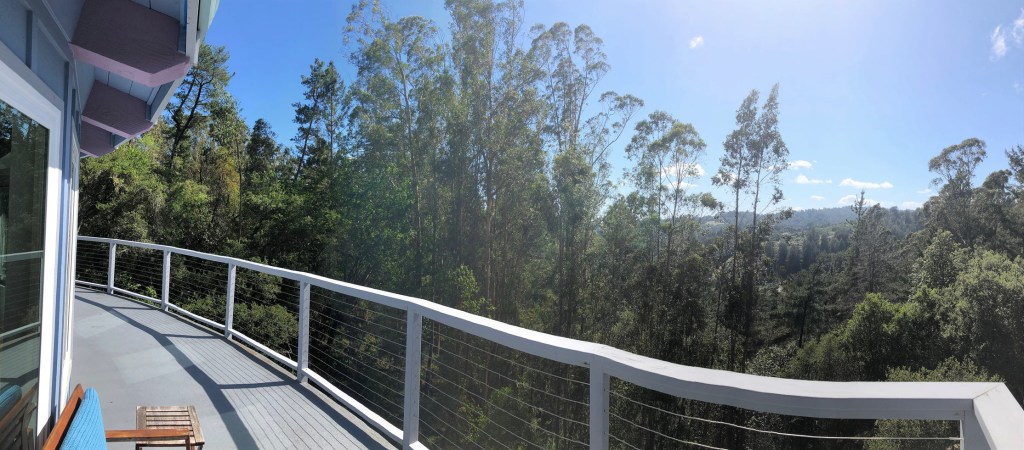
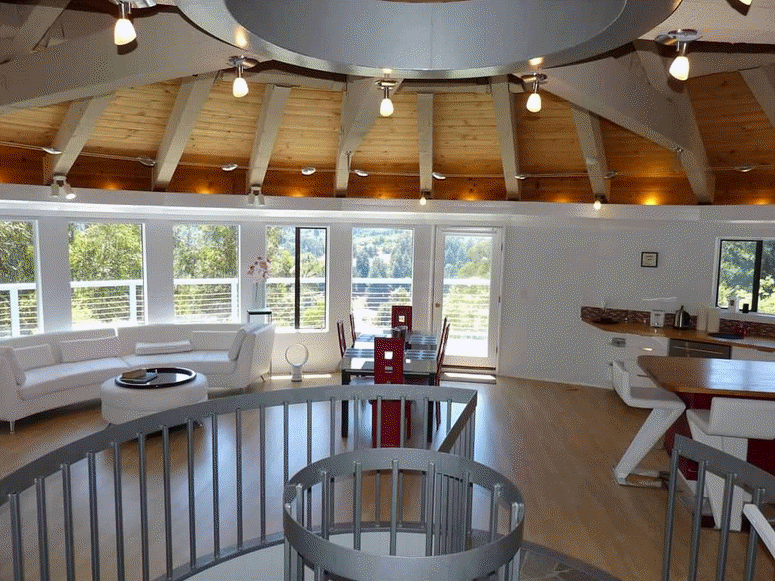
Jeanine and Eric also allowed us to stay at their Round House getaway in more rural Corralitos. A respite from all the visiting we had done, we slowed down (except for our dancing!) and enjoyed the local, more Mexican flavors del dia. Perched up high on a hill, and even higher on their 3rd-level deck, we were almost on par with the circling birds of prey—their lack of wing flapping in contrast with the huge swirling, dancing Eucalyptus trees was a mesmerizing sight.

We got to see long-no-see friend Amos, with whom I played soccer at Virginia, and caught up a tiny bit and of course, acknowledged there would be plenty more in the future as we only scratched the surface of things, like his running with the bulls (…”they pass by your throng in 5 seconds; not really a ‘run with’…”) in Pamplona.

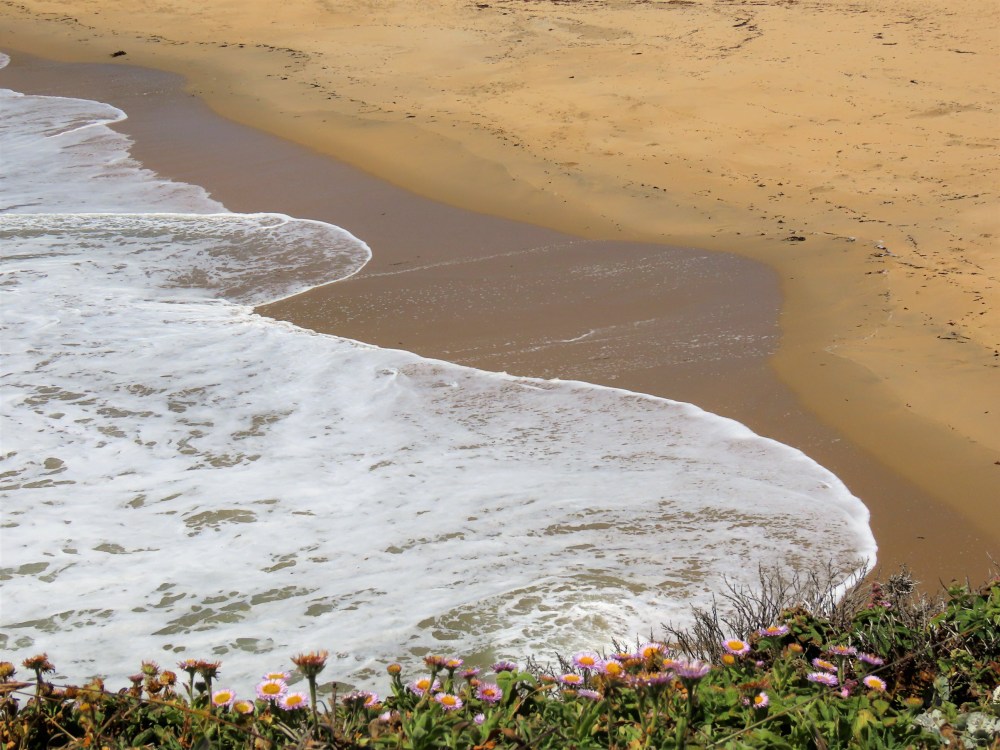
It’s the landscape that imprinted itself on me during this trip. The built-up areas are what they are, and Seattle is booming with grace, but it is the natural grand scale that hit me, so different from the intimate tree-boughed spaces we have in the east. With Redwoods tripling the height of our (still tall at 80′) oaks and maples, a walk in the western woods is often monumental in scale, and even in the densest of forests, vistas can be quite far. The mountains are really big and in-your-face, not a distant, blue-hazed affair like the Blue Ridge Mountains of the Appalachias. It feels like the entire northern California coast is unbuilt, with one national or state park after another making Route 1 on the coast a continuous open air, sage brushed ranch that rolls over the modest unpreposing highway and suddenly over a cliff to crunch into craggy rocks and the sea.

Wet-suited, cold-water surfers dot some of these craggy rock “beach” areas, and you realize the surfers tempt those rocks because the surf comes in just the right way in only certain places. While of course there are big population centers, I think now of the vast amounts of open space and why the outdoorsy types flock there.

I am reminded of Snow Falling on Cedars by David Guterson and how the Pacific Northwest landscape was such a big character in the book: to write about the area without invoking the feeling of the land would be just another mystery novel.

I also particularly liked the changeable weather, rather than the oft-mentioned warmth of the weather. Moisture in the fog (despite the ongoing drought, still growing plenty of things), temperature drops, the fresh breezes, the need for layered clothing. Much more to like than what I experienced in LA.

I don’t know what else Tasha and I might say about it—it will develop in us over time as we enjoy the prospect of going back…
CASCADE II S2:E5

Feb 7, 2022

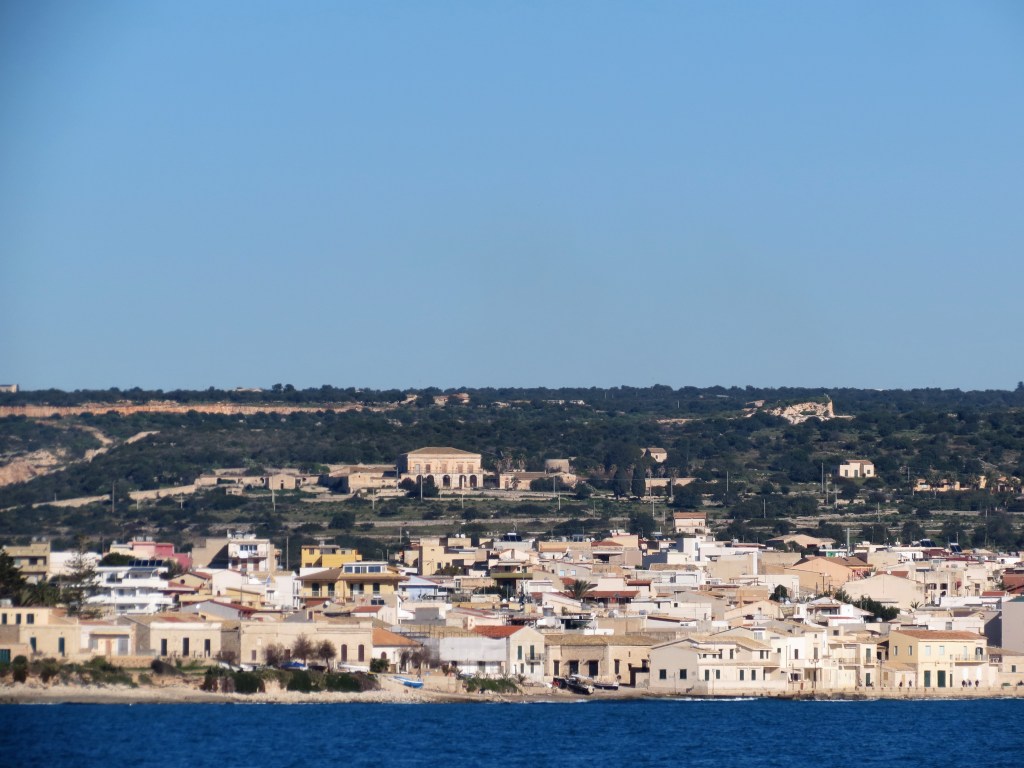
Last we wrote we were leaving Syracuse and heading back to MDR (Marina di Ragusa). We had a delightful sail for seven of the ten hours, anchored overnight, and then motored the rest of the way with the wind on the nose. It was glorious weather and we enjoyed being outside in the sunshine in January, albeit with gloves.

Since our return, we have been dropping into a more relaxed yet energized mode consisting of reading, walking, dancing, writing, and adventuring.

In Syracuse, we picked up a couple of books about Sicily, one the Vittorini book we learned about in the library, Conversations in Sicily, and the other a novel about one of the wealthiest families in Sicily, The Florios of Sicily. Both were engaging and gave us a better sense of the history of Sicily and its people. While we missed the illusions to fascism which had the book banned, Vittorini’s book was a very poetic take on working-class Sicily in the 30’s. The other was a more mercenary tale of the spice trade of Palermo through the centuries, with power and revenge at the center, a less appealing theme to us. Will and I love to read out loud to each other so that way we get to share the books in the moment.

We have been taking long walks along the beach and waterfront, which feels great. The promenade is often jammed with people, especially on the weekends in nice weather. There are couples, often smartly dressed or in jogging suits, families with kids on tiny bikes, and older folks walking arm in arm. For the most part, these are not power walkers but rather people out walking at a slow pace enjoying the sunshine. There are joggers as well, just as in America, but the passeggiata is an Italian specialty to be savored.

One day shortly after we returned, I was feeling the deep need to dance, so we brought my speaker down to the beach, put on one of my Spotify playlists, and danced. With the ocean view, breaking waves, warm sunshine, and sand on our feet, it felt great to move in such an expansive way after spending so much time in the more confined space of the boat and marina.

The next time, we posted our dance on the MDR Liveaboards Facebook page, and a German woman from the marina showed up. It turns out she is a dance therapist and has done conscious movement for years, so we had a lot in common. Next thing you know, we spent a couple of hours over a cappuccino talking about dance therapy, which was very inspiring for me. The next time we danced, a British woman came whom we’d met earlier, along with our Senegalese friend who is the chef at the restaurant on the beach where we dance. What a joyous communion of souls in motion! We’ve been dancing consistently twice a week now and does it ever feel great!

Click here to see a couple of videos taken by our surfer friend:

Dancing on the beach

Dancing with our Senegalese friend (Instagram)

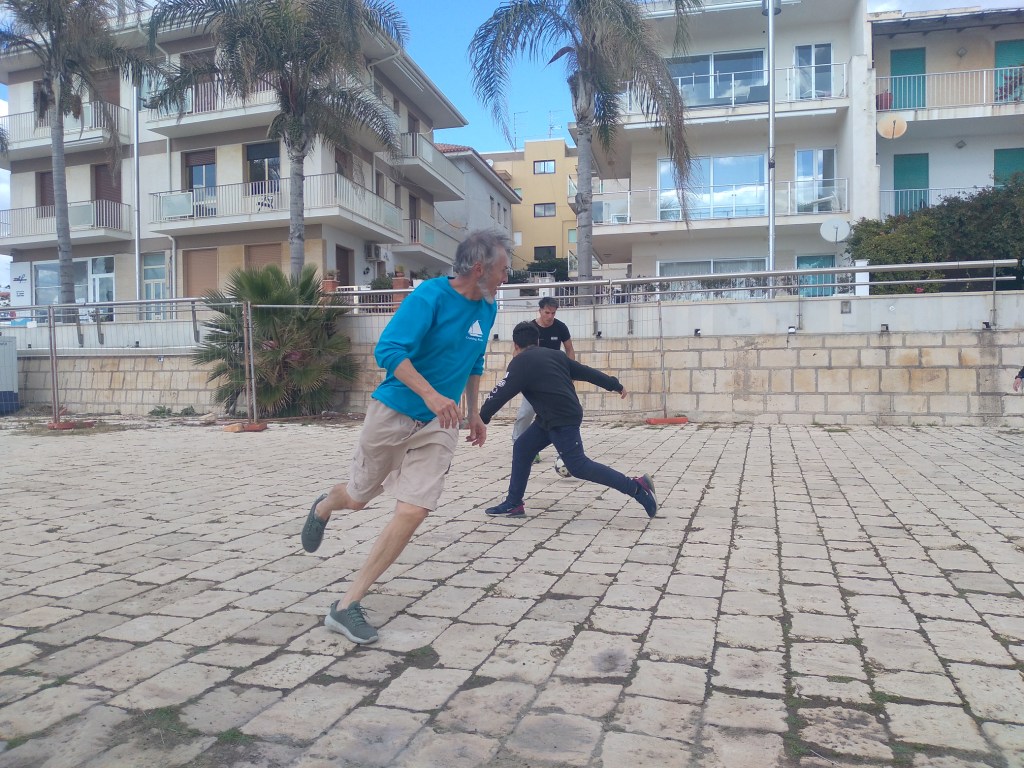
In addition, Will finally found some people to play soccer with—a man and his son and his son’s friend. They played kids against adults and were fairly evenly matched. Not bad for a former pro at age 65!

Inspired by dance, my new German friend, and my ongoing pursuit of how to bring embodiment into daily life in a more conscious way, I have been doing some writing about such things. As a certified UZAZU facilitator, I’m re-energizing myself around how to support people in reconnecting with their authentic selves through their bodies. Will too has been spending some time writing his ideas about humanity, nature, and being—the acceptance of an ever-changing nature as the core experience of all beings.

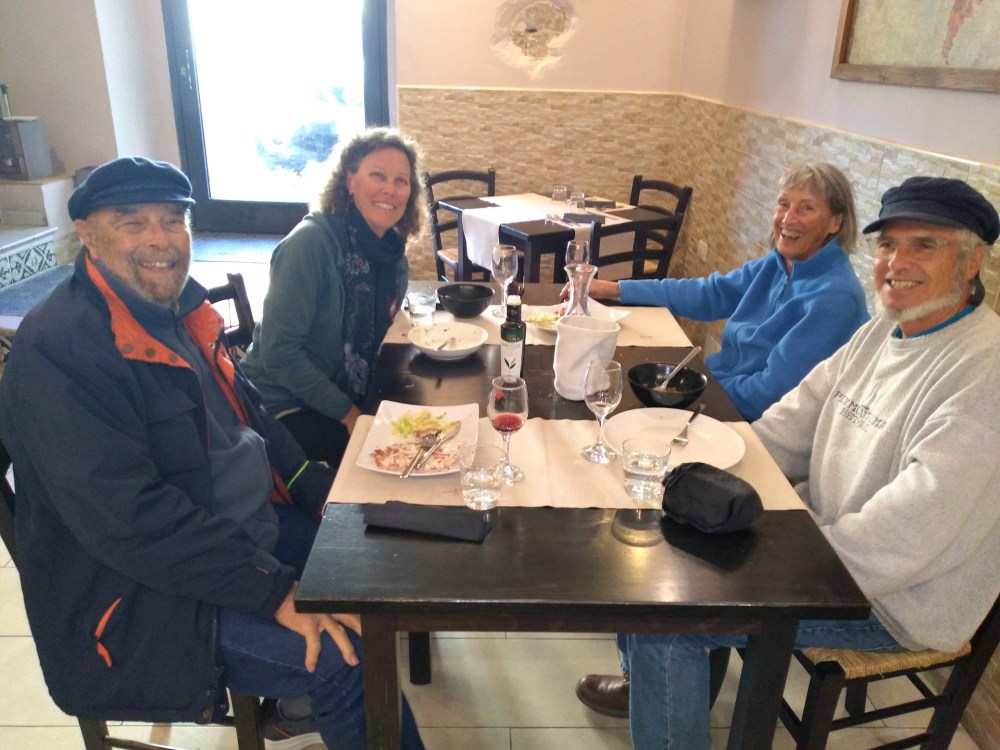
One day we biked 7 kilometers along the coast to Donnafugata, a small beach town that was largely devoid of people, it being January. Looking for a restaurant, we encountered a friendly man named Salvo (a common name in Italy, short for Salvatore), who recommended a restaurant on the beach and walked with us there to make sure we found it. After twenty minutes of talking with him in Italian, we said, why don’t you join us, so he did! We had a fabulous meal of somewhat upscale, creative Italian fare, something we hadn’t seen before. Next thing you know, he’s offering to bring us some of his caponata di peperoni, a different take on the standard dish with eggplant. The next day, he showed up at the marina, dish in hand, and we spent some more time talking on the boat. Needless to say, we’ve found the people in Sicily to be amazingly friendly.

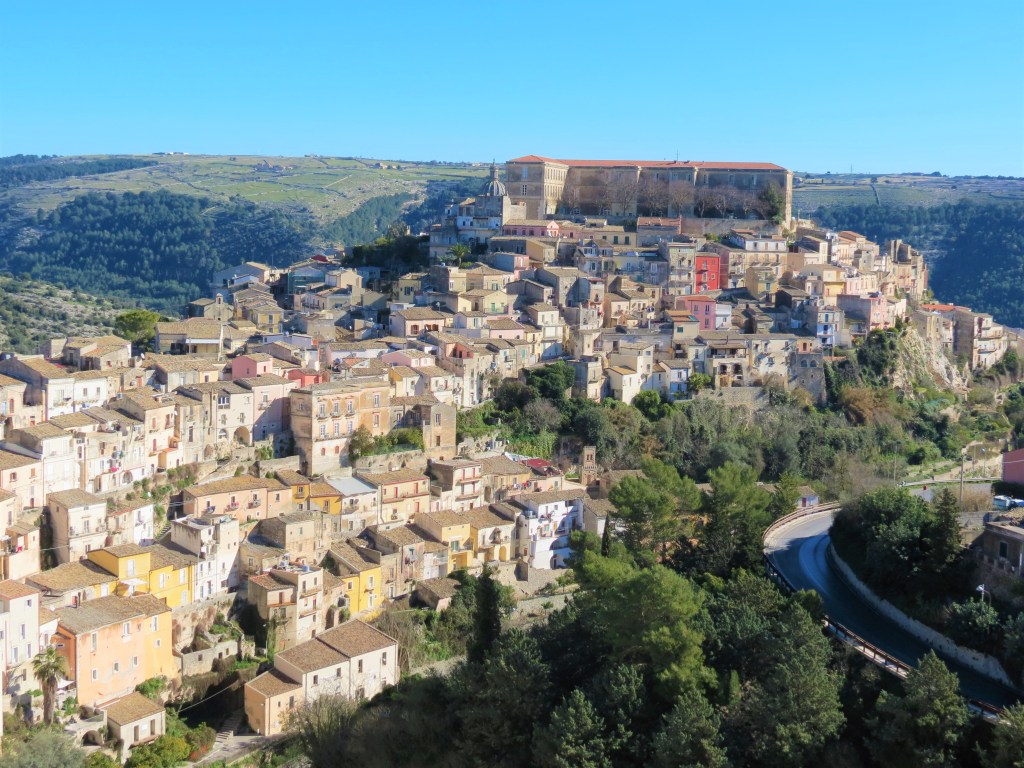
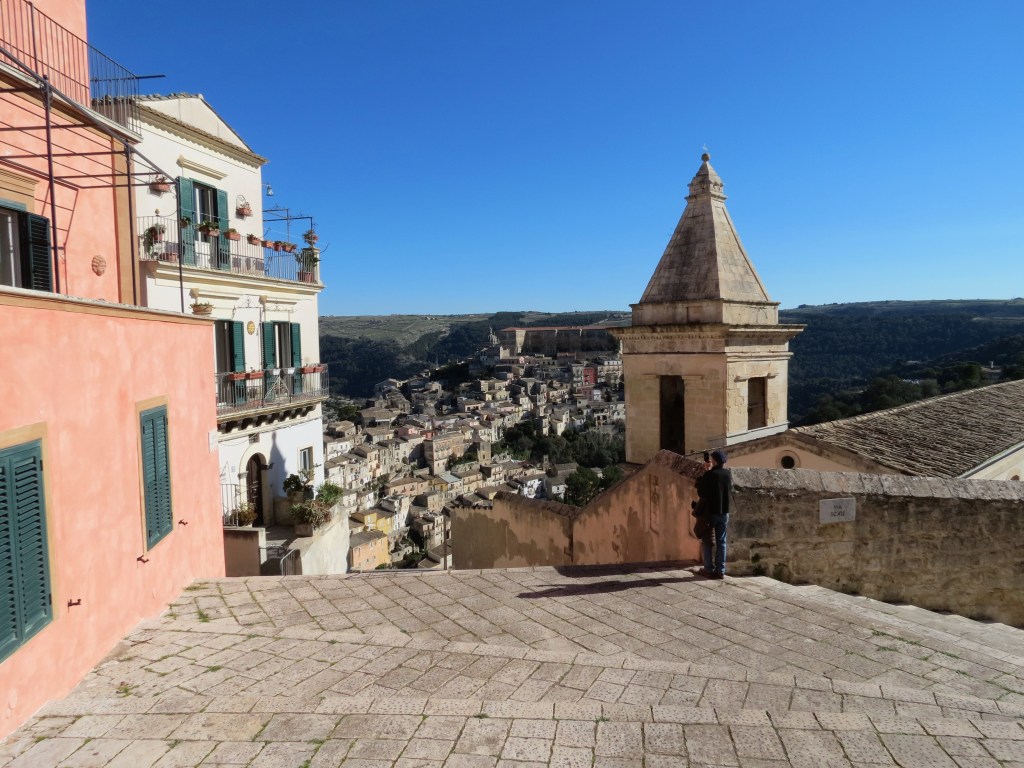
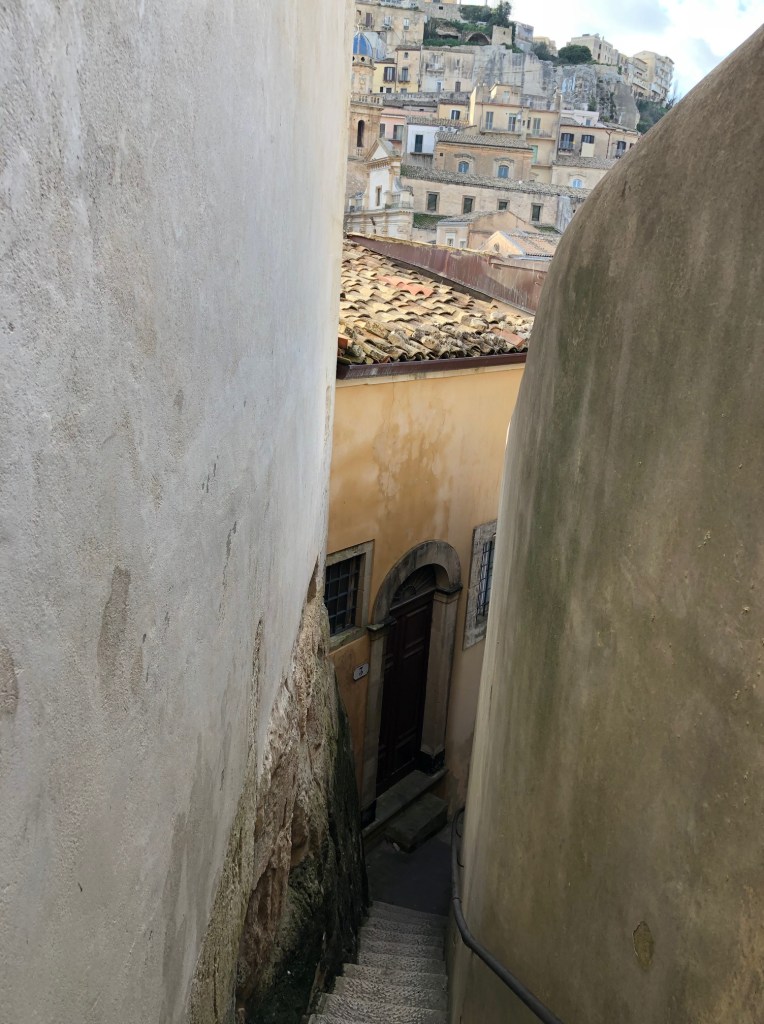
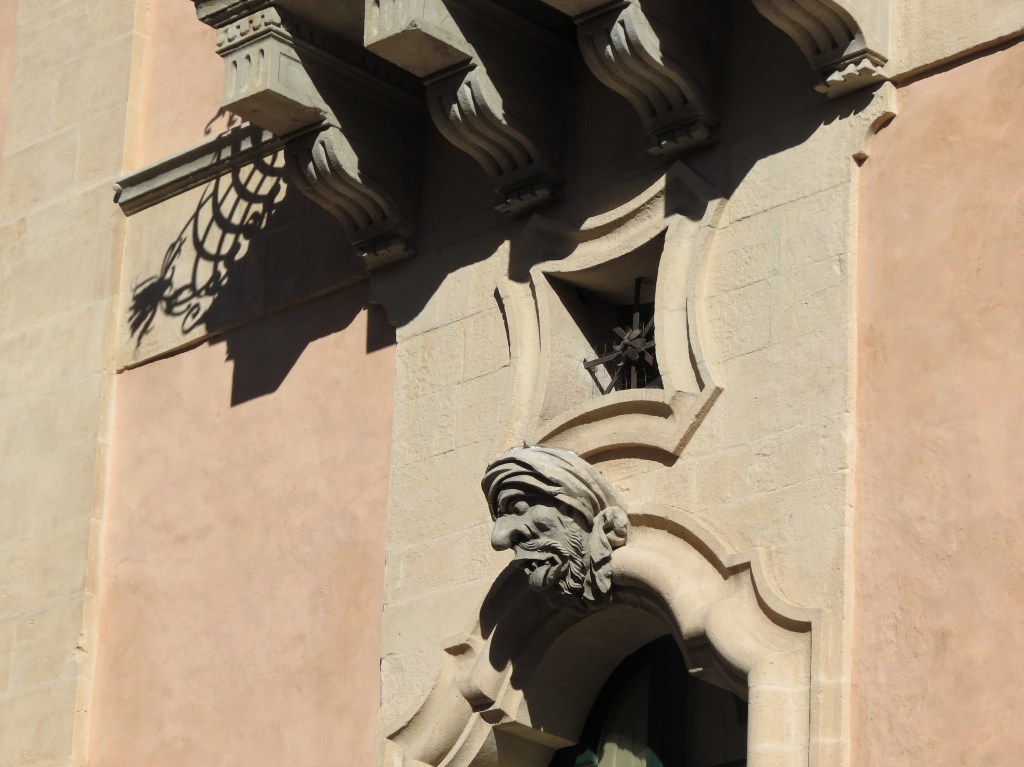
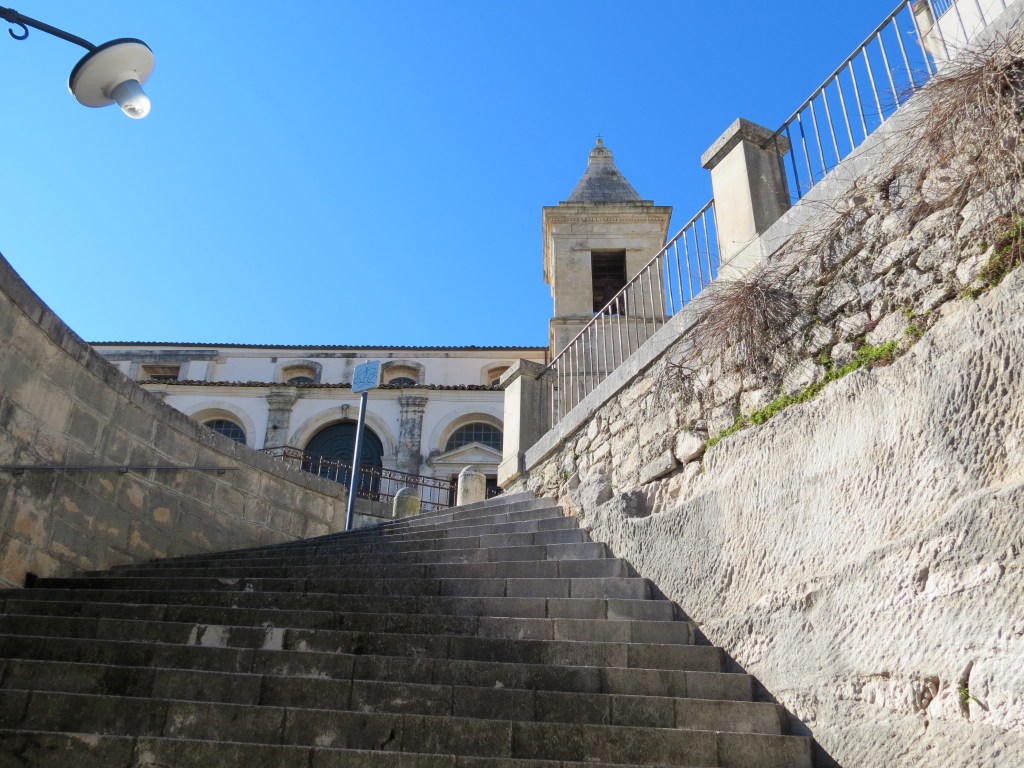
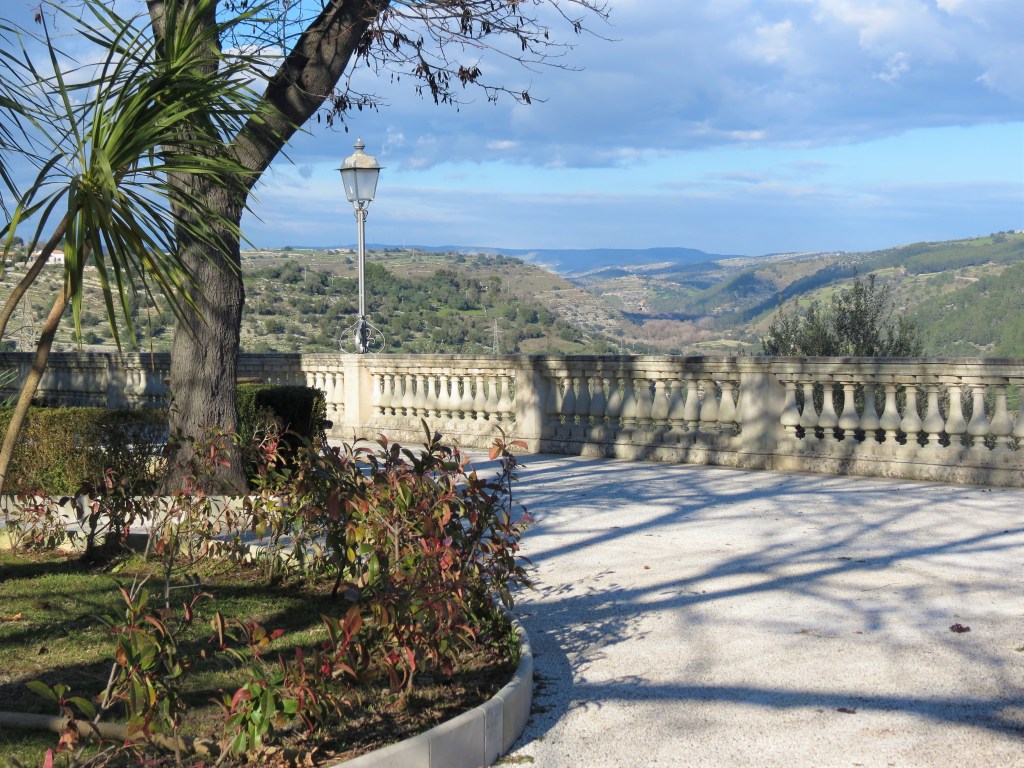
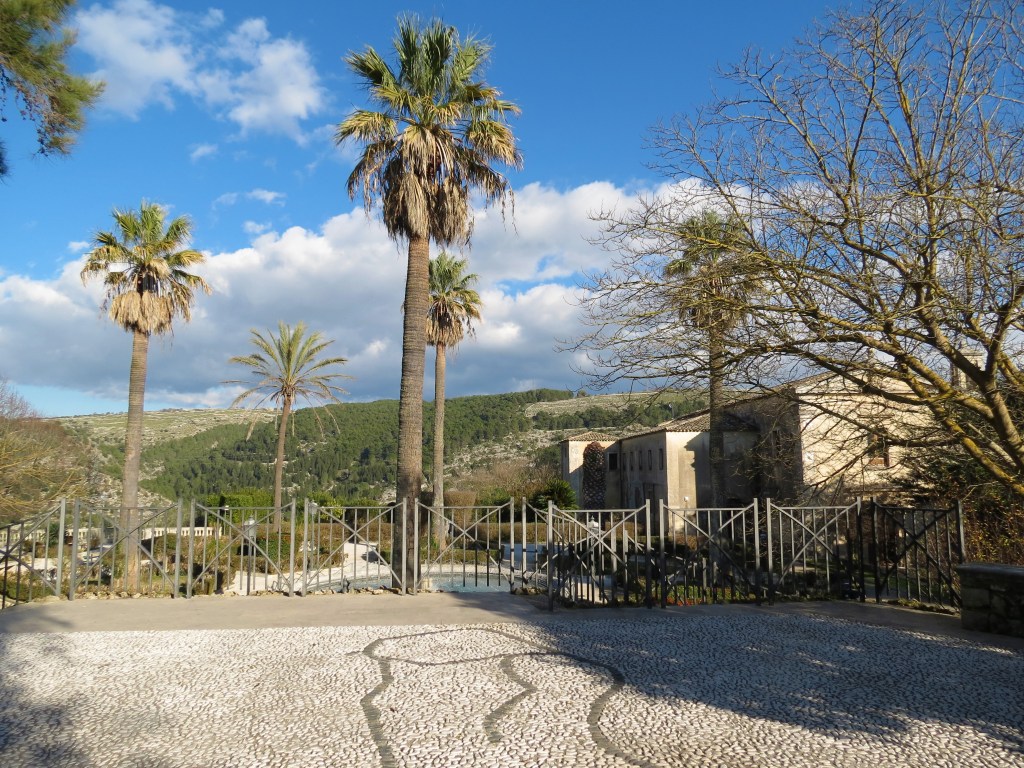
Another day we took the bus to Ragusa Ibla, the old hilltop city about 30 minutes from MDR. We walked and walked and walked up winding streets and stairs between ancient buildings until we got to the new city and turned right around and walked all the way down again. Eventually, we came upon a 18th century cathedral, which is always such a spectacle—so ornate. As usual, the town was largely devoid of people, it being January and lunchtime, when everyone goes home and the shops are all closed—very strange indeed but it’s the Italian way. After all that walking, we luckily found an open restaurant and ate a nice meal, then made our way back to the bus. It was a pleasant day away from the marina for a change of scenery.

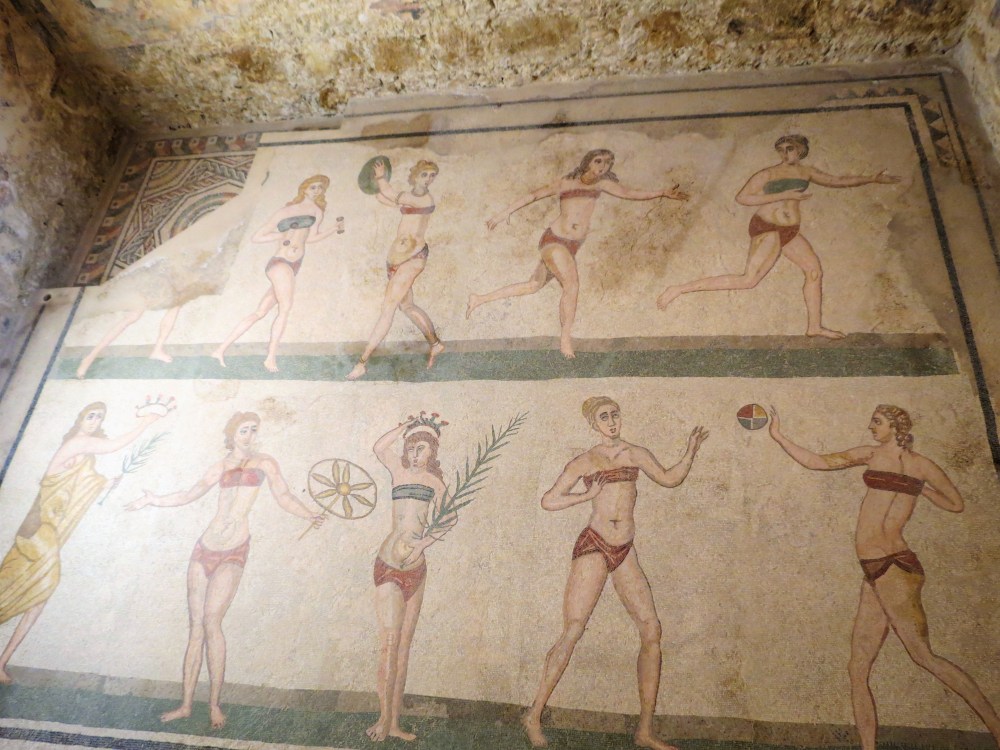
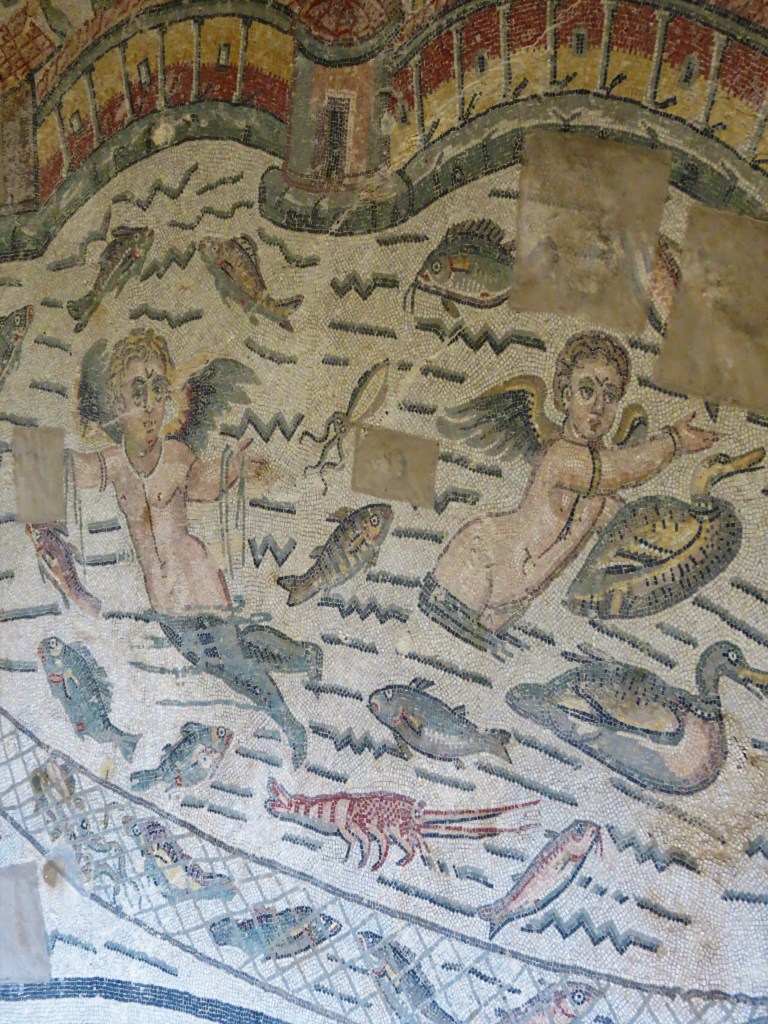
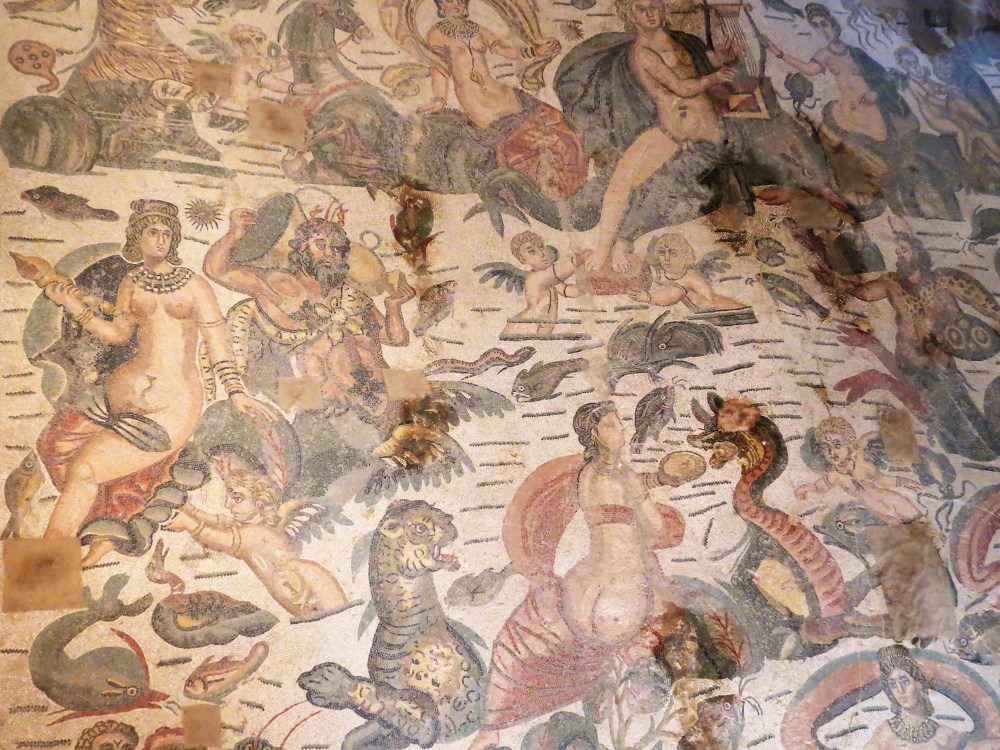
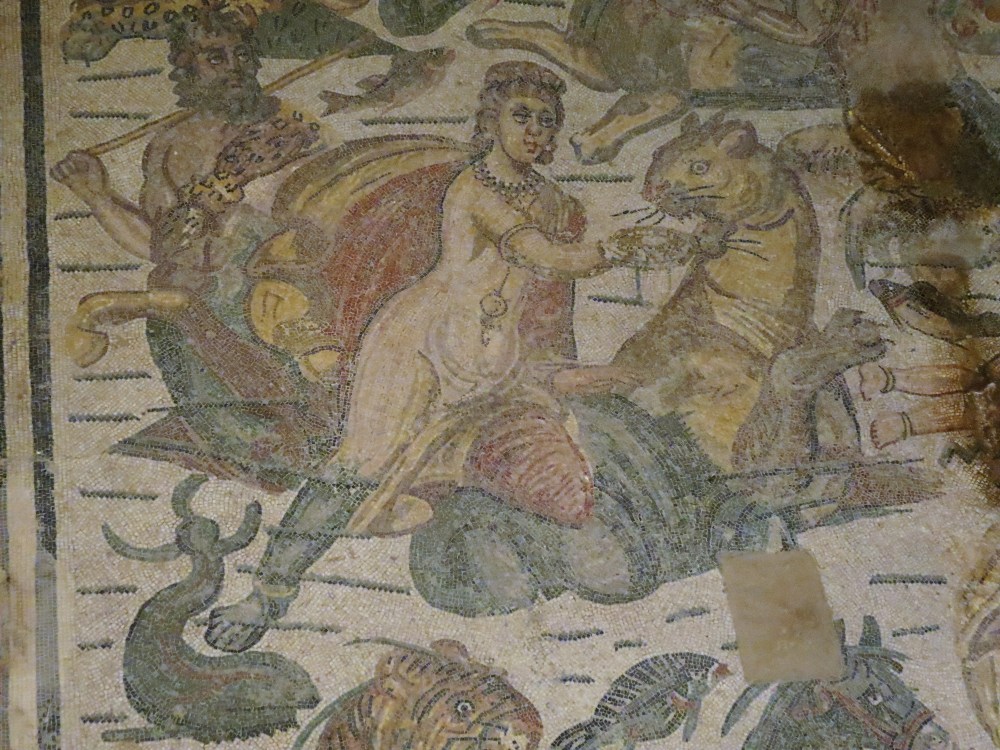
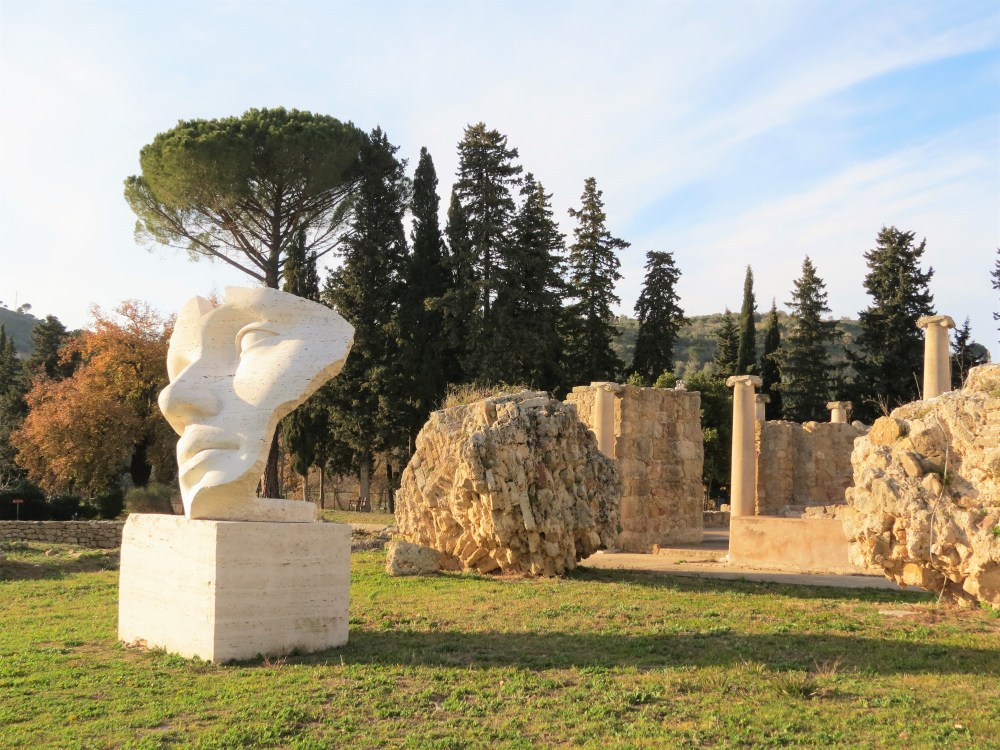
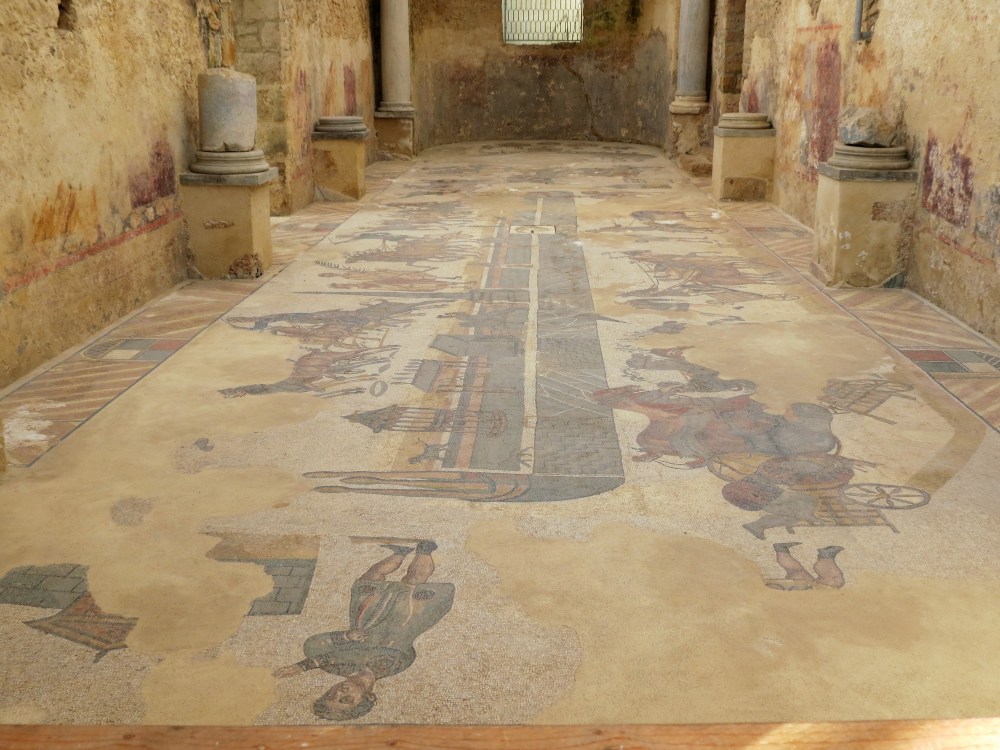
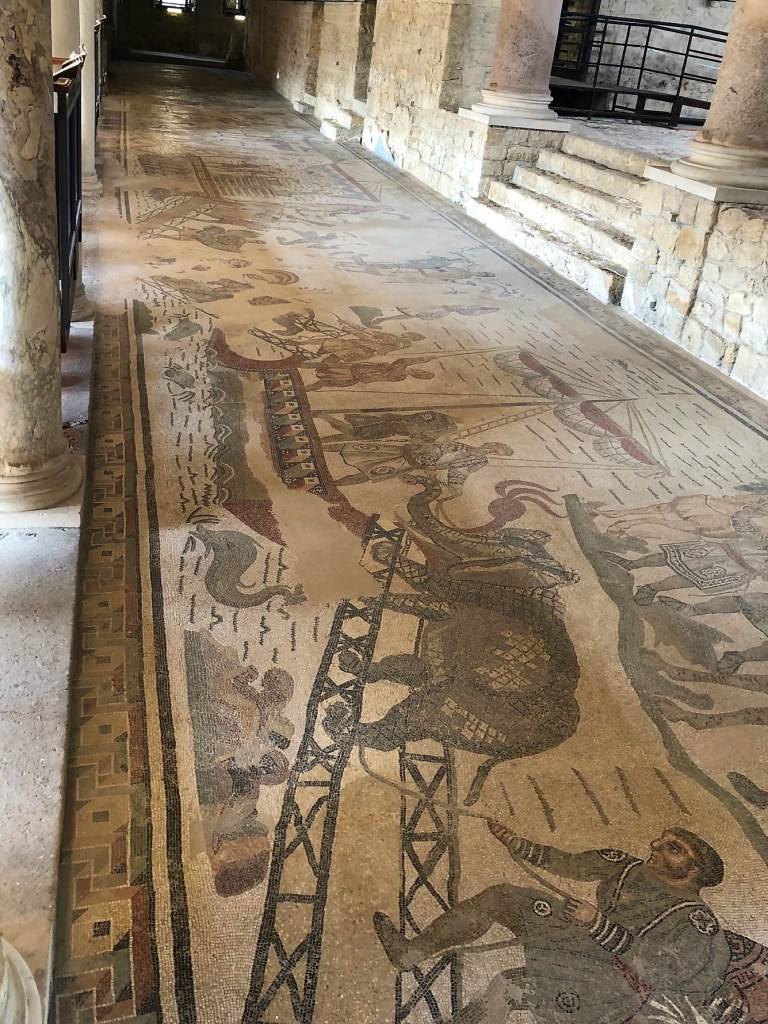
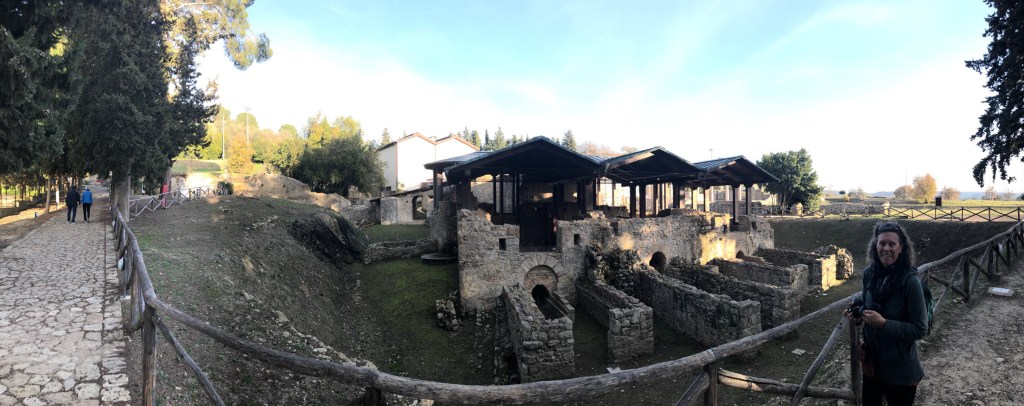
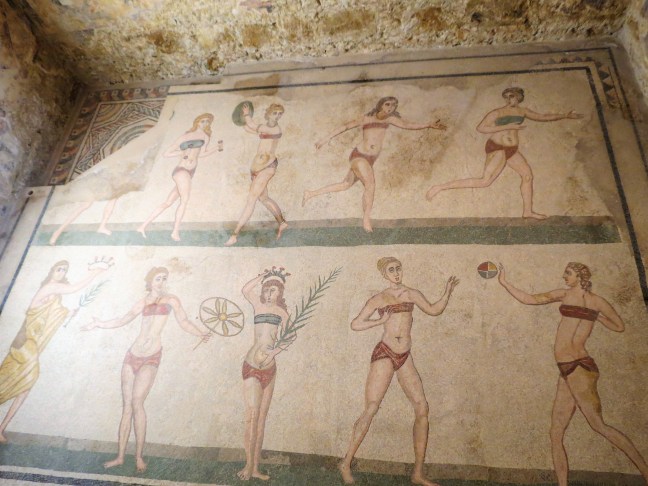
We also rented a car and went for the day with Bill and Nancy to Villa Romana del Casale in Piazza Armerina, about a two-hour drive from MDR. This archeological site is an old Roman governor’s hunting lodge from the 4th century, which was covered in mud until the 1970s. When it was unearthed, they discovered room after room of all manner of amazing mosaics. Completed over two centuries, the place is a feat of human artistry and imagination. We especially appreciated some of their attempts at 3-dimensionality and the representation of shadow and underwater bodies, all using tiny tiles.

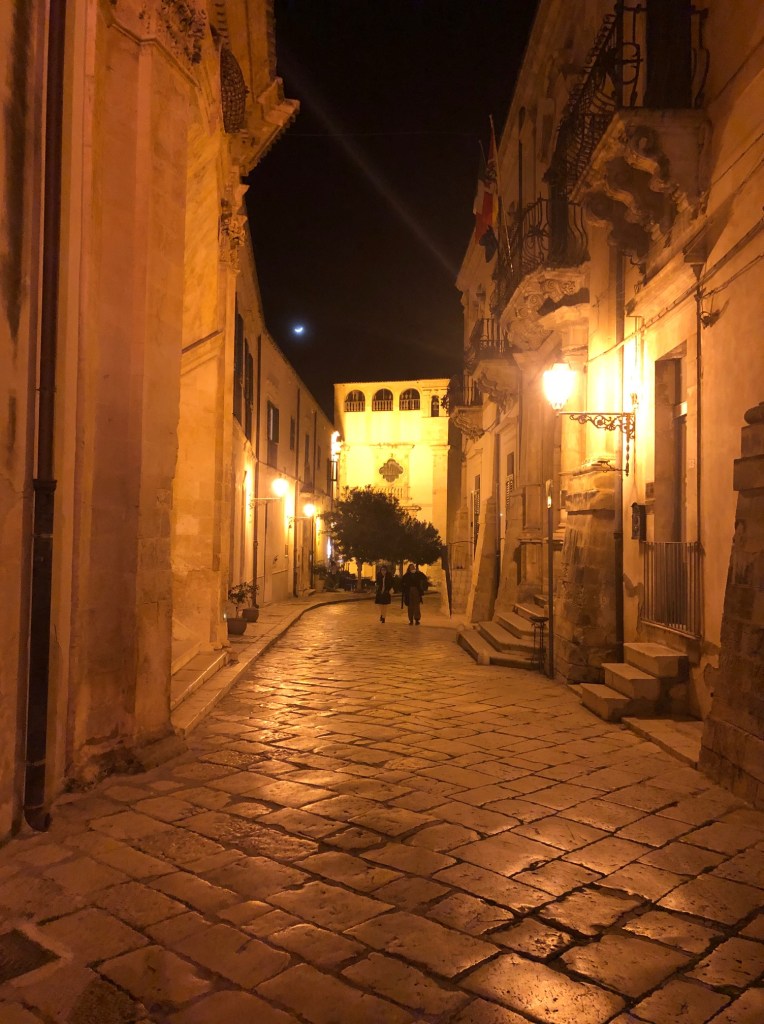
After a long day of driving, including a swing by a house that a friend is interested in buying and lunch in Piazza Armerina where narrow, steep, one-way streets with blockades nearly had us trapped, Will and I decided to take advantage of the car and drive to the nearby city of Scicli about 25 minutes up the coast. It was different being out at night in a city that people actually live in, so instead of the feeling of a ghost town that we often have encountered during the day, there were plenty of people around. We asked an older woman climbing the stairs with her evening shopping where a good place to eat was, and she turned right around and escorted us two blocks to a nuovo Siciliano place where we had the chef’s version of caponata and grilled octopus served on a bed of melted cheese. We ended the evening with a box of 14 mini cannoli of different flavors, ohmy!

As with most opportunities, our trip to Sicily has been a wonderful slice of life that has come with various ups and downs, adventures and routine, activity and reflection, vitality and sickness. The abundance of fresh, inexpensive food has been especially delightful. And it’s been great to spend time with my Dad and Nancy, and to be around so many sailors, albeit tethered to a dock.

And in a couple days we fly back to Portland, where February snows and temperatures await us. We hope the weather isn’t too much of a shock to our systems!

Tasha & Will

NIRIVANA S1:E9

Sept 30, 2021

As summer has drawn to a close, the equinox has ushered in fall, and the equilux has pivoted our days to more darkness than light, we’ve begun our transition from “out cruising” to “back home,” whatever that means. As the land beckons, the sea remains our ground; as such, the definition is still unfolding.

*     *     *

After two days and nights at the beautiful Jewell Island in Casco Bay, we reluctantly head back to our home port in South Portland, where we experience the rocking and rolling of motorboat wake as a more-or-less constant throb, the Portland skyline in the distance, a stark contrast to the tree-lined anchorages we’ve experienced all summer. After a wonderful welcome home meal at the nearby marina restaurant with my cousin, the next stop is Bellaire Rd. to pick up our car in preparation for our drive north. The first step into my house is a shock: the strange unfamiliarity of the oh-so familiar space and things that have been home for more than six years.

After the first hour of sitting on the living room couch, there is an uncanny sinking into place, like putting on a well-worn pair of shoes after years of their sitting in the back of the closet. “Oh, I remember these! But do I still want or need them now that I’m X, Y, and Z (fill in the blank: a live-aboard sailor, in partnership, on the move)? This much is clear: the collection of “stuff” that has accumulated in my life is partially a product of our culture, partially my acquisitive nature in my attempt at creating a home, and partially a function of having the space to allow it to accumulate. The smaller one’s space, the less one collects because the less one can collect. Living aboard the boat, I haven’t missed any of it.

That first night we spend in the basement apartment that I’d used as an AirBnB for a year, pre-covid. We shower, do laundry, collect the mail, drive to the supermarket, and buy a propane heater in anticipation of colder weather. Moving through space surrounded by a tin can, navigating on asphalt roads with yellow lines, stopping at red lights, and flowing in and out of buildings all feel oddly dissociative. Our bodies know the moves, but our senses are somehow disengaged. There is a form of numbness that creeps in. Where is the wind on our face, the changing view as the boat gently moves through 10, 20, 30 degrees at anchor in the slowly shifting wind, the ospreys squealing overhead with the sky as backdrop, the varying expanse of vision from the near shore to the distant islands to the far horizon, the gentle tinkling of the water as the tide and wind lap the hull? These are feelings unexperienced on land.

* * *

When on land, almost everything in the “world” is man-dominated, and so much is man-made that any nature is relegated to the margins; clearly man bends everything to his will and feels no remorse, likely since he has “god-given” dominion over all of creation. Frightening. Worse, when you’ve been immersed in the endless variations and compositions of beauty available everywhere in the island world, you realize that man’s attempts at beautifying things is so sadly shallow. Because everyone is so wrapped up in such trappings, we rarely question the path our “progress” has taken us (how did we get here? –David Byrne), let alone challenge it.  

*     *     *

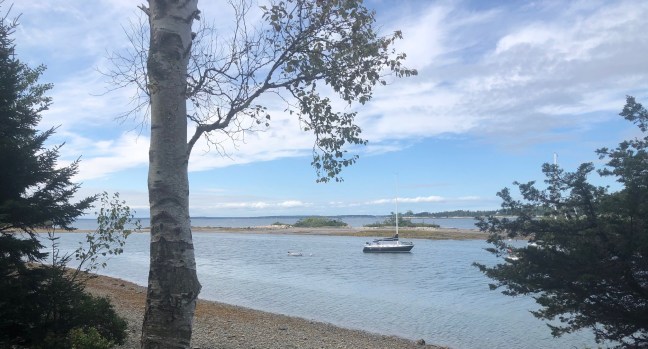
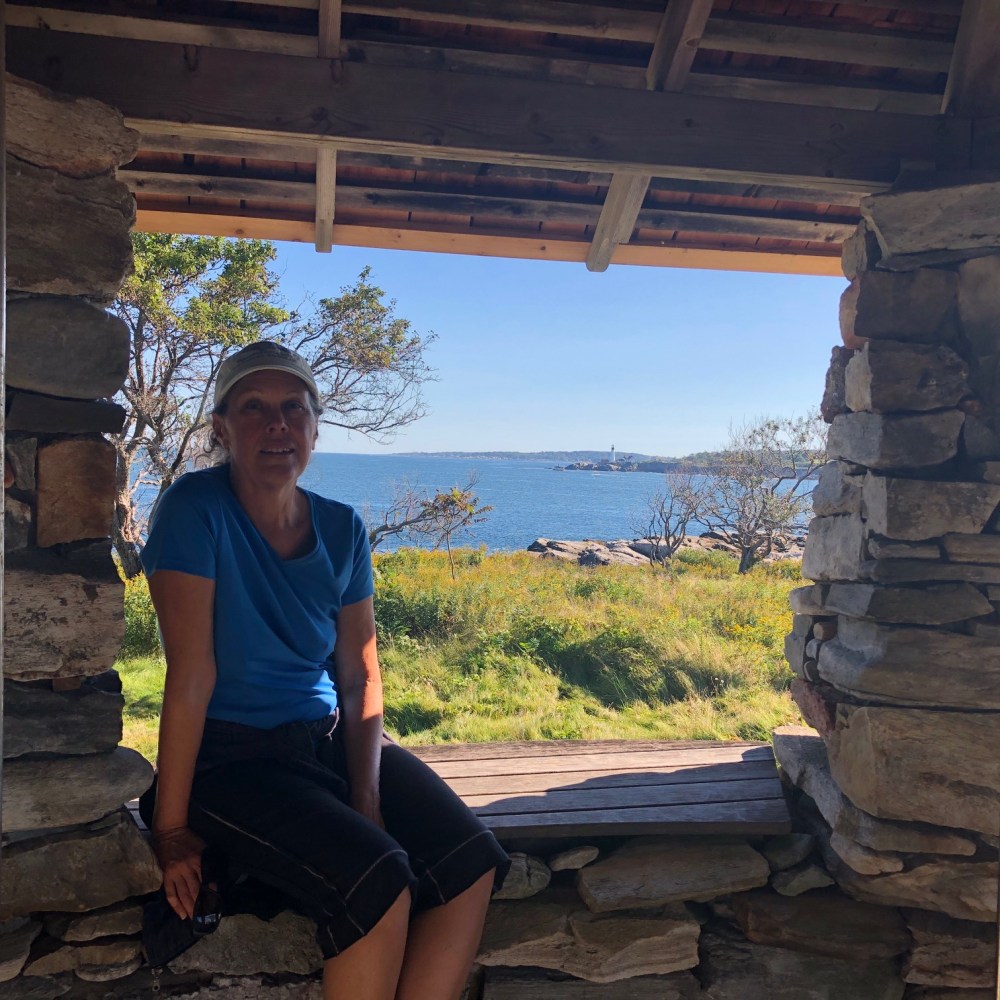
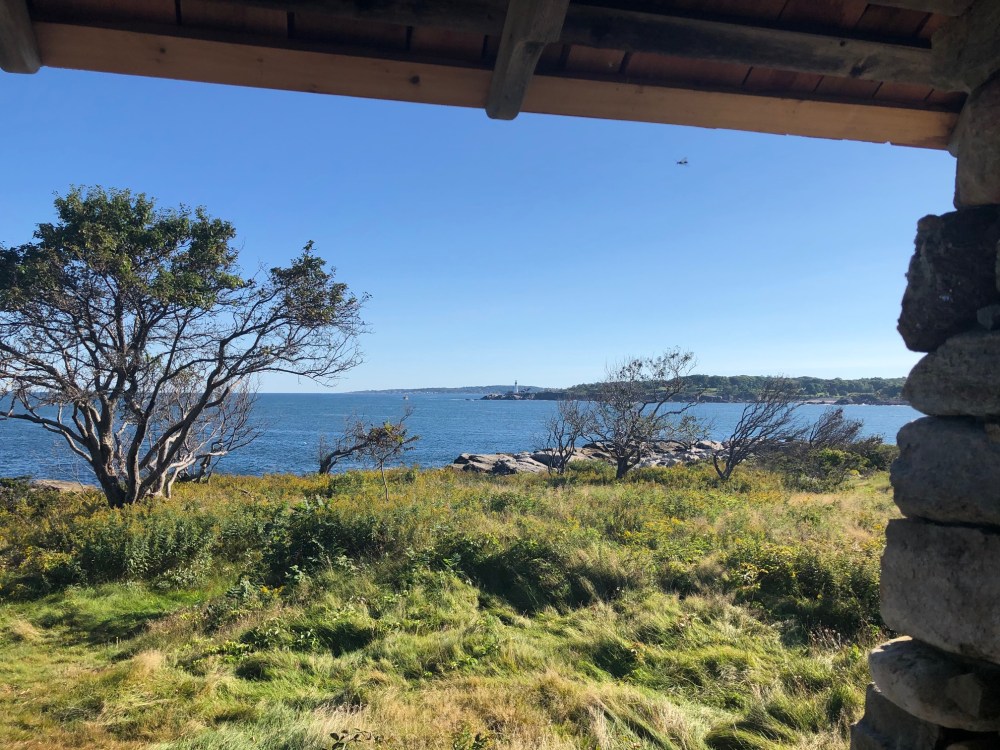
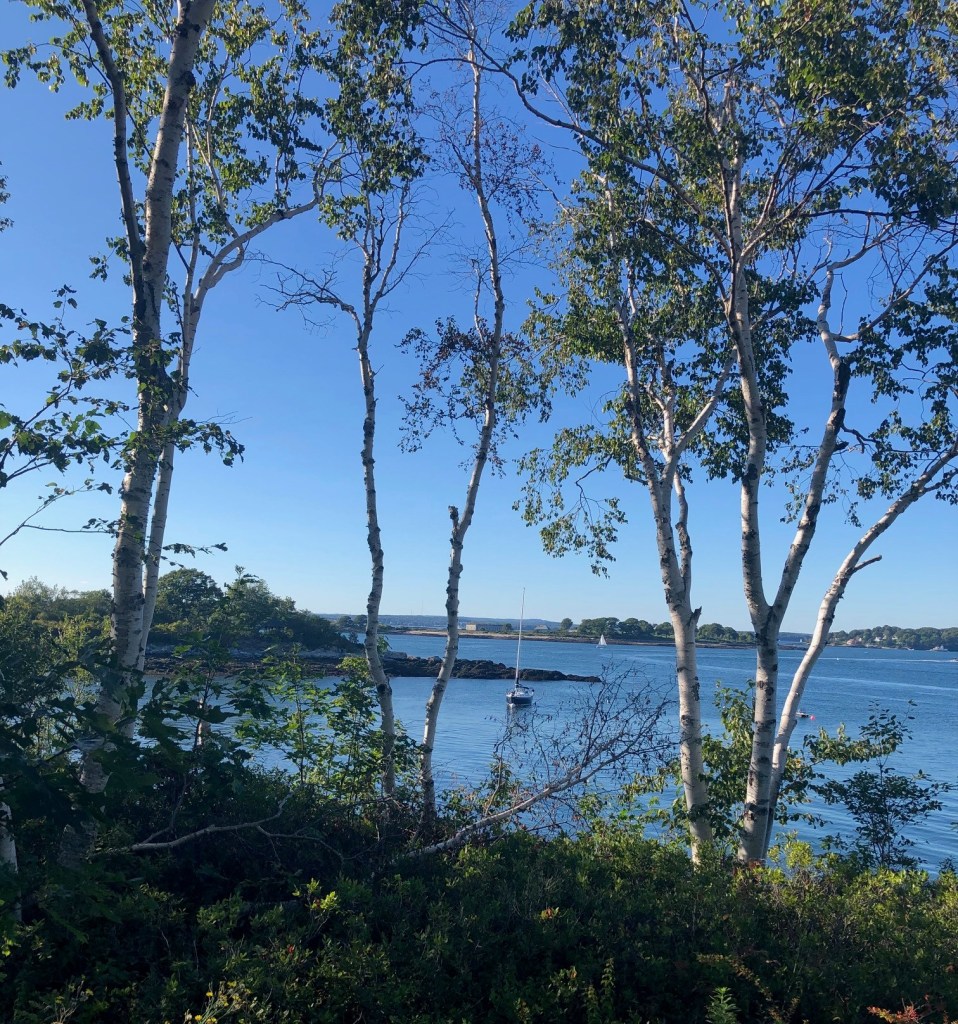
We drive north, connect with family over the loss of my uncle, drive south. We drive north for a music festival, connect with old friends and acquaintances, drive south. We pay my mother a surprise visit in her small Portland apartment, which feels ever so much more the right size than my house. We spend a couple of nights at a small anchorage on Cushing Island two miles away in a partially successful attempt to avoid the rolling. We go ashore on this private island with the permission of Will’s friend who owns a house there and have a fascinating conversation with the island caretaker of the past 16 years. We see Portland Head Light through the lens of one of the gazebos built by the military in years gone by and have a new appreciation of this seemingly off-limits island.

We return to our mooring to the sound of a loud motor and drilling as a huge crane installs yet another dock at Spring Point Marina for another thirty boats. We take a friend for an afternoon sail and choose Diamond Cove as a different nearby destination to avoid the noise and rolling. The next morning, we awaken to ferries coming and going and jack hammering on shore. We motor around the corner to Cow Island where we hear teens whooping and hollering ashore as they practice leadership and cooperation skills.

And then, we have a glorious ten-mile sail to The Goslings, near Harpswell, where we spend four beatific nights in a quiet anchorage that we share with only a few boats coming and going. We run out of water and motor four miles in 20 knots with gusts to 25 to Paul’s Marina to tank up, and then return to our quiet anchorage, which remains remarkably calm despite the wind. Instead of the forecasted rain, the next day we row ashore in what feels like a sunny summer day to the small, protected islands and explore the trees, mushrooms, plant life, and distant shoreline trail along Lower Goose Island, and then bushwhack our way across the island back to the near shore. We enjoy the rain as it finally pelts the dodger and hatches overhead, enjoying the perfectly geometric patterns the raindrops make as they swirl on the smooth surface above our heads in the V-berth. (Click here for video.) Life feels real again.

We’re invited to a friend’s house for lunch in nearby Brunswick, so we motor four miles to South Freeport where we’re picked up by friends and drive to her lovely farmhouse and feast on a wonderful meal. We get a hot shower ashore at the marina before rowing back to the boat, where we hang on an empty mooring along with the cormorants, enjoying this harbor for the third time.

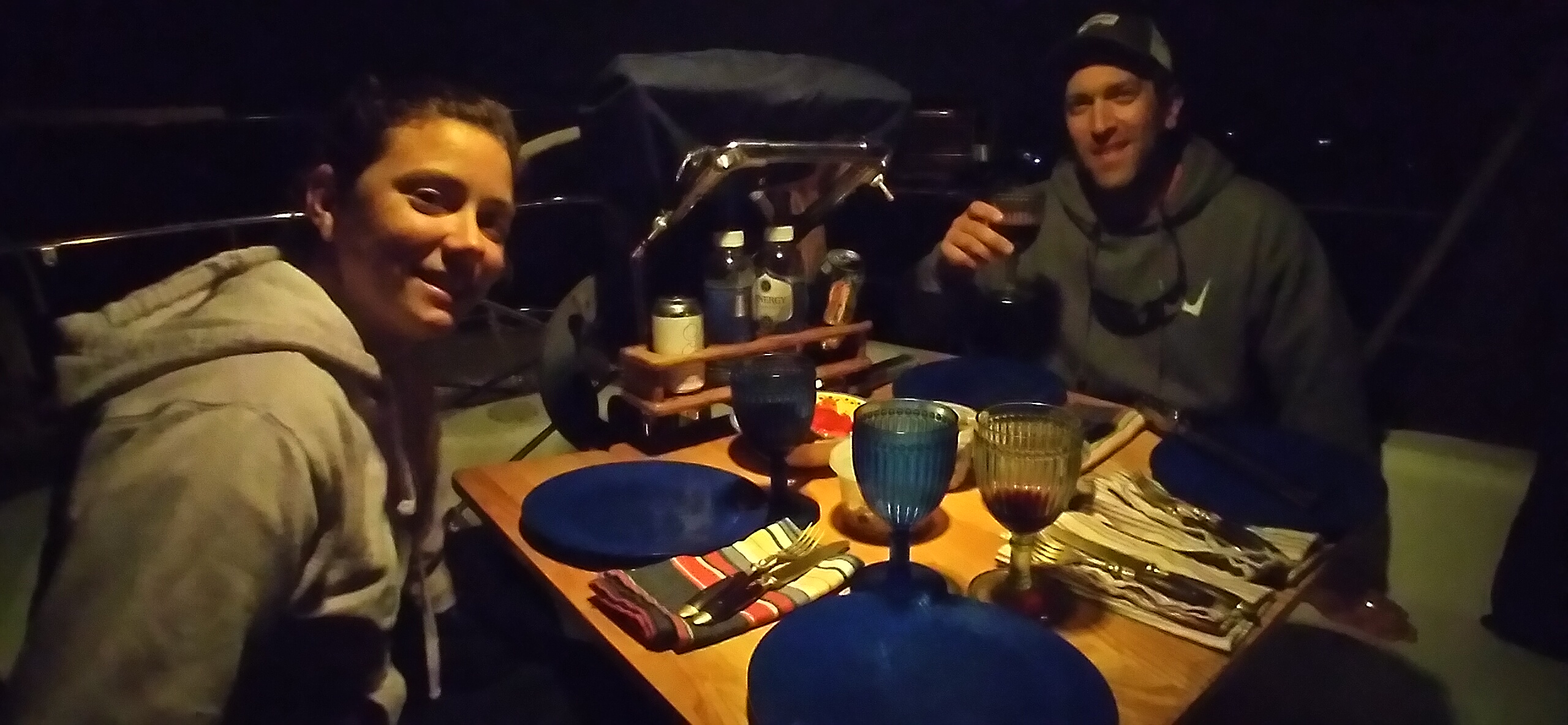
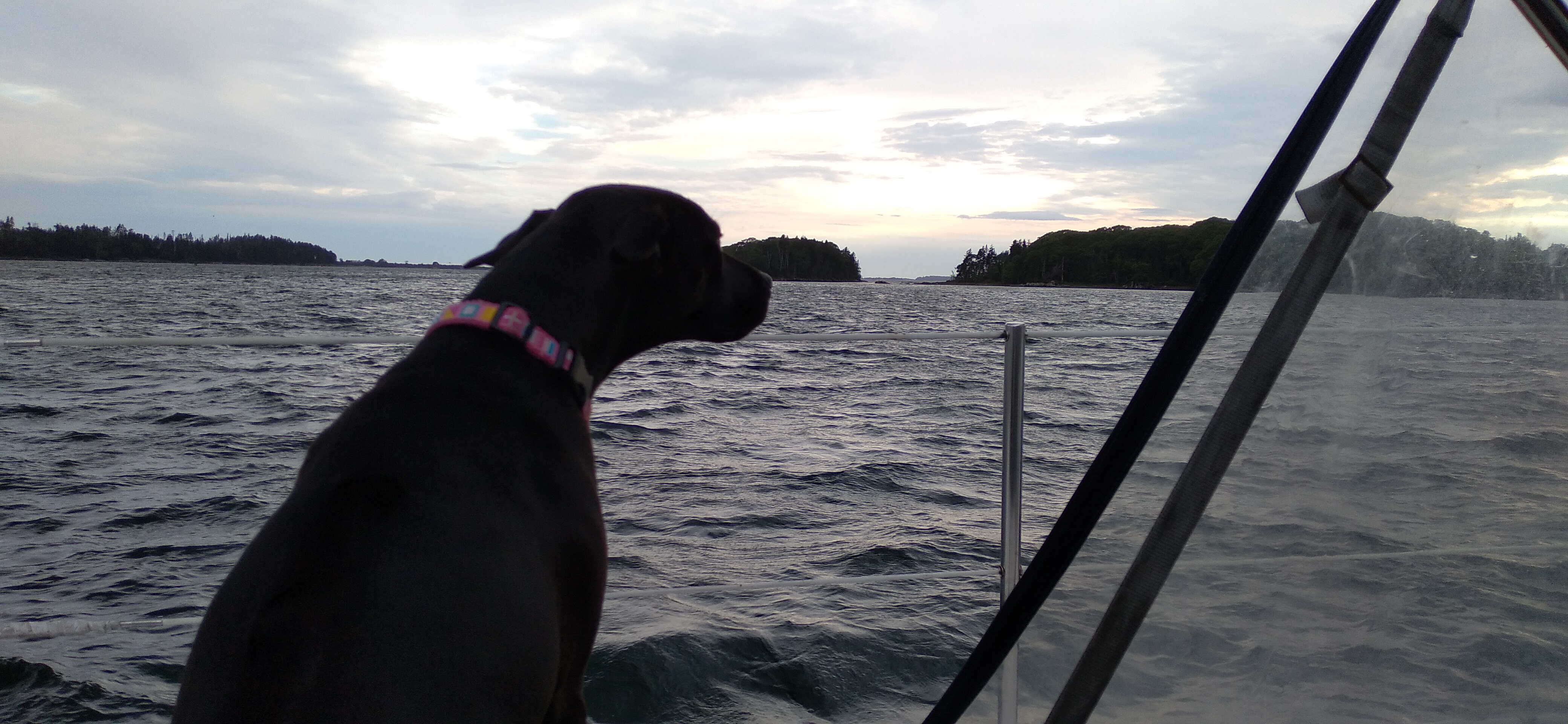
Will dissects the freshwater system in our ongoing attempt to identify a leak, which he finally does: a rusted hot water tank. We enjoy an afternoon sail in 15 knots of wind with my son, daughter-in-law, and grand-dog, and then have a glorious meal in the cockpit under solar lights. That night, we run out of water only three days after filling our tank, so we head back to South Portland to try and deal with this now pressing issue.

So we are back on our mooring once again, this time with several days of north wind, which feels a bit less rolly than the prevailing south-westerlies, combined, perhaps, with less boat traffic. Will prepares to extract the rusty hot water heater and replace it with a spare from his old boat. We drive to the hardware store and stock up on food. We have dinner with a friend and visit with family. We consider taking a slip at the neighboring marina before moving into our winter slip. We contemplate exploring neighboring islands while the weather is still relatively mild. We think about going to a rustic hut in the woods. We fire up the propane heater for the first time to take off the chill and hunker down for one more night in our now cozy cabin. We have just over two weeks until we move into our slip at DiMillo’s and just over two weeks of this period of transition. We have a disquieting sense of being “between worlds.”

At the same time, we have the profound realization that as soon as we attempt to define it, name it, we’ve limited our experience of it, whatever “it” is. Instead, the closest to a definition we’ve arrived at is “we’ll know it when we see it”—about home, about what to do next, and about pretty much anything we choose to give our attention to. And that feeling of knowing is fluid and ever-changing; it comes and goes, like the weather, wind, and tides. Trying to pin it down in any way that remains fixed is merely the mind’s attempt at creating solidity, certainty, and predictability, in our very human but futile attempt at defining what is inherently unpredictable—life itself. And yet, with all its unpredictability, our lives remain an adventure of the first order, as long as we stay open to all of it. And we are reminded every day that doing it in partnership is a gift of a lifetime—for both of us.

Remembering Roland

. . . and speaking of bookends. . . our last blog ended with us showing up in South Freeport for our community dance, which was where we started back in June . . .

. . . and it is also, sadly, the day my beloved uncle Roland Barth died. You can read his obituary here:

Roland S. Barth Obituary

A week later, his extended family and many friends participated in a beautiful memorial at the Head Tide Church in Alna, Maine, the town where he and many of my relatives have lived for decades.

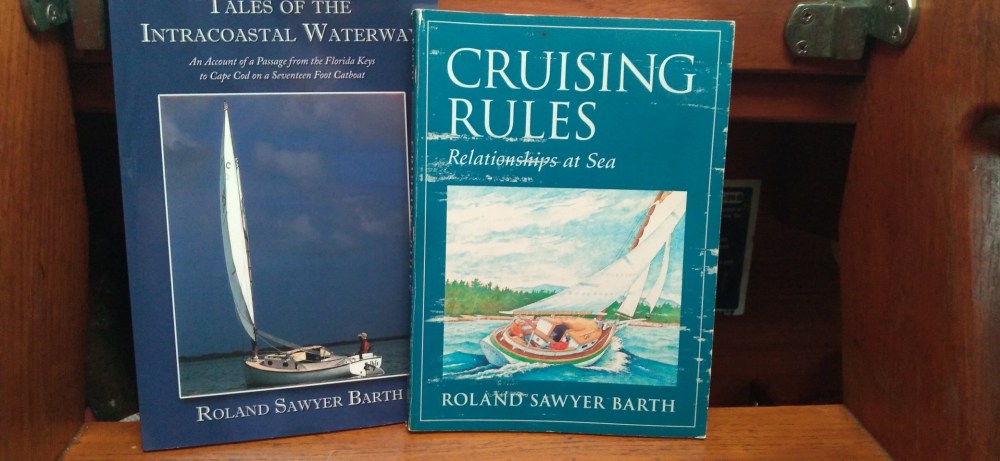
I want to take this opportunity to acknowledge my Uncle Roland by sharing this memory of him, which I spoke at his memorial. Not only was he a lifelong sailor and author of two wonderful books on sailing—along with numerous books on education—he was a great mentor and support to me in my journey on the sea.

* * *

Eight years ago, September, Roland and I sailed Mare’s Tale from Camden to Round Pond. He had just had an episode of transient global amnesia cruising Penobscot Bay with Barbara, and he needed someone to help sail the boat back with him, since he vowed never to sail alone again. I was happy to accompany him on such a long trip as I was actively looking to buy a cruising sailboat of my own. Among the boats I was considering was a Contessa 26, so it was a great opportunity for me to try out the boat. What I didn’t anticipate was Roland broaching the subject of possibly co-owning his boat given his new condition.

We had a delightful sail as we played with the possibilities of co-ownership. As we approached the bar between Hog and Louds at just past half high tide, he asked, “Now what would you have done if the tide had been just before half high?” Being a prudent sailor, I said, “I would have waited until half tide or better.” Right answer! I had passed the test. So now I had to look inside myself to see if what I really wanted was to co-own a 26’ sailboat with my uncle. While I was honored and seriously considered it, in the end, I decided that was exactly what I didn’t want: to co-own a boat with a father-like figure. Instead, I wanted to experience it for myself, which is after all what “learning by heart” is all about. It was very clarifying, and he understood completely. So I took a leap off a cliff and bought a Sabre 28, a boat of my own. And through it all, Roland has been one of my biggest supporters, first as I became Captain of My Own Ship and now, as I craft my own Cruising Rules for my current relationship at sea, living aboard with my partner Will.

In reviewing old emails, I was astonished to find so many from my dear Uncle Roland over the course of owning Maverick solo and now NIRVANA with Will. When I signed the contract on my new boat, he wrote, “Way to go, Tasha! A great vessel at a great price.” Both of our boats now in Round Pond, we bailed each other’s dinghies, and I checked Mare’s Tail’s waterline given a slow leak. After recommending the documentary Maidentrip about a 14-year-old girl sailing solo around the world, he wrote, “You next for around the globe on Maverick?” When I thought I lost my dinghy because I was distracted by a man, he wrote, “Moral of the story: never turn over command of your dinghy…or your life…to some guy!” And after wavering whether to launch one year because it felt too daunting to do it alone and then changing the oil in the engine for the first time, he wrote, “Great to see your hands in the oil, Tasha. So pleased that this little vessel has become such an important part of your life…and to have played a very minor role in that.” More than playing a minor role, he’s been an inspiration.

In 2018, we went on our first Uncle-Niece cruise in Casco Bay, and just after he sold Mare’s Tail in 2019, we went on our second. From his gushing email of gratitude, he wrote, “Thanks for arresting my grieving at not being able to sail my own boat…and providing the leadership and modeling of what a good captain should be.” You have no idea how much that email meant to me, coming from him.

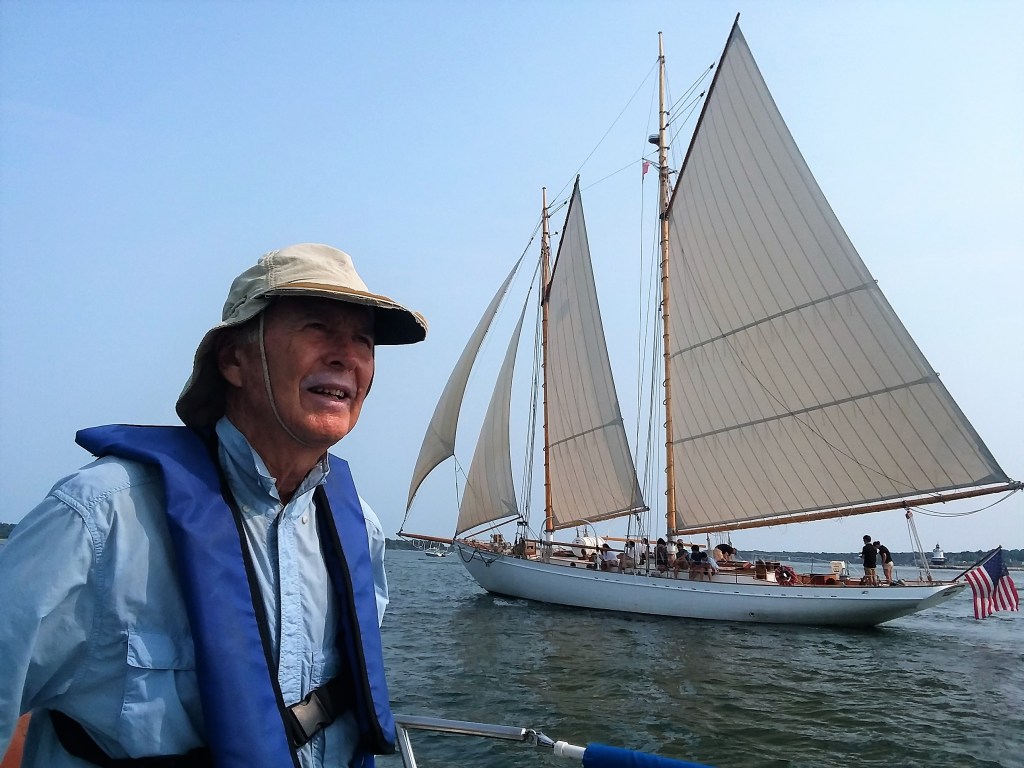
Happy Roland at the Helm, 2019

Having since sold my Sabre and bought a Freedom 36 with Will, we had the honor and great good fortune to have taken Roland on his last sail of Muscongus Bay with Joanna. On that occasion, he passed along his personal copy of Cruising Rules that he carried with him on Mare’s Tale for 25 years, with this inscription, “To captains Tasha and Will, with gratitude for our little cruise, Harbor Island, Monhegan, and the George’s Islands, and in anticipation of new cruising you two will craft together.” There was a moment at the helm when Joanna asked, “On a scale of one to ten, how much pain are you in Dad?” His response: “I’ve got my hands on the wheel and I’m sailing. My pain is a zero.” If I were to turn that into a cruising rule it would be: When in any kind of pain, get out on the water and go sailing!

As I’ve made the transition from life on land to life on the sea, I couldn’t have asked for a more supportive and loving uncle on my shoulder along the way. So I’ve created a cruising rule in honor of Roland, which I shared with him several years ago. For all the sailors out there, perhaps you’re familiar with the misogynist acronym for finding your compass course given true, variation, and deviation: True Virgins Make Dull Company, Add Whisky, Subtract Ethics. Instead, I offer this one for finding your course through life, relationships—on land and sea—and all the chartered and uncharted waters we inevitably encounter along the way:

True Value Manifests Deep Connection, Add Wisdom, Subtract Ego

That’s my uncle Roland.

Sept 18, 2021

Frailty and Responsibility

My former manfriend had a blog that he wrote every week called Loose Canon, and he was. Just over a year ago, he died of cancer after a year and a half of a slow decline that was simultaneously excruciating to experience and a gift to participate in. I sat with his daughter just after he passed reading TS Eliot’s Four Quartets, a poem he had spent nearly all ten years I knew him memorizing. “The past is all deception and the future futureless.”  “What we call the beginning is often the end. And to make an end is to make a beginning. The end is where we start from.”

Last week, my mother went into the hospital for the second time in a month, this time with a shoulder fracture having fallen in the middle of the night. She doesn’t remember falling, only the excruciating pain as she lay on the floor, for hours, nearing hypothermia, before her neighbor finally heard her calling out and called 911. I received a call that she was in the emergency room and found her with a shoulder the size of a football.

Just over eleven years ago, my nineteen year old son died in a car crash. He was driving too fast, spun out on a sharp curve five miles from home, and hit a telephone pole. Despite driving a Volvo, a car my ex-husband insisted was the safest thing around, he died instantly. The hardest moment in my life was going into the funeral parlor with my younger son and together, saying goodbye to his cold, stiff body, his hand raised up in the air as if clutching a steering wheel. When I went to visit my mother’s neighbors to thank them for finding her on the floor, I had a visceral flashback to the time I called on the people whose power went out when my son hit the pole in front of their house, rushed outside and found him dead, and called the police. It lasted for ninety seconds, which according to Jill Bolte Taylor, author of My Stroke of Insight, is the natural amount of time for human emotion to flood the system when it is not being conflated by what the Buddhists call “the second arrow,” that is, not pure, natural, healing grief, but suffering, which is a choice.

Other than that moment, I’ve been holding up remarkably well through my mother’s recent episode as I spend hours and hours every day plotting her next move from home to hospital to rehab to assisted living. If you have done this, you know what’s involved. If not, I will spare you the details, but suffice it to say, it is human complexity of the highest order. Take system (the human body), apply specialty after specialty at different pay scales, put together in a small, institutional room with wires, tubes, and beeping boxes, and shake and bake. Add the megalomania that is the health insurance industry that charges $24 for an aspirin and you know what I’m talking about.

I am someone who abhors drugs and hospitals and all things medical. Now I know my mother’s drug list and diagnoses as if I were a physician. I can navigate the Medicare and MaineCare systems as if I were a social worker. And I am becoming steeped in the extraordinarily large business that is helping the gigantic aging population in this country go from “independence” to “assisted living” to “skilled nursing” to the grave. Today we called on a family friend who happens to be a partner at a fancy law firm in town to draw up a “durable power of attorney” so I can take charge of my mother’s financial affairs, as well as her medical decisions when the time comes with the “health care proxy” I signed some months ago with the home health social worker. Over the course of her past two hospitalizations, I’ve been asked a dozen times what my mother’s “wishes” are. You better know what they are, because you don’t want to be dragged through that system any more than you sign up for. Or if you do, you better have insurance to cover it.

The episode with my mother is following on the year and a half of navigating my friends demise from cancer, with similar tenaciousness, despite the fact that we were no longer a couple. The day he couldn’t move from his chair in excruciating pain, I’m the one he called and said, “Please come. I don’t want to die alone.” I was there through it all: radiation, chemotherapy, caregivers, social workers, hospice, family, friends. And the long, slow process of watching a man who up until age 77, stubbornly rode his bicycle everywhere through all manner of weather, groceries piled into a large backpack, decline to a state of shuffling across the floor with a cane, skin and bones, drugged out on morphine, talking nonsense half the time and weeping the other half.

Virtually every industry is in on it, the living and dying game, big time. Is one human life really worth that much money? A friend of mine told me that in the last year of his mother’s life, the hospital bills totaled $940,000! I tend to be an isolationist, a hide-your-head-in-the-sand kind of girl who wants no part of any of it. I’d rather be writing poetry and sailing off into the sunset with a lover. And yet here I am, right smack in the middle of what George Harrison called “Living in a Material World” or as Pierre Teilhard de Chardin said, “We are spiritual beings having a human experience.” And I will now invoke Joni Mitchell, “my favorite theme,” and bring me back to my reference point, “We are stardust, we are golden.” And we are each worth lightyears more than what money can value, which I believe is my point.

Needless to say, none of these are worlds I have chosen to visit – the death of my son, the demise of my friend, the decline of my mother – but this is what is called RESPONSIBILITY. Last year at a 5Rhythms dance retreat called The Holy Actor, that word was on the altar of the hall. My immediate reaction was ICK, cross my fingers in front of it, please don’t remind me of THAT while I’m here practicing freedom! Until my friend told me what someone had pointed out to him, a reframe on the word: responsibility is THE ABILITY TO RESPOND. It is that ability that I have been cultivating a lot of late. The ability to see what is, as it is, and to respond in the moment with what is needed, without judgement or drama, and without REACTING from a place of FIGHT, FLIGHT, or FEAR, that is, from the limbic part of the brain, the part that is conditioned by past experience. Add to that list the other key players of the primitive brain that run much of our lives SUBMIT and ATTACH. I learned these new ones from my therapist and clearly see how they too have played out in my life. The twenty-two years of my marriage and the ten years following with the man who died were examples of both.

The key to waking up, to rising above these habitual responses to higher levels of consciousness is AWARENESS, aka MINDFULNESS. The fact that this word is becoming mainstream is a pretty cool thing. And yet, as those of us who try and practice it know, it’s easier said than done. Until you just get it. You simply wake up one day and say, oh yeah, I am not reacting, I am responding. I am doing what needs to be done without my primitive-brain-emotional-drama-self driving the bus. And when they start to move from the back of the bus to the driver seat, I am conscious enough to know what that feels like in my body, and I put on the brakes, stop the bus, and step outside.

I recently went for a walk in the woods with the Mindfulness Meetup, and it was the most amazing experience. To  practice noticing, in detail, what the senses were taking in: the towering trees, the chirping birds, the cold air on my skin, my heartbeat. And once again I was reminded how much I love the woods. How being in nature makes me see things differently, with an artist’s eye. How collecting bark and moss and pinecones makes me feel like a child. And how all of it comes together as a poem in my heart that uplifts me like a song. As for the title, that’s for another day.

SARASWATI

Walking in noble silence
mindful of the sense doors
thoughts replaced by
pinecones and driftwood

a spring chill penetrates
skin to bone
blood pulsing freely
feeds the soul-body

a family of trees
urge each step
protecting from above
supporting from below

no distinction between
living and dead
form and formless
earth feeds earth

reflections dance
in flowing pools
a moving masterpiece
of creation.

I Hereby Surrender

4 AM. My mind activates with ideas that seem profound enough to want to get up and write them down.

A couple of years ago I bought this domain name surrendertotheabundance.com after an “intention map” workshop I did at the start of the year. It started with a Tarot reading and then moved into intuitive collaging about the coming year. Mine was a large, circular, two-sided hanging piece. On one side was a colorful array of lusciousness of the senses – lips, tulips, wine – with various cards with music, art, relaxation, and playfulness protruding from the edges like a child’s drawing of rays of sunshine, a flamboyant peacock at the center. On the other side was a monk sitting in meditation, a serene scene of calm water behind him and a smooth, white stone below him with the word Surrender at his feet. This map become known to me as Surrender to the Abundance and was my theme for 2017. I even made up “calling cards” with the website that reads: A sailor, dancer, actor, singer, photographer, and writer living in the mystery.

You see, for several years, I have had themes to each of my years. It started in 2013, again at a New Year’s Day community celebration where we sang rounds, read poetry, and did art projects. That year I created a scroll with the words “If Not Now, When,” which hung on a door in my house for a year and acted as a daily reminder. That is the year I took a leap off a cliff and bought a 28’ sailboat.

As for the calling cards, I haven’t handed out a single one. I have never felt ready to identify myself as any of those things. And yet, I have spent a lifetime become each and every one of them. So when do you get to start calling yourself something that you want to be? When you decide it’s time? When you choose to put yourself out there as opposed to hiding yourself under a bushel? When you choose transformation over safety? When you choose to rise yourself up like Maya Angelou as opposed to putting yourself down? When you choose to surrender to the abundance as opposed to attempt to control what cannot be controlled?

So today, at 4AM, I once again call on the theme of “If Not Now When” to officially start this blog. I call on forces larger than myself and trust that I have something worthy enough to say that someone else might want to read. I am constantly inspired by people and things I encounter in this life. Along with water, air, and food, it is my fuel. I’ve been at it long enough, this obsession to find what will buoy me up when times are hard and what will take me to higher levels of consciousness when I can see my way clear through the dust storms of ego.

I hereby surrender to the abundance and share it with you. May you be inspired.